


 Se i rommet
 Del som digitalt kort
 Del
Del
 Detaljer
 Studentguide

 Last ned
 Liknende objekter
 Røntgen
 Lysbildefremvisning
 Besøksstatistikk
Julia Reading


William Glackens' "Julia Reading" captures a vibrant scene of intellectual engagement with rich detail and warm tones. Explore this iconic Ashcan School painting today!
 Les mer
Utforsk realistiske malerier av William James Glackens (1870-1938), en pioner innen Ashcan School. Oppdag levende bilder av tidlig 20.-århundrets New York og Paris, som fanger dagliglivet med imponerende detaljer.
Giclée / Kunsttrykk
Giclée- eller lerretsprint av museumskvalitet med rask produksjon og fleksible valgmuligheter for etterbehandling. ( Bestill håndmalt reproduksjon Gå til digitalt bilde)




P118B Nkr10

P118H Nkr10

P118W Nkr10

P438Z Nkr10

P508JH Nkr12

P508YH Nkr12

P805H Nkr10

P805Z Nkr10

P919BZ Nkr10

P919G Nkr10

P919XJ Nkr10

P959ZH Nkr10

P968JZ Nkr12

W106C Nkr8

W218G Nkr10

W218JH Nkr8

W218Y Nkr10

W307PJ Nkr10

W316G Nkr10

W316PJ Nkr8

W316Y Nkr10

W398PJ Nkr8

W4111J Nkr10

W500HY Nkr15

W500JH Nkr15

W692G Nkr12

W849H Nkr8

W940BG Nkr15

W953PJ Nkr8




Standardformat
tilpasset
CM
INCH
Velg mellom våre forhåndsdefinerte størrelser som bevarer kunstverkets opprinnelige proporsjoner.
Loading sizes...

bredde
høyde
Du kan oppgi egne mål for å tilpasse en spesifikk ramme eller et bestemt område. Dersom den valgte størrelsen ikke samsvarer med det originale bildets proporsjoner, vil vi enten beskjære kunstverket eller utvide bildet med en speilet eller ensfarget kant. En digital mockup vil bli sendt til din godkjenning før produksjonen starter.
Vennligst merk at forhåndsvisningen på skjermen ikke gjenspeiler den faktiske beskjæringen eller utvidelsen. Kun mockuppen vil vise den endelige komposisjonen nøyaktig.
Selv om tilpassede størrelser er tilgjengelige, anbefaler vi å velge et mål fra den forhåndsdefinerte listen for å bevare de originale proporsjonene.
Verdensomspennende levering () på 2 uker i stedet for standard 4/5 uker. (29 September)

Gratis ekspressfrakt over hele verden

Lerretsduk av høykvalitets lin

Full transportforsikring

Garanti for refusjon av toll og importavgifter

Garantert fargeekthet

100 dagers returrett ved fabrikasjonsfeil

100% pengene tilbake-garanti

Mengderabatt
 Glassalternativet er kun tilgjengelig i størrelser under 110 cm

Julia Reading
Giclée / Kunsttrykk
Format på reproduksjon
-


Totalpris
Nkr 645
A Snapshot of Urban Life: Unveiling "Julia Reading"
William James Glackens’ “Julia Reading,” painted in 1916, isn't merely a portrait; it’s a meticulously crafted window into the burgeoning dynamism and subtle social currents of early 20th-century New York City. Born during the height of the Ashcan School movement, Glackens rejected the idealized depictions favored by the National Academy of Design, instead choosing to capture the gritty reality of everyday life – the bustling streets, the casual interactions, and the quiet moments within a rapidly changing metropolis. “Julia Reading” exemplifies this approach, offering a glimpse into a specific scene that simultaneously feels intimate and profoundly connected to the larger urban narrative.
The painting immediately draws the eye to its central figure, a woman engrossed in a book. Her posture – slightly turned towards the viewer, her hand resting delicately on the page – conveys a sense of quiet contemplation amidst the implied activity around her. Glackens’ masterful use of light and shadow establishes a strong focal point, directing our gaze to Julia's face and highlighting the subtle details of her expression. The inclusion of two other individuals—a man standing behind her and another seated further back—adds layers of narrative complexity without disrupting the primary focus. These figures, though less defined, contribute to the sense of a shared space, a moment captured within the larger tapestry of urban life.
The Ashcan School: A Rejection of Tradition
Glackens was a key figure in the Ashcan School, a movement that challenged the established norms of American art. Rejecting the polished surfaces and grand narratives of academic painting, the Ashcan artists sought to depict the realities of urban life with honesty and immediacy. They favored working-class subjects, unvarnished scenes, and often employed a darker palette—a deliberate choice reflecting the sometimes bleak conditions of city living. “Julia Reading” embodies this spirit perfectly; it’s not a romanticized vision of New York, but rather a realistic portrayal of a woman finding solace in literature within its crowded streets.
The painting's style is characterized by loose brushstrokes and an emphasis on capturing the essence of the scene. Glackens employed a technique reminiscent of Impressionism, using broken color and subtle gradations to create a sense of movement and atmosphere. The composition itself—a slightly off-center arrangement with overlapping planes—adds to the painting’s dynamism and invites the viewer to become part of the scene.
Symbolism and Context: A Moment in Time
The book Julia is reading likely symbolizes escape, knowledge, or perhaps simply a moment of respite from the demands of city life. It's a small detail that speaks volumes about the human desire for intellectual stimulation amidst the chaos of urban existence. The setting itself—a public space filled with implied activity—suggests a sense of anonymity and connection within a large population. “Julia Reading” was painted during a period of rapid industrialization and urbanization in America, a time of significant social and economic change. The painting reflects this transformation, capturing the spirit of a city grappling with modernity while still retaining its inherent human qualities.
A Legacy of Realism: Glackens' Enduring Influence
William James Glackens’ work continues to resonate today because it offers a powerful and honest portrayal of American life. “Julia Reading” stands as a testament to his skill as an artist and his commitment to capturing the realities of the urban experience. His legacy extends beyond individual paintings; he helped pave the way for future generations of artists who sought to depict America with greater authenticity and social awareness. Reproductions of this evocative piece offer a valuable window into a bygone era, inviting viewers to contemplate the timeless themes of human connection, solitude, and the enduring power of art.
Relaterte kunstverk


Kunstnerbiografi
A Pioneer of Ashcan Realism
William James Glackens (1870 – 1938) stands as a cornerstone figure in American art, indelibly shaping the landscape of realism during the early twentieth century. Born in Philadelphia on March 13th, 1870, to Elizabeth Finn Glackens and Samuel Glackens—a clerk for the Pennsylvania Railroad—his artistic journey began with an innate fascination for drawing, a passion nurtured by his formative years. This inclination propelled him towards enrollment at the Pennsylvania Academy of Fine Arts, where he honed his skills under the guidance of Thomas Anshutz, a celebrated realist who profoundly influenced Glackens’ stylistic approach.The Ashcan School and Its Vision
Glackens' artistic trajectory coincided with the emergence of the Ashcan School—a movement that fiercely rejected the prevailing aesthetic conventions of its time. Rejecting idealized beauty and grandeur, the Ashcan School championed a gritty portrayal of urban life in New York City, mirroring the realities faced by ordinary people. Alongside Louis Glackens, his brother, Glackens established this influential group, determined to depict the everyday struggles and triumphs of working-class communities with uncompromising honesty. This commitment to realism distinguished him from many of his contemporaries and cemented his place within art history.Glackens’ Artistic Style: Detail and Atmosphere
Glackens' paintings are characterized by their masterful execution—particularly in capturing atmosphere and detail. He favored dark hues, skillfully blending them to create immersive environments that conveyed the palpable energy of city streets. His technique involved meticulous observation and painstaking brushwork, resulting in canvases brimming with texture and nuance. Notably, Glackens’ artistic sensibilities were shaped by the Impressionist painter Pierre Auguste Renoir, whose influence can be discerned in his later works—characterized by a brighter palette and an emphasis on capturing fleeting moments of beauty amidst urban bustle.Illustrative Career and Patronage
Beyond his studio practice, Glackens cultivated a prolific career as an illustrator for newspapers and magazines based in Philadelphia and New York City. This engagement with journalistic illustration honed his visual storytelling abilities and broadened his artistic repertoire. Furthermore, Glackens played a crucial role in bolstering American art heritage by collaborating with Albert C. Barnes—a wealthy philanthropist—to acquire European paintings for the Barnes Foundation in Philadelphia. This ambitious undertaking significantly enriched the foundation’s collection and solidified Glackens' reputation as an advocate for artistic excellence.Notable Works and Legacy
Glackens’ artistic legacy extends beyond his individual creations. His masterpiece, “The Shoppers,” exemplifies his ability to distill complex urban narratives into evocative visual representations—now housed in the New Realism Collection at TopImpressionists.com. Similarly, “View of Haarlem with Bleaching Grounds,” a painting by Jacob Isaakszoon van Ruysdael (ruysdael), showcases Glackens’ dedication to replicating the meticulous detail and craftsmanship of Dutch masters. His enduring influence continues to inspire artists today, securing his place as one of America's foremost realist painters—a testament to his unwavering commitment to portraying the human experience with profound sensitivity and artistic integrity.
William James Glackens
1870 - 1938 , USA
Kort om kunstneren
- Artistic Movement Or Style: Ashcan School
- Artists Or Movements Influenced By This Artist: ['Pierre Auguste Renoir']
- Artists Who Influenced This Artist: ['Thomas Anshutz']
- Date Of Birth: Philadelphia, USA (1870)
- Date Of Death: Westport, CT (1938)
- Full Name: William James Glackens
- Nationality: Amerikaner
- Notable Artworks:
- The Shoppers
- View of Haarlem
- Place Of Birth: Philadelphia
Relaterte artikler

Capturing the Light: A Journey Through the Soul of American Impressionism and the Hudson River School
Explore the luminous beauty of American Impressionism and the Hudson River School. Discover a curated journey through light, landscape, and history, celebrating the enduring legacy of masters through exquisite, hand-painted oil reproductions for the discerning art lover.

Capturing the Soul of Nature: A Journey Through the Sublime Majesty of American Romanticism
Explore the breathtaking beauty of American Romanticism. Discover how Hudson River School masters captured the sublime spirit of the wilderness through luminous oil landscapes and emotional depth. A journey into the soul of nature for the true art enthusiast.
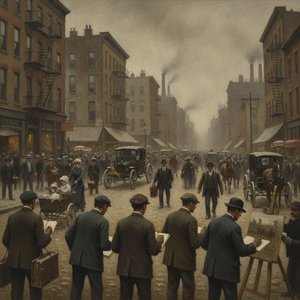
The Ashcan School: Capturing the Raw, Unfiltered Soul of Urban Life through American Realism
Discover the raw beauty of the Ashcan School. Explore how masters like Bellows and Henri captured the gritty, vibrant soul of early 20th-century New York through profound American Realism and evocative urban landscapes.

The Unvarnished Truth: A Cultural Journey Through the Soul of American Realism
Explore the profound beauty of American Realism. From the Ashcan School's urban grit to intimate portraits, discover how artists captured the authentic soul of a nation through unvarnished truth and masterful observation.
Utforsk kunstverk organisert etter temaer, stiler og kjennetegn.

