


 Se i rommet
 Del som digitalt kort
 Del
Del
 Detaljer
 Studentguide

 Last ned
 Liknende objekter
 Røntgen
 Lysbildefremvisning
 Besøksstatistikk
May Day in Central Park


Experience William Glackens’ ‘May Day in Central Park’! A vibrant 1905 oil painting capturing NYC's energy. Ashcan School realism, dynamic brushwork & timeless beauty. Own a piece of art history!
 Les mer
Utforsk realistiske malerier av William James Glackens (1870-1938), en pioner innen Ashcan School. Oppdag levende bilder av tidlig 20.-århundrets New York og Paris, som fanger dagliglivet med imponerende detaljer.
Giclée / Kunsttrykk
Giclée- eller lerretsprint av museumskvalitet med rask produksjon og fleksible valgmuligheter for etterbehandling. ( Bestill håndmalt reproduksjon Gå til digitalt bilde)




P118B Nkr10

P118H Nkr10

P118W Nkr10

P438Z Nkr10

P508JH Nkr12

P508YH Nkr12

P805H Nkr10

P805Z Nkr10

P919BZ Nkr10

P919G Nkr10

P919XJ Nkr10

P959ZH Nkr10

P968JZ Nkr12

W106C Nkr8

W218G Nkr10

W218JH Nkr8

W218Y Nkr10

W307PJ Nkr10

W316G Nkr10

W316PJ Nkr8

W316Y Nkr10

W398PJ Nkr8

W4111J Nkr10

W500HY Nkr15

W500JH Nkr15

W692G Nkr12

W849H Nkr8

W940BG Nkr15

W953PJ Nkr8




Standardformat
tilpasset
CM
INCH
Velg mellom våre forhåndsdefinerte størrelser som bevarer kunstverkets opprinnelige proporsjoner.
Loading sizes...

bredde
høyde
Skriv inn bredden og høyden du trenger, slik at den passer til din ramme eller vegg. Et trykk kan kun beskjæres, aldri gjøres større enn bildet, så et format med en annen form vil miste en del av motivet. Vi sender deg en digital mockup for godkjenning før vi trykker noe som helst. Bildet som vises på denne siden viser ikke den faktiske beskjæringen — det er kun mockuppen som gjør det.
Verdensomspennende levering () på 2 uker i stedet for standard 4/5 uker. (26 October)

Gratis ekspressfrakt over hele verden

Lerretsduk av høykvalitets lin

Full transportforsikring

Garanti for refusjon av toll og importavgifter

Garantert fargeekthet

100 dagers returrett ved fabrikasjonsfeil

100% pengene tilbake-garanti

Mengderabatt
 Glassalternativet er kun tilgjengelig i størrelser under 110 cm

May Day in Central Park
Giclée / Kunsttrykk
Format på reproduksjon
-


Totalpris
Nkr 656
A Vibrant Snapshot of Urban Life: William James Glackens’ “May Day in Central Park”
William James Glackens' "May Day in Central Park," painted in 1905, isn’t merely a depiction of a park scene; it’s a vibrant portal into the heart of early 20th-century New York City. Captured during the height of the Ashcan School movement, this oil on canvas offers a raw and unvarnished glimpse of everyday life – a bustling celebration unfolding amidst the verdant backdrop of Central Park. Glackens, a key figure in this revolutionary artistic circle, eschewed the idealized portrayals favored by academic art, instead choosing to document the gritty realities of urban existence with an honesty that resonated deeply with his contemporaries and continues to captivate viewers today.
The painting immediately draws the eye into a scene brimming with energy. A diverse crowd – men in suits, women in fashionable dresses, children playing – are engaged in various activities: picnicking beneath towering trees, chatting animatedly, and simply enjoying the sunshine. The composition is masterfully balanced, guiding the viewer’s gaze through the lively tableau. Notice the careful placement of details—an apple resting on a blanket, a handbag casually draped over a chair—these small touches ground the scene in a palpable sense of realism, reminding us that this isn't a staged spectacle but an authentic moment captured by Glackens’ discerning eye.
The Ashcan School and its Rejection of Tradition
To fully appreciate “May Day in Central Park,” it’s crucial to understand the context of the Ashcan School. Emerging in the late 19th and early 20th centuries, this movement represented a deliberate break from the established norms of American art. Artists like Glackens, Robert Henri, and John Sloan rejected the polished surfaces and mythological subjects favored by the National Academy of Design, instead focusing on depicting the lives of ordinary people in their urban environments. Glackens’ work embodies this ethos—he doesn't shy away from portraying the less glamorous aspects of city life, capturing its energy, its chaos, and its inherent beauty with a bold and unapologetic style.
His technique reflects this commitment to realism. Glackens employs a distinctive palette dominated by dark hues – deep greens, browns, and blues—contrasted sharply with the vibrant pinks, creams, and whites of the figures. This creates a dynamic visual effect, emphasizing the movement and vitality of the scene. His brushwork is loose and expressive, conveying a sense of immediacy and capturing the fleeting moments of urban life. The impasto technique – applying paint thickly to the canvas – adds textural richness and depth, further enhancing the painting’s visceral impact.
Symbolism and Emotional Resonance
Beyond its realistic depiction of a park gathering, “May Day in Central Park” carries deeper symbolic weight. May Day itself represents renewal, celebration, and the arrival of summer – themes powerfully conveyed through the painting's joyful atmosphere. The figures engaged in various activities—picnicking, playing, conversing—suggest a sense of community and shared experience. The presence of the trees, bathed in dappled sunlight, evokes feelings of tranquility and connection to nature, offering a welcome respite from the hustle and bustle of city life.
Glackens’ masterful use of light and color contributes significantly to the painting's emotional resonance. The warm hues create a sense of warmth and vitality, drawing the viewer into the scene and inviting them to share in the joy of the moment. The composition is carefully balanced, ensuring that all elements contribute to the overall feeling of optimism and celebration. “May Day in Central Park” isn’t just a painting; it's an invitation to step back in time and experience the vibrant spirit of early 20th-century New York City.
Bringing History Home: Reproductions Available
Today, reproductions of "May Day in Central Park" are available through TopImpressionists.com, offering art lovers the opportunity to own a piece of this iconic American masterpiece. These meticulously crafted reproductions capture the essence of Glackens’ original work, allowing you to bring the energy and beauty of Central Park into your home or office. For further insights into William James Glackens and the Ashcan School, we encourage you to explore resources like Wikipedia and WikiArt.
Spørsmål og svar
Hvilken følelse formidler "May Day in Central Park" av William James Glackens?
"May Day in Central Park" av William James Glackens formidler en Tranquil emosjonell tone.
Hvilket motiv og hvilken atmosfære forener "May Day in Central Park" av William James Glackens?
"May Day in Central Park" av William James Glackens kombinerer central park, new york city, urban scene, leisure, social gathering, 1905, american art, impressionism med en Calm atmosfære.
Hvor kan jeg se originalen av "May Day in Central Park" av William James Glackens?
Originalen av "May Day in Central Park" av William James Glackens oppbevares i Fine Arts Museums of San Francisco, San Francisco, USA. En reproduksjon gjør det mulig å stille ut verket i eget hjem.
Relaterte kunstverk


Kunstnerbiografi
A Pioneer of Ashcan Realism
William James Glackens (1870 – 1938) stands as a cornerstone figure in American art, indelibly shaping the landscape of realism during the early twentieth century. Born in Philadelphia on March 13th, 1870, to Elizabeth Finn Glackens and Samuel Glackens—a clerk for the Pennsylvania Railroad—his artistic journey began with an innate fascination for drawing, a passion nurtured by his formative years. This inclination propelled him towards enrollment at the Pennsylvania Academy of Fine Arts, where he honed his skills under the guidance of Thomas Anshutz, a celebrated realist who profoundly influenced Glackens’ stylistic approach.The Ashcan School and Its Vision
Glackens' artistic trajectory coincided with the emergence of the Ashcan School—a movement that fiercely rejected the prevailing aesthetic conventions of its time. Rejecting idealized beauty and grandeur, the Ashcan School championed a gritty portrayal of urban life in New York City, mirroring the realities faced by ordinary people. Alongside Louis Glackens, his brother, Glackens established this influential group, determined to depict the everyday struggles and triumphs of working-class communities with uncompromising honesty. This commitment to realism distinguished him from many of his contemporaries and cemented his place within art history.Glackens’ Artistic Style: Detail and Atmosphere
Glackens' paintings are characterized by their masterful execution—particularly in capturing atmosphere and detail. He favored dark hues, skillfully blending them to create immersive environments that conveyed the palpable energy of city streets. His technique involved meticulous observation and painstaking brushwork, resulting in canvases brimming with texture and nuance. Notably, Glackens’ artistic sensibilities were shaped by the Impressionist painter Pierre Auguste Renoir, whose influence can be discerned in his later works—characterized by a brighter palette and an emphasis on capturing fleeting moments of beauty amidst urban bustle.Illustrative Career and Patronage
Beyond his studio practice, Glackens cultivated a prolific career as an illustrator for newspapers and magazines based in Philadelphia and New York City. This engagement with journalistic illustration honed his visual storytelling abilities and broadened his artistic repertoire. Furthermore, Glackens played a crucial role in bolstering American art heritage by collaborating with Albert C. Barnes—a wealthy philanthropist—to acquire European paintings for the Barnes Foundation in Philadelphia. This ambitious undertaking significantly enriched the foundation’s collection and solidified Glackens' reputation as an advocate for artistic excellence.Notable Works and Legacy
Glackens’ artistic legacy extends beyond his individual creations. His masterpiece, “The Shoppers,” exemplifies his ability to distill complex urban narratives into evocative visual representations—now housed in the New Realism Collection at TopImpressionists.com. Similarly, “View of Haarlem with Bleaching Grounds,” a painting by Jacob Isaakszoon van Ruysdael (ruysdael), showcases Glackens’ dedication to replicating the meticulous detail and craftsmanship of Dutch masters. His enduring influence continues to inspire artists today, securing his place as one of America's foremost realist painters—a testament to his unwavering commitment to portraying the human experience with profound sensitivity and artistic integrity.
William James Glackens
1870 - 1938 , USA
Kort om kunstneren
- Artistic Movement Or Style: Ashcan School
- Artists Or Movements Influenced By This Artist: ['Pierre Auguste Renoir']
- Artists Who Influenced This Artist: ['Thomas Anshutz']
- Date Of Birth: Philadelphia, USA (1870)
- Date Of Death: Westport, CT (1938)
- Full Name: William James Glackens
- Nationality: Amerikaner
- Notable Artworks:
- The Shoppers
- View of Haarlem
- Place Of Birth: Philadelphia
Relaterte artikler
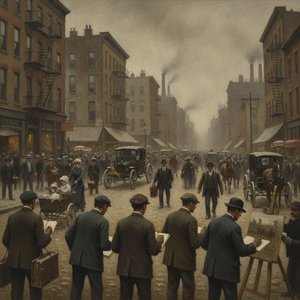
The Ashcan School: Capturing the Raw, Unfiltered Soul of Urban Life through American Realism
Discover the raw beauty of the Ashcan School. Explore how masters like Bellows and Henri captured the gritty, vibrant soul of early 20th-century New York through profound American Realism and evocative urban landscapes.
Utforsk kunstverk organisert etter temaer, stiler og kjennetegn.

