Atelier — Gratis frakt til hele verden — Leveringstid 2–6 uker
      André Derain, 1880 – 1954

      André Derain: The 100 Best-Known Paintings

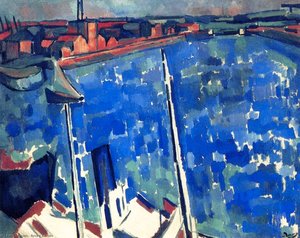
      Of all André Derain's paintings, bathers (1907) is the most famous. Close behind come London Bridge (1906) and Charing Cross from sw (1906). Among the 354 works by André Derain in our catalogue, these 100 are the most celebrated, each shown with its date, its museum and its story.

      Ranked by our popularity score, which combines the searches, visits and orders for each work. Updated October 2026. Each painting on this page can be ordered as an oil reproduction painted by hand on linen canvas, or as a fine art print, made to the size you choose.

      Portrait of André Derain
      André Derain · 1880 – 1954
      Born · died
      1880 – 1954, Chatou
      Movement
      Fauvist expressionism
      Works in our catalogue
      354
      Most famous
      bathers (1907)
      Most works at
      Statens Museum for Kunst

      André Derain's 10 most celebrated paintings

      bathers (1907) by André Derain
      1

      bathers

      1907 · Oil On Canvas

      To stand before André Derain's Bathers is to step directly into the exhilarating heart of the early twentieth century art revolution. This painting, executed in 1907, is not merely a depiction of figures by water; it is a pure explosion of color and emotion rendered through the lens of Fauvism. The very air around the canvas seems charged with the energy of bold pigment. Derain, a key figure alongside Henri…

      London Bridge (1906) by André Derain
      2

      London Bridge

      1906 · Oil On Canvas · MoMA - Museum of Modern Art, New York City

      In the heart of 1906, a revolution was unfolding on canvas, and André Derain was one of its most daring architects. His masterpiece, London Bridge, is far more than a mere architectural study; it is a visceral explosion of emotion captured through the lens of Fauvism. While the London fog is traditionally associated with muted greys and somber tones, Derain defies the atmospheric reality of the Thames to present a…

      Charing Cross from sw (1906) by André Derain
      3

      Charing Cross from sw

      1906 · Oil On Canvas · National Gallery of Art, Washington

      Charing Cross from SW: A Fauvist Symphony of London André Derain’s “Charing Cross from SW” isn't merely a depiction of a London landmark; it’s an explosion of feeling, a vibrant declaration of the Fauvist movement at its peak. Painted in 1906, this artwork captures a bustling scene along the Thames, dominated by the iconic Charing Cross bridge, yet rendered through a lens entirely unique to Derain's revolutionary approach to color…

      Landscape at L'Estaque (1906) by André Derain
      4

      Landscape at L'Estaque

      1906 · Oil On Canvas

      To stand before André Derain’s Landscape at L'Estaque is not merely to observe a scene; it is to be enveloped by a burst of pure, unadulterated chromatic energy. Painted in 1906, this oil on canvas stands as a vibrant manifesto of the Fauvist movement—a style that dared to liberate color from the shackles of mere description. Here, the natural world of L'Estaque is rendered not with photographic accuracy, but with…

      Hyde Park (1906) by André Derain
      5

      Hyde Park

      1906 · Oil On Panel · Musee d'Art Moderne de Troyes, Troyes

      To gaze upon André Derain's Hyde Park is to step directly into the effervescent heart of early 20th-century Parisian life. This painting, executed in 1906, is far more than a mere depiction of an afternoon stroll; it is a vibrant celebration of modern leisure captured through the revolutionary lens of Fauvism. The scene unfolds with an almost palpable energy—a tapestry woven from bold color and dynamic movement. We see figures…

      Cypresses (1907) by André Derain
      7

      Cypresses

      1907 · Oil On Panel

      To stand before André Derain’s "Cypresses" is to step directly into the vibrant heart of early twentieth-century French modernism. This captivating oil-on-panel, dating from 1907, is far more than a mere depiction of a landscape; it is an explosion of color and emotion captured by an artist at the zenith of his revolutionary period. The scene unfolds with a profound sense of natural grandeur: a field dotted with resilient pine…

      Portrait of Madame Paul Guillaume with a large hat (1928) by André Derain
      8

      Portrait of Madame Paul Guillaume with a large hat

      1928 · Oil On Canvas

      To stand before André Derain’s Portrait of Madame Paul Guillaume with a large hat is to step directly into the vibrant, charged atmosphere of an early twentieth-century artist's studio. This painting is far more than a mere likeness; it is a meditation on creativity itself. The subject, seated amidst the beautiful chaos of artistic tools—canvases leaning against unseen supports, palettes bearing the ghosts of color—commands our attention with a serene…

      Drying the Sails (1905) by André Derain
      9

      Drying the Sails

      1905 · Oil On Canvas · Pushkin State Museum, Moskva

      André Derain’s “Drying the Sails,” painted in 1905, isn't merely a depiction of a harbor scene; it’s an explosion of color and emotion—a quintessential embodiment of the Fauvist movement. Born from a confluence of artistic influences and a desire to break free from traditional representation, this painting captures a fleeting moment on the French coast, imbued with a raw energy that continues to resonate with viewers today. Derain, alongside Henri…

      Mountains at Collioure by André Derain
      10

      Mountains at Collioure

      Oil On Canvas

      In the annals of modern art, few moments capture the raw, unbridled energy of a revolution quite like André Derain’s Mountains at Collioure. Painted during the feverish summer of 1905, this masterpiece serves as a vibrant manifesto of the Fauvist movement, a period when color was liberated from the shackles of reality to serve the needs of pure emotion. As one gazes upon this canvas, the eye is immediately swept…

      André Derain paintings ranked 11 to 100

      Harbour of Collioure (1905) by André Derain
      #13

      Harbour of Collioure

      1905 · Staatsgalerie Stuttgart

      In this oil on canvas, André Derain presents Harbour of Collioure, a work from 1905. The painting captures a Mediterranean port, focusing on the specific light and atmosphere…

      Have it painted by hand →
      Black Scarf (1935) by André Derain
      #14

      Black Scarf

      1935

      To stand before André Derain's "Black Scarf" is to step directly into the effervescent, color-drenched heart of early 20th-century Paris. Painted in 1935, this oil on canvas transcends…

      Order this canvas →
      Landscape (Blue) (1906) by André Derain
      #16

      Landscape (Blue)

      1906

      To stand before André Derain’s Landscape (Blue) is to step directly into the exhilarating heart of early twentieth-century modernism. This painting, executed in 1906, is not merely a…

      Have it painted by hand →
      Landscape near Chatou (1904) by André Derain
      #17

      Landscape near Chatou

      1904

      In the annals of early twentieth-century modernism, few moments capture the raw, unbridled energy of artistic revolution quite like André Derain’s Landscape near Chatou. Painted in 1904, this…

      Have it painted by hand →
      Landscape at Collioure (1905) by André Derain
      #18

      Landscape at Collioure

      1905

      To stand before André Derain’s Landscape at Collioure is to witness the moment when the traditional boundaries of nature were dissolved by a sudden, brilliant explosion of light…

      Bring this light home →
      The Dance (1906) by André Derain
      #19

      The Dance

      1906

      In the annals of modern art, few moments capture the raw, unbridled spirit of rebellion quite like the emergence of Fauvism, and few works embody this revolution as…

      Have it painted by hand →
      Still Life med frukt (1940) by André Derain
      #20

      Still Life med frukt

      1940 · Harris Museum - Art Gallery

      André Derain og Still Life med Frukt – En Fauvistisk Reise til Natur og Farge Still Life med Frukt av André Derain er et verk som fascinerer ved…

      Have it painted by hand →
      Cassis by André Derain
      #21

      Cassis

      The artwork titled Cassis, also known as Landscape at Cassis, is an oil on canvas painting. This work was executed by the French artist André Derain in 1907.…

      Bring this light home →
      Music (1904) by André Derain
      #23

      Music

      1904

      The early 20th century was a transformative period for modern art, with the emergence of various movements that challenged traditional techniques and aesthetics. One such movement was Fauvism,…

      Order this canvas →
      Head of a Young Woman (1923) by André Derain
      #25

      Head of a Young Woman

      1923 · Statens Museum for Kunst

      A soulful portrait emerges from a palette of ochre, sienna, and cream. The subject is positioned in a close-up, centered composition that forces an intimate encounter between the…

      Bring this light home →
      Sorrowful Landscape (1946) by André Derain
      #26

      Sorrowful Landscape

      1946

      The Sorrowful Landscape by André Derain is a masterpiece that embodies the essence of Expressionism, a style characterized by its emphasis on conveying intense emotions and inner experiences.…

      Order this canvas →
      Landscape at Cadaques (1913) by André Derain
      #27

      Landscape at Cadaques

      1913

      Landscape at Cadaques is a landscape oil on canvas created by André Derain in 1913. This work belongs to the Cubism and Post-Impressionism movements, reflecting a period of…

      Bring this light home →
      Collioure (1905) by André Derain
      #28

      Collioure

      1905

      The sun hangs heavy over the Mediterranean as we find ourselves in 1905, witnessing the lively scene of Collioure. This oil on canvas by André Derain captures a…

      Bring this light home →
      Martigues (1908) by André Derain
      #30

      Martigues

      1908

      The painting Martigues by André Derain is a quintessential example of the Fauvist art movement. Created in 1908, this oil on canvas work embodies the essence of Fauvism,…

      Bring this light home →
      Harlequin (1923) by André Derain
      #31

      Harlequin

      1923 · Statens Museum for Kunst

      This 1923 oil painting on canvas presents a solitary figure dressed as a Harlequin, captured in a moment of quiet introspection. The subject is seated and holds a…

      Have it painted by hand →
      Boy's Head (1914) by André Derain
      #33

      Boy's Head

      1914 · Statens Museum for Kunst

      In Boy's Head by André Derain, the composition centers on a close-up study of a single human figure. The subject's face is positioned slightly turned to the left,…

      Bring this light home →
      The beautiful model (1923) by André Derain
      #37

      The beautiful model

      1923

      The painting The Beautiful Model by André Derain is a stunning example of Fauvism, a style characterized by vivid colors and emotive brushstrokes. Created in 1923, this oil…

      Order this canvas →
      Fishing Boats, Colioure (1905) by André Derain
      #38

      Fishing Boats, Colioure

      1905 · Metropolitan Museum of Art

      Introduction to the Painting Fishing Boats, Colioure, painted in 1905 by André Derain, is a quintessential example of the Fauvist art movement. This vibrant oil on canvas painting…

      Order this canvas →
      Boats at Colliure by André Derain
      #41

      Boats at Colliure

      André Derain, a French artist and co-founder of the Fauvist movement, created a captivating piece titled Boats at Colliure. This painting is a quintessential representation of the Fauvist…

      Bring this light home →
      The Lighthouse at Collioure (1905) by André Derain
      #42

      The Lighthouse at Collioure

      1905 · Musée d’Art Moderne de la Ville de Paris

      André Derain’s “The Lighthouse at Collioure,” painted in 1905, isn't merely a depiction of a coastal scene; it’s an immersive experience—a vibrant explosion of color and movement that…

      Bring this light home →
      Nude with Folded Arms (1924) by André Derain
      #43

      Nude with Folded Arms

      1924 · Statens Museum for Kunst

      The oil on canvas work titled Nude with Folded Arms was executed by the artist André Derain. This specific painting dates to 1924. It is currently held within…

      Have it painted by hand →
      Golden age (1940) by André Derain
      #44

      Golden age

      1940

      In the sweeping expanse of André Derain’s "Golden Age," viewers are transported into a primordial realm where the boundaries between humanity and nature dissolve into a dramatic, cinematic…

      Bring this light home →
      Fishing Boats, Collioure (1905) by André Derain
      #56

      Fishing Boats, Collioure

      1905 · MoMA - Museum of Modern Art

      Introduction to the Painting Fishing Boats, Collioure, painted in 1905 by André Derain, is a quintessential example of Fauvism, an art movement characterized by bold and vivid colors.…

      Have it painted by hand →
      Landscape (1907) by André Derain
      #57

      Landscape

      1907

      In this mesmerizing 1907 masterpiece, titled Landscape, André Derain invites the viewer into a world where reality is reimagined through the fractured lens of early modernism. The canvas…

      Have it painted by hand →
      Still Life with Pipe (1911) by André Derain
      #58

      Still Life with Pipe

      1911 · Statens Museum for Kunst

      In the 1911 work Still Life with Pipe by André Derain, the composition is centered on a wooden table or ledge. The arrangement consists of a tall reddish-brown…

      Bring this light home →
      Pinewood near Sausset-les-Pins (1913) by André Derain
      #59

      Pinewood near Sausset-les-Pins

      1913 · Statens Museum for Kunst

      The landscape unfolds through a series of leaning, organic forms that define a grove of pine trees. Thick, sweeping brushstrokes trace the bark of the trunks, creating a…

      Order this canvas →
      Le Phare de Collioure by André Derain
      #60

      Le Phare de Collioure

      In the annals of modern art history, few movements captured the raw, unbridled energy of light and emotion quite like Fauvism. At the heart of this revolution stands…

      Order this canvas →
      The Last Supper (1911) by André Derain
      #61

      The Last Supper

      1911 · Art Institute of Chicago

      A Moment of Sacred Tension The air in the room feels heavy, thick with the weight of a final meal. In this 1911 oil on canvas, the scene…

      Order this canvas →
      The road (1932) by André Derain
      #65

      The road

      1932

      To gaze upon André Derain’s The Road is to step into a moment suspended in the golden haze of memory. This oil on canvas, dating from 1932, captures…

      Bring this light home →
      Bacchus dance (1906) by André Derain
      #66

      Bacchus dance

      1906

      Bacchus Dance: A Fauvist Celebration of Movement The early 20th century witnessed a seismic shift in art, marked by movements that boldly challenged established norms. Among these was…

      Have it painted by hand →
      L'Estaque (1906) by André Derain
      #72

      L'Estaque

      1906

      The painting L'Estaque by André Derain is a quintessential example of Fauvism, a style characterized by the use of bold, vibrant colors and energetic brushstrokes. Created in 1906,…

      Bring this light home →
      Boats at Collioure (1905) by André Derain
      #73

      Boats at Collioure

      1905

      Gazing upon André Derain's "Boats at Collioure," one is immediately transported to the sun-drenched shores of the French Riviera. This painting captures more than just a seascape; it…

      Order this canvas →
      Harlequin og Pierrot (1924) by André Derain
      #75

      Harlequin og Pierrot

      1924 · Musée de l'Orangerie

      Harlequin og Pierrot – André Derain André Derain var ikke først og fremmest en kunstner født til stor kunsthistorie eller kritisk analyse, men han begynte sin kunstneriske vei…

      Bring this light home →
      Portrait of Alice Derain (1921) by André Derain
      #78

      Portrait of Alice Derain

      1921

      To gaze upon André Derain’s Portrait of Alice Derain is to step through a painted portal into a moment suspended in time—a quiet afternoon imbued with the warmth…

      Order this canvas →

      André Derain's canvases, period by period

      What André Derain painted most

      The four subjects that return most often on these canvases, each with its best-loved example.

      Where André Derain's canvases hang

      The 8 museums that hold the most of the paintings on this page.

      Museum City Works by André Derain Paintings from this list
      Statens Museum for Kunst, KøbenhavnStatens Museum for Kunst København 17 Head of a Young Woman, Harlequin, Sitting Female Model, Semi-Nude
      Metropolitan Museum of Art, New YorkMetropolitan Museum of Art New York 4 Houses of Parliament at Night, London, Fishing Boats, Colioure, Lucien Gilbert
      Musée d’Art Moderne de la Ville de Paris, ParisMusée d’Art Moderne de la Ville de Paris Paris 7 The Lighthouse at Collioure, The Gypsy
      MoMA - Museum of Modern Art, New York CityMoMA - Museum of Modern Art New York City 4 London Bridge, Fishing Boats, Collioure
      Art Institute of Chicago, ChicagoArt Institute of Chicago Chicago 3 The Last Supper, Cagnes
      National Gallery of Art, WashingtonNational Gallery of Art Washington 2 Charing Cross from sw
      Musee d'Art Moderne de Troyes, TroyesMusee d'Art Moderne de Troyes Troyes 2 Hyde Park
      Pushkin State Museum, MoskvaPushkin State Museum Moskva 2 Drying the Sails

      Decade by decade: André Derain's most celebrated canvas

      1. 1890s
      2. 1900s
        bathers (1907) by André Derain
        Canvas 1 of 100

        bathers

        Age 20 – 29

        To stand before André Derain's Bathers is to step directly into the exhilarating heart of the early twentieth century art revolution. This painting, executed in 1907, is not…

      3. 1910s
        Landscape at Cadaques (1913) by André Derain
        Ranked 27 of 100

        Landscape at Cadaques

        Age 30 – 39

        Landscape at Cadaques is a landscape oil on canvas created by André Derain in 1913. This work belongs to the Cubism and Post-Impressionism movements, reflecting a period of…

      4. 1920s
        Portrait of Madame Paul Guillaume with a large hat (1928) by André Derain
        Ranked 8 of 100

        Portrait of Madame Paul Guillaume with a large hat

        Age 40 – 49

        To stand before André Derain’s Portrait of Madame Paul Guillaume with a large hat is to step directly into the vibrant, charged atmosphere of an early twentieth-century artist's…

      5. 1930s
        Black Scarf (1935) by André Derain
        14 of 100

        Black Scarf

        Age 50 – 59

        To stand before André Derain's "Black Scarf" is to step directly into the effervescent, color-drenched heart of early 20th-century Paris. Painted in 1935, this oil on canvas transcends…

      6. 1940s
        Still Life med frukt (1940) by André Derain
        Canvas 20 of 100

        Still Life med frukt

        Age 60 – 69 · Harris Museum - Art Gallery

        André Derain og Still Life med Frukt – En Fauvistisk Reise til Natur og Farge Still Life med Frukt av André Derain er et verk som fascinerer ved…

      Your questions on André Derain's paintings, answered

      Which is the most celebrated painting by André Derain?Read the answer

      bathers (1907), followed by London Bridge (1906) and Charing Cross from sw (1906).

      How old was André Derain at the time of bathers?Read the answer

      André Derain, born in 1880, was 27 years old: bathers dates from 1907.

      Which ten paintings is André Derain most famous for?Read the answer

      bathers, London Bridge, Charing Cross from sw, Landscape at L'Estaque, Hyde Park, The Turning Road, L'Estaque - (129.5x195), Cypresses, Portrait of Madame Paul Guillaume with a large hat, Drying the Sails and Mountains at Collioure. Each canvas in the ranking above comes with its year and its museum.

      How many paintings by André Derain are known?Read the answer

      354 works by André Derain are in our catalogue, dated 1899 to 1946.

      Which museums hold André Derain's best-known canvases?Read the answer

      Mostly in Statens Museum for Kunst (København), Metropolitan Museum of Art (New York) and Musée d’Art Moderne de la Ville de Paris (Paris); the list above names each museum and its canvases.

      In which years did André Derain paint the most celebrated canvases?Read the answer

      In 1900s, which gave 45 of the 100 works on this page, bathers among them.

      What are the first and the last of André Derain's famous canvases?Read the answer

      The earliest canvas here is Funeral (1899); the latest is Sorrowful Landscape (1946).

      Which subjects return most often in André Derain's paintings?Read the answer

      Landscape (18), Trees (12) and Boats (10), across the 100 works on this page.

      What did André Derain usually paint with?Read the answer

      Oil On Canvas, used in 49 of the 100 works on this page.

      To which art movement does André Derain belong?Read the answer

      Fauvist expressionism, as the canvases on this page show.

      What can I see by André Derain at the Statens Museum for Kunst?Read the answer

      The Statens Museum for Kunst, København holds 10 of the works on this page, among them Head of a Young Woman, Harlequin and Sitting Female Model, Semi-Nude.

      Can I order a hand-painted copy of a painting by André Derain?Read the answer

      Yes. Every painting on this page can be ordered from its own page as an oil reproduction painted by hand, or as a fine art print, in the size you choose.

      André Derain: the painter's story

      Tidlig liv, familie og utdanning

      I året 1880 trådte André Derain inn i verden i Chatou, en landsby som ligger trygt plassert i Yvelines-regionen i Frankrike. Hans tidlige år ble formet av de stille landskapene i Île-de-France, hvor en naturlig nysgjerrighet for omgivelsene begynte å slå rot. Allerede innen 1895 hadde han begynt å studere på egen hånd, i et forsøk på å forstå den visuelle verden gjennom egne øyne snarere enn gjennom formell undervisning. Denne perioden med selvstendig utforskning gjorde det mulig for ham å utvikle en personlig måte å se på, før akademiets strenge rammer kunne påtvinge ham sin vilje.

      Veien mot å bli maler var ikke hans eneste tanke. I 1898 søkte han en mer strukturert utdanning og studerte kortvarig for å bli ingeniør ved Académie Camillo. Det var innenfor disse akademiske hallene at livet hans tok en avgjørende vending; han deltok i maleklasser under Eugène Carrière og møtte der Henri Matisse. Dette møtet skulle endre livsløpet hans, og trekke ham bort fra ingeniørfagets presisjon og mot lerretets ekspressive muligheter. Ambisjonene hans var sterke, men fremgangen ble avbrutt av borgerens plikter. Fra september 1901 til 1904 fullførte han sin militærtjeneste i Commercy, en periode med adskillelse som satte hans blomstrende kunstneriske utvikling på pause.

      Den fauvistiske revolusjonen og Collioure

      Sommeren 1905 brakte en plutselig og lysende endring i livene til André Derain og Henri Matisse. De reiste sammen til fiskerlandsbyen Collioure, et sted hvor lyset virket å kreve en helt ny måte å se på. I dette kystlandskapet begynte kunstneren å bevege seg bort fra representasjonens tradisjonelle regler. Hans arbeider fra 1905 til 1906 ble definert av en voldsom fargebruk som sjokkerte dem som var vant til mer subtile toner. Han benyttet forenklede linjer og en overdreven bruk av farger for å fange landskapets essens, og foretrakk intense, ublandede nyanser fremfor verdens naturlige fargespill.

      Denne radikale tilnærmingen til maleriet utløste sterke reaksjoner fra både publikum og presse. Kunstnerne ble møtt med en slik forundring at de fikk kallenavnet Les Fauves, eller de ville dyrene. Selv om navnet var ment som en hån mot deres påståtte mangel på disiplin, ble det omfavnet av gruppen. André Derains lerreter i disse årene søkte ikke å gjenskape omgivelsene slik et fotografi ville gjort, men brukte i stedet fargen som et direkte uttrykk for følelser. Penselstrøkene var dristige og palettene rystende, noe som markerte et brudd med alt som hadde kommet før dem.

      London-maleriene og oppdragene

      I mars 1906 så kunsthandleren Ambroise Vollard en ny retning for kunstneren og sendte ham til London. Dette var ingen enkel ekskursjon, men et bevisst oppdrag for å fange essensen av en by som lenge hadde vært et motiv for mange malere. André Derain ankom den engelske hovedstaden og begynte å betrakte det urbane landskapet gjennom et prisme av intense farger, i en tydelig bevegelse bort fra det stille franske landskapet. Han søkte å oversette storbyens energi til noe som kunne føles, snarere enn bare observeres.

      Gjennom denne perioden skapte kunstneren en serie på tretti malerier, hvor han rettet blikket mot Themsen og byens massive arkitektur. Han forsøkte ikke å gjenskape de grå tåkene som ofte forbindes med elven; i stedet benyttet han dristige fargetoner for å skildre vannets bevegelser og broenes silhuetter. Hans visjon av byen representerte et radikalt brudd med de atmosfæriske studiene til de som hadde gått foran ham. Han fokuserte på den strukturelle tyngden i landemerkene og det skiftende lyset i det urbane miljøet.

      Disse verkene forble blant hans mest populære skapelser, da de tilbød et friskt perspektiv på et velkjent motiv. Ved å rette søkelyset mot Themsen og Tower Bridge, fanget han en følelse av modernitet og rastløs bevegelse. Den tykke påføringen av maling og den ukonvensjonelle paletten gjorde det mulig for ham å fremstille byen som en levende, pustende enhet av lys og skygge.

      Utviklingen mot klassisisme og gotisk stil

      Etter hvert som årene gikk, begynte de ville impulsene fra ungdomstiden å legge seg. Rundt 1907 inntraff en endring i både hånd og øye, og arbeidet hans ble mer stramt og nøkternt. De utemmede fargene som en gang hadde definert lerretene hans, vek plass for en mer disiplinert tilnærming. Dette skiftet var ikke et brått brudd, men snarere en gradvis bevegelse mot struktur og form. Han søkte en annen form for sannhet, en som fantes i komposisjonens stille styrke fremfor i fargenes sjokkeffekt.

      I årene mellom 1911 og 1914 trådte han inn i en fase som mange har omtalt som hans gotiske periode. I denne tiden ble interessen for de gamle mestrene og klassiske former stadig mer fremtredende. Han beveget seg bort fra de intense, ublandede pigmentene fra hans tidligere år, og søkte i stedet en mer kontrollert og intellektuelt streng måte å se verden på. Dette var en søkende tid, hvor han vendte blikket bakover mot kunstens fundament for å finne en ny vei fremover.

      Den store krigen endret landskapet i både hans liv og hans kunst på ny. I etterkant av konflikten fremstod han som en leder for bevegelsen kjent som "Returen til orden". Denne nye klassisismen søkte stabilitet og klarhet i en epoke preget av dype omveltninger. Han ble en sentral skikkelse i denne gjenoppblomstringen, og bidro til å styre kunstens retning mot en mer strukturert og tradisjonell estetikk. Hans verker reflekterte dette ønsket om orden, og omfavnet en følelse av varighet som hadde vært fraværende i hans mer eksperimentelle år.

      De senere år og hans bortgang

      Etter hvert som årene gikk, utvidet kunstnerens interesser seg langt utover lerretets grenser og inn i teaterets magiske verden. I 1919 rettet han sitt kreative blikk mot scenen, hvor han utformet scenografien til balletten La Boutique Fantasque for de berømte Ballets Russes. Dette dypdykket i scenografi og kostymedesign avdekket en sans for rytme og spektakulær visuell kraft som utfylte hans stadig mer modne estetikk. Hans evne til å fange og holde på oppmerksomheten gjennom form og farge fortsatte å bli anerkjent av hans samtidige, noe som kulminerte i at han ble tildelt den prestisjetunge Carnegie-prisen i 1928.

      De siste tiårene av hans liv var preget av en vedvarende søken etter en ny klassisisme, et bevisst brudd med ungdomstidens mer viltre og utemmede impulser. Han forble en aktiv og betydningsfull skikkelse i kunstverdenen, selv mens det politiske landskapet i Europa endret seg drastisk rundt ham. André Derain gikk til slutt bort den 8. september 1954, og etterlot seg et livsverk som hadde vandret gjennom mange ulike og revolusjonerende uttrykksformer.

      Arv og innflytelse

      Ringvirkningene fra fauvist-bevegelsen, som André Derain var med på å etablere sammen med Henri Matisse, strakte seg langt utover det umiddelbare sjokket som deres fargevalg vakte. Ved å bryte de tradisjonelle båndene for hvordan farge forholder seg til den fysiske verden, bidro han til å rydde vei for kubismens strukturelle innovasjoner og den emosjonelle intensiteten man finner i moderne ekspresjonisme. Hans rastløse søken etter et nytt visuelt språk betydde at lærdommen fra de solfylte landskapene i Collioure til slutt vandret nordover og påvirket utviklingen av tysk ekspresjonisme. Han malte ikke bare; han bidro til å redefinere selve formålet med penselstrøket.

      Hans innflytelse forble en konstant tilstedeværelse for påfølgende generasjoner av kunstnere som søkte å balansere den rå energien fra hans tidlige år med den strukturerte disiplinen i hans senere virke. Selv mens hans egen stil beveget seg mot en mer nøktern og klassisk tilnærming, fortsatte den radikale ånden fra ungdomstiden å resonnere. Han beviste at en kunstner kunne bevege seg mellom ungdommens ville, ublandede fargetoner og en mer kontrollert, intellektuell strenghet uten å miste sin kreative sannhet. Denne tilpasningsdyktigheten sikret at hans tilstedeværelse i den moderne kunsthistorien forble ubestridelig, selv etter at bevegelsene han var med på å føde, utviklet seg til helt nye former.

      • Charing Cross Bridge, London
      • Harlequin and Pierrot
      • The Last Supper of Jesus

      All 354 works by André Derain →