


 Podgląd w skali 1:1
 Wyślij jako kartkę
 Udostępnij
 Szczegóły dzieła
 Przewodnik

 Pobierz obraz
 Podobne obiekty
 RTG
RTG Pokaz slajdów
 Statystyki
Sister Emily Sleeping
 Oil On Canvas
- WallArt
- Contemporary Realism
 1848
1848- 19th Century
 47.0 x 60.0 cm
 Hamburger Kunsthalle
Adolph von Menzel’s "Sister Emily Sleeping" captures a poignant moment of quiet contemplation in 1848 Realism. This intimate portrait showcases meticulous detail and subdued tones, offering a glimpse into Victorian life – discover this stunning hand-painted reproduction.
 Rozwiń treść
Adolph von Menzel (1815-1905) – wybitny malarz realizmu niemieckiego, znany z precyzyjnych obrazów życia codziennego i scen industrialnych. Odkryj jego arcydzieła i wpływ na artystów, takich jak Degas.
Giclée / Wydruk artystyczny
Wydruki giclée lub płótna o jakości muzealnej, szybka realizacja i szeroki wybór opcji wykończenia. ( Zamów ręcznie malowaną reprodukcję Przejdź do wersji cyfrowej)




P118B zł10

P118H zł10

P118W zł10

P438Z zł10

P508JH zł12

P508YH zł12

P805H zł10

P805Z zł10

P919BZ zł10

P919G zł10

P919XJ zł10

P959ZH zł10

P968JZ zł12

W106C zł8

W218G zł10

W218JH zł8

W218Y zł10

W307PJ zł10

W316G zł10

W316PJ zł8

W316Y zł10

W398PJ zł8

W4111J zł10

W500HY zł15

W500JH zł15

W692G zł12

W849H zł8

W940BG zł15

W953PJ zł8




Standardowy format
personalizowane
CM
INCH
Wybierz spośród naszych standardowych rozmiarów, które zachowują oryginalne proporcje dzieła sztuki.
Loading sizes...

szerokość
wysokość
Wpisz wymaganą szerokość i wysokość, aby dopasować grafikę do ramy lub ściany. Wydruk można jedynie przyciąć, nigdy nie powiększając go poza oryginalny obraz, dlatego format o innych proporcjach spowoduje utratę części kompozycji. Przed rozpoczęciem druku prześlemy Ci cyfrowy podgląd do zatwierdzenia. Obraz wyświetlany na tej stronie nie pokazuje rzeczywistego przycięcia — jedynie podgląd oddaje ten efekt.
Dostawa na cały świat () w ciągu 2 tygodni zamiast standardowych 4/5 tygodni. (28 Październik)

Bezpłatna ekspresowa wysyłka na cały świat

Wysokiej jakości płótno lniane

Pełne ubezpieczenie przesyłki

Gwarancja zwrotu należności celnych i podatków importowych

Gwarancja wiernego odwzorowania kolorów

100-dniowa polityka zwrotów (tylko w przypadku wad)

Gwarancja 100% zwrotu pieniędzy

Zniżka przy zakupie wielu sztuk
 Opcja ze szkłem jest dostępna wyłącznie w rozmiarach poniżej 110 cm

Sister Emily Sleeping
Giclée / Wydruk artystyczny
Wymiary reprodukcji
-


Cena całkowita
zł 265
A Sanctuary of Stillness: The Intimacy of Menzel’s Vision
In the quietude of a dimly lit room, Adolph von Menzel captures a moment that feels as though time itself has paused to catch its breath. Sister Emily Sleeping is not merely a portrait; it is an invitation into a private, domestic sanctuary. The scene unfolds with a profound sense of vulnerability and tenderness, depicting two women sharing a space of deep connection. One figure rests in the gentle embrace of sleep, her form draped in soft blues, while her companion sits beside her, a silent guardian of this peaceful repose. There is an undeniable weight to the silence within the frame, a heavy, comforting stillness that speaks to the enduring strength of familial or platonic bonds. For the discerning collector, this piece offers more than just visual beauty; it provides an emotional anchor, a window into a mid-19th-century world where intimacy was found in the smallest, most unadorned gestures.
The technical mastery on display in this work reflects Menzel’s roots in the meticulous world of lithography. His approach to Realism is characterized by an unflinching devotion to detail and a sophisticated command of texture. As your eyes wander across the canvas, you can almost feel the weight of the heavy fabrics and the cool smoothness of the room's surfaces. Menzel employs a muted, somber palette—dominated by earthy browns, deep greys, and melancholic blues—to sculpt the light and shadow within the composition. This use of chiaroscuro does not merely illuminate the subjects; it creates an atmosphere of psychological depth, pulling the viewer into the shadows alongside the figures. The subtle nuances in facial expressions and the careful rendering of the room's elements, from the soft couch to the steady presence of a nearby clock, ground the ethereal moment in a tangible, breathing reality.
Historical Resonance and the Beauty of the Everyday
To understand the impact of this painting, one must look to the era of its creation. Painted in 1848, a year of significant social upheaval across Europe, Menzel’s work stands as a quiet rebellion against the grand, often idealized narratives of his time. While many of his contemporaries sought to depict heroic legends or romanticized landscapes, Menzel turned his gaze inward, toward the unvarnished truth of human experience. He eschewed the sentimental embellishments prevalent in Romanticism, choosing instead to find the extraordinary within the ordinary. This dedication to portraying life with honesty and precision helped define German Realism, making him a titan of his era.
For those looking to integrate such a masterpiece into a contemporary interior, Sister Emily Sleeping offers a unique versatility. Its subdued tones and contemplative mood make it an exquisite centerpiece for a study, a library, or a serene bedroom setting. It does not demand attention through loud colors or jarring compositions; rather, it commands respect through its quiet dignity and the way it harmonizes with sophisticated, understated decor. A high-quality reproduction of this work allows the soul of Menzel’s realism to breathe within a modern home, providing a sense of historical continuity and a perennial source of calm inspiration.
Pytania i odpowiedzi
W jaki sposób Contemporary Realism dzieła „Sister Emily Sleeping” nawiązuje do kraju pochodzenia artysty?
Dzieło z nurtu Contemporary Realism, zatytułowane "Sister Emily Sleeping", zostało stworzone przez artystę urodzonego w Polska.
Jaka jest technika i wymiary oryginału „Sister Emily Sleeping” – Adolph Menzel?
"Sister Emily Sleeping" powstało przy użyciu Oil On Canvas i w swojej oryginalnej formie ma wymiary 47 x 60 cm.
Do czego sugerowane jest wykorzystanie „Sister Emily Sleeping” – Adolph Menzel?
Sugerowanym zastosowaniem dla „Sister Emily Sleeping” – Adolph Menzel jest Accent, choć może on służyć również do innych celów.
Biografia artysty
A Life Etched in Realism: The World of Adolph von Menzel
Adolph Friedrich Erdmann von Menzel, a name synonymous with German Realism, was more than just a painter; he was a visual chronicler of 19th-century life. Born on December 8, 1815, in Breslau (now Wrocław, Poland), his journey began not amidst the hallowed halls of artistic academies, but within the practical world of his father’s lithographic workshop. This early immersion in reproduction and detail would profoundly shape his aesthetic sensibilities. Though initially intended for a professorial path by his father, young Adolph's passion for art proved undeniable, leading to brief studies at the Berlin Academy of Art in 1833 before embracing a largely self-taught approach. He quickly distinguished himself through meticulous draftsmanship and an uncanny ability to capture the essence of everyday scenes, initially through lithography, but soon expanding into painting and etching—media he would master with unparalleled skill. Menzel’s life was one dedicated to observation, to translating the world around him onto canvas and paper with a precision that bordered on photographic realism, yet always imbued with a subtle emotional depth.Early Years and Artistic Beginnings
Menzel's early years were marked by a unique blend of practicality and artistic inclination. His father, a skilled lithographer, established a successful workshop in Breslau, providing Adolph with invaluable experience in the techniques of reproduction and printmaking. This hands-on training instilled in him a deep appreciation for detail and precision—qualities that would become hallmarks of his later work. Despite his father’s initial aspirations for him to pursue a career in academia, young Adolph's passion for art quickly overshadowed all other considerations. He enrolled briefly at the Berlin Academy of Art in 1833, but found the formal training restrictive and ultimately opted for a largely self-taught path. This decision allowed him to develop his own unique style, characterized by its meticulous draftsmanship and unflinching realism. His early works primarily focused on lithography, producing stunningly detailed reproductions of historical events and contemporary scenes. These prints demonstrated an exceptional command of technique and a keen eye for observation—qualities that would serve as the foundation for his later paintings.Historical Grandeur and Patriotic Imagery
Menzel’s career gained significant momentum through his illustrations for historical works, particularly those depicting the reign of Frederick the Great. Commissioned to create large-scale compositions for historical narratives, he meticulously researched each scene, striving for an unparalleled level of accuracy and detail. These paintings resonated deeply with a burgeoning national pride in Prussia during a period of significant political and social change. The dramatic lighting, dynamic composition, and carefully rendered costumes conveyed a sense of grandeur and power—elements that appealed to the public’s desire for patriotic imagery. Works like *The Battle of Jena-Auerstedt* exemplify this early success, capturing the intensity and chaos of battle with remarkable realism. However, Menzel's artistic vision extended beyond mere historical recreation; he sought to imbue his paintings with a sense of drama and emotion, creating works that were both visually stunning and intellectually stimulating.Shifting Focus: Genre Scenes and Modern Life
As the 19th century progressed, Menzel’s artistic focus began to shift away from grand historical narratives towards more intimate and contemporary subjects. He increasingly turned his attention to genre scenes—depictions of everyday life in Berlin—and studies of modern industrial labor. This transition marked a significant departure from the conventions of academic painting and signaled Menzel's commitment to capturing the realities of the modern world. His masterpiece, *The Iron Rolling Mill*, completed between 1872 and 1875, stands as a testament to this shift in focus. The monumental canvas depicts the grueling labor of ironworkers, capturing their physical strength, exhaustion, and camaraderie with unflinching honesty. This work was not romanticized; it was raw, visceral, and profoundly modern in its approach—a stark contrast to the idealized depictions of industry prevalent at the time. Alongside *The Iron Rolling Mill*, Menzel produced a wealth of other genre paintings that offered insightful glimpses into the lives of ordinary Berliners.Influences and Artistic Style
Menzel’s artistic style was shaped by a complex interplay of influences. While largely self-taught, he deeply admired the Dutch Masters—artists like Rembrandt and Vermeer—for their mastery of light and shadow, their ability to capture the essence of human emotion, and their commitment to realism. He also drew inspiration from the works of other German artists, including Caspar David Friedrich, though Menzel’s approach differed in its emphasis on observation and detail. His meticulous draftsmanship is evident in every work, characterized by a remarkable level of precision and attention to detail. Furthermore, his skill with etching—a medium he mastered throughout his career—allowed him to create incredibly detailed drawings that served as studies for his paintings. Menzel’s artistic development was not linear; he continually experimented with technique and subject matter, adapting his style to suit the demands of each project.Legacy and Historical Significance
Adolph von Menzel's impact on German art is undeniable. He bridged the gap between traditional historical painting and modern realism, paving the way for future generations of artists to explore new subjects and techniques. His posthumous reputation rests not only on his paintings but also on his extensive graphic work—drawings and etchings that reveal a remarkable sensitivity and observational skill. He was knighted by Kaiser Wilhelm II in 1898, becoming Adolph von Menzel, a recognition of his immense contribution to the cultural landscape of Germany. His works are now celebrated in museums across the country, including the Museum Georg Schäfer and the Städtische Galerie im Lenbachhaus. Menzel’s art serves as a powerful reminder of the beauty and complexity inherent in everyday life, and his dedication to capturing reality with honesty and precision ensures his enduring place as one of the most important German artists of the 19th century. His legacy continues to inspire artists and viewers alike, offering insights into a pivotal period of social and industrial transformation.
Adolph Menzel
1815 - 1905 , Polska
Krótka nota
- Artistic Movement Or Style: Realizm
- Artists Or Movements Influenced By This Artist: ['Edgar Degas']
- Artists Who Influenced This Artist: ['Holenderscy mistrzowie']
- Date Of Birth: 8 grudnia 1815
- Date Of Death: 9 lutego 1905
- Full Name: Adolph Friedrich Erdmann von Menzel
- Nationality: Niemiec
- Notable Artworks:
- Kowalnia żelaza
- Rynek w Weronie
- Portret
- Place Of Birth: Wrocław, Polska
Powiązane artykuły

Adolph von Menzel: Realism, Prussian Society & the Painterly Chronicle of a Changing Era
Explore the life & work of Adolph von Menzel, a leading German Realist painter. Discover his detailed depictions of Prussian society, innovative techniques, and lasting influence on art history. Hand-painted reproductions available at TopImpressionists.

Top 10 Sławnych Obrazów w Odcieniach Szaroniebieskiego – Inspiracje dla Wnętrz | TopImpressionists.com
Odkryj 10 najsłynniejszych obrazów w odcieniach szaroniebieskiego! Poznaj historie Claude Moneta, Degasa i Van Gogha. Inspiracje wnętrzarskie i reprodukcje najwyższej jakości na TopImpressionists.com – sztuka dla Twojego domu.

Romantic Realism's Finest: 10 Masterpieces for Your Home | TopImpressionists
Explore 10 defining masterpieces of Romantic Realism! Discover Courbet, Millet & Daumier's powerful paintings—capturing emotion and social realities. Find museum-quality reproductions for your home at TopImpressionists.com.
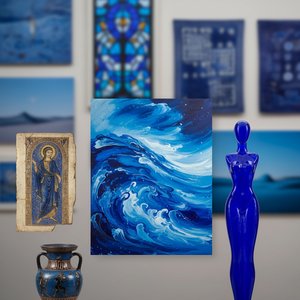
Błękit w Sztuce: Symbolika, Historia i Psychologiczne Oddziaływanie Koloru
Odkryj fascynującą historię błękitu w sztuce! Poznaj symbolikę, psychologię i wpływ tego koloru na arcydzieła renesansu i współczesne trendy. Ekspercka analiza dla miłośników sztuki.

Odbitki Giclée: Jakość Archiwalna i Estetyczne Niuanse dla Wymagającego Kolekcjonera
Poznaj sekrety druku giclée – technologii zapewniającej najwyższą jakość reprodukcji sztuki i trwałość archiwalaną. Poradnik dla wymagających kolekcjonerów o wyborze papieru, tuszy i profilach kolorystycznych.
Odkryj dzieła sztuki uporządkowane według tematów, stylów i cech charakterystycznych.


