


 Podgląd w skali 1:1
 Wyślij jako kartkę
 Udostępnij
 Szczegóły dzieła
 Przewodnik

 Pobierz obraz
 Podobne obiekty
 RTG
RTG Pokaz slajdów
 Statystyki
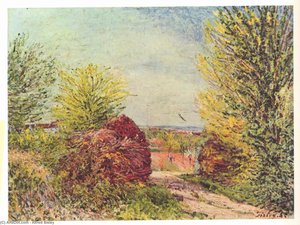
Boulevard Heloise, Argenteuil
 Oil On Canvas
- WallArt
- Impressionism
 1872
1872- 19th Century
 39.0 x 61.0 cm
Experience Alfred Sisley’s Impressionist masterpiece, Boulevard Heloise, Argenteuil, capturing a vibrant street scene in 1872 France with its detailed figures and bustling activity – perfect for art lovers to own.
 Rozwiń treść
Alfred Sisley – francuski impresjonista, mistrz spokojnych krajobrazów i rzek. Uchwycił ulotne światło Francji z delikatną precyzją. Odkryj jego piękno!
Otrzymaj plik gotowy do druku, którego jakość znacznie przewyższa podgląd internetowy. Każdy sprzedawany przez nas obraz cyfrowy pochodzi z wysokorozdzielczego pliku wzorcowego w naszej bazie — zazwyczaj o szerokości od 5 000 do 15 000 pikseli — dzięki czemu możesz drukować w dużym formacie, mocno kadrować lub z pełnym przekonaniem odwzorowywać najdrobniejsze detale.
Żaden plik nie opuszcza naszego studia bez odpowiedniej obróbki. Ekspert ds. cyfrowych sprawdza kolory pod kątem zgodności z oryginałem i w razie potrzeby je koryguje, a następnie za pomocą profesjonalnych narzędzi do retuszu poprawia ostrość i szczegółowość — zawsze zachowując wierność pociągnięciom pędzla i stylowi artysty. Rezultatem jest obraz, który wygląda jak prawdziwy obraz, a nie jak przefiltrowany skan.
Zatwierdzasz przed finalizacją: nasz ekspert prześle obraz drogą mailową w ciągu 72 godzin do Twojego wglądu. Nie jesteś zadowolony? Poproś o poprawki lub korektę, bądź o zwrot kosztów, jeśli jakość nie spełnia oczekiwań.
To jakość, na której polegają wydawcy, studia projektowe, galerie oraz drukarnie.
Obraz cyfrowy
Pobierz plik o wysokiej rozdzielczości do osobistego użytku, druku oraz projektów kreatywnych. ( Przełącz na wydania drukowane Zamów ręcznie malowaną reprodukcję)
W każdym zamówieniu na obraz cyfrowy znajduje się
Profesjonalna dostawa cyfrowa z gwarancją
Wybierając TopImpressionists.com, nie otrzymujesz jedynie obrazu – otrzymujesz profesjonalnie udoskonalone cyfrowe dzieło sztuki, stworzone z najwyższą precyzją i objęte gwarancją satysfakcji. Oto wszystko, co automatycznie dołączane jest do Twojego zamówienia:

Błyskawiczna wysyłka e-mailowa
Plik z obrazem cyfrowym w wysokiej rozdzielczości zostanie przesłany na Twój adres e-mail w ciągu 72 godzin od złożenia zamówienia – gotowy do natychmiastowego użycia.

Plik cyfrowy wzbogacony przez AI
Twoja grafika została profesjonalnie zoptymalizowana przy użyciu zaawansowanych narzędzi AI oraz ręcznej edycji, co zapewnia maksymalną szczegółowość, klarowność i wierność kolorów.

Darmowe ponowne przesyłki dożywotnio
Przypadkowo usunąłeś lub zgubiłeś swój plik? Bez obaw – prześlemy go Tobie ponownie w dowolnym momencie, bez żadnych opłat.

Bez opłat importowych – zawsze
Ciesz się swoją sztuką natychmiast, bez żadnych opłat celnych, należności ani kosztów dostawy – pliki cyfrowe są zawsze wolne od podatku.

Gwarancja wierności kolorów
Dzięki zastosowaniu profesjonalnych narzędzi i procesów zarządzania barwą zapewniamy, że Twoje cyfrowe zdjęcie odzwierciedla oryginalne kolory tak wiernie, jak to tylko możliwe.

Gwarancja satysfakcji przez 100 dni
Jeśli nie będziesz zadowolony ze swojego cyfrowego obrazu, dokonamy jego poprawki lub zwrócimy 100% kosztów w ciągu 100 dni – bez zbędnych pytań.

100% Gwarancja zwrotu pieniędzy
Nie jesteś zadowolony? Otrzymaj pełny zwrot kosztów w ciągu 100 dni od otrzymania pliku cyfrowego – bez zbędnych pytań.

Rabaty przy zamówieniach hurtowych
Kup 3 obrazy, oszczędź 10% - Kup 5, oszczędź 15% - Kup 10+, oszczędź 20%. Idealne do projektów kreatywnych, galerii i agencji.
Boulevard Heloise, Argenteuil by Alfred Sisley: A Moment of Parisian Life
Alfred Sisley’s “Boulevard Heloise, Argenteuil,” painted in 1872, is more than just a depiction of a street scene; it's a carefully constructed evocation of a specific moment in time – the vibrant pulse of daily life within a burgeoning French town. This oil on canvas, measuring 39 x 61 cm, transports us to Argenteuil, a place where the Impressionist movement found fertile ground for its exploration of light and atmosphere. The painting captures a bustling boulevard, dominated by pedestrians navigating their way through the scene, some laden with handbags, adding a touch of domesticity to the urban landscape. Sisley’s masterful use of color and brushstroke creates an immediate sense of movement and energy, inviting the viewer to step into this fleeting moment.
A Symphony of Impressionist Technique
- Color Palette: Sisley employs a delicate yet impactful palette dominated by muted greens, blues, and browns – characteristic of his focus on atmospheric effects. The subtle variations in tone create depth and volume, particularly evident in the reflections on the wet cobblestones.
- Brushwork: Noticeable is the loose, broken brushstroke technique that defines Impressionism. Sisley doesn’t meticulously render details; instead, he uses short, rapid strokes to capture the fleeting effects of light and shadow, conveying a sense of immediacy and spontaneity.
- Texture: The artist skillfully utilizes texture through layering of paint, creating a palpable sense of surface – from the rough fabric of the pedestrians' clothing to the sheen of the horses’ coats.
Symbolism and Context within the Impressionist Movement
Painted during a period of significant social and urban change in France, “Boulevard Heloise, Argenteuil” reflects Sisley’s interest in documenting modern life. The presence of horses, commonplace transportation at the time, alongside the pedestrians highlights the evolving relationship between people and their environment. This work aligns with the broader Impressionist project – a rejection of academic conventions in favor of capturing subjective perceptions of reality. Sisley's focus on ordinary scenes, rather than grand historical or mythological subjects, was revolutionary for its time. It’s often compared to works by Renoir, demonstrating a shared commitment to portraying everyday life with sensitivity and nuance.
Historical Significance and Reproduction Value
Created in 1872, “Boulevard Heloise, Argenteuil” offers a valuable glimpse into the late 19th century. Sisley’s dedication to capturing the essence of Argenteuil's atmosphere cemented his place as a key figure in the Impressionist movement. TopImpressionists.com is proud to offer a meticulously crafted hand-painted reproduction of this iconic artwork, ensuring that its beauty and historical significance are preserved for generations to come. This reproduction faithfully recreates Sisley’s technique and color palette, allowing you to experience the painting's emotional impact in your own space.
Pytania i odpowiedzi
Czy "Boulevard Heloise, Argenteuil" wpisuje się w typową tematykę twórczości Alfred Sisley?
„Boulevard Heloise, Argenteuil” przedstawia impressionism, argenteuil, boulevard, sisley, france, street scene, horses, podczas gdy powracające motywy u Alfred Sisley to modern french life, impressionist techniques, urban landscapes focus, sisley’s key work, documenting daily scenes. Porównanie tych dwóch elementów ukazuje, jak dzieło nawiązuje do typowej dla tego artysty tematyki.
Jaki rozmiar wydruku jest zalecany dla dzieła "Boulevard Heloise, Argenteuil"?
Zalecany rozmiar wydruku dla „Boulevard Heloise, Argenteuil” – Alfred Sisley to Large.
Do którego etapu twórczości Alfred Sisley należy dzieło „Boulevard Heloise, Argenteuil”?
„Boulevard Heloise, Argenteuil” pochodzi z okresu Mature Impressionism w twórczości Alfred Sisley. Klasyfikacja ta wiąże dzieło z rozwojem artysty.
Podobne dzieła




Biografia artysty
A Life Immersed in Light and Landscape
Alfred Sisley, a name often whispered alongside those of Monet, Renoir, and Pissarro, occupies a unique and profoundly beautiful space within the Impressionist movement. Born in Paris on October 30, 1839, to British parents—William Sisley, a silk merchant, and Felicia Sell, a music enthusiast—he carried a dual heritage that subtly informed his artistic vision. Though he would spend nearly his entire life in France, Sisley retained British citizenship, a fact that brought him personal disappointment later in life when applying for French naturalization was refused. His early years were comfortably bourgeois, affording him the opportunity to pursue studies initially intended for a commercial career in London at the age of eighteen. However, the allure of art proved too strong, and he returned to Paris in 1861, embarking on formal training under Swiss artist Marc-Charles-Gabriel Gleyre at the École des Beaux-Arts. It was here, amidst the burgeoning artistic ferment of the era, that Sisley forged crucial friendships with Monet, Renoir, and Bazille—relationships that would profoundly shape his artistic trajectory. These companions shared a rebellious spirit, rejecting the rigid conventions of academic painting in favor of capturing the fleeting effects of light and atmosphere directly from nature.The Quiet Master of Impressionism
Sisley’s dedication to *plein air* painting—working outdoors, directly observing the natural world—was unwavering. Unlike some of his contemporaries who experimented with diverse genres, Sisley remained steadfastly committed to landscape throughout his career. This focused devotion allowed him to refine a distinctive style characterized by tranquility, delicate color palettes, and a subtle rendering of light. His canvases are often awash in pale shades of green, pink, purple, dusty blue, and cream, creating an atmosphere of serene contemplation. While the early works remain largely lost to time, his mature paintings reveal a meticulous observation of nature combined with a poetic sensibility. He wasn’t interested in grand narratives or dramatic gestures; instead, he found beauty in the everyday—in the gentle flow of rivers, the dappled light filtering through trees, and the quiet charm of rural life. His early struggles for recognition were compounded by his father's financial difficulties following the Franco-Prussian War in 1870, forcing Sisley to rely solely on the sale of his art for sustenance—a precarious existence that shadowed much of his career. He was a true Impressionist, but one who often labored in relative obscurity during his lifetime.Rivers, Canals, and the Essence of Place
Recurring themes permeate Sisley’s oeuvre, most notably his fascination with water. River landscapes became a signature subject, exemplified by his series of paintings created during a trip to England in 1874 along the Thames near Molesey. These works, capturing the tranquil beauty of the river and its surroundings, are considered among his finest achievements—a “perfect moment of Impressionism,” as art historian Kenneth Clark described them. He also developed a deep connection with Moret-sur-Loing, where he lived for many years, immortalizing its canals, bridges, and surrounding countryside in numerous canvases. Paintings like "Watermill near Moret," "Barges on the Loing Canal, Spring", and “Fields around the Forest” showcase his ability to imbue ordinary scenes with a sense of poetic grace. He didn’t merely depict these places; he captured their *essence*, conveying not just what they looked like but how they felt—the gentle breeze, the warmth of the sun, the quiet murmur of the water. This sensitivity to atmosphere and mood is perhaps Sisley's most enduring legacy.Influences and a Lasting Legacy
Sisley’s artistic influences were multifaceted. Gleyre’s academic training provided a foundation in technique, while the camaraderie with Monet, Renoir, and Bazille fostered a shared commitment to Impressionist principles. He absorbed their emphasis on capturing fleeting moments of light and atmosphere but developed his own unique voice—one characterized by restraint and subtlety. Though he often labored in relative obscurity during his lifetime, Sisley’s work is now celebrated for its beauty, sensitivity, and unwavering dedication to portraying nature. His influence can be seen in the works of later landscape painters who sought to capture the ephemeral qualities of light and atmosphere with similar nuance. He was a true master of light, atmosphere, and the quiet poetry of the natural world.- Major Themes: Landscapes, riverscapes, canals, rural life, atmospheric effects.
- Key Characteristics: Delicate color palettes, subtle rendering of light, tranquil mood, *plein air* painting.
- Influences: Marc-Charles-Gabriel Gleyre, Claude Monet, Pierre-Auguste Renoir, Frédéric Bazille, Barbizon school painters.
A Biographical Sketch
Alfred Sisley was born in Paris on October 30, 1839, to affluent British parents. His father, William Sisley, was in the silk business, and his mother, Felicia Sell, was a cultivated music connoisseur. He spent his early years in London, studying for a career in commerce before returning to Paris in 1861 with a fervent desire to pursue art. It was at the École des Beaux-Arts that he encountered Gleyre and formed lasting friendships with Monet, Renoir, and Bazille—artists who shared his passion for capturing the fleeting effects of light and atmosphere. Sisley’s early works, though largely lost, demonstrated an emerging talent for depicting landscapes with a delicate touch and a keen eye for detail. The Franco-Prussian War significantly impacted his life, leading to financial hardship and forcing him to rely on the sale of his paintings for survival. Despite these challenges, he continued to paint tirelessly, developing his signature style—characterized by its tranquil mood, subtle color palettes, and masterful rendering of light. He spent much of his later years in Moret-sur-Loing, where he found inspiration in the surrounding countryside and created some of his most beloved works. Alfred Sisley died on January 29, 1899, in Moret-sur-Loing, leaving behind a legacy as one of the most serene and beautiful Impressionists. His paintings remain cherished for their ability to transport viewers to quiet corners of France—a testament to his lifelong dedication to capturing the essence of light and landscape.
Alfred Sisley
1839 - 1899 , Francja
Krótka nota
- Artistic Movement Or Style: Impresjonizm
- Artists Or Movements Influenced By This Artist: ['Barbizon']
- Artists Who Influenced This Artist:
- Gleyre
- Monet
- Renoir
- Date Of Birth: 1839-10-30
- Date Of Death: 1899-01-29
- Full Name: Alfred Sisley
- Nationality: Brytyjsko-Francuz
- Notable Artworks:
- Kanał Saint-Martin
- Mroźny dzień w Louveciennes
- Regaty w Molesey
- Place Of Birth: Paryż, Francja