


 Zobacz w skali 1:1
 Wyślij
 Udostępnij
 Szczegóły
 Przewodnik

 Pobierz plik obrazu
 Podobne obiekty
 RTG
RTG Pokaz slajdów
 Statystyki
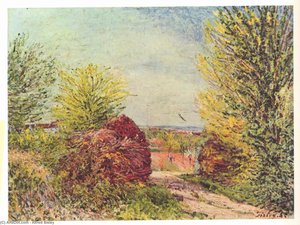
The Bridge at Moret


Alfred Sisley's 'The Bridge at Moret' captures the serene beauty of a French landscape in quintessential Impressionist style. This 1893 oil painting evokes tranquility and light, showcasing Sisley’s mastery of capturing fleeting moments. Discover this iconic artwork today.
 Czytaj więcej
Alfred Sisley – francuski impresjonista, mistrz spokojnych krajobrazów i rzek. Uchwycił ulotne światło Francji z delikatną precyzją. Odkryj jego piękno!
Kup wysokiej rozdzielczości, ulepszony obraz cyfrowy o jakości znacznie przewyższającej podgląd online.
Każdy plik jest starannie przygotowywany przez naszych specjalistów przy użyciu zaawansowanych narzędzi oraz profesjonalnej, ręcznej retuszy. Dbamy o to, aby każdy obraz cechował się wyjątkową ostrością, precyzyjnym odwzorowaniem kolorów i subtelnymi detalami.
Ostateczny plik dostarczany jest drogą mailową w ciągu 72 godzin, zoptymalizowany do natychmiastowego wykorzystania w profesjonalnych zastosowaniach redakcyjnych i poligraficznych. To ta sama jakość, której ufają czołowe studia projektowe, wydawnictwa oraz galerie sztuki.
Obraz cyfrowy
Pobierz plik o wysokiej rozdzielczości do osobistego użytku, druku oraz projektów kreatywnych. ( Przełącz na wersję drukowaną Kup ręcznie malowany obraz)
W każdym zamówieniu na obraz cyfrowy znajduje się
Profesjonalna dostawa cyfrowa z gwarancją
Wybierając TopImpressionists.com, nie otrzymujesz jedynie obrazu – otrzymujesz profesjonalnie udoskonalone cyfrowe dzieło sztuki, stworzone z najwyższą precyzją i objęte gwarancją satysfakcji. Oto wszystko, co automatycznie dołączane jest do Twojego zamówienia:

Błyskawiczna dostawa e-mailowa
Plik z obrazem cyfrowym w wysokiej rozdzielczości zostanie przesłany na Twój adres e-mail w ciągu 72 godzin od złożenia zamówienia – gotowy do natychmiastowego użycia.

Plik cyfrowy ulepszony przez AI
Twoja grafika została profesjonalnie zoptymalizowana przy użyciu zaawansowanych narzędzi AI oraz ręcznej edycji, co zapewnia maksymalną szczegółowość, klarowność i wierność kolorów.

Bezpłatna dożywotnia ponowna dostawa
Przypadkowo usunąłeś lub zgubiłeś swój plik? Bez obaw – prześlemy go Tobie ponownie w dowolnym momencie, bez żadnych opłat.

Bez opłat importowych – zawsze
Ciesz się swoją sztuką natychmiast, bez żadnych opłat celnych, należności ani kosztów dostawy – pliki cyfrowe są zawsze wolne od podatku.

Gwarancja odwzorowania kolorów
Dzięki zastosowaniu profesjonalnych narzędzi i procesów zarządzania barwą zapewniamy, że Twoje cyfrowe zdjęcie odzwierciedla oryginalne kolory tak wiernie, jak to tylko możliwe.

100 dni na satysfakcję
Jeśli nie będziesz zadowolony ze swojego cyfrowego obrazu, poprawimy go lub zwrócimy 100% kosztów w ciągu 100 dni – bez zbędnych pytań.

100% Gwarancja zwrotu pieniędzy
Nie jesteś zadowolony? Otrzymaj pełny zwrot kosztów w ciągu 100 dni od otrzymania pliku cyfrowego – bez zbędnych pytań.

Rabaty przy zamówieniach hurtowych
Kup 3 obrazy, oszczędź 10% - Kup 5, oszczędź 15% - Kup 10+, oszczędź 20%. Idealne do projektów kreatywnych, galerii i agencji.
The Bridge at Moret: A Symphony of Light and Tranquility
Alfred Sisley’s “The Bridge at Moret” is more than just a depiction of a rural French scene; it's an immersion into the very soul of Impressionism. Painted in 1893, this oil on canvas captures a fleeting moment – a bridge spanning a serene river, bisecting a small town bathed in the soft glow of afternoon light. The painting’s enduring appeal lies not just in its picturesque subject matter but in Sisley's masterful ability to translate his immediate sensory experience onto the canvas, embodying the core tenets of the movement that sought to capture the ephemeral qualities of light and color.
Sisley, a British-born painter who spent his career in France, was deeply influenced by the Romantic landscape tradition, yet he forged his own path within the burgeoning Impressionist circle. His work is characterized by a remarkable sensitivity to atmosphere, achieved through meticulous observation and a deliberate rejection of traditional academic techniques. Unlike artists focused on precise detail and polished surfaces, Sisley prioritized conveying the *impression* of a scene – the way light dances across water, the subtle shifts in color as shadows lengthen, the overall feeling of tranquility.
A Window into Impressionist Technique
- Color Palette: The painting’s dominant hues—muted greens, blues, and browns—are carefully layered to create a sense of depth and atmosphere. Sisley employed broken brushstrokes, applying paint in short, distinct dabs rather than blending them smoothly, a technique that allowed the colors to mix optically in the viewer's eye.
- Light as Subject: The most striking element is undoubtedly the play of light. Sisley expertly captures the effects of sunlight filtering through trees and reflecting off the water’s surface, creating shimmering highlights and subtle gradations of tone. This focus on light—a hallmark of Impressionism—elevates the scene beyond a simple landscape to a study in visual perception.
- Brushwork: Notice the loose, expressive brushstrokes that define the bridge, the buildings, and the foliage. These aren’t attempts to meticulously render every detail; instead, they convey movement, energy, and the artist's immediate response to the scene.
Historical Context and Symbolism
“The Bridge at Moret” was created during a pivotal moment in art history – the rise of Impressionism challenged the established norms of the Salon, the official art exhibition in Paris. Sisley’s work reflects this spirit of rebellion, embracing spontaneity and subjective experience over academic conventions. The bridge itself can be interpreted as a symbol of connection—linking the town to the river, and perhaps, representing the artist's own journey through artistic exploration.
The painting is currently housed in the Musée d’Orsay in Paris, a testament to its enduring significance within the Impressionist canon. Its presence alongside works by Monet and Pissarro further solidifies Sisley’s place as a key figure in this revolutionary movement. Its historical context adds another layer of appreciation; it's a snapshot of rural France at the turn of the 20th century, a time of social change and artistic innovation.
Bringing “The Bridge at Moret” into Your Space
A hand-painted reproduction of “The Bridge at Moret” offers a unique opportunity to bring this iconic Impressionist masterpiece into your home or office. TopImpressionists’s meticulous reproductions capture the essence of Sisley's original, faithfully recreating the painting's delicate color palette and expressive brushwork. Whether adorning a formal living room or adding a touch of tranquility to a workspace, this artwork will undoubtedly become a focal point, sparking conversation and inspiring contemplation.
Pytania i odpowiedzi
Któremu artyście przypisuje się "The Bridge at Moret"?
Dzieło "The Bridge at Moret" przypisuje się Alfred Sisley.
Czy istnieje przewodnik dla „The Bridge at Moret” autorstwa Alfred Sisley?
Strona Przewodnik dzieła „The Bridge at Moret” autorstwa Alfred Sisley oferuje dwustronicową kartę informacyjną w formacie do druku: samo dzieło wraz z tabelą identyfikacyjną, oś czasu umieszczającą je w latach życia artysty, inne prace tego twórcy, zmierzoną paletę kolorystyczną oraz gotowe do skopiowania cytaty w czterech stylach.
Jaki rozmiar wydruku „The Bridge at Moret” autorstwa Alfred Sisley będzie odpowiedni do zalecanego pomieszczenia?
W pomieszczeniu typu Living Room sugerowany jest wydruk dzieła „The Bridge at Moret” w rozmiarze Large.
Podobne dzieła




Biografia artysty
A Life Immersed in Light and Landscape
Alfred Sisley, a name often whispered alongside those of Monet, Renoir, and Pissarro, occupies a unique and profoundly beautiful space within the Impressionist movement. Born in Paris on October 30, 1839, to British parents—William Sisley, a silk merchant, and Felicia Sell, a music enthusiast—he carried a dual heritage that subtly informed his artistic vision. Though he would spend nearly his entire life in France, Sisley retained British citizenship, a fact that brought him personal disappointment later in life when applying for French naturalization was refused. His early years were comfortably bourgeois, affording him the opportunity to pursue studies initially intended for a commercial career in London at the age of eighteen. However, the allure of art proved too strong, and he returned to Paris in 1861, embarking on formal training under Swiss artist Marc-Charles-Gabriel Gleyre at the École des Beaux-Arts. It was here, amidst the burgeoning artistic ferment of the era, that Sisley forged crucial friendships with Monet, Renoir, and Bazille—relationships that would profoundly shape his artistic trajectory. These companions shared a rebellious spirit, rejecting the rigid conventions of academic painting in favor of capturing the fleeting effects of light and atmosphere directly from nature.The Quiet Master of Impressionism
Sisley’s dedication to *plein air* painting—working outdoors, directly observing the natural world—was unwavering. Unlike some of his contemporaries who experimented with diverse genres, Sisley remained steadfastly committed to landscape throughout his career. This focused devotion allowed him to refine a distinctive style characterized by tranquility, delicate color palettes, and a subtle rendering of light. His canvases are often awash in pale shades of green, pink, purple, dusty blue, and cream, creating an atmosphere of serene contemplation. While the early works remain largely lost to time, his mature paintings reveal a meticulous observation of nature combined with a poetic sensibility. He wasn’t interested in grand narratives or dramatic gestures; instead, he found beauty in the everyday—in the gentle flow of rivers, the dappled light filtering through trees, and the quiet charm of rural life. His early struggles for recognition were compounded by his father's financial difficulties following the Franco-Prussian War in 1870, forcing Sisley to rely solely on the sale of his art for sustenance—a precarious existence that shadowed much of his career. He was a true Impressionist, but one who often labored in relative obscurity during his lifetime.Rivers, Canals, and the Essence of Place
Recurring themes permeate Sisley’s oeuvre, most notably his fascination with water. River landscapes became a signature subject, exemplified by his series of paintings created during a trip to England in 1874 along the Thames near Molesey. These works, capturing the tranquil beauty of the river and its surroundings, are considered among his finest achievements—a “perfect moment of Impressionism,” as art historian Kenneth Clark described them. He also developed a deep connection with Moret-sur-Loing, where he lived for many years, immortalizing its canals, bridges, and surrounding countryside in numerous canvases. Paintings like "Watermill near Moret," "Barges on the Loing Canal, Spring", and “Fields around the Forest” showcase his ability to imbue ordinary scenes with a sense of poetic grace. He didn’t merely depict these places; he captured their *essence*, conveying not just what they looked like but how they felt—the gentle breeze, the warmth of the sun, the quiet murmur of the water. This sensitivity to atmosphere and mood is perhaps Sisley's most enduring legacy.Influences and a Lasting Legacy
Sisley’s artistic influences were multifaceted. Gleyre’s academic training provided a foundation in technique, while the camaraderie with Monet, Renoir, and Bazille fostered a shared commitment to Impressionist principles. He absorbed their emphasis on capturing fleeting moments of light and atmosphere but developed his own unique voice—one characterized by restraint and subtlety. Though he often labored in relative obscurity during his lifetime, Sisley’s work is now celebrated for its beauty, sensitivity, and unwavering dedication to portraying nature. His influence can be seen in the works of later landscape painters who sought to capture the ephemeral qualities of light and atmosphere with similar nuance. He was a true master of light, atmosphere, and the quiet poetry of the natural world.- Major Themes: Landscapes, riverscapes, canals, rural life, atmospheric effects.
- Key Characteristics: Delicate color palettes, subtle rendering of light, tranquil mood, *plein air* painting.
- Influences: Marc-Charles-Gabriel Gleyre, Claude Monet, Pierre-Auguste Renoir, Frédéric Bazille, Barbizon school painters.
A Biographical Sketch
Alfred Sisley was born in Paris on October 30, 1839, to affluent British parents. His father, William Sisley, was in the silk business, and his mother, Felicia Sell, was a cultivated music connoisseur. He spent his early years in London, studying for a career in commerce before returning to Paris in 1861 with a fervent desire to pursue art. It was at the École des Beaux-Arts that he encountered Gleyre and formed lasting friendships with Monet, Renoir, and Bazille—artists who shared his passion for capturing the fleeting effects of light and atmosphere. Sisley’s early works, though largely lost, demonstrated an emerging talent for depicting landscapes with a delicate touch and a keen eye for detail. The Franco-Prussian War significantly impacted his life, leading to financial hardship and forcing him to rely on the sale of his paintings for survival. Despite these challenges, he continued to paint tirelessly, developing his signature style—characterized by its tranquil mood, subtle color palettes, and masterful rendering of light. He spent much of his later years in Moret-sur-Loing, where he found inspiration in the surrounding countryside and created some of his most beloved works. Alfred Sisley died on January 29, 1899, in Moret-sur-Loing, leaving behind a legacy as one of the most serene and beautiful Impressionists. His paintings remain cherished for their ability to transport viewers to quiet corners of France—a testament to his lifelong dedication to capturing the essence of light and landscape.
Alfred Sisley
1839 - 1899 , Francja
Najważniejsze informacje
- Artistic Movement Or Style: Impresjonizm
- Artists Or Movements Influenced By This Artist: ['Barbizon']
- Artists Who Influenced This Artist:
- Gleyre
- Monet
- Renoir
- Date Of Birth: 1839-10-30
- Date Of Death: 1899-01-29
- Full Name: Alfred Sisley
- Nationality: Brytyjsko-Francuz
- Notable Artworks:
- Kanał Saint-Martin
- Mroźny dzień w Louveciennes
- Regaty w Molesey
- Place Of Birth: Paryż, Francja