
 Podgląd w skali 1:1
 Wyślij jako kartkę
 Udostępnij
 Szczegóły dzieła
 Przewodnik

 Pobierz obraz
 Podobne obiekty
 RTG
RTG Pokaz slajdów
 Q&A
Q&A Statystyki
Philip II

- 115.0 x 93.0 cm


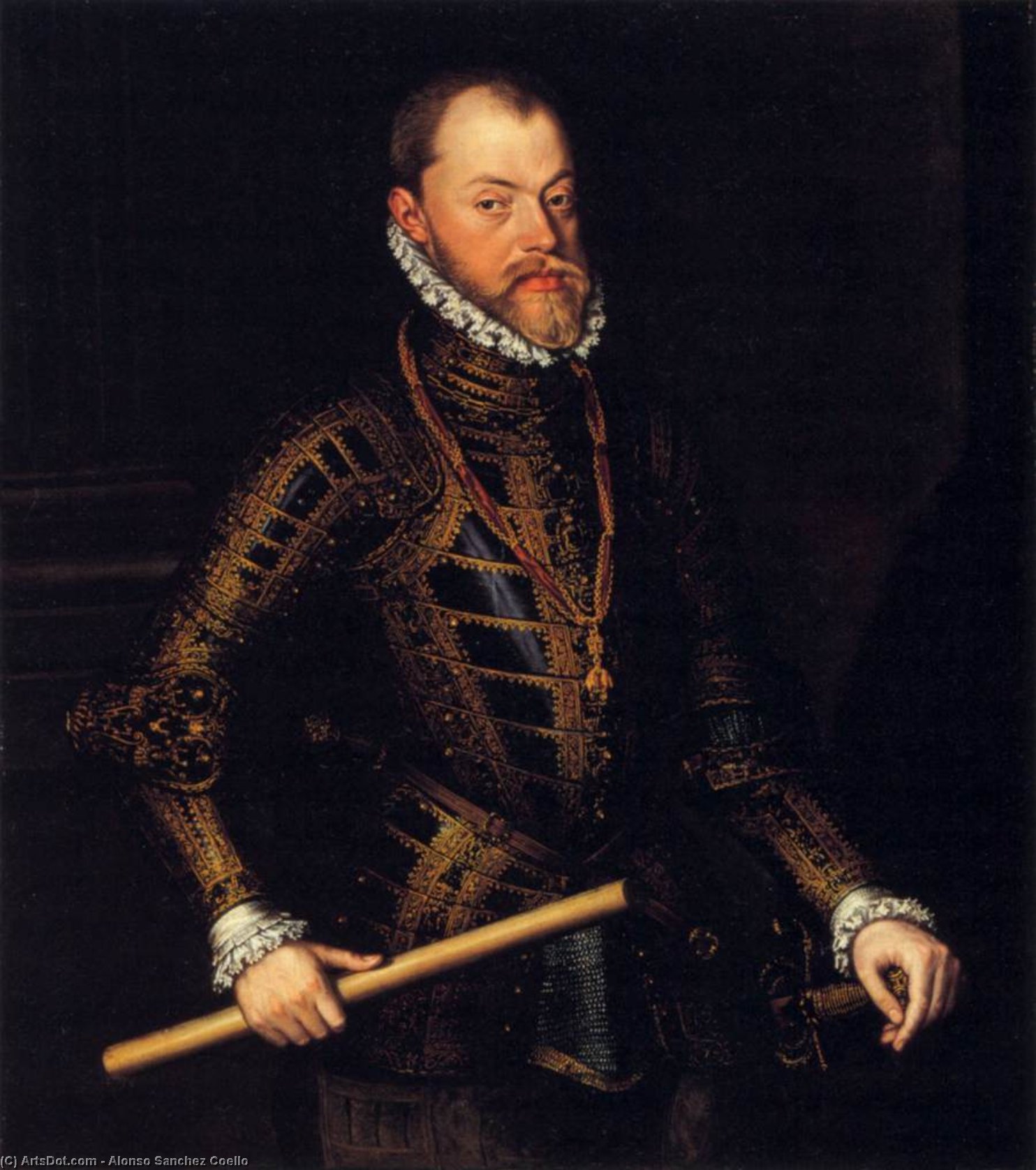
A powerful 1570 portrait of Philip II by Alonso Sánchez Coello captures the regal authority of the Spanish court through detailed 16th-century attire and a commanding presence, perfect for your fine art collection.
 Rozwiń treść
Alonso Sánchez Coello (1531-1588) był czołowym hiszpańskim portrecistą renesansowym i malarzem dworskim Filipa II. Jego godne portrety rodziny królewskiej oraz dzieła religijne ukształtowały sztukę XVI wieku.
Giclée / Wydruk artystyczny
Wydruki giclée lub płótna o jakości muzealnej, szybka realizacja i szeroki wybór opcji wykończenia. ( Zamów ręcznie malowaną reprodukcję Przejdź do wersji cyfrowej)




P118B zł10

P118H zł10

P118W zł10

P438Z zł10

P508JH zł12

P508YH zł12

P805H zł10

P805Z zł10

P919BZ zł10

P919G zł10

P919XJ zł10

P959ZH zł10

P968JZ zł12

W106C zł8

W218G zł10

W218JH zł8

W218Y zł10

W307PJ zł10

W316G zł10

W316PJ zł8

W316Y zł10

W398PJ zł8

W4111J zł10

W500HY zł15

W500JH zł15

W692G zł12

W849H zł8

W940BG zł15

W953PJ zł8




Standardowy format
personalizowane
CM
INCH
Wybierz spośród naszych standardowych rozmiarów, które zachowują oryginalne proporcje dzieła sztuki.
Loading sizes...

szerokość
wysokość
Wpisz wymaganą szerokość i wysokość, aby dopasować grafikę do ramy lub ściany. Wydruk można jedynie przyciąć, nigdy nie powiększając go poza oryginalny obraz, dlatego format o innych proporcjach spowoduje utratę części kompozycji. Przed rozpoczęciem druku prześlemy Ci cyfrowy podgląd do zatwierdzenia. Obraz wyświetlany na tej stronie nie pokazuje rzeczywistego przycięcia — jedynie podgląd oddaje ten efekt.
Dostawa na cały świat () w ciągu 2 tygodni zamiast standardowych 4/5 tygodni. (2 Listopad)

Bezpłatna ekspresowa wysyłka na cały świat

Wysokiej jakości płótno lniane

Pełne ubezpieczenie przesyłki

Gwarancja zwrotu należności celnych i podatków importowych

Gwarancja wiernego odwzorowania kolorów

100-dniowa polityka zwrotów (tylko w przypadku wad)

Gwarancja 100% zwrotu pieniędzy

Zniżka przy zakupie wielu sztuk
 Opcja ze szkłem jest dostępna wyłącznie w rozmiarach poniżej 110 cm

Philip II
Giclée / Wydruk artystyczny
Wymiary reprodukcji
-


Cena całkowita
zł 268
The Majesty of Sovereignty: A Glimpse into the Spanish Golden Age
In the profound stillness of Alonso Sánchez Coello’s 1570 portrait, Philip II emerges not merely as a man, but as the very embodiment of imperial authority. To gaze upon this masterpiece is to step through a portal into the heart of the sixteenth-century Spanish Court, where every brushstroke serves to reinforce the divine right of kings. The subject stands with a commanding presence, his gaze steady and resolute, framed by the intricate textures of a period defined by opulence and rigid social hierarchy. As a premier court painter, Coello possessed the rare ability to capture the weight of a crown without the need for a literal diadem, using instead the subtle language of posture and attire to communicate power.
The composition is a masterclass in focused intensity. By utilizing a deep, somber background, Coello ensures that the viewer’s eye is immediately drawn to the luminous details of the monarch's personage. The play of light across the ruffled collar—a hallmark of Renaissance aristocratic fashion—creates a rhythmic interplay of shadow and brilliance, highlighting the meticulous craftsmanship of the textile. This technique, which blends the objective precision of the Flemish tradition with a certain Venetian warmth, allows the textures of the fabric and the sheen of the steel to feel almost tactile, inviting the observer to appreciate the material wealth of the era.
Symbolism and the Art of Presence
Every element within this portrait is a deliberate symbol of the Spanish Empire's zenith. The sword held by Philip II is far more than a mere accessory; it is a potent signifier of his role as the defender of the faith and the arbiter of justice across vast territories. It introduces an element of latent strength into the composition, suggesting that beneath the refined elegance of his suit lies the iron will required to govern a global superpower. The meticulous rendering of his beard and mustache further emphasizes a mature, seasoned leadership, projecting an image of stability and wisdom to both contemporary subjects and modern viewers alike.
For the discerning collector or interior designer, this piece offers more than just historical interest; it provides a profound emotional anchor for any space. The painting exudes a sense of timeless dignity and quiet confidence. When placed within a curated collection or as a focal point in a sophisticated study, the portrait commands respect and fosters an atmosphere of intellectual depth. It is a work that does not shout for attention but rather earns it through its sheer, understated gravity, making it an ideal selection for those looking to infuse their environment with the grandeur of classical European history.
A Legacy Captured in Oil
The technical brilliance of Alonso Sánchez Coello lies in his ability to balance the individual's humanity with the iconographic requirements of royalty. Through a sophisticated use of chiaroscuro, he sculpts the features of Philip II, giving the face a three-dimensional vitality that has endured for centuries. This mastery of light and shadow ensures that the portrait remains dynamic, shifting in character as the ambient light of a room changes throughout the day. It is this enduring quality—this ability to breathe life into the pigments—that makes a high-quality reproduction of this work such a captivating investment for lovers of fine art.
Owning a piece that echoes the splendor of the Spanish Golden Age allows one to participate in a long tradition of aesthetic appreciation. Whether you are drawn to the historical narrative of the Habsburg dynasty or the exquisite technical execution of the Renaissance masters, this portrait serves as a window into a world of unparalleled elegance. It is an invitation to surround oneself with the echoes of greatness, bringing the sophisticated soul of the sixteenth century into the contemporary home.
Pytania i odpowiedzi
Gdzie mogę kupić wydruk „Philip II” – Alonso Sánchez Coello?
Odbitkę dzieła „Philip II” – Alonso Sánchez Coello można zamówić bezpośrednio na stronie Wydruk artystyczny premium: szlachetna odbitka na płótnie bawełnianym lub archiwalnym papierze o strukturze płótna.
Ile lat miał(a) Alonso Sánchez Coello, tworząc "Philip II" w 1570 roku?
Alonso Sánchez Coello miał 39 lat w momencie powstania „Philip II” w 1570. Wiek ten obliczono na podstawie roku urodzenia artysty, 1531.
Jak zbudowana jest kompozycja kolorystyczna „Philip II” – Alonso Sánchez Coello?
Kompozycja kolorystyczna „Philip II” – Alonso Sánchez Coello łączy w sobie Serene kontrast z Softly Mixed Palette harmonią.
Biografia artysty
Wczesne lata i kształtowanie talentu
- Miejsce urodzenia: Benifaió, Hiszpania (1531)
- Dzieciństwo spędził w okolicach Walencji, aż do śmierci ojca.
- Około 1541/42 roku przeniósł się do Portugalii, aby zamieszkać u swojego dziadka, szlachcica służącego portugalskim monarchom.
- Około 1550 roku studiował u Anthonisa Mora (Antonio Moro) w Flandrii.
- Korzystał z mecenatu Antoine'a de Granville, biskupa Arras, który był również protektorem Mora.
Kariera na dworze hiszpańskim
- Pracował dla portugalskiej rodziny królewskiej, a później na dworze João Manuella, księcia Portugalii.
- W 1555 roku przeniósł się na dwór hiszpański Filipa II, dzięki rekomendacji Juany, siostry króla.
- W 1560 roku otrzymał tytuł malarza dworskiego.
- Około 1560/61 roku poślubił Louisę Reyaltes, córkę złotnika.
- Jego córka, Isabel Sánchez, również została malarką i pomagała w prowadzeniu warsztatu.
- Wraz z dworem przeniósł się do Toledo, a w 1561 roku osiadł w Madrycie.
Styl artystyczny i inspiracje
- Styl: Połączenie flamandzkiej obiektywności z wenecką sensualnością.
- Wpływy: Przede wszystkim pod wpływem Anthonisa Mora oraz Tycjana.
- Od Mora przejął niezwykłą precyzję warsztatową.
- Od Tycjana zaczerpnął weneckie złote tony, bogactwo wykonania oraz mistrzowskie operowanie światłem.
- Sławę przyniósły mu portrety charakteryzujące się swobodą pozy, godnością, powagą i ciepłą kolorystyką.
Najważniejsze dzieła i osiągnięcia
- Tworzył zarówno wybitne portrety, jak i malarstwo religijne.
- Jego dzieła religijne, choć konwencjonalne, cechują się surowym, ascetycznym stylem.
- Najważniejsze portrety:
- Filip II trzymający różaniec (1573)
- Portret infanty Isabel Clary Eugenii (1571)
- Seria obrazów przedstawiająca dzieci Filipa II.
- Podwójny portret infantek Isabelli Clary Eugenii oraz Cataliny Micaeli (1568–9).
- Malował dzieła religijne dla klasztoru El Escorial.
- Stworzył również widok topograficzny portu w Sewilli.
Dziedzictwo i znaczenie historyczne
- Jego reputacja jako mistrza portretu bywała utrudniana przez liczne kopie i naśladownictwa innych artystów.
- Uważany jest za kluczową postać hiszpańskiego renesansu, szczególnie w kontekście malarstwa dworskiego.
- Jego twórczość wywarła ogromny wpływ na późniejszych mistrzów, w tym na Velázqueza, zwłaszcza w sposobie oddawania tekstur zbroi i draperii.
- Zmarł w Madrycie 8 sierpnia 1588 roku.

Alonso Sánchez Coello
1531 - 1588 , Hiszpania
Krótka nota
- Artistic Movement Or Style: Renesans hiszpański
- Artists Or Movements Influenced By This Artist:
- Juan Pantoja de la Cruz
- Felipe de Liaño
- Artists Who Influenced This Artist:
- Anthonis Mor
- Tycjan
- Date Of Birth: ok. 1531
- Date Of Death: 1588
- Full Name: Alonso Sánchez Coello
- Nationality: Iberyjska
- Notable Artworks:
- Filip II trzymający różaniec
- Portret damy
- Anna Austriaczka
- Don Jan Austriacki
- Katarzyna Austriaczka, Królowa
- Place Of Birth: Benifaió, Hiszpania
Powiązane artykuły

Mastering the Shadows: A Journey Through the Chiaroscuro and Soul of Iconic Spanish Painting
Embark on a sophisticated exploration of Spanish art history, from the chiaroscuro mastery of Velázquez to the profound shadows of Goya. Discover how the dramatic light and emotional depth of Spain's greatest masters continue to inspire collectors and connoisseurs today.

Diego Velázquez: Master of the Spanish Golden Age – Technique, Influence & Courtly Portraiture
Explore the life & work of Diego Velázquez, master of the Spanish Golden Age. Discover his innovative techniques, iconic paintings like Las Meninas, and lasting influence on art history. Expert insights for collectors.

Złoty Wiek Odnowiony: Dramatyczny Realizm i Duchowny Zapał w Sztuce Hiszpańskiego Baroku
Poznaj fascynujący świat baroku hiszpańskiego! Analiza dramatycznego realizmu Velázqueza, Zurbarána i Ribery oraz wpływu kontrreformacji na sztukę. Ekspercka wiedza dla kolekcjonerów i miłośników historii malarstwa.

Rafael de Penagos: A Study in Spanish Portraiture & Artistic Identity
Explore the life & art of Rafael de Penagos, a leading Spanish Art Deco illustrator. Discover his iconic 'Penagos Woman', commercial work, and lasting legacy. Learn about this pivotal figure in 20th-century Spanish art history.

25 Arcydzieł Prado: Historia Sztuki i Inspiracje do Twojego Domu | TopImpressionists
Odkryj 25 arcydzieł Museo del Prado! Poznaj historię Velázquez, Goyi i El Greco. Inspiracje wnętrzarskie z klasycznymi obrazami baroku i renesansu. Reprodukcje najwyższej jakości na TopImpressionists.com – sztuka dla Twojego domu.
Odkryj dzieła sztuki uporządkowane według tematów, stylów i cech charakterystycznych.
