


 Zobacz w skali 1:1
 Wyślij
 Udostępnij
 Szczegóły
 Przewodnik

 Pobierz plik obrazu
 Podobne obiekty
 RTG
RTG Pokaz slajdów
 Statystyki
LE CALVAIRE


 Czytaj więcej
Andrea Mantegna (1431-1506) – renesansowy mistrz perspektywy i rzeźbiarskiego detalu. Odkryj ikoniczne dzieła, takie jak 'Lamentacja' i Sala Ślubów w Pałacu Książęcym!
Ręcznie malowana reprodukcja olejowa
Ręcznie malowany obraz olejny na płótnie, wykonany na zamówienie przez naszych artystów w wybranym przez Ciebie wymiarze i oprawie. ( Przełącz na wersję drukowaną Przełącz na wersję cyfrową)




P118B zł10

P118H zł10

P118W zł10

P438Z zł10

P508JH zł12

P508YH zł12

P805H zł10

P805Z zł10

P919BZ zł10

P919G zł10

P919XJ zł10

P959ZH zł10

P968JZ zł12

W106C zł8

W218G zł10

W218JH zł8

W218Y zł10

W307PJ zł10

W316G zł10

W316PJ zł8

W316Y zł10

W398PJ zł8

W4111J zł10

W500HY zł15

W500JH zł15

W692G zł12

W849H zł8

W940BG zł15

W953PJ zł8




Standardowy
na zamówienie
CM
INCH
Wybierz spośród naszych standardowych rozmiarów, które zachowują oryginalne proporcje dzieła sztuki.
Loading sizes...

szerokość
wysokość
Wpisz wymaganą szerokość i wysokość, aby obraz pasował do Twojej ramy lub ściany. Ponieważ jest to dzieło malowane ręcznie, w przypadku rozmiaru o innym proporcji artysta może domalować nieco więcej wokół obrazu lub przyciąć fragmenty — wybór należy do Ciebie. Przed rozpoczęciem pracy prześlemy Ci cyfrową wizualizację do zatwierdzenia. Obraz widoczny na tej stronie nie przedstawia rzeczywistego efektu — jedynie wizualizacja oddaje realny rezultat.
Przykłady możliwych zmian: Zamień twarz na zdjęcie klienta; Dodaj zwierzę domowe (np. zamień kota na psa); Ukryj wiadomość w tle; Zmień krajobraz lub elementy tła.
Po złożeniu zamówienia zespół TopImpressionists.com skontaktuje się z klientem drogą mailową w celu uzyskania instrukcji i prześle wizualizację projektu
Po złożeniu zamówienia zespół TopImpressionists.com skontaktuje się z klientem drogą mailową w celu uzyskania instrukcji i prześle wizualizację projektu
Dostawa na całym świecie () w ciągu 3–4 tygodni zamiast standardowych 5 tygodni. (24 Październik). Bez kompromisów w kwestii jakości.

Bezpłatna ekspresowa wysyłka na cały świat

Wysokiej jakości płótno lniane

Pełne ubezpieczenie transportowe

Gwarancja zwrotu należności celnych i podatków importowych

Gwarancja idealnego odwzorowania barw

100-dniowy okres na zwrot dzieła w przypadku wykrycia wad produkcyjnych

Gwarancja 100% zwrotu pieniędzy

Oferta przy zakupie wielu sztuk
 Opcja ze szkłem jest dostępna wyłącznie w rozmiarach poniżej 110 cm

LE CALVAIRE
Technika wykonania
Rozmiar reprodukcji
-


Suma do zapłaty
zł 1032
LE CALVAIRE: A Monumental Testament to Renaissance Faith
Andrea Mantegna’s *Le Calvaire*, or The Crucifixion, transcends mere depiction; it embodies the very spirit of Quattrocento Florence and Verona—a profound engagement with classical ideals fused with an unprecedented mastery of perspective and sculptural form. Painted between 1457 and 1459 for the high altar of San Zeno Basilica in Verona, this monumental panel stands as a cornerstone of Mantegna’s artistic legacy and a testament to his unwavering devotion to reviving Roman grandeur within the burgeoning Italian Renaissance.- Artist & Context: Born around 1431 in Carturu, Andrea Mantegna wasn't simply adopting classical styles; he was embarking on an intellectual pilgrimage—a fervent desire to recapture the majesty of Rome through meticulous observation and artistic reconstruction. Unlike many contemporaries preoccupied with idealized beauty, Mantegna possessed a singular obsession for archaeological accuracy, nurtured under the tutelage of Francesco Squarcione whose workshop functioned as an academy dedicated to studying Roman ruins. This formative experience instilled in him a conviction that art could illuminate history and elevate the human spirit.
- Technique & Innovation: Mantegna’s approach to painting was revolutionary for its time. He eschewed the flattened surfaces favored by Florentine artists, prioritizing sculptural depth achieved through innovative use of linear perspective—a technique pioneered by Brunelleschi and perfected by Alberti. Notice how the horizon line descends dramatically below the natural level, creating an illusion of greater monumentality and drawing the viewer’s eye upwards towards the crucifix itself. This masterful manipulation of space wasn't merely stylistic; it reflected Mantegna’s belief that art should strive for realism and convey a sense of grandeur commensurate with the divine subject matter.
- Composition & Symbolism: The painting’s composition is carefully orchestrated to evoke contemplation and reverence. Jesus Christ dominates the central panel, flanked by Saint John the Baptist on his left and Mary Magdalene on his right—figures rendered with remarkable anatomical precision, mirroring the idealized forms of classical sculpture. The inclusion of a horse on the far right adds an element of dramatic tension and reinforces the image’s solemn atmosphere. Each detail – from the folds of Christ's robe to the expressions of sorrow etched upon the faces of the figures – speaks volumes about Christian iconography and conveys the profound emotional impact of witnessing the crucifixion.
- Material & Detail: Executed in tempera on panel, *Le Calvaire* exemplifies Mantegna’s meticulous attention to material qualities. The artist painstakingly recreated the textures of Roman marble—evident in the depiction of the architectural setting—demonstrating his commitment to replicating the visual language of antiquity with breathtaking accuracy. Furthermore, observe the subtle gradations of color and shading that imbue the figures with lifelike presence, highlighting Mantegna’s unparalleled skill as a draftsman and painter.
- Legacy & Influence: *Le Calvaire* cemented Mantegna's reputation as one of the foremost artists of his era and profoundly influenced subsequent generations of painters. Its pioneering use of perspective established a new standard for artistic representation, shaping the visual vocabulary of Renaissance art throughout Europe. Today, reproductions of this iconic masterpiece continue to inspire awe and admiration, serving as enduring reminders of Mantegna’s genius and the transformative power of classical inspiration.
Further Exploration
You can delve deeper into Andrea Mantegna's artistic journey by visiting Wikipedia, exploring his remarkable Camera Picta at Padua’s Eremitani, and admiring the grandeur of San Zeno Basilica in Verona. Consider commissioning a high-quality Giclee print or canvas reproduction to bring this timeless masterpiece into your home—a tangible connection to the artistic spirit of Renaissance Italy.Pytania i odpowiedzi
O czym jest "LE CALVAIRE" i jaką ma atmosferę?
„LE CALVAIRE” autorstwa Andrea Mantegna przedstawia religion, crucifixion, renaissance, perspective, antiquity, landscape, detail, wprowadzając Dramatic nastrój. Tematyka i atmosfera wspólnie definiują to dzieło.
Jaki nastrój wprowadzi LE CALVAIRE do wnętrza?
Dzięki swojemu Dramatic nastrojowi, "LE CALVAIRE" idealnie sprawdzi się w Living Room.
Czy dzieło „LE CALVAIRE” autorstwa Andrea Mantegna znajduje się w domenie publicznej i dlaczego?
Dzieło "LE CALVAIRE" autorstwa Andrea Mantegna znajduje się w stanowi domenę publiczną – autorskie prawa majątkowe wygasły. Okres ochrony praw autorskich liczony jest od daty śmierci artysty, a Andrea Mantegna zmarł(a) w 1506.
Biografia artysty
A Renaissance Forged in Antiquity: The Life and Art of Andrea Mantegna
Andrea Mantegna, born near Padua around 1431, stands as a pivotal figure bridging the Early and High Renaissances. His artistic journey wasn’t merely about adopting classical forms; it was an immersive excavation of antiquity, a passionate attempt to resurrect the spirit of Rome within the burgeoning Italian Renaissance. Unlike many contemporaries who drew inspiration from classical models, Mantegna possessed a unique fervor for archaeological accuracy. This obsession stemmed from his formative years under Francesco Squarcione, a painter and collector whose workshop functioned less as a traditional studio and more as an academy dedicated to the study of Roman ruins, sculptures, and inscriptions. It was within these walls, surrounded by fragments of a lost empire, that Mantegna’s artistic vision began to take shape—a vision characterized by sculptural forms, dramatic perspective, and an almost obsessive attention to detail. His early life remains somewhat shrouded in mystery; accounts suggest he was discovered as a promising apprentice, his innate talent recognized and nurtured by Squarcione despite humble origins. This unconventional beginning perhaps fueled Mantegna’s relentless pursuit of artistic mastery and his determination to forge a style distinctly his own.The Gonzaga Court and the Illusion of Reality
Mantegna's career truly blossomed when he entered the service of the Gonzaga family in Mantua, becoming court painter in 1488. This patronage provided him with an unprecedented level of artistic freedom and a platform to realize his most ambitious projects. The Gonzaga’s were not simply patrons; they were collaborators, commissioning works that pushed the boundaries of artistic innovation. It was during this period that Mantegna created what is arguably his masterpiece: the *Camera degli Sposi* (Bridal Chamber) frescoes in the Palazzo Ducale. This groundbreaking work transcends mere decoration; it's a complete illusionistic environment, seamlessly integrating architecture and painting to create an extended sense of space. The frescoes depict scenes from the life of the Gonzaga family – portraits that are remarkably lifelike and engaging – and a breathtaking *di sotto in sù* (seen from below) ceiling panel that creates the illusion of an open sky. This masterful manipulation of perspective wasn’t simply about technical skill; it was about creating a world within a room, blurring the lines between reality and representation. The *Camera degli Sposi* is considered one of the most significant achievements in Renaissance art, demonstrating Mantegna's unparalleled ability to create convincing illusions of depth and space. Beyond the *Camera degli Sposi*, Mantegna continued to produce works of exceptional quality for the Gonzaga court, including the monumental series *Triumphs of Caesar*. These paintings, inspired by Roman triumphal processions, are not merely historical depictions; they are elaborate allegories celebrating the power and prestige of the Gonzaga family, presented with a grandeur that rivals the imperial ambitions of ancient Rome.A Master of Perspective and Anatomical Precision
Mantegna’s artistic innovations extended far beyond illusionistic environments. He was a pioneer in the use of perspective, frequently employing techniques that went against conventional methods to achieve dramatic effects. Frequently, he adjusted the horizon line, creating a sense of monumentality and imposing scale. This technique, coupled with his meticulous attention to anatomical detail, gave his figures an unparalleled sense of weight and presence. He wasn’t content with simply representing the human form; he dissected it, studied its musculature, and rendered it with a precision that was revolutionary for his time. His mastery of *trompe-l'oeil* – creating illusions so convincing they deceive the eye – further enhanced this effect, blurring the boundaries between painting and reality. This dedication to anatomical accuracy wasn’t merely an exercise in technical skill; it reflected Mantegna’s deep engagement with classical sculpture and his desire to emulate the idealized forms of antiquity. He sought not just to depict the human body but to capture its inherent dignity and power. His influence on subsequent generations of artists, including Raphael and Michelangelo, is undeniable, as they built upon his foundations in perspective, anatomy, and composition.Early Works and Influences
Mantegna’s early career was marked by a rapid development of his distinctive style. He began with religious works, such as the *St. George and the Dragon* (c. 1465-1466), which showcases his mastery of perspective and dramatic composition. His *Lamentation over the Dead Christ*, painted around 1480, is another significant example of his early work, demonstrating his ability to convey emotion through carefully rendered figures and a somber color palette. His artistic influences were diverse, drawing from both classical antiquity and contemporary Italian painting. The works of Donatello, particularly his sculptures, undoubtedly influenced Mantegna’s interest in anatomical accuracy and the portrayal of human form. Similarly, the paintings of Giovanni Bellini, with their rich colors and expressive figures, likely shaped his approach to color and composition. However, Mantegna ultimately forged a unique style that combined these influences into something entirely new and distinctive.Legacy and Enduring Influence
Andrea Mantegna died in Mantua in 1506, leaving behind a legacy that continues to resonate with art historians and enthusiasts alike. His work represents a crucial turning point in the history of Renaissance art, bridging the gap between the Early and High Renaissance styles. He wasn’t simply an imitator of classical forms; he was an interpreter, adapting ancient motifs and techniques to create something entirely new and uniquely his own. His meticulous attention to detail, his mastery of perspective, and his profound engagement with classical antiquity established him as a leading figure of his time. Mantegna’s exploration of classical themes helped revive interest in ancient art and culture, paving the way for the artistic achievements of the High Renaissance. His influence can be seen in the works of countless artists who followed, from Raphael's graceful compositions to Michelangelo's powerful figures. Today, his paintings are housed in major museums around the world, including The National Gallery in London and the Pinacoteca di Brera in Milan, where they continue to inspire awe and admiration.
Andrea Mantegna
1431 - 1506 , Włochy
Najważniejsze informacje
- Artistic Movement Or Style: Renesans
- Artists Or Movements Influenced By This Artist:
- Donatello
- Renesans
- Artists Who Influenced This Artist: ['Squarcione']
- Date Of Birth: ok. 1431
- Date Of Death: 1506
- Full Name: Andrea Mantegna
- Nationality: Włoski
- Notable Artworks:
- Lamentacja nad zmartwionym Chrystusem
- Święty Jerzy
- Camera degli Sposi
- Place Of Birth: Carturu, Italia
Zobacz także powiązane artykuły

Sacred Narratives Embodied: A Comprehensive Exploration of Religious Iconography in Art History
Explore the rich history of religious iconography in art! Discover symbolism, movements & masterpieces from Byzantine to Renaissance periods. Expert insights for collectors and enthusiasts at TopImpressionists.

Święte Opowieści na Płótnie: Badanie Scen Religijnych i Ich Trwałego Wpływu
Odkryj fascynujący świat malarstwa religijnego! Poznaj historię ikon, symbolikę sakralną i techniki wykonania dzieł sztuki. Ekspercka analiza dla kolekcjonerów i miłośników historii.

Bartolomeo Pinelli: Neoclassical Linearity & Roman Topography of Memory
Explore the captivating world of Bartolomeo Pinelli, a master Italian engraver renowned for his evocative Roman scenes & historical narratives. Discover his art and legacy with TopImpressionists.

Sacred Narratives on Canvas: Exploring Religious Painting Through History
Explore the rich history of religious painting with TopImpressionists.com! Discover iconic artworks, symbolism & techniques from antiquity to the Renaissance. Enhance your art appreciation today.
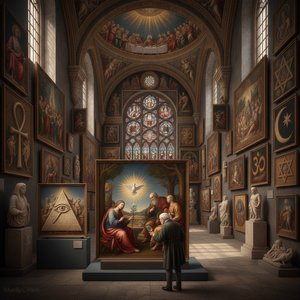
Divine Details: Decoding the Sacred Language of Religious Symbolism in Art History Masterpieces
Explore the profound power of religious symbolism in art history. From Renaissance masterpieces to sacred iconography, uncover the hidden meanings behind divine details in a deep dive into classical art excellence.
Odkryj dzieła sztuki uporządkowane według tematów, stylów i cech charakterystycznych.


