


 Podgląd w skali 1:1
 Wyślij jako kartkę
 Udostępnij
 Szczegóły dzieła
 Przewodnik

 Pobierz obraz
 Podobne obiekty
 RTG
RTG Pokaz slajdów
 Statystyki
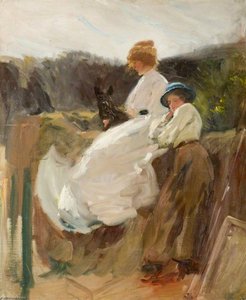
David and Dorelia in Normandy
 Oil
Oil- WallArt
- Post-Impressionism
 1908
1908- Modern
 37.0 x 45.0 cm
 Fitzwilliam College
A tender Post-Impressionist portrait of intimacy by Augustus Edwin John capturing David and Dorelia in a sunlit landscape, offering a rare glimpse into Edwardian romance that you can bring to your private collection.
 Rozwiń treść
Augustus Edwin John (1878-1961) – walijski malarz znany z portretów i murali. Jego twórczość charakteryzuje się żywymi kolorami, ekspresją i oddaniem psychiki modeli. Uznawany za jednego z najważniejszych przedstawicieli postimpresjonizmu w Anglii.
Dzieło sztuki prezentowane na tej stronie podlega ochronie prawem autorskim, co oznacza, że nie mamy prawa do tworzenia ani sprzedaży jego identycznej reprodukcji. Ochrona ta jest egzekwowana na mocy umów międzynarodowych, takich jak Konwencja berneńska oraz przez przepisy prawa krajowego, w tym te określone w Prawo autorskie USA – Tytuł 17.
Jako pełną szacunku i legalną alternatywę oferujemy personalizowane, malowane ręcznie dzieła sztuki inspirowane oryginałem. Nasi wykwalifikowani i profesjonalni artyści starannie analizują styl, nastrój oraz artystyczną esencję pierwowzoru, aby stworzyć nowe, unikalne dzieło, które przywołuje te same emocje – pozostając jednocześnie w pełni oryginalną kreacją.
Metoda ta jest w pełni zgodna z przepisami prawa autorskiego, ponieważ nie polega na kopiowaniu ani powielaniu chronionego dzieła. Stanowi ona kreatywną reinterpretację – nowy obraz, który czerpie inspirację z oryginału, ale nie jest z nim tożsamy.
Ręcznie malowana reprodukcja olejowa
Ręcznie malowany obraz olejny na płótnie, wykonany na zamówienie przez naszych artystów w wybranym przez Ciebie wymiarze i oprawie. ( Przełącz na wydania drukowane Przejdź do wersji cyfrowej)




P118B zł10

P118H zł10

P118W zł10

P438Z zł10

P508JH zł12

P508YH zł12

P805H zł10

P805Z zł10

P919BZ zł10

P919G zł10

P919XJ zł10

P959ZH zł10

P968JZ zł12

W106C zł8

W218G zł10

W218JH zł8

W218Y zł10

W307PJ zł10

W316G zł10

W316PJ zł8

W316Y zł10

W398PJ zł8

W4111J zł10

W500HY zł15

W500JH zł15

W692G zł12

W849H zł8

W940BG zł15

W953PJ zł8




Standardowy format
personalizowane
CM
INCH
Wybierz spośród naszych standardowych rozmiarów, które zachowują oryginalne proporcje dzieła sztuki.
Loading sizes...

szerokość
wysokość
Wpisz wymaganą szerokość i wysokość, aby obraz pasował do Twojej ramy lub ściany. Ponieważ jest to dzieło malowane ręcznie, w przypadku rozmiaru o innych proporcjach artysta może domalować nieco więcej wokół obrazu lub przyciąć jego fragmenty — wybór należy do Ciebie. Przed rozpoczęciem pracy prześlemy Ci cyfrową wizualizację do zatwierdzenia. Obraz widoczny na tej stronie nie przedstawia rzeczywistego efektu — jedynie wizualizacja oddaje realny rezultat.
Przykłady możliwych zmian: Zamień twarz na zdjęcie klienta; Dodaj zwierzę domowe (np. zamień kota na psa); Ukryj wiadomość w tle; Zmień krajobraz lub elementy tła.
Po złożeniu zamówienia zespół TopImpressionists.com skontaktuje się z klientem drogą mailową w celu uzyskania instrukcji i prześle wizualizację projektu
Po złożeniu zamówienia zespół TopImpressionists.com skontaktuje się z klientem drogą mailową w celu uzyskania instrukcji i prześle wizualizację projektu
Dostawa na całym świecie () w ciągu 3–4 tygodni zamiast standardowych 5 tygodni. (26 Październik). Bez kompromisów w kwestii jakości.

Bezpłatna ekspresowa wysyłka na cały świat

Wysokiej jakości płótno lniane

Pełne ubezpieczenie przesyłki

Gwarancja zwrotu należności celnych i podatków importowych

Gwarancja wiernego odwzorowania kolorów

100-dniowa polityka zwrotów (tylko w przypadku wad)

Gwarancja 100% zwrotu pieniędzy

Zniżka przy zakupie wielu sztuk
 Opcja ze szkłem jest dostępna wyłącznie w rozmiarach poniżej 110 cm

David and Dorelia in Normandy
Technika reprodukcji
Wymiary reprodukcji
-


Cena całkowita
zł 1033
David and Dorelia in Normandy
Augustus Edwin John’s “David and Dorelia in Normandy” is more than just a portrait; it's a distillation of Edwardian romance and bohemian artistic aspiration, captured with meticulous draughtsmanship and imbued with a palpable sense of intimacy. Painted in 1908, the canvas depicts David Garnett (John) and Dorelia McNeill—John’s mistress—reclining on the grass overlooking a hillside bathed in the golden light of Provence. This idyllic scene transcends mere representation, embodying John's fascination with the Romani people and his exploration of human relationships amidst the backdrop of artistic experimentation.- Style & Technique: The painting exemplifies John’s distinctive Post-Impressionist style—characterized by subtle tonal gradations and a restrained palette dominated by earthy browns, greens, and ochres. John employed a layered technique, applying thin glazes over underdrawings to achieve remarkable luminosity and depth of color. His meticulous attention to detail is evident in the rendering of drapery folds and facial expressions, conveying an understated emotional resonance.
- Historical Context: Painted during the Edwardian era—a period marked by social conservatism juxtaposed with burgeoning artistic innovation—the artwork reflects the prevailing mood of refined leisure and intellectual curiosity. John’s decision to portray Dorelia McNeill alongside Garnett was a bold statement against societal conventions, highlighting the complexities of love and desire within the confines of Victorian morality.
- Symbolism & Narrative: The hillside landscape serves as a symbolic representation of stability and contemplation—a counterpoint to the turbulent emotions simmering beneath the surface. Dorelia’s pose—relaxed yet watchful—suggests an awareness of John's gaze, hinting at unspoken desires and vulnerabilities. The painting captures a moment of quiet connection between two individuals navigating the challenges of passion and commitment.
- Fitzwilliam Museum Perspective: Held by the Fitzwilliam Museum in Cambridge, “David and Dorelia in Normandy” exemplifies John’s ability to convey profound emotion through deceptively simple compositions. Its provenance underscores its significance within British art history—a testament to John's enduring legacy as one of the foremost portrait painters of his time.
- Reception & Influence: Critics lauded John’s masterful draughtsmanship and psychological insight, recognizing “David and Dorelia in Normandy” as a quintessential example of his oeuvre. The painting continues to inspire artists and collectors alike—a timeless depiction of human connection that resonates with viewers across generations.
Pytania i odpowiedzi
Czy dzieło "David and Dorelia in Normandy" posiada podgląd w rozszerzonej rzeczywistości?
Dzieło „David and Dorelia in Normandy” – Augustus Edwin John możesz zobaczyć na własnej ścianie dzięki stronie Podgląd w AR, wykorzystując rozszerzoną rzeczywistość na kompatybilnym urządzeniu.
Z jakiego okresu pochodzi „David and Dorelia in Normandy” – Augustus Edwin John?
"David and Dorelia in Normandy" pochodzi z epoki Modern.
Jaki rozmiar wydruku „David and Dorelia in Normandy” – Augustus Edwin John będzie odpowiedni do zalecanego pomieszczenia?
Zalecane zestawienie dla „David and Dorelia in Normandy” – Augustus Edwin John: wydruk w formacie Small do Living Room.
Podobne dzieła




Biografia artysty
A Welsh Bohemian: The Life and Art of Augustus Edwin John
Augustus Edwin John, a name synonymous with vibrant color and intensely personal portraits, emerged as one of the most distinctive figures in early 20th-century British art. Born on January 4, 1878, in Tenby, a charming coastal town nestled within the Pembrokeshire county of Wales, his life was a tapestry woven with artistic passion, bohemian adventures, and a profound connection to both the natural world and its marginalized communities. From his humble beginnings as the third child of Edwin William John, a solicitor, and Augusta Smith (who tragically died when he was just six years old), John’s early exposure to art—primarily through his elder sister Gwen’s drawing lessons—laid the foundation for a career that would challenge conventions and leave an indelible mark on the British artistic landscape.Early Influences and Artistic Training
John's artistic journey began formally at the Tenby School of Art, where his innate talent quickly became evident. However, it was his enrollment at the Slade School of Fine Art in London in 1894 that truly shaped his development. Under the tutelage of Henry Tonks, a renowned and demanding instructor, John honed his draughtsmanship to an extraordinary degree, mastering the fundamentals of line, form, and perspective with remarkable precision. The Slade’s rigorous curriculum instilled in him a deep appreciation for academic tradition while simultaneously encouraging experimentation and innovation—a balance that would become characteristic of his artistic style. Crucially, during this period, John's exposure to the works of Old Masters like Peter Paul Rubens profoundly influenced his approach to composition, color, and dramatic lighting. Simultaneously, he absorbed the spirit of French Impressionists such as Matisse and Gauguin, embracing their use of vibrant hues and a rejection of traditional academic constraints. The subtle tonal harmonies of Puvis de Chavannes also resonated deeply with John’s aesthetic sensibilities, informing his ability to capture fleeting emotions and atmospheric effects. A pivotal moment arrived in 1897 when a diving accident in Tenby resulted in a severe head injury. This traumatic event dramatically altered John's personality, unleashing a newfound spontaneity and boldness that would become central to his artistic expression.The Romani Connection and a Life Beyond the Studio
Following the Slade years, John embarked on a period of intense exploration, seeking inspiration beyond the confines of London’s art scene. He spent considerable time in France, immersing himself in the vibrant culture of Montmartre, and later found himself captivated by the landscapes and people of Provence. However, it was his encounter with the Romani (Gypsy) community that proved to be a transformative experience. Drawn to their nomadic lifestyle, rich traditions, and captivating spirit, John became deeply involved in documenting their lives through painting, photography, and extensive research. He traveled extensively throughout Europe and Britain, living alongside the Roma, learning their language, customs, and beliefs. This immersion profoundly impacted his art, imbuing it with a sense of freedom, wanderlust, and an appreciation for the beauty of the natural world—qualities that are particularly evident in works like *Air Mechanic Shaw* (1935), a powerful portrait of T.E. Lawrence capturing both his heroic stature and underlying vulnerability. His presidency of the Gypsy Lore Society further solidified his commitment to understanding and celebrating this often-misunderstood community.A Portraitist of Distinction: Capturing the Essence of Character
While John’s engagement with Romani culture is undeniably significant, he is perhaps most celebrated for his extraordinary portraits. Possessing an uncanny ability to capture not just likeness but also the inner life of his subjects—their personality, mood, and fleeting emotions—John created some of the most psychologically astute and compelling portraits of the early 20th century. His style was characterized by a loose, expressive brushwork, vibrant colors, and a willingness to experiment with unconventional techniques. He famously described his approach as seeking an “instantaneous attitude,” striving to capture a momentary glimpse into the soul of his sitter. From aristocratic figures like Lord Leverhulme (whose notoriously unhappy portrait is a testament to John’s uncompromising honesty) to literary giants such as George Bernard Shaw and Dylan Thomas, John's portraits graced the walls of homes and galleries across Britain and beyond. Notable works include *Caspar* (1909), a poignant depiction of youthful innocence, and numerous studies of Gwen John, his sister and lifelong companion.Legacy and Critical Reception
Throughout his career, Augustus Edwin John experienced both widespread acclaim and periods of critical fluctuation. Initially celebrated for his innovative oil sketching techniques and figure drawings, some critics later found his work to be overly flamboyant or lacking in painterly finesse. His service as a war artist during World War I, attached to the Canadian forces, yielded memorable portraits of soldiers, but an unfortunate incident led to his recall to England. Despite these challenges, John remained a significant force in British art history. He was one of the few artists of his time to achieve widespread public recognition and played a crucial role in popularizing Post-Impressionism within the United Kingdom. Awarded the Order of Merit in 1942, he also documented his life and artistic philosophy in two volumes of autobiography: *Chiaroscuro* (1952) and *Finishing Touches* (published posthumously in 1964). While his reputation waned somewhat after World War II, there has been a renewed appreciation for his work in recent years, particularly for the vibrancy and originality of his early pieces. Augustus Edwin John’s art continues to captivate and inspire, reminding us of the power of individual expression and the enduring allure of a life lived with passion and artistic integrity.
Augustus Edwin John
1878 - 1961 , Walia
Krótka nota
- Artistic Movement Or Style: Postimpresjonizm
- Artists Or Movements Influenced By This Artist: ['Nowoczesne malarstwo brytyjskie']
- Artists Who Influenced This Artist:
- Rubens
- Matisse
- Gauguin
- Date Of Birth: 4 stycznia 1878
- Date Of Death: 31 października 1961
- Full Name: Augustus Edwin John
- Nationality: Walijski
- Notable Artworks:
- Caspar
- Air Mechanic Shaw
- David John
- Place Of Birth: Tenby, Walia
Powiązane artykuły
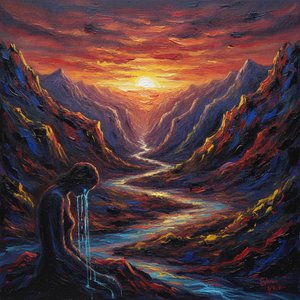
Capturing Emotion: A Journey Through the Soul of Expressionist Landscapes
Explore the profound emotional depth of Expressionist landscapes. Discover how Post-Impressionist masters moved beyond light to capture the soul through vibrant color and form. A curated journey for true art lovers seeking the beauty of expressive mastery.

Beyond the Light: Discovering the Soul and Emotional Depth of Post-Impressionism
Embark on a cultural journey through Post-Impressionism. Discover the profound emotional depth of masters like Van Gogh and Cézanne, exploring how they moved beyond light to capture the very soul of human experience through vibrant color and symbolic form.
Odkryj dzieła sztuki uporządkowane według tematów, stylów i cech charakterystycznych.

