

Przedstawiony: · Wraz z ramą:
 Podgląd w skali 1:1
 Wyślij jako kartkę
 Udostępnij
 Szczegóły dzieła
 Przewodnik

 Pobierz obraz
 Podobne obiekty
 RTG
RTG Pokaz slajdów
 Pytania i odpowiedzi
 Statystyki


zł 1247
Ręcznie malowana reprodukcja olejowa
Ręcznie malowany obraz olejny na płótnie, wykonany na zamówienie przez naszych artystów w wybranym przez Ciebie wymiarze i oprawie. ( Przełącz na wydania drukowane Przejdź do wersji cyfrowej)
Ten utwór podlega ochronie prawem autorskim
Dzieło sztuki prezentowane na tej stronie podlega ochronie prawem autorskim, co oznacza, że nie mamy prawa do tworzenia ani sprzedaży jego identycznej reprodukcji. Ochrona ta jest egzekwowana na mocy umów międzynarodowych, takich jak Konwencja berneńska oraz przez przepisy prawa krajowego, w tym te określone w Prawo autorskie USA – Tytuł 17.
Jako pełną szacunku i legalną alternatywę oferujemy personalizowane, malowane ręcznie dzieła sztuki inspirowane oryginałem. Nasi wykwalifikowani i profesjonalni artyści starannie analizują styl, nastrój oraz artystyczną esencję pierwowzoru, aby stworzyć nowe, unikalne dzieło, które przywołuje te same emocje – pozostając jednocześnie w pełni oryginalną kreacją.
Metoda ta jest w pełni zgodna z przepisami prawa autorskiego, ponieważ nie polega na kopiowaniu ani powielaniu chronionego dzieła. Stanowi ona kreatywną reinterpretację – nowy obraz, który czerpie inspirację z oryginału, ale nie jest z nim tożsamy.
 Dowiedz się więcej
Wymiar
·Standardowy format
personalizowane
CM
INCH
Wybierz spośród naszych standardowych rozmiarów, które zachowują oryginalne proporcje dzieła sztuki.
Ładowanie rozmiarów...

szerokość
wysokość
Wpisz wymaganą szerokość i wysokość, aby obraz pasował do Twojej ramy lub ściany. Ponieważ jest to dzieło malowane ręcznie, w przypadku rozmiaru o innych proporcjach artysta może domalować nieco więcej wokół obrazu lub przyciąć jego fragmenty — wybór należy do Ciebie. Przed rozpoczęciem pracy prześlemy Ci cyfrową wizualizację do zatwierdzenia. Obraz widoczny na tej stronie nie przedstawia rzeczywistego efektu — jedynie wizualizacja oddaje realny rezultat.
Wykończenie
·
Białe krawędzie zł1

rozmyte krawędzie zł1

Przedłużony zł1

P118B zł10

P118H zł10

P118W zł10

P438Z zł10

P508JH zł12

P508YH zł12

P805H zł10

P805Z zł10

P919BZ zł10

P919G zł10

P919XJ zł10

P959ZH zł10

P968JZ zł12

W106C zł8

W218G zł10

W218JH zł8

W218Y zł10

W307PJ zł10

W316G zł10

W316PJ zł8

W316Y zł10

W398PJ zł8

W4111J zł10

W500HY zł15

W500JH zł15

W692G zł12

W849H zł8

W940BG zł15

W953PJ zł8

H24-GOLD zł30

H24-SILVER zł30

H36-GOLD zł45

H36-SILVER zł45
Dostarczane w ochronnej tubie, gotowe do oprawienia przez Twojego ramiarza.
Dodatki
opcjonalneCo obejmują dodatki?
Przykłady możliwych zmian: Zastąpienie twarzy zdjęciem klienta; Dodanie zwierzęcia (np. zamiana kota na psa); Ukrycie wiadomości w tle; Zmiana krajobrazu lub elementów tła.
Po złożeniu zamówienia zespół TopImpressionists.com skontaktuje się z klientem drogą mailową w celu uzyskania instrukcji i prześle podgląd projektu
Po złożeniu zamówienia zespół TopImpressionists.com skontaktuje się z klientem drogą mailową w celu uzyskania instrukcji i prześle podgląd projektu
Dostawa na całym świecie () w ciągu 3–4 tygodni zamiast standardowych 5 tygodni. (4 Listopad). Bez kompromisów w kwestii jakości.
Lakier ochronny
Etykieta obiektu
Szczegóły grawerowanej brązowej tabliczki
This elegant plaque features the artist's name and the title of the artwork, finely engraved for a timeless presentation.
It is made from bronze with a refined, elegant finish. The text is precisely laser-engraved for a sharp and permanent result. Measuring 9x2 cm, the plaque is compact yet easy to read. It's built to be durable and scratch-resistant, offering a professional, museum-quality look. Mounting is simple thanks to the included adhesive backing.
Szczegóły przezroczystej tabliczki akrylowej
The plaque includes essential engraved details such as the artist's name, the title of the artwork, the date it was created, the type of media used-like oil on canvas or watercolor-a brief description of the piece, and a QR code that links to the complete artwork information.
It is crafted from clear acrylic, offering a sleek, modern appearance. The text is UV-engraved in black to ensure strong visual contrast. With a size of 10x15 cm, it ensures optimal readability. It comes equipped with two metal hooks for secure wall mounting. The plaque is designed to be weather-resistant, making it suitable for various environments, and it includes interactive features that work seamlessly with smartphone scanning.
Szczegóły czarnej tabliczki akrylowej
This elegant plaque includes engraved information such as the artist's name, the title of the artwork, the date it was created, the type of media used (like oil on canvas or watercolor), a short description of the artwork, and a QR code for quick access to more information.
The plaque itself is made from refined black acrylic with a premium finish. The text is laser-engraved in white for high contrast and readability. Its size is 10x15 cm, designed to be easy to read. It comes with two metal hooks for professional mounting. The design is sleek and fits any interior style. It is also weather-resistant and durable, with built-in digital integration for mobile compatibility.
Opcja ze szkłem jest dostępna wyłącznie w rozmiarach poniżej 110 cm
 Opcja ze szkłem jest dostępna wyłącznie w rozmiarach poniżej 110 cm
- Bezpłatna ekspresowa wysyłka na cały świat
- Wysokiej jakości płótno lniane
- Pełne ubezpieczenie przesyłki
- Gwarancja zwrotu należności celnych i podatków importowych
- Gwarancja wiernego odwzorowania kolorów
- 100-dniowa polityka zwrotów (tylko w przypadku wad)
- Gwarancja 100% zwrotu pieniędzy
- Zniżka przy zakupie wielu sztuk


Opis obiektu
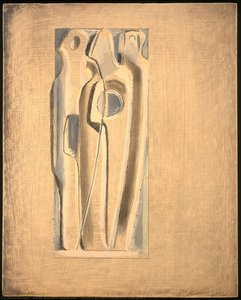
Explore Dame Barbara Hepworth’s ‘Three Figures’ (1951), a captivating abstract study of human forms. Discover her pioneering modernist style & layered brushwork in this evocative piece.
Biografia artysty
Poznaj modernistyczne rzeźby Barbary Hepworth (1903-1975). Pionierką sztuki abstrakcyjnej była Hepworth, której dzieła – w tym 'Oval Form' i 'Two Forms' – łączą surrealizm z abstrakcją. Odkryj jej dziedzictwo w Muzeum Hepworth Wakefield.
O obrazie
Barbara Hepworth’s ‘Three Figures – Project for Sculpture’: A Meditation on Form and Connection
“Three Figures – Project for Sculpture,” created in 1951 by the influential British sculptor Barbara Hepworth, offers a compelling glimpse into her exploration of form and space during a pivotal moment in modern art. This work, rendered in a luminous golden hue, transcends mere representation to become a deeply evocative study of human presence—a testament to Hepworth’s mastery of abstraction and her profound engagement with the fundamental principles of sculpture. The painting's strength lies not in literal depiction but in its ability to conjure a sense of quiet contemplation, inviting viewers to consider the relationships between individuals and their shared experience.
A Modernist Vision: Style and Technique
Hepworth’s approach aligns squarely with the modernist movement, particularly its emphasis on reducing forms to their essential geometric elements. The composition is dominated by rectangular and triangular shapes, meticulously constructed to create a sense of depth through overlapping planes and subtle tonal variations. Visible brushstrokes, layered and glazed with oil paint, contribute significantly to the artwork's tactile quality – an invitation to almost reach out and touch the implied solidity of the figures. The directional lighting further enhances this three-dimensionality, casting carefully considered shadows that sculpt the forms themselves. This technique, rooted in Hepworth’s training at the Royal College of Art, demonstrates a sophisticated understanding of both representational space and abstract form.
Historical Context and Influences
Created in 1951, “Three Figures” reflects a period of significant artistic innovation. Hepworth was a key figure within the Unit One movement, alongside Ben Nicholson and Paul Nash, which sought to bridge the gap between Surrealism and Abstraction – a bold experiment that challenged traditional notions of representation. Her earlier work, heavily influenced by her time in Paris and engagement with abstraction-création, paved the way for this exploration of simplified forms and spatial relationships. The painting’s restrained style echoes the growing interest in geometric abstraction prevalent throughout Europe at the time, while retaining a distinctly humanistic focus.
Symbolism and Emotional Resonance
While overtly symbolic elements are absent, “Three Figures” possesses a powerful emotional resonance. The solemn postures of the figures suggest introspection and perhaps a shared experience – a quiet connection forged through form and space. Hepworth’s work often explored themes of human vulnerability and resilience, and this piece is no exception. It invites viewers to contemplate their own place within the larger world, prompting a sense of empathy and understanding. The painting's enduring appeal lies in its ability to tap into these universal emotions, making it a timeless meditation on the nature of human connection.
Pytania i odpowiedzi
Na którym etapie kariery Barbara Hepworth znajduje się dzieło „Three Figures – Project for Sculpture”, biorąc pod uwagę jego datę powstania?
Data powstania dzieła (1951) sytuuje "Three Figures – Project for Sculpture" w Mature Period rozwoju twórczości Barbara Hepworth.
W jaki sposób „Three Figures – Project for Sculpture” – Barbara Hepworth łączy Modernism z krajem pochodzenia artysty?
"Three Figures – Project for Sculpture" łączy nurt Modernism z Wielka Brytania poprzez miejsce urodzenia jego twórcy.
Jakie umiejscowienie najlepiej pasuje do formatu dzieła „Three Figures – Project for Sculpture” – Barbara Hepworth?
Dzięki formatowi Portrait, reprodukcja dzieła „Three Figures – Project for Sculpture” idealnie sprawdzi się w Living Room.
Najważniejsze informacje i quiz o sztuce
O Barbara Hepworth

Barbara Hepworth
1903 - 1975, Wielka Brytania
Biografia artysty
Barbara Hepworth: Pioneer of Organic Abstraction
Barbara Hepworth (1903–1975) stands as one of the most influential figures in British sculpture of the 20th century, a sculptor whose uncompromising vision reshaped artistic conventions and cemented her place among the foremost innovators of modernism. Born Jocelyn Barbara Hepworth on January 10, 1903, in Wakefield, Yorkshire—the eldest child of Herbert and Gertrude Johnson Hepworth—her formative years were steeped in the rugged beauty of the Pennines landscape, an environment that would profoundly inform her artistic sensibility for decades to come.Herbert Hepworth was a civil engineer for the West Riding County Council, who in 1921 advanced to the role of county surveyor.- Early Education: Hepworth attended Wakefield Girls’ High School where she excelled academically and musically.
- Leeds School of Art: At Leeds School of Art from 1920, she encountered Henry Moore, forging a friendship that would endure throughout their careers—a relationship characterized by mutual respect and spirited debate about artistic direction.
Formal Training and Artistic Beginnings
Hepworth’s formal training culminated in her enrollment at the Royal College of Art (RCA) in London in 1921, where she honed her sculptural skills under the tutelage of Henry Moore and others. Her diploma in 1924 marked a pivotal moment, propelling her into the burgeoning avant-garde movement of the time—specifically Abstraction-Création—and establishing her connection with fellow artists like Ben Nicholson and Paul Nash.Together with Moore and other students at the College, makes occasional trips to Paris.- Early Style: Hepworth’s initial explorations embraced simplified forms inspired by Egyptian sculpture, reflecting a fascination with ancient art traditions.
- Direct Carving Technique: She championed “direct carving,” prioritizing the tactile engagement between artist and material—a method that distinguished her work from more conventional modeling techniques.
Collaboration and Influence of Ben Nicholson
Hepworth’s artistic partnership with Ben Nicholson began in 1931, transforming into a deeply intertwined relationship both personally and professionally.She marries sculptor John Skeaping in 1925. Their shared studio in Hampstead became a crucible for experimentation—a space where they wrestled with questions of form, texture, and spatial relationships. Nicholson’s influence on Hepworth's aesthetic was undeniable, fostering her embrace of geometric abstraction and shaping her exploration of the interplay between mass and void.She would later relate this shift to having triplets with Nicholson in 1934, noting that after this ‘the work was more formal, and all traces of naturalism had disappeared, and for some years I was absorbed in the relationships in space, in size and texture and weight, as well as in the tensions between the forms.’- Unit One Movement: Hepworth’s involvement with Unit One—a collective dedicated to synthesizing Surrealist and Abstract Expressionist impulses—solidified her position at the forefront of British modernism.
- Landscape Sculpture: Hepworth's artistic vision was profoundly shaped by her immersion in the Yorkshire landscape, which served as a constant source of inspiration for her sculptures—particularly those exploring the relationship between organic forms and geometric abstraction.“The main sources of my inspiration are the human figure and the landscape; also the one in relation to the other.” Barbara Hepworth
Mature Style and Legacy
Hepworth’s mature style—characterized by a sensual exploration of material and space—produced monumental sculptures that captivated audiences worldwide.She was made a Commander of the Order of the British Empire in 1958, and was later awarded the rank of Dame in 1965. Notable works include *Oval Form*, *Two Forms*, and *Totem*, which exemplify her unwavering commitment to abstraction while retaining an evocative connection to nature.“Carving to me is more interesting than modelling, because there is an unlimited variety of materials from which to draw inspiration.” Barbara Hepworth- Hepworth Wakefield: Her legacy continues to inspire artists and art enthusiasts alike, enshrined in the Hepworth Wakefield—a museum dedicated to showcasing her oeuvre and fostering dialogue about contemporary sculpture.
- Notable Exhibitions: Hepworth’s sculptures graced prestigious venues such as the Kimbell Art Museum in Fort Worth, Texas, cementing her reputation as a globally recognized artist.The Hepworth Wakefield houses numerous masterpieces from renowned artists, including hepworth's own works.
Krótkie informacje o Barbara Hepworth
- Artistic Movement Or Style: Modernizm
- Artists Or Movements Influenced By This Artist: ['Unit One']
- Artists Who Influenced This Artist: ['Henry Moore']
- Date Of Birth: 10 stycznia 1903
- Full Name: Jocelyn Barbara Hepworth
- Nationality: Angielka
- Notable Artworks:
- Oval Form
- Two Forms
- Totem
- Place Of Birth: Wakefield, Anglia
Odkryj dzieła sztuki uporządkowane według tematów, stylów i cech charakterystycznych.


Barbara Hepworth
Three Figures – Project for Sculpture
() ·
Wraz z ramą: · Ręcznie malowane farbami olejnymi na płótnie lnianym
Suma