


 Zobacz w skali 1:1
 Wyślij
 Udostępnij
 Szczegóły
 Przewodnik

 Pobierz plik obrazu
 Podobne obiekty
 RTG
RTG Pokaz slajdów
 Statystyki
Psyche
 Acrylic On Canvas
- WallArt
- French Impressionism
 1876
1876 64.0 x 54.0 cm
 Muzeum Thyssen-Bornemisza
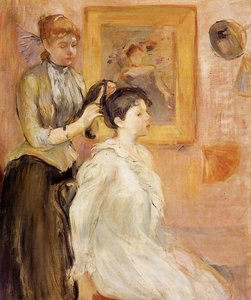
Berthe Morisot’s ‘Psyche,’ painted in 1876, exemplifies Impressionism’s focus on domestic scenes and fleeting light. This masterpiece portrays a woman contemplating her reflection before a mirror, bathed in soft illumination and adorned with subtle details—a testament to Morisot's pioneering spirit and enduring influence within the art world.
 Czytaj więcej
Berthe Morisot – pionierka impresjonizmu, znana z intymnych scen domowych i subtelnego oddziaływania światła. Odkryj jej unikalny styl i dziedzictwo obok Édouarda Maneta.
Giclée / Wydruk artystyczny
Wydruki giclée lub płótna o jakości muzealnej, szybka realizacja i szeroki wybór opcji wykończenia. ( Kup ręcznie malowany obraz Przełącz na wersję cyfrową)




P118B zł10

P118H zł10

P118W zł10

P438Z zł10

P508JH zł12

P508YH zł12

P805H zł10

P805Z zł10

P919BZ zł10

P919G zł10

P919XJ zł10

P959ZH zł10

P968JZ zł12

W106C zł8

W218G zł10

W218JH zł8

W218Y zł10

W307PJ zł10

W316G zł10

W316PJ zł8

W316Y zł10

W398PJ zł8

W4111J zł10

W500HY zł15

W500JH zł15

W692G zł12

W849H zł8

W940BG zł15

W953PJ zł8




Standardowy
na zamówienie
CM
INCH
Wybierz spośród naszych standardowych rozmiarów, które zachowują oryginalne proporcje dzieła sztuki.
Loading sizes...

szerokość
wysokość
Możesz wprowadzić własne wymiary, aby dopasować dzieło do konkretnej ramy lub przestrzeni. Jeśli wybrany rozmiar nie będzie odpowiadał proporcjom oryginalnego obrazu, przytniecie dzieło lub rozszerzymy obraz za pomocą odbicia lustrzanego lub jednolitego wypełnienia krawędzi. Przed rozpoczęciem produkcji prześlemy cyfrową wizualizację do Twojej akceptacji.
Prosimy pamiętać, że podgląd na ekranie nie odzwierciedla faktycznego przycinania ani rozszerzania. Tylko wizualizacja dokładnie pokaże końcową kompozycję.
Mimo dostępności niestandardowych rozmiarów, zalecamy wybór wymiaru z listy zdefiniowanej, aby zachować oryginalne proporcje.
Dostawa na cały świat () w ciągu 2 tygodni zamiast standardowych 4/5 tygodni. (11 Październik)

Bezpłatna ekspresowa wysyłka na cały świat

Wysokiej jakości płótno lniane

Pełne ubezpieczenie transportowe

Gwarancja zwrotu należności celnych i podatków importowych

Gwarancja idealnego odwzorowania barw

100-dniowy okres na zwrot dzieła w przypadku wykrycia wad produkcyjnych

Gwarancja 100% zwrotu pieniędzy

Oferta przy zakupie wielu sztuk
 Opcja ze szkłem jest dostępna wyłącznie w rozmiarach poniżej 110 cm

Psyche
Giclée / Wydruk artystyczny
Rozmiar reprodukcji
-


Suma do zapłaty
zł 257
Psyche by Berthe Morisot: An Intimate Reflection of Impressionist Vision
Berthe Morisot’s *Psyche*, painted in 1876, stands as a cornerstone of Impressionism—a movement that revolutionized artistic expression and captured the fleeting beauty of everyday life. Currently housed within the Museo Nacional Thyssen-Bornemisza in Madrid, Spain, this deceptively simple portrait transcends mere representation; it delves into themes of introspection, femininity, and the subtle interplay between light and perception. Morisot’s masterful technique—characterized by loose brushstrokes and a delicate tonal palette—perfectly embodies the Impressionist ethos, prioritizing atmosphere over meticulous detail.Composition and Setting: A Dialogue Between Woman and Mirror
The painting depicts a young woman standing before a dressing mirror, her gaze fixed upon her reflection. Morisot skillfully employs compositional devices to heighten the sense of intimacy and contemplation. The room itself is sparsely furnished—two chairs and a dining table—creating a backdrop that emphasizes the subject’s solitude. However, crucially, two windows flank the mirror, flooding the space with diffused daylight – a hallmark of Impressionist painting. This light isn't merely decorative; it actively shapes the tonal range of the canvas, contributing to the overall mood of quiet serenity and inner reflection. The woman wears a white dress that contrasts sharply with the deep red carpet beneath her feet, drawing the viewer’s eye towards the central figure and reinforcing the symbolic significance of purity against opulent surroundings.Symbolism: Beyond Appearance – Exploring Inner Consciousness
The title *Psyche*, referencing Greek mythology—the soul—immediately establishes a profound connection between the painting's subject and universal themes of psychological exploration. Psyche, in myth, undertakes a perilous journey to retrieve Eros (Cupid), symbolizing love and desire. Morisot’s portrayal captures this essence through her woman’s posture – absorbed in her gaze at her reflection – suggesting an internal preoccupation with self-awareness and emotional experience. The mirror serves as a powerful visual metaphor for confronting one's inner self, mirroring not just physical appearance but also psychological state. Furthermore, the inclusion of the dining table hints at domestic life and perhaps represents the woman’s role within the home—a theme frequently explored by Morisot in her oeuvre.Technique: Delicate Brushstrokes and Luminosity – The Impressionist Legacy
Morisot's brushwork is remarkably fluid and loose, prioritizing tonal variation over precise delineation. She achieves this effect through layering thin washes of paint—a technique known as glazing—allowing light to penetrate deeply into the canvas and creating a luminous quality that captures the ephemeral effects of natural illumination. The artist’s meticulous attention to detail—particularly in rendering the folds of the dress and the texture of the carpet—is balanced by an overall impression of spontaneity and immediacy, reflecting the Impressionist commitment to capturing fleeting moments of experience. Like many Impressionists, Morisot sought to convey not just what she saw but how she felt—a feat accomplished with remarkable grace and sensitivity.Historical Context: Challenging Conventions – A Woman’s Voice in Art
Berthe Morisot's participation in the Impressionist movement was itself a groundbreaking achievement for women artists at the time. Facing considerable societal prejudice, Morisot persevered in pursuing her artistic ambitions alongside Édouard Manet—whom she married—demonstrating unwavering determination and securing exposure to the Parisian art scene. Her work aligns with broader trends of the era – a shift away from academic formalism towards subjective observation and emotional expression—solidifying her place as one of the “tres grandes dames” (the three great ladies) of Impressionism, alongside Marie Bracquemond and Mary Cassatt. *Psyche* remains an enduring testament to Morisot’s artistic vision and her contribution to redefining the boundaries of art history.Pytania i odpowiedzi
Czy mogę przyjrzeć się bliżej dziełu "Psyche"?
Dzieło "Psyche" można badać warstwa po warstwie na stronie Prześwietlenie, która stanowi interaktywny podgląd inspirowany stołem świetlnym konserwatora, oferujący jedenaście optycznych odczytów obrazu.
Któremu artyście przypisuje się "Psyche"?
Autorem dzieła „Psyche” jest Berthe Morisot. Praca ta figuruje w katalogu pod nazwiskiem Berthe Morisot.
W jakim wieku Berthe Morisot stworzył(a) "Psyche"?
Gdy w 1876 roku powstało dzieło „Psyche”, Berthe Morisot – urodzony/a w 1841 – miał/a 35 lat.
Jakie są prawa do reprodukcji dzieła "Psyche" znajdującego się w Muzeum Thyssen-Bornemisza?
Oryginał dzieła „Psyche” znajduje się w Muzeum Thyssen-Bornemisza, a utwór jest stanowi domenę publiczną – autorskie prawa majątkowe wygasły.
Jakie emocje przekazuje dzieło "Psyche" należące do nurtu French Impressionism?
"Psyche" niesie ze sobą Reflective wydźwięk emocjonalny w obrębie nurtu French Impressionism.
Czy dzieło "Psyche" jest wolne od praw autorskich?
„Psyche” autorstwa Berthe Morisot znajduje się w stanowi domenę publiczną – autorskie prawa majątkowe wygasły. Status ten określa zasady reprodukcji obrazu tego dzieła.
W którym roku powstało dzieło "Psyche"?
Dzieło "Psyche" pochodzi z 1876 roku. Data ta pozwala umiejscowić pracę w kontekście twórczości Berthe Morisot oraz epoki, w której powstała.
Podobne dzieła



Biografia artysty
A Life Immersed in Light and Intimacy
Berthe Morisot, born in Bourges, France, in 1841, emerged as a pivotal figure within the Impressionist movement, yet her story extends far beyond simply being a “female Impressionist.” To define her solely by gender diminishes the profound originality of her artistic vision and her unwavering commitment to capturing the fleeting moments of modern life. Descended from a bourgeois family with artistic lineage – she was related to the celebrated Rococo painter Jean-Honoré Fragonard – Morisot received an education uncommon for women of her era, one that nurtured her innate talent and fostered a lifelong dedication to painting. Early lessons with Geoffroy-Alphonse Chocarne and Joseph Guichard provided foundational skills, but it was exposure to the masterpieces within the Louvre, copying works by the Old Masters, that truly ignited her artistic sensibility. This period of rigorous training laid the groundwork for her later explorations of light, color, and form. The influence of Jean-Baptiste-Camille Corot proved particularly significant; his emphasis on *plein air* painting – working outdoors directly from nature – became a cornerstone of Morisot’s approach, allowing her to capture the ephemeral qualities of light and atmosphere with remarkable sensitivity.Navigating the Impressionist Circle
Morisot's artistic journey intertwined closely with that of Édouard Manet, whom she met in 1864. Their relationship was one of mutual respect and intellectual exchange, with Manet serving as a mentor and friend. He painted her numerous times, immortalizing her presence within his own evolving style. However, Morisot wasn’t merely a subject; she actively participated in the burgeoning Impressionist movement, becoming a founding member alongside Monet, Degas, Renoir, and Pissarro. In 1874, she boldly exhibited with this group of “rejected” artists, defying the conservative standards of the official Salon. This first Impressionist exhibition marked a turning point in art history, challenging traditional academic conventions and paving the way for new modes of artistic expression. Morisot participated in nearly all subsequent Impressionist exhibitions, consistently showcasing her unique perspective and solidifying her position within the avant-garde. Her work, often depicting intimate scenes of domestic life – women reading, mothers with children, leisurely moments in gardens – offered a distinctly feminine gaze, challenging prevailing societal norms and expanding the scope of acceptable subject matter for female artists.A Distinctive Artistic Voice
What sets Morisot apart is not simply *what* she painted, but *how* she painted it. Her brushwork is characterized by its delicate fluidity, a lightness of touch that conveys an impression of spontaneity and immediacy. She masterfully employed broken color – applying small strokes of pure pigment side-by-side to create a shimmering effect of light and atmosphere. Unlike some of her Impressionist colleagues who focused on grand landscapes or bustling cityscapes, Morisot often chose intimate interior scenes and portraits, exploring the nuances of human relationships and the quiet beauty of everyday life. Her palette is typically soft and harmonious, favoring pastel shades and subtle gradations of color. This isn’t to say her work lacks strength; rather, it possesses a refined elegance and emotional depth that resonates with viewers even today. Critics like Gustave Geffroy recognized this unique quality, hailing her as one of “les trois grandes dames” of Impressionism – alongside Marie Bracquemond and Mary Cassatt – acknowledging her significant contribution to the movement.Key Works and Influences
Morisot’s artistic development was shaped by a confluence of influences. Beyond Corot's *plein air* technique, she deeply admired the works of Eugène Delacroix, particularly his use of color and dramatic lighting. The influence of Japanese prints, which were gaining popularity in France during this period, is also evident in her compositions—particularly her careful attention to detail and cropped viewpoints. Her early work often mirrored Manet’s style, but she quickly developed a distinct voice, characterized by a delicate lyricism and an intimate portrayal of domestic life. Notable works include *Woman at Her Toilette*, a poignant depiction of a young woman preparing for the evening; *The Cradle*, a tender scene of a mother and child; and *Summer's Day*, which captures a fleeting moment of joy amidst a sun-drenched garden. These paintings, along with many others, reveal her remarkable ability to convey emotion through subtle gestures and carefully observed details.Legacy and Lasting Influence
Berthe Morisot’s life was tragically cut short in 1895, but her artistic legacy endures. Married to Eugène Manet, brother of Édouard, she navigated a world that often underestimated female artists, yet she persevered with unwavering determination. She exhibited under her full maiden name – a subtle act of independence and self-assertion – and consistently challenged conventional expectations. Her work continues to captivate audiences with its delicate beauty, emotional honesty, and innovative technique. Morisot’s influence extends beyond the realm of Impressionism; she paved the way for future generations of female artists, demonstrating that women could achieve artistic excellence and contribute meaningfully to the evolution of art history. Today, her paintings are held in prestigious collections around the world, serving as a testament to her enduring talent and her pivotal role in shaping modern art. Woman in the Green Dress, *The Cradle*, and *Summer’s Day* remain iconic examples of her mastery, inviting viewers into a world of light, intimacy, and quiet contemplation.
Berthe Morisot
1841 - 1895 , Francja
Najważniejsze informacje
- Artistic Movement Or Style: Impresjonizm
- Artists Or Movements Influenced By This Artist: ['Impresjonizm']
- Artists Who Influenced This Artist:
- Corot
- Manet
- Date Of Birth: 14 stycznia 1841
- Date Of Death: 2 marca 1895
- Full Name: Berthe Morisot
- Nationality: Francuzka
- Notable Artworks:
- Kobieta w zieleni
- Kołyska
- Lato
- Place Of Birth: Bourges, Francja
Zobacz także powiązane artykuły

10 Arcydzieł Impresjonizmu Krajobrazowego, Które Zdefiniowały Sztukę
Odkryj 10 arcydzieł impresjonizmu krajobrazowego! Poznaj historie Moneta, Renoir'a i Van Gogha. Inspiracje wnętrzarskie, techniki malarskie i piękne reprodukcje obrazów na TopImpressionists.com. Eksploruj kolekcję online!

10 Arcydzieł Impresjonizmu Krajobrazowego: Sztuka, Artyści i Dekoracje Wnetrz
Odkryj 10 arcydzieł impresjonizmu krajobrazowego! Poznaj historie Monet, Renoir i innych mistrzów. Inspiracje wnętrzarskie, techniki malarskie i reprodukcje obrazów najwyższej jakości na TopImpressionists.com. Eksploruj pełną kolekcję online!

Impressionizm w Obrazach: 10 Arcydzieł Pełnych Światła i Koloru | TopImpressionists
Odkryj 10 arcydzieł impresjonizmu! Poznaj historie Claude Moneta, Degasa i Van Gogha. Reprodukcje obrazów najwyższej jakości – pejzaże pełne światła i koloru do Twojego wnętrza. TopImpressionists.

Top 10 arcydzieł impresjonizmu, które zmieniły sztukę | TopImpressionists.com
Odkryj 10 arcydzieł impresjonizmu od Moneta, Renoir'a i Degasa! Poznaj historię tych ikonicznych obrazów, techniki malarskie i inspiracje. Reprodukcje najwyższej jakości na TopImpressionists.com – idealne do Twojego wnętrza. Eksploruj kolekcję online!

Beyond the Shadows: The Powerful Legacies of Artemisia Gentileschi and Berthe Morisot
Explore the profound legacies of Artemisia Gentileschi and Berthe Morisot. Discover how these female masters redefined the Baroque and Impressionist eras through dramatic chiaroscuro and luminous light in this expert art-history guide for collectors and enthusiasts.
Odkryj dzieła sztuki uporządkowane według tematów, stylów i cech charakterystycznych.


