

 Podgląd w skali 1:1
 Wyślij jako kartkę
 Udostępnij
 Szczegóły dzieła
 Przewodnik

 Pobierz obraz
 Podobne obiekty
 RTG
RTG Pokaz slajdów
 Pytania i odpowiedzi
 Statystyki
Świętą Jesieńną


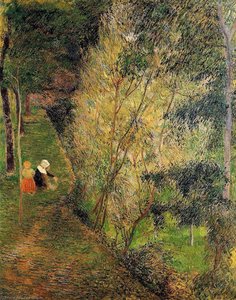
Świętą Jesieńną - piękna impresjonistyczna kompozycja Camille'a Pissarro przedstawiająca spokojną jesienną scenerię drzew i ścieżki, doskonała dla kolekcjonerów sztuki. Znajdziesz więcej dzieł artysty na TopImpressionists!
 Rozwiń treść
Camille Pissarro – pionier impresjonizmu i neoimpresjonizmu. Jego obrazy przedstawiają życie codzienne, krajobrazy i pejzaże. Wpływ na Cézanne'a, Van Gogha i innych! Odkryj jego świat.
Giclée / Wydruk artystyczny
Wydruki giclée lub płótna o jakości muzealnej, szybka realizacja i szeroki wybór opcji wykończenia. ( Zamów ręcznie malowaną reprodukcję Przejdź do wersji cyfrowej)




P118B zł10

P118H zł10

P118W zł10

P438Z zł10

P508JH zł12

P508YH zł12

P805H zł10

P805Z zł10

P919BZ zł10

P919G zł10

P919XJ zł10

P959ZH zł10

P968JZ zł12

W106C zł8

W218G zł10

W218JH zł8

W218Y zł10

W307PJ zł10

W316G zł10

W316PJ zł8

W316Y zł10

W398PJ zł8

W4111J zł10

W500HY zł15

W500JH zł15

W692G zł12

W849H zł8

W940BG zł15

W953PJ zł8




Standardowy format
personalizowane
CM
INCH
Wybierz spośród naszych standardowych rozmiarów, które zachowują oryginalne proporcje dzieła sztuki.
Loading sizes...

szerokość
wysokość
Wpisz wymaganą szerokość i wysokość, aby dopasować grafikę do ramy lub ściany. Wydruk można jedynie przyciąć, nigdy nie powiększając go poza oryginalny obraz, dlatego format o innych proporcjach spowoduje utratę części kompozycji. Przed rozpoczęciem druku prześlemy Ci cyfrowy podgląd do zatwierdzenia. Obraz wyświetlany na tej stronie nie pokazuje rzeczywistego przycięcia — jedynie podgląd oddaje ten efekt.
Dostawa na cały świat () w ciągu 2 tygodni zamiast standardowych 4/5 tygodni. (6 Listopad)

Bezpłatna ekspresowa wysyłka na cały świat

Wysokiej jakości płótno lniane

Pełne ubezpieczenie przesyłki

Gwarancja zwrotu należności celnych i podatków importowych

Gwarancja wiernego odwzorowania kolorów

100-dniowa polityka zwrotów (tylko w przypadku wad)

Gwarancja 100% zwrotu pieniędzy

Zniżka przy zakupie wielu sztuk
 Opcja ze szkłem jest dostępna wyłącznie w rozmiarach poniżej 110 cm

Świętą Jesieńną
Giclée / Wydruk artystyczny
Wymiary reprodukcji
-


Cena całkowita
zł 274
Path Under the Trees, Summer
The painting “Path Under the Trees, Summer” by Camille Pissarro stands as a quintessential embodiment of Impressionism—a movement that irrevocably altered the course of art history and championed capturing fleeting moments of sensory experience. Executed in 1877 during his prolific artistic output, this oil on canvas masterpiece isn’t merely a depiction of a rural landscape; it's an invitation to immerse oneself in the tranquil beauty of a summer afternoon. Located in the Kröller-Müller Museum in the Netherlands, alongside numerous other celebrated Impressionist artworks, “Path Under the Trees” exemplifies Pissarro’s masterful approach to portraying light and atmosphere—a cornerstone of his artistic philosophy.A Symphony of Light and Color
Pissarro's technique is characterized by loose brushstrokes that prioritize capturing the ephemeral qualities of sunlight filtering through foliage. Observe how he skillfully blends shades of emerald green, ochre yellow, and muted blues to recreate the dappled illumination dancing across the path and illuminating the trunks of trees. Unlike academic painting’s meticulous realism, Impressionism sought to convey not what the eye sees precisely but rather what it feels—the warmth of the sun on skin, the scent of wildflowers carried on a gentle breeze. The artist's deliberate disregard for sharp outlines contributes to the painting's hazy luminescence and enhances its sense of immediacy.The Scene: Rural Tranquility
The composition itself speaks volumes about Pissarro’s artistic vision. Two figures stroll along a winding path bordered by mature trees—a common motif in Impressionist landscapes reflecting the artists’ fascination with everyday life and their desire to depict scenes from ordinary existence. Scattered amongst the trees are three horses, adding dynamism to the tranquil setting. These animals aren't simply present; they serve as conduits for conveying movement and vitality within the broader panorama. The artist’s careful positioning of these elements creates a harmonious balance that draws the viewer’s gaze across the canvas.Historical Context: Impressionism's Rebellion
Impressionism emerged in Paris during the late 1860s and early 1870s as a reaction against the rigid conventions of academic art—which prioritized idealized representations and meticulous detail. Artists like Pissarro challenged established norms, advocating for painting outdoors (“plein air”) and prioritizing subjective perception over objective observation. This bold artistic stance resonated with intellectuals and artists alike who embraced a new aesthetic sensibility that valued spontaneity and emotional resonance above all else. The Impressionists’ influence extended far beyond the realm of art, impacting literature, music, and philosophy—marking a pivotal moment in cultural history.Symbolism Beyond Surface Beauty
While visually captivating, “Path Under the Trees” possesses deeper symbolic significance. The path itself represents life's journey—a meandering route through challenges and triumphs—while the trees symbolize resilience and permanence amidst the transient beauty of nature. The horses embody movement and vitality, reminding us that even in moments of stillness, life continues to unfold around us. Ultimately, Pissarro’s painting invites contemplation on themes of harmony, observation, and appreciation for the simple pleasures of existence—a timeless message conveyed with unparalleled artistic grace.- For more information on Impressionism, visit /art/list/?Filter=A@D3CRF5-Neo-Impressionism-Art-Movement.
- To learn more about the Kröller-Müller Museum’s collection, visit /art/list/?Filter=kröller-müller+museum,museum&.
- Handmade oil painting reproductions of “Path Under the Trees” are available at /pl/art/show/art-9gegx4-pl/.
Pytania i odpowiedzi
Czy obraz „Świętą Jesieńną” – Kamille Pissarro można swobodnie reprodukować?
„Świętą Jesieńną” – Kamille Pissarro znajduje się w domenie publicznej (należy do domeny publicznej – autorskie prawa majątkowe wygasły). Status ten określa zasady reprodukcji obrazu tego dzieła.
Czy dostępna jest prezentacja w formie pokazu slajdów dla „Świętą Jesieńną” – Kamille Pissarro?
Dostępna jest prezentacja zdjęć: strona Prezentacja slajdów dzieła „Świętą Jesieńną” – Kamille Pissarro.
Jaki jest zalecany rozmiar wydruku dla „Świętą Jesieńną” – Kamille Pissarro?
Dla dzieła „Świętą Jesieńną” – Kamille Pissarro sugerowana jest reprodukcja w formacie Duży format. Rozmiar można dostosować, zachowując proporcje.
Podobne dzieła




Biografia artysty
A Life Rooted in Observation: The World of Camille Pissarro
Camille Pissarro, a name synonymous with both the birth and evolution of Impressionism, was an artist whose life mirrored the shifting landscapes he so devotedly captured on canvas. Born Jacob Abraham Camille Pissarro on July 10, 1830, in Charlotte Amalie, St. Thomas – then part of the Danish West Indies, now the US Virgin Islands – his origins were as diverse and vibrant as the scenes that would later define his artistic vision. His father, a Portuguese Jewish merchant with French nationality, and his mother, from a French-Jewish family on the island, instilled in him a unique cultural heritage. This upbringing, somewhat unconventional due to familial complexities, fostered an early sensitivity to the world around him, a quality that would become the cornerstone of his artistic practice. His initial formal training at the Savary Academy near Paris provided a foundation in traditional techniques, but it was his return to St. Thomas and subsequent work as a cargo clerk that truly ignited his passion for observation. The bustling harbor, the vibrant local life, and the raw beauty of the Caribbean landscape became his first subjects, shaping an eye keenly attuned to the nuances of everyday existence.From Realism to Revolution: Artistic Development
Pissarro’s artistic journey was one of constant exploration and refinement. After a period assisting Danish painter Anton Melbye in Paris, he immersed himself in the works of masters like Gustave Courbet, Jean-Baptiste-Camille Corot, and Honoré Daumier – artists who championed realism and social commentary. He initially sought acceptance within the established art world, exhibiting at the Paris Salon, but soon found its constraints stifling. A pivotal moment came with his embrace of *plein air* painting—working outdoors directly from nature—a practice encouraged by Corot that would become central to Impressionism. This shift wasn’t merely technical; it represented a philosophical change, a desire to capture the fleeting effects of light and atmosphere, the very essence of a scene rather than its precise representation. He began experimenting with looser brushwork and brighter palettes, moving away from academic conventions towards a more subjective and expressive style. His early landscapes, though still grounded in realism, hinted at the revolutionary path he was about to forge. This period saw him grappling with finding his own voice amidst the burgeoning artistic ferment of Paris, a city undergoing rapid transformation that provided endless inspiration.The Father Figure of Impressionism
Camille Pissarro wasn’t simply *an* Impressionist; he was arguably its most steadfast and unifying force. Uniquely, he exhibited at all eight Paris Impressionist exhibitions between 1874 and 1886, acting as a stabilizing presence within a group often characterized by internal disagreements and individual ambitions. He wasn’t merely present—he actively encouraged his fellow artists, offering support, guidance, and a much-needed sense of camaraderie. This earned him the affectionate nickname “the father figure” of the movement. His commitment to artistic freedom and innovation was unwavering, even in the face of critical scorn and public indifference. He believed in the power of collective action and championed the idea of artists exhibiting independently from the Salon’s restrictive rules. Beyond his own work, Pissarro's influence extended to a younger generation of artists, including Paul Cézanne, Vincent van Gogh, and Paul Gauguin, whom he mentored and profoundly impacted. He provided them with not only technical advice but also a philosophical framework for their artistic explorations. His willingness to experiment led him briefly into Neo-Impressionism, influenced by Georges Seurat and Paul Signac’s pointillist techniques, before ultimately returning to a more personal style that blended his earlier influences with new discoveries.Landscapes of Life: Themes and Legacy
Pissarro's artistic output was remarkably diverse, yet consistently focused on the world around him. He is celebrated for his depictions of both rural and urban landscapes, often portraying scenes of everyday life—peasants working in fields, bustling Parisian streets, quiet village squares. His paintings weren’t simply picturesque views; they were social commentaries, reflecting his deep empathy for the working class and his commitment to depicting their lives with dignity and respect.- Landscapes: Renowned for capturing the beauty of both countryside and city life.
- Scenes of Parisian Life: Vivid portrayals of a rapidly changing metropolis.
- Peasant Life: Reflecting his social consciousness and empathy for the working class.

Kamille Pissarro
1830 - 1903 , Stany Zjednoczone Wyspy Dziewicze
Krótka nota
- Artistic Movement Or Style: Impresjonizm, Neo-Impresjonizm
- Artists Or Movements Influenced By This Artist:
- Cézanne
- Van Gogh
- Gauguin
- Artists Who Influenced This Artist:
- Courbet
- Corot
- Daubigny
- Date Of Birth: 10 lipca 1830
- Date Of Death: 13 listopada 1903
- Full Name: Camille Pissarro
- Nationality: Dansk-Francuz
- Notable Artworks:
- Boulevard Montmartre
- Norwood pod śniegiem
- Place Of Birth: Charlotte Amalie, Francja
Powiązane artykuły

Paul Cézanne: 25 Arcydzieł, które Zrewolucjonizowały Świat Sztuki | TopImpressionists
Odkryj 25 arcydzieł Paula Cézanne'a – od impresjonizmu po postimpresjonizm. Poznaj historie, techniki i inspiracje malarza, który zrewolucjonizował sztukę. Reprodukcje obrazów najwyższej jakości na TopImpressionists.com!

Evocations of Place: A Historical Journey Through Landscape Art
Explore the rich history of landscape art with TopImpressionists. Discover renowned artists, movements like Impressionism & Romanticism, and expert guidance for collecting timeless pieces. Find your perfect serene escape today!

Camille Pissarro: Pioneer of Impressionism & Father of Modern Art – A Legacy Explored
Explore the life & art of Camille Pissarro, a pivotal figure in Impressionism and Post-Impressionism. Discover his techniques, influences, and lasting legacy on modern painting. Learn more at TopImpressionists.

John Constable: 25 Najlepszych Obrazów Mistrza Angielskiego Krajobrazu | TopImpressionists
Odkryj 25 arcydzieł Johna Constable'a – mistrza angielskiego krajobrazu! Poznaj romantyczne pejzaże, technikę malarską i inspiracje z Dedham Vale. Reprodukcje obrazów najwyższej jakości na TopImpressionists.com. Eksploruj pełną kolekcję online!

10 Arcydzieł Impresjonizmu Krajobrazowego, Które Zdefiniowały Sztukę
Odkryj 10 arcydzieł impresjonizmu krajobrazowego! Poznaj historie Moneta, Renoir'a i Van Gogha. Inspiracje wnętrzarskie, techniki malarskie i piękne reprodukcje obrazów na TopImpressionists.com. Eksploruj kolekcję online!
Odkryj dzieła sztuki uporządkowane według tematów, stylów i cech charakterystycznych.


