


 Zobacz w skali 1:1
 Wyślij
 Udostępnij
 Szczegóły
 Przewodnik

 Pobierz plik obrazu
 Podobne obiekty
 RTG
RTG Pokaz slajdów
 Statystyki
Marathon
 Oil On Canvas
- WallArt
- Romanticism
 1848
1848- 19th Century
 157.0 x 200.0 cm
 Neue Pinakotheka
Experience the dramatic mood of Rottmann's 1848 landscape, featuring a tumultuous sky over rugged terrain; bring this masterpiece home today.
 Czytaj więcej
Explore the evocative landscapes of Carl Rottmann – German Romanticism master! Discover his mythical scenes & Bavarian vistas. A key figure in 19th-century art.
Giclée / Wydruk artystyczny
Wydruki giclée lub płótna o jakości muzealnej, szybka realizacja i szeroki wybór opcji wykończenia. ( Kup ręcznie malowany obraz Przełącz na wersję cyfrową)




P118B zł10

P118H zł10

P118W zł10

P438Z zł10

P508JH zł12

P508YH zł12

P805H zł10

P805Z zł10

P919BZ zł10

P919G zł10

P919XJ zł10

P959ZH zł10

P968JZ zł12

W106C zł8

W218G zł10

W218JH zł8

W218Y zł10

W307PJ zł10

W316G zł10

W316PJ zł8

W316Y zł10

W398PJ zł8

W4111J zł10

W500HY zł15

W500JH zł15

W692G zł12

W849H zł8

W940BG zł15

W953PJ zł8




Standardowy
na zamówienie
CM
INCH
Wybierz spośród naszych standardowych rozmiarów, które zachowują oryginalne proporcje dzieła sztuki.
Loading sizes...

szerokość
wysokość
Wpisz wymaganą szerokość i wysokość, aby dopasować grafikę do ramy lub ściany. Wydruk można jedynie przyciąć, nigdy nie powiększając go poza oryginalny obraz, dlatego format o innym proporcji spowoduje utratę części kompozycji. Przed rozpoczęciem druku prześlemy Ci cyfrowy podgląd do zatwierdzenia. Obraz wyświetlany na tej stronie nie pokazuje rzeczywistego przycięcia — jedynie podgląd oddaje ten efekt.
Dostawa na cały świat () w ciągu 2 tygodni zamiast standardowych 4/5 tygodni. (22 Październik)

Bezpłatna ekspresowa wysyłka na cały świat

Wysokiej jakości płótno lniane

Pełne ubezpieczenie transportowe

Gwarancja zwrotu należności celnych i podatków importowych

Gwarancja idealnego odwzorowania barw

100-dniowy okres na zwrot dzieła w przypadku wykrycia wad produkcyjnych

Gwarancja 100% zwrotu pieniędzy

Oferta przy zakupie wielu sztuk
 Opcja ze szkłem jest dostępna wyłącznie w rozmiarach poniżej 110 cm

Marathon
Giclée / Wydruk artystyczny
Rozmiar reprodukcji
-


Suma do zapłaty
zł 262
The Drama of the Elements: Capturing Nature's Majesty in Rottmann's Marathon
To stand before Carl Anton Joseph Rottmann’s Marathon is to be enveloped by the raw, untamed breath of nature itself. This monumental oil on canvas, painted in 1848, transcends mere landscape depiction; it is a profound meditation on power, transition, and the sublime indifference of the natural world. The scene unfolds with an almost overwhelming sense of depth, drawing the viewer's eye across rugged terrain where massive boulders litter the foreground like forgotten monuments to geological time. It is a place caught between moments—a pause before or after a monumental atmospheric event.
Mastery in Light and Shadow: Technical Brilliance
Rottmann’s technical prowess is immediately apparent, particularly in his handling of the sky. The canvas is dominated by a tumultuous, massive storm cloud that occupies the upper reaches, a brooding expanse of dark grays and deep blues. This celestial drama contrasts sharply with the muted earth tones that anchor the foreground and middle ground. Observe how the light struggles to penetrate this heavy canopy; it creates pockets of illumination on the distant rolling hills and casts dramatic shadows across the water below. The body of water acts as a perfect, somber mirror, reflecting the overcast grandeur above. This sophisticated interplay between light and shadow—a hallmark of Romantic landscape painting—gives the entire composition an electrifying, palpable atmosphere.
Historical Echoes and Emotional Resonance
Painted during the mid-19th century, Marathon speaks to the era's fascination with the sublime—that feeling of awe mixed with terror when confronted by nature’s overwhelming scale. While Rottmann draws stylistic comparisons to masters like Peter Paul Rubens in its dramatic energy, his focus here is on a more austere, almost monumental depiction of geological power. The scene evokes a sense of human insignificance against the backdrop of such vast, brooding forces. It whispers tales of endurance; the scattered life among the rocks suggests resilience, while the storm cloud hints at inevitable change.
Bringing the Sublime Home: Reproduction for the Modern Collector
For those who wish to invite this powerful emotional landscape into a contemporary setting, acquiring a high-quality reproduction allows one to experience Rottmann’s vision up close. Imagine this dramatic vista gracing your walls—a focal point that demands contemplation. The muted palette and deep sense of atmosphere make it exceptionally versatile, lending an air of cultivated drama and intellectual depth to any room. It is not merely decoration; it is a conversation piece, a window into the Romantic spirit, reminding us of nature's enduring, magnificent force.
Pytania i odpowiedzi
W którym roku i w ramach jakiego nurtu powstało dzieło "Marathon"?
"Marathon" powstało w 1848 roku jako dzieło należące do nurtu Romanticism. Data oraz przynależność do tego kierunku osadzają dzieło w historii sztuki.
Jaki jest zalecany rozmiatr wydruku dla „Marathon” autorstwa Carl Anton Joseph Rottmann?
Zalecanym rozmiarem wydruku dla dzieła "Marathon" jest Large. Dostępne są również inne rozmiary o tych samych proporcjach.
Z której epoki pochodzi "Marathon"?
Okres historyczny dzieła „Marathon” autorstwa Carl Anton Joseph Rottmann to 19th Century. Ta klasyfikacja pozwala umiejscowić pracę w historii sztuki.
Biografia artysty
The Visionary Landscapes of Carl Rottmann
Born in the tranquil setting of Handschuhsheim, Germany, in 1797, Carl Anton Joseph Rottmann emerged as a profound voice within the movement of German Romanticism. His life and artistry were deeply intertwined with the shifting landscapes of 19th-century Europe, reflecting a period where the sublime beauty of nature met the burgeoning spirit of national identity. Unlike many of his contemporaries who focused on the intimate or the domestic, Rottmann possessed an expansive vision, seeking to capture the monumental scale of the world through sweeping vistas and mythic atmospheres. His journey was one of constant movement, traveling through the rugged terrains of Greece, Italy, and the Bavarian Alps, each location leaving an indelible mark on his palette and his perception of the divine within the natural world.
The development of Rottmann’s style was a masterful evolution from classical precision to a more emotive, atmospheric approach. Influenced by the grand traditions of landscape painting, he moved beyond mere topographical accuracy to embrace the sublime—that specific Romantic quality of awe and terror inspired by the vastness of nature. His technique involved a sophisticated understanding of light and shadow, using them not just to define form, and shape, but to evoke a sense of historical weight and mythic presence. In his hands, a mountain range was never just stone and ice; it was a silent witness to antiquity, a stage for the legends of old. This ability to infuse physical geography with spiritual and historical narrative became the hallmark of his mature period.
A Legacy of Light and Myth
Rottmann’s achievements are most notably seen in his ability to bridge the gap between the tangible world and the realm of imagination. His works often serve as windows into a lost era, where the ruins of ancient civilizations seem to breathe under the soft glow of a Mediterranean sun or the misty shroud of a northern forest. Through his meticulous attention to the interplay of light upon textures—the roughness of weathered stone, the translucency of water, and the softness of clouds—he achieved a level of luminosity that captivated the art world of his time.
The historical significance of his oeuvre lies in its role as a cornerstone of Romantic landscape art. His contributions can be summarized through several key artistic pillars:
- The Synthesis of History and Nature: He pioneered a method of painting where the landscape itself acts as a vessel for historical memory, blending archaeological interest with poetic expression.
- Mastery of Atmospheric Perspective: His use of color temperature and clarity to create depth allowed viewers to feel immersed in the vastness of his depicted scenes.
- Cultural Documentation: Through his travels, he provided a visual record of the European landscapes that were central to the Romantic identity, particularly the Greek and Bavarian vistas.
Ultimately, the work of Carl Rottmann remains a testament to the power of the gaze to transform the ordinary into the extraordinary. He did not merely paint what he saw; he painted what he felt in the presence of greatness. His legacy continues to resonate with those who find beauty in the monumental and meaning in the silent, enduring features of our earth, ensuring his place as a vital figure in the tapestry of 19th-century European art.

Carl Anton Joseph Rottmann
1797 - 1850 , Germany
Najważniejsze informacje
- Full Name: Joseph Wright of Derby
- Nationality: English
- Date Of Birth: 1797
- Date Of Death: 1850
- Place Of Birth: Handschuhsheim, Germany
- Notable Artworks:
- An Experiment on a Bird in the Air Pump
- The Slaughtered Horse
- A Man Defending His Cart
- Artistic Movement Or Style: Romanticism, Neoclassicism
- Artists Who Influenced This Artist:
- Janys Zedres
- Rembrandt
- Artists Or Movements Influenced By This Artist:
- Joshua Reynolds
- Romanticism
Zobacz także powiązane artykuły
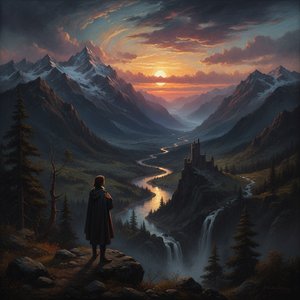
Capturing the Soul: The Emotional Majesty and Sublime Power of Romantic Landscape Painting
Explore the profound emotional depth of Romantic landscape painting. Discover how masters like Turner and Friedrich captured the sublime power of nature through intuition and imagination in this expert art history retrospective.

Capturing the Soul: The Emotional Magic and Sublime Grandeur of Romantic Landscape Painting
Explore the profound emotional depth of Romantic landscape painting. Discover how masters like Friedrich and Turner captured the sublime through light, shadow, and nature's power in this expert art history retrospective for discerning collectors.
Odkryj dzieła sztuki uporządkowane według tematów, stylów i cech charakterystycznych.


