


 Zobacz w skali 1:1
 Wyślij
 Udostępnij
 Szczegóły
 Przewodnik

 Pobierz plik obrazu
 Podobne obiekty
 RTG
RTG Pokaz slajdów
 Statystyki
Widok na Ejsee
 Akryl na płótnie
- Sztuka ścienna
- Romantic Landscape Painting
 1825
1825 76.0 x 100.0 cm
 Neue Pinakotheka
Podziwiaj piękny krajobraz Alp Bawarskich autorstwa Karla Rottmanna! Klasyka romantyzmu niemieckiego - impresjonistyczne odwzorowanie Ejsee, jednego z najpiękniejszych jezior Bawarii.
 Czytaj więcej
Explore the evocative landscapes of Carl Rottmann – German Romanticism master! Discover his mythical scenes & Bavarian vistas. A key figure in 19th-century art.
Giclée / Wydruk artystyczny
Wydruki giclée lub płótna o jakości muzealnej, szybka realizacja i szeroki wybór opcji wykończenia. ( Kup ręcznie malowany obraz Przełącz na wersję cyfrową)




P118B zł10

P118H zł10

P118W zł10

P438Z zł10

P508JH zł12

P508YH zł12

P805H zł10

P805Z zł10

P919BZ zł10

P919G zł10

P919XJ zł10

P959ZH zł10

P968JZ zł12

W106C zł8

W218G zł10

W218JH zł8

W218Y zł10

W307PJ zł10

W316G zł10

W316PJ zł8

W316Y zł10

W398PJ zł8

W4111J zł10

W500HY zł15

W500JH zł15

W692G zł12

W849H zł8

W940BG zł15

W953PJ zł8




Standardowy
na zamówienie
CM
INCH
Wybierz spośród naszych standardowych rozmiarów, które zachowują oryginalne proporcje dzieła sztuki.
Loading sizes...

szerokość
wysokość
Możesz wprowadzić własne wymiary, aby dopasować dzieło do konkretnej ramy lub przestrzeni. Jeśli wybrany rozmiar nie będzie odpowiadał proporcjom oryginalnego obrazu, przytniecie dzieło lub rozszerzymy obraz za pomocą odbicia lustrzanego lub jednolitego wypełnienia krawędzi. Przed rozpoczęciem produkcji prześlemy cyfrową wizualizację do Twojej akceptacji.
Prosimy pamiętać, że podgląd na ekranie nie odzwierciedla faktycznego przycinania ani rozszerzania. Tylko wizualizacja dokładnie pokaże końcową kompozycję.
Mimo dostępności niestandardowych rozmiarów, zalecamy wybór wymiaru z listy zdefiniowanej, aby zachować oryginalne proporcje.
Dostawa na cały świat () w ciągu 2 tygodni zamiast standardowych 4/5 tygodni. (10 Październik)

Bezpłatna ekspresowa wysyłka na cały świat

Wysokiej jakości płótno lniane

Pełne ubezpieczenie transportowe

Gwarancja zwrotu należności celnych i podatków importowych

Gwarancja idealnego odwzorowania barw

100-dniowy okres na zwrot dzieła w przypadku wykrycia wad produkcyjnych

Gwarancja 100% zwrotu pieniędzy

Oferta przy zakupie wielu sztuk
 Opcja ze szkłem jest dostępna wyłącznie w rozmiarach poniżej 110 cm

Widok na Ejsee
Giclée / Wydruk artystyczny
Rozmiar reprodukcji
-


Suma do zapłaty
zł 257
Carl Anton Joseph Rottmann – View of the Eibsee
The painting “View of the Eibsee” by Carl Anton Joseph Rottmann stands as a testament to Romantic landscape artistry, capturing not merely a picturesque vista but also an emotional resonance deeply rooted in its time. Executed in 1825, this artwork exemplifies Rottmann’s distinctive approach – prioritizing atmospheric perspective and dramatic lighting to convey sublime beauty alongside subtle social commentary. It resides within the Bavarian State Painting Collections, specifically at Pinakothek München, offering visitors a chance to experience firsthand the artistic legacy of a pivotal figure in German Romanticism.A Vision of Alpine Majesty
Rottmann’s depiction of the Eibsee – nestled amidst the towering peaks of Bavaria – is immediately striking for its expansive horizontals that dominate the canvas. These sweeping lines powerfully evoke the grandeur and immensity of the mountains, emphasizing their dominance over the surrounding landscape. The artist skillfully employs a technique characteristic of Romantic painters: meticulous observation combined with imaginative interpretation to transcend mere representation. Unlike many contemporary artists who sought to depict scenes with human presence, Rottmann deliberately avoids figures, creating an almost meditative space where the raw beauty of nature reigns supreme. This decision underscores the Romantic preoccupation with confronting the sublime – experiencing awe and wonder in the face of overwhelming natural forces.Technique and Impressionistic Hints
Rottmann’s brushwork is notable for its loose, expressive strokes that contribute to the painting's overall atmospheric effect. He utilizes oil paint on canvas, applying pigment thickly to build up texture and capturing subtle variations in tonal color. While firmly grounded in traditional landscape conventions, Rottmann subtly incorporates elements reminiscent of Impressionism – prioritizing fleeting impressions of light and shadow rather than striving for photographic accuracy. The diffused sunlight filtering through the clouds casts a soft glow upon the mountainsides, highlighting their contours and creating an illusion of depth that draws the viewer’s eye into the scene. Careful attention to detail—particularly in rendering the reflections on the lake surface—further enhances the painting's realism while maintaining its artistic integrity.Symbolism Within Simplicity
Beyond its visual splendor, “View of the Eibsee” carries symbolic weight reflecting Romantic ideals. The mountains themselves represent strength, permanence, and spiritual aspiration – qualities deeply valued during the period. Their isolation symbolizes solitude and contemplation, inviting viewers to contemplate the sublime experience of confronting nature’s grandeur. The stillness of the lake mirrors inner peace and tranquility, suggesting a harmonious relationship between humanity and the natural world. Rottmann's masterful composition serves not only to depict a beautiful landscape but also to communicate profound philosophical ideas about human existence and our connection to the cosmos.A Legacy of Romantic Landscape Painting
Carl Anton Joseph Rottmann’s “View of the Eibsee” remains an enduring masterpiece of German Romanticism, demonstrating his ability to synthesize observation with imagination and technique with emotion. Its influence can be seen in subsequent landscape painters who sought to capture similar atmospheric effects and convey comparable spiritual aspirations. Today, reproductions of this artwork continue to inspire collectors and interior designers alike—serving as a reminder that true beauty resides not merely in visual appearance but also in the profound resonance it evokes within the human spirit.Pytania i odpowiedzi
Czy „Widok na Ejsee” autorstwa Carl Anton Joseph Rottmann to dzieło o jasnej czy ciemnej kolorystyce?
Jasność dzieła „Widok na Ejsee” autorstwa Carl Anton Joseph Rottmann wynosi głęboki cień, przy luminancji na poziomie Miękki cień.
Do czego zaleca się wykorzystanie wydruku "Widok na Ejsee"?
Sugerowanym zastosowaniem dla „Widok na Ejsee” autorstwa Carl Anton Joseph Rottmann jest Akcent kolorystyczny. Może on jednak służyć również do innych celów.
W jakim rozmiarze zaleca się wydruk dzieła "Widok na Ejsee"?
Zalecanym rozmiarem wydruku dla dzieła "Widok na Ejsee" jest Duży format. Dostępne są również inne rozmiary o tych samych proporcjach.
W jaki sposób kontrast i harmonia łączą się w "Widok na Ejsee"?
Analiza kolorystyczna dzieła „Widok na Ejsee” autorstwa Carl Anton Joseph Rottmann rejestruje Oświadczenie kontrast oraz Dysonansowa paleta harmonię.
W którym roku powstało „Widok na Ejsee” autorstwa Carl Anton Joseph Rottmann?
Powstanie „Widok na Ejsee” autorstwa Carl Anton Joseph Rottmann datuje się na 1825.
Kto stworzył "Widok na Ejsee"?
Autorem dzieła „Widok na Ejsee” jest Carl Anton Joseph Rottmann. Praca ta figuruje w katalogu pod nazwiskiem Carl Anton Joseph Rottmann.
W jakim wieku Carl Anton Joseph Rottmann stworzył(a) "Widok na Ejsee"?
Gdy w 1825 roku powstało dzieło „Widok na Ejsee”, Carl Anton Joseph Rottmann – urodzony/a w 1797 – miał/a 28 lat.
Biografia artysty
The Visionary Landscapes of Carl Rottmann
Born in the tranquil setting of Handschuhsheim, Germany, in 1797, Carl Anton Joseph Rottmann emerged as a profound voice within the movement of German Romanticism. His life and artistry were deeply intertwined with the shifting landscapes of 19th-century Europe, reflecting a period where the sublime beauty of nature met the burgeoning spirit of national identity. Unlike many of his contemporaries who focused on the intimate or the domestic, Rottmann possessed an expansive vision, seeking to capture the monumental scale of the world through sweeping vistas and mythic atmospheres. His journey was one of constant movement, traveling through the rugged terrains of Greece, Italy, and the Bavarian Alps, each location leaving an indelible mark on his palette and his perception of the divine within the natural world.
The development of Rottmann’s style was a masterful evolution from classical precision to a more emotive, atmospheric approach. Influenced by the grand traditions of landscape painting, he moved beyond mere topographical accuracy to embrace the sublime—that specific Romantic quality of awe and terror inspired by the vastness of nature. His technique involved a sophisticated understanding of light and shadow, using them not just to define form, and shape, but to evoke a sense of historical weight and mythic presence. In his hands, a mountain range was never just stone and ice; it was a silent witness to antiquity, a stage for the legends of old. This ability to infuse physical geography with spiritual and historical narrative became the hallmark of his mature period.
A Legacy of Light and Myth
Rottmann’s achievements are most notably seen in his ability to bridge the gap between the tangible world and the realm of imagination. His works often serve as windows into a lost era, where the ruins of ancient civilizations seem to breathe under the soft glow of a Mediterranean sun or the misty shroud of a northern forest. Through his meticulous attention to the interplay of light upon textures—the roughness of weathered stone, the translucency of water, and the softness of clouds—he achieved a level of luminosity that captivated the art world of his time.
The historical significance of his oeuvre lies in its role as a cornerstone of Romantic landscape art. His contributions can be summarized through several key artistic pillars:
- The Synthesis of History and Nature: He pioneered a method of painting where the landscape itself acts as a vessel for historical memory, blending archaeological interest with poetic expression.
- Mastery of Atmospheric Perspective: His use of color temperature and clarity to create depth allowed viewers to feel immersed in the vastness of his depicted scenes.
- Cultural Documentation: Through his travels, he provided a visual record of the European landscapes that were central to the Romantic identity, particularly the Greek and Bavarian vistas.
Ultimately, the work of Carl Rottmann remains a testament to the power of the gaze to transform the ordinary into the extraordinary. He did not merely paint what he saw; he painted what he felt in the presence of greatness. His legacy continues to resonate with those who find beauty in the monumental and meaning in the silent, enduring features of our earth, ensuring his place as a vital figure in the tapestry of 19th-century European art.

Carl Anton Joseph Rottmann
1797 - 1850 , Germany
Najważniejsze informacje
- Full Name: Joseph Wright of Derby
- Nationality: English
- Date Of Birth: 1797
- Date Of Death: 1850
- Place Of Birth: Handschuhsheim, Germany
- Notable Artworks:
- An Experiment on a Bird in the Air Pump
- The Slaughtered Horse
- A Man Defending His Cart
- Artistic Movement Or Style: Romanticism, Neoclassicism
- Artists Who Influenced This Artist:
- Janys Zedres
- Rembrandt
- Artists Or Movements Influenced By This Artist:
- Joshua Reynolds
- Romanticism
Zobacz także powiązane artykuły

Capturing the Soul of Nature: A Journey Through the Sublime Majesty of American Romanticism
Explore the breathtaking beauty of American Romanticism. Discover how Hudson River School masters captured the sublime spirit of the wilderness through luminous oil landscapes and emotional depth. A journey into the soul of nature for the true art enthusiast.
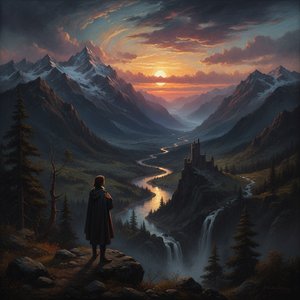
Capturing the Soul: The Emotional Majesty and Sublime Power of Romantic Landscape Painting
Explore the profound emotional depth of Romantic landscape painting. Discover how masters like Turner and Friedrich captured the sublime power of nature through intuition and imagination in this expert art history retrospective.

Capturing the Soul: The Emotional Magic and Sublime Grandeur of Romantic Landscape Painting
Explore the profound emotional depth of Romantic landscape painting. Discover how masters like Friedrich and Turner captured the sublime through light, shadow, and nature's power in this expert art history retrospective for discerning collectors.
Odkryj dzieła sztuki uporządkowane według tematów, stylów i cech charakterystycznych.


