


 Podgląd w skali 1:1
 Wyślij jako kartkę
 Udostępnij
 Szczegóły dzieła
 Przewodnik

 Pobierz obraz
 Podobne obiekty
 RTG
RTG Pokaz slajdów
 Q&A
Q&A Statystyki
DRZEWO KOROW


 Rozwiń treść
Odkryj arcydzieło Caspara Davida Friedricha – "Morze Lodowe". Romantyczny realizm, symbolika i dramatyczna piękno krajobrazu arktycznego. Idealne dla wymagających kolekcjonerów.
Ręcznie malowana reprodukcja olejowa
Ręcznie malowany obraz olejny na płótnie, wykonany na zamówienie przez naszych artystów w wybranym przez Ciebie wymiarze i oprawie. ( Przełącz na wydania drukowane Przejdź do wersji cyfrowej)




P118B zł10

P118H zł10

P118W zł10

P438Z zł10

P508JH zł12

P508YH zł12

P805H zł10

P805Z zł10

P919BZ zł10

P919G zł10

P919XJ zł10

P959ZH zł10

P968JZ zł12

W106C zł8

W218G zł10

W218JH zł8

W218Y zł10

W307PJ zł10

W316G zł10

W316PJ zł8

W316Y zł10

W398PJ zł8

W4111J zł10

W500HY zł15

W500JH zł15

W692G zł12

W849H zł8

W940BG zł15

W953PJ zł8




Standardowy format
personalizowane
CM
INCH
Wybierz spośród naszych standardowych rozmiarów, które zachowują oryginalne proporcje dzieła sztuki.
Loading sizes...

szerokość
wysokość
Wpisz wymaganą szerokość i wysokość, aby obraz pasował do Twojej ramy lub ściany. Ponieważ jest to dzieło malowane ręcznie, w przypadku rozmiaru o innych proporcjach artysta może domalować nieco więcej wokół obrazu lub przyciąć jego fragmenty — wybór należy do Ciebie. Przed rozpoczęciem pracy prześlemy Ci cyfrową wizualizację do zatwierdzenia. Obraz widoczny na tej stronie nie przedstawia rzeczywistego efektu — jedynie wizualizacja oddaje realny rezultat.
Przykłady możliwych zmian: Zamień twarz na zdjęcie klienta; Dodaj zwierzę domowe (np. zamień kota na psa); Ukryj wiadomość w tle; Zmień krajobraz lub elementy tła.
Po złożeniu zamówienia zespół TopImpressionists.com skontaktuje się z klientem drogą mailową w celu uzyskania instrukcji i prześle wizualizację projektu
Po złożeniu zamówienia zespół TopImpressionists.com skontaktuje się z klientem drogą mailową w celu uzyskania instrukcji i prześle wizualizację projektu
Dostawa na całym świecie () w ciągu 3–4 tygodni zamiast standardowych 5 tygodni. (29 Październik). Bez kompromisów w kwestii jakości.

Bezpłatna ekspresowa wysyłka na cały świat

Wysokiej jakości płótno lniane

Pełne ubezpieczenie przesyłki

Gwarancja zwrotu należności celnych i podatków importowych

Gwarancja wiernego odwzorowania kolorów

100-dniowa polityka zwrotów (tylko w przypadku wad)

Gwarancja 100% zwrotu pieniędzy

Zniżka przy zakupie wielu sztuk
 Opcja ze szkłem jest dostępna wyłącznie w rozmiarach poniżej 110 cm

DRZEWO KOROW
Technika reprodukcji
Wymiary reprodukcji
-


Cena całkowita
zł 1036
DRZEWO KOROW: Medytacja nad śmiertelnością i pięknem
„L’Arbre aux Corbeaux” (Drzewo korow) autorstwa Caspara Davida Friedricha to coś więcej niż tylko przedstawienie leśnej scenerii; to głęboka medytacja nad ludzką kondycją, oddana z dbałością o szczegół i sugestywną moc, która definiowała romantyczną wizję tego artysty. Obraz natychmiast wciąga widza w świat przesiąknięty melancholią i zadumą, zdominowany przez surowe piękno sękatego drzewa – którego gałęzie wyciągają się ku niebu niczym błagalne ramiona – na tle mrocznego nieba i niepokojącej obecności kruków. Ten ikoniczny obraz, często interpretowany jako reprezentacja śmiertelności i przemijalności ziemskiej egzystencji, wciąż rezonuje z odbiorcami setki lat po jego powstaniu.
Mistrzostwo pruskiego romantyzmu
Styl Friedricha jest kwintesencją pruskiego romantyzmu. Artysta odrzuca klasyczne ideały równowagi i harmonii, wybierając zamiast tego surową, emocjonalną odpowiedź na naturę. Kompozycja dzieła – zdominowana przez poziome linie drzewa i podłoża, skontrastowane z pionowym pędem jego gałęzi – buduje poczucie niepokoju i bezbronności. Przygaszona paleta szarości, brązów i błękitów znacząco przyczynia się do ogólnej atmosfery powagi i introspekcji. Warto zwrócić uwagę na pieczołowite oddanie tekstury: szorstkiej kory drzewa, delikatnych piór kruków czy wilgotnej ziemi pod stopami – wszystko to zostało skrupulatnie zaobserwowane i przeniesione na płótno z biegłością w technice olejnej, która antycypuje impresjonistyczne skupienie na świetle i atmosferze.
Symbolika i interpretacja
Symbolika zawarta w „L’Arbre aux Corbeaux” jest wielowarstwowa i otwarta na interpretację, odzwierciedlając szersze troski filozoficzne Friedricha. Samo drzewo było szeroko interpretowane jako symbol życia, śmierci i cyklu natury – jego gałęzie sięgające niebios kontrastują z krukami, które reprezentują rozkład i nieuchronność przemijania. Umieszczenie samotnej postaci na pierwszym planie, wpatrzonej w górę, sugeruje tęsknotę za duchowym zrozumieniem lub być może konfrontację z własną śmiertelnością. Same ptaki nie są jedynie elementami dekoracyjnymi; niosą ze sobą potężny ciężar symboliczny, często kojarzony z wróżbami i ostrzeżeniami w folklorze oraz tradycji religijnej. Niektórzy badacze wierzą, że Friedrich był pod wpływem ówczesnych idei filozoficznych związanych z koncepcją „Sehnsucht” – niemieckiego słowa opisującego głęboką, bolesną tęsknotę za czymś nieosiągalnym.
Kontekst historyczny i dziedzictwo
„L’Arbre aux Corbeaux” powstało około 1824 roku, w okresie znaczących zmian społecznych i intelektualnych w Niemczech. Rozwój industrializacji i urbanizacji rzucał wyzwanie tradycyjnym wartościom, podczas gdy romantyzm oferował alternatywę – odnowioną estymę dla natury, emocji i indywidualnego doświadczenia. Twórczość Friedricha stała się niezwykle wpływowa, kształtując bieg malarstwa pejzażowego i inspirując pokolenia artystów pragnących uchwycić wzniosłe piękno oraz duchową potęgę świata przyrody. Dziś reprodukcje takie jak ta pozwalają nam docenić geniusz Friedricha i kontemplować jego nieprzemijające pytania o życie, śmierć i nasze miejsce w ogromie natury – to ponadczasowy przekaz, który nieustannie zachwyca widzów na całym świecie.
Pytania i odpowiedzi
Jakie emocje budzi „DRZEWO KOROW” – Caspar David Friedrich?
W "DRZEWO KOROW" nastrojowi Sielski towarzyszy emocja Melancholijny.
Czy obraz „DRZEWO KOROW” – Caspar David Friedrich można swobodnie reprodukować?
Jeśli chodzi o prawa autorskie, "DRZEWO KOROW" znajduje się w należy do domeny publicznej – autorskie prawa majątkowe wygasły.
Jaki rozmiar wydruku jest zalecany dla „DRZEWO KOROW” – Caspar David Friedrich?
Dla dzieła „DRZEWO KOROW” – Caspar David Friedrich sugerowana jest reprodukcja w formacie Duży format. Rozmiar można dostosować, zachowując proporcje.
Biografia artysty
A Solitary Vision: The Life and Art of Caspar David Friedrich
Born in the Baltic port city of Greifswald in 1774, Caspar David Friedrich’s life was steeped in a melancholic atmosphere that would profoundly shape his artistic vision. His early years were marked by loss – the deaths of his mother and siblings cast a long shadow, fostering a sensitivity to mortality and transience that became central themes in his work. Initially educated by his older brother Christian in drawing, Friedrich’s formal training began at the University of Leipzig, where he pursued both art and theology, though neither degree was completed. This dual interest – a fascination with the visual world alongside a deep spiritual questioning – would prove crucial to his development as an artist. Further studies in Copenhagen honed his technical skills, exposing him to landscape painting traditions that would serve as a foundation for his unique style, yet it was not imitation he sought but rather expression—a means of conveying inner emotional states through the language of nature.The Birth of Romantic Landscape
Friedrich’s artistic journey wasn't merely about depicting scenery; it was about imbuing landscapes with profound symbolic meaning. He moved away from the meticulous detail favored by earlier artists, embracing a more personal and expressive approach. His paintings are characterized by an emphasis on the sublime – evoking feelings of awe, terror, and spiritual connection in the face of nature’s grandeur. The use of *Rückenfiguren*, figures seen from behind, became a signature element, inviting viewers to step into the scene and share in the contemplative experience. Natural elements like ancient trees, towering mountains, swirling fog, and crumbling ruins weren't simply picturesque details; they were potent symbols representing life’s cycles, spiritual longing, and the weight of history. His palette, often muted with blues, grays, and browns, further enhanced the mood of introspection and solemnity that pervades his work. He pioneered a way to depict landscapes not as mere views but as reflections of the human soul—a revolutionary concept for its time.Iconic Works and Enduring Themes
Several paintings stand out as defining examples of Friedrich’s artistic achievement. “The Abbey in the Oakwood” (1809-1810), a haunting image of a ruined churchyard enveloped by bare trees, speaks powerfully to themes of mortality and spiritual decay. It exemplifies his masterful use of light and shadow to convey emotion and invites contemplation on the passage of time. Perhaps his most famous work, “Wanderer Above the Sea of Fog” (c. 1818), encapsulates the Romantic ideal of the individual confronting the vastness and mystery of existence. The figure, silhouetted against a swirling sea of mist, embodies both human aspiration and insignificance—a poignant reminder of our vulnerability in the face of nature’s immensity. “Chalk Cliffs on Rügen” (1818) demonstrates his mastery of atmospheric effects and subtly conveys a sense of national identity—a growing concern in the fragmented political landscape of early 19th-century Germany. The composition draws inspiration from Dutch landscape painters like Jacob van Ruisdael, reflecting Friedrich’s admiration for classical artistic traditions. Even more dramatic is “The Sea of Ice” (1824), a chilling depiction of an Arctic wasteland, representing nature’s immense power and indifference to human fate—a testament to the sublime and Friedrich's ability to capture the psychological impact of confronting overwhelming natural forces. Recurring throughout his oeuvre are themes of nature as a manifestation of the divine, the fragility of humanity in the face of cosmic forces, melancholy, solitude, spiritual yearning, and a burgeoning sense of German nationalism.Influences and Artistic Development
Friedrich’s artistic development was shaped by several key influences. He studied under Johann Christian Dahl, whose landscapes instilled in him a fascination with atmospheric perspective and tonal modulation—techniques he would skillfully employ throughout his career. Furthermore, Friedrich engaged deeply with the philosophical ideas of Immanuel Kant, particularly Kant's concept of transcendental idealism, which questioned the certainty of human perception and emphasized the role of imagination in shaping our experience. These intellectual currents informed his artistic vision, prompting him to explore the relationship between mind and nature—a central preoccupation that distinguishes his work from earlier landscape painters. He rejected academic conventions, prioritizing emotional expression over precise representation, establishing himself as a pioneer of Romantic art.Legacy and Rediscovery
Caspar David Friedrich’s art resonated deeply with audiences during his lifetime, though it wasn't universally appreciated. Despite facing criticism for perceived obscurity and lack of technical virtuosity, he achieved considerable renown among fellow artists and intellectuals. However, Friedrich experienced a significant rediscovery in the late 20th century, becoming widely recognized as one of the most important figures in German Romanticism—a movement that profoundly impacted European art and culture. His emphasis on subjective experience and emotional expression paved the way for later movements like Symbolism and Surrealism, influencing generations of artists who sought to explore the inner world through visual means. He remains a pivotal figure whose work continues to inspire awe and contemplation, reminding us of the profound connection between humanity and the natural world—a connection that Friedrich eloquently captured in his unforgettable landscapes.
Caspar David Friedrich
1774 - 1840 , Niemcy
Krótka nota
- Artistic Movement Or Style: Romantyzm
- Artists Or Movements Influenced By This Artist:
- Symbolizm
- Surrealizm
- Artists Who Influenced This Artist:
- Holenderscy Mistrzowie
- J.C. Dahl
- Date Of Birth: 5 września 1774
- Full Name: Caspar David Friedrich
- Nationality: Niemiec
- Notable Artworks:
- Abbey w Oleśnicy
- Wędrowiec nad Morzem Mgły
- Żwiry Rugii
- Place Of Birth: Greifswald, Niemcy
Powiązane artykuły

Capturing the Soul of Nature: A Journey Through the Sublime Majesty of American Romanticism
Explore the breathtaking beauty of American Romanticism. Discover how Hudson River School masters captured the sublime spirit of the wilderness through luminous oil landscapes and emotional depth. A journey into the soul of nature for the true art enthusiast.

Capturing the Soul: The Emotional Magic and Sublime Grandeur of Romantic Landscape Painting
Explore the profound emotional depth of Romantic landscape painting. Discover how masters like Friedrich and Turner captured the sublime through light, shadow, and nature's power in this expert art history retrospective for discerning collectors.
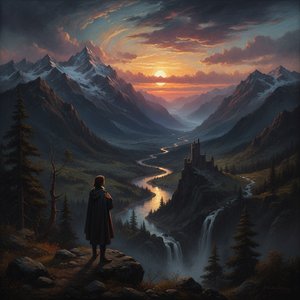
Capturing the Soul: The Emotional Majesty and Sublime Power of Romantic Landscape Painting
Explore the profound emotional depth of Romantic landscape painting. Discover how masters like Turner and Friedrich captured the sublime power of nature through intuition and imagination in this expert art history retrospective.
Odkryj dzieła sztuki uporządkowane według tematów, stylów i cech charakterystycznych.


