

 Podgląd w skali 1:1
 Wyślij jako kartkę
 Udostępnij
 Szczegóły dzieła
 Przewodnik

 Pobierz obraz
 Podobne obiekty
 RTG
RTG Pokaz slajdów
 Pytania i odpowiedzi
 Statystyki
Helena de Kay Gilder

- 79.0 x 53.0 cm


Cecilia Beaux's poignant portrait captures Helena de Kay Gilder mourning her husband, Richard Watson Gilder, symbolizing fidelity and reflecting Beaux’s evolving artistic vision. Explore this intimate depiction of grief and Victorian floral language.
 Rozwiń treść
Cecilia Beaux – wybitna malarka portretowa epoki Złotego Wieku, znana z eleganckich i psychologicznie głębokich obrazów przedstawiających postacie towarzystwa. Jej prace to świadectwo amerykańskiej historii i kultury.
Giclée / Wydruk artystyczny
Wydruki giclée lub płótna o jakości muzealnej, szybka realizacja i szeroki wybór opcji wykończenia. ( Zamów ręcznie malowaną reprodukcję Przejdź do wersji cyfrowej)




P118B zł10

P118H zł10

P118W zł10

P438Z zł10

P508JH zł12

P508YH zł12

P805H zł10

P805Z zł10

P919BZ zł10

P919G zł10

P919XJ zł10

P959ZH zł10

P968JZ zł12

W106C zł8

W218G zł10

W218JH zł8

W218Y zł10

W307PJ zł10

W316G zł10

W316PJ zł8

W316Y zł10

W398PJ zł8

W4111J zł10

W500HY zł15

W500JH zł15

W692G zł12

W849H zł8

W940BG zł15

W953PJ zł8




Standardowy format
personalizowane
CM
INCH
Wybierz spośród naszych standardowych rozmiarów, które zachowują oryginalne proporcje dzieła sztuki.
Loading sizes...

szerokość
wysokość
Wpisz wymaganą szerokość i wysokość, aby dopasować grafikę do ramy lub ściany. Wydruk można jedynie przyciąć, nigdy nie powiększając go poza oryginalny obraz, dlatego format o innych proporcjach spowoduje utratę części kompozycji. Przed rozpoczęciem druku prześlemy Ci cyfrowy podgląd do zatwierdzenia. Obraz wyświetlany na tej stronie nie pokazuje rzeczywistego przycięcia — jedynie podgląd oddaje ten efekt.
Dostawa na cały świat () w ciągu 2 tygodni zamiast standardowych 4/5 tygodni. (4 Listopad)

Bezpłatna ekspresowa wysyłka na cały świat

Wysokiej jakości płótno lniane

Pełne ubezpieczenie przesyłki

Gwarancja zwrotu należności celnych i podatków importowych

Gwarancja wiernego odwzorowania kolorów

100-dniowa polityka zwrotów (tylko w przypadku wad)

Gwarancja 100% zwrotu pieniędzy

Zniżka przy zakupie wielu sztuk
 Opcja ze szkłem jest dostępna wyłącznie w rozmiarach poniżej 110 cm

Helena de Kay Gilder
Giclée / Wydruk artystyczny
Wymiary reprodukcji
-


Cena całkowita
zł 272
A Portrait of Poignant Grace
In the quiet, evocative realm of Cecilia Beaux’s 1911 masterpiece, Helena de Kay Gilder, we encounter more than just a likeness; we enter a profound meditation on grief and enduring devotion. This intimate portrait captures Beaux’s lifelong friend and mentor at a pivotal moment of transition, following the untimely passing of her husband, the celebrated poet Richard Watson Gilder. The painting serves as a tender window into the soul of a woman navigating the heavy shadows of loss while maintaining an aura of quiet dignity. As the viewer gazes upon Gilder, there is an immediate sense of being invited into a private moment of introspection, where the weight of the past meets the resilience of the present.
Beaux’s technical mastery is on full display through her signature blend of academic realism and Impressionistic light. She renders the subject's features with remarkable precision, capturing the subtle, melancholic nuances of a gaze directed outward—a look that seems to pierce through the canvas to touch the viewer's own emotions. The artist employs delicate tonal gradations and a diffused, ethereal light that softens the edges of the figure, creating an atmosphere of dreamlike solemnity. By utilizing a deliberately abstract backdrop, Beaux eschews distracting details, allowing the suggestive brushstrokes to echo the contours of Gilded Age elegance and focus all emotional energy upon the sitter herself.
Symbolism and the Language of Memory
Beyond its formal beauty, the painting is rich with the Victorian language of flowers, a subtle yet powerful tool for communicating deep-seated emotions. Within the composition, Beaux skillfully incorporates geranium ivy, a botanical symbol representing bridal favor and fidelity. This choice is deeply intentional, serving as a silent tribute to Gilder’s enduring love and the unbreakable bonds of marriage even in the face of death. Such symbolic layers transform the portrait from a mere social record into a poetic narrative of remembrance.
For collectors and interior designers, this work offers an unparalleled opportunity to introduce a piece of profound historical depth into a curated space. The somber palette of blacks and muted tones, contrasted with the organic textures of the plants, provides a sophisticated focal point that commands attention without overwhelming its surroundings. Whether placed in a formal study or a contemplative sitting room, a high-quality reproduction of this work brings with it an air of intellectual prestige and emotional resonance, making it an exquisite choice for those who seek art that speaks to the complexities of the human experience.
Pytania i odpowiedzi
Jaki nastrój i emocje łączą się w "Helena de Kay Gilder"?
„Helena de Kay Gilder” – Cecilia Beaux emanuje Melancholic emocjami, wpisując się w ogólnie Elegant nastrój.
Czy mogę zobaczyć „Helena de Kay Gilder” – Cecilia Beaux w różnym oświetleniu?
"Helena de Kay Gilder" można badać warstwa po warstwie na stronie Analiza rentgenowska, która oferuje interaktywny podgląd inspirowany stołem świetlnym konserwatora, prezentujący jedenaście optycznych odczytów obrazu.
Jakie miejsce zajmuje „Helena de Kay Gilder” wśród powracających motywów w twórczości Cecilia Beaux?
„Helena de Kay Gilder” przedstawia victorian mourning, floral symbolism, female portraiture, domestic interior, symbolic gesture, light & shadow, family legacy, podczas gdy powracające motywy u Cecilia Beaux to victorian era portraiture, floral language symbolism, female grief remembrance, family legacy preservation, artist’s experimental style. Porównanie tych dwóch elementów ukazuje, jak dzieło nawiązuje do typowej dla tego artysty tematyki.
Podobne dzieła


Biografia artysty
A Life Illuminated: The World of Cecilia Beaux
Cecilia Beaux, born Eliza Cecilia Beaux on May 1st, 1855, in Philadelphia, emerged as a pivotal figure in American portraiture during the Gilded Age. Her story is one woven with threads of personal tragedy, determined self-reliance, and an unwavering commitment to artistic excellence. The shadow of early loss fell upon her life when her mother succumbed to puerperal fever just twelve days after Beaux’s birth, leaving a void that would subtly shape her perspective. Raised by her maternal grandmother and aunts in Philadelphia, she experienced a childhood marked by both stability and the quiet absence of parental guidance. Her father, unable to cope with his grief, returned to France for extended periods, creating a somewhat detached familial dynamic. Yet, within this framework, Beaux’s artistic inclinations were nurtured, initially through lessons with her relative Catherine Ann Drinker, an accomplished artist who served as an early role model and mentor. These formative years instilled in her not only technical skills but also a profound understanding of the dedication required to pursue a life devoted to art.Forging a Path: Education and Early Influences
Beaux’s artistic education continued under Francis Adolf van der Wielen, where she honed her skills in perspective and drawing from casts. However, the societal constraints of the Victorian era presented significant obstacles for aspiring female artists; direct study of anatomy was largely denied to women until much later in her career. Undeterred, Beaux persevered, securing a place at the prestigious Pennsylvania Academy of the Fine Arts in 1876. While she maintained a degree of independence from the fervent followers of Thomas Eakins, his progressive teaching philosophy undeniably influenced her approach to art. It was during this period that Beaux began to establish herself as a skilled portraitist, winning several Mary Smith Prizes at the Pennsylvania Academy exhibitions between 1885 and 1892 – accolades that signaled her rising talent and recognition within the artistic community. A crucial turning point came with her decision to study in Paris in 1888, immersing herself in the European art scene and absorbing influences from academic masters like Tony Robert-Fleury and William-Adolphe Bouguereau, as well as the burgeoning Impressionist movement exemplified by artists such as Édouard Manet and Edgar Degas. This exposure broadened her artistic horizons and refined her technique, laying the foundation for her distinctive style. She sought guidance from prominent Parisian instructors, carefully crafting a persona that allowed her to participate in the Salon while subtly concealing her origins.A Master of Society Portraiture
Upon returning to Philadelphia, Cecilia Beaux quickly ascended to prominence as a sought-after portraitist, capturing the essence of America’s social and intellectual elite with remarkable sensitivity and skill. Her portraits weren't merely likenesses; they were insightful studies of character, imbued with psychological depth and an elegant aesthetic sensibility. She possessed an extraordinary ability to convey not only the physical appearance but also the inner lives of her subjects. Her most celebrated works often depicted wealthy industrialists, prominent politicians, and fashionable socialites – figures who defined the era’s prosperity and influence. Beaux's brushwork was characterized by a loose, expressive style, reminiscent of Impressionism while retaining a formal elegance. She skillfully employed color to create atmosphere and mood, capturing the subtle nuances of personality with remarkable precision. Her masterpiece, *Portrait of Harriet Sears Amory* (1892), exemplifies this mastery – a vibrant depiction of a wealthy Philadelphia socialite that showcases Beaux’s technical prowess and her ability to capture both the grandeur and vulnerability of her sitter. Along with John Singer Sargent and William Merritt Chase, Beaux became one of the leading portraitists in the United States at the turn of the twentieth century. Chase himself famously declared her “not only the greatest living woman painter, but the best that has ever lived,” a testament to the high regard she held within artistic circles.Breaking Barriers and Defining a Legacy
Cecilia Beaux’s career was marked by both professional success and personal challenges. Despite facing systemic discrimination as a female artist in a male-dominated field, she persevered through sheer determination and talent. She established her own studio in Philadelphia and built a loyal clientele, attracting prominent figures from across the country. In 1895, she became the first woman to teach at the Pennsylvania Academy of the Fine Arts, a significant achievement that opened doors for future generations of female artists. Her influence extended beyond her own work; she mentored numerous students who went on to become successful painters in their own right. Beaux’s later years were marked by a shift towards more intimate and introspective portraits, often depicting family members and close friends. She continued to exhibit her work throughout her life, receiving numerous awards and accolades – including a gold medal from the National Institute of Arts and Letters – solidifying her place as one of America's most respected portraitists. She moved to New York in 1900 and built a summer house in Gloucester, Massachusetts, which became a popular stopping point for her distinguished clientele.Enduring Influence and Artistic Significance
Cecilia Beaux’s legacy extends far beyond the canvases she created. Her portraits offer a fascinating glimpse into the social and cultural landscape of the Gilded Age, capturing the elegance, ambition, and complexities of American society. Her innovative approach to portraiture – characterized by psychological depth, expressive brushwork, and a keen eye for detail – continues to inspire artists today. Beaux’s works are now held in esteemed collections such as The Westmoreland Museum of American Art and the Pennsylvania Academy of the Fine Arts, ensuring that her artistic contributions will be appreciated for generations to come. Her story serves as an inspiring example of resilience, determination, and the enduring power of art to transcend social barriers. Her ability to seamlessly blend technical mastery with emotional depth cemented her place as a significant figure in the history of American art, and continues to inspire artists and art lovers alike.
Cecilia Beaux
1855 - 1942 , Stany Zjednoczone
Krótka nota
- Artistic Movement Or Style: Impressionizm, Portret
- Artists Or Movements Influenced By This Artist: ['École des Beaux-Arts']
- Artists Who Influenced This Artist:
- Thomas Eakins
- John Singer Sargent
- Date Of Birth: 1855-05-01
- Date Of Death: 1942-09-17
- Full Name: Eliza Cecilia Beaux
- Nationality: Amerykańska
- Notable Artworks:
- Harriet Sears Amory
- Georges Clemenceau
- Place Of Birth: Filadelfia, USA
Powiązane artykuły

Victorian Naturalism: The Art of Capturing Botanical Precision and Raw Wilderness
Explore the profound beauty of Victorian Naturalism. Discover how 19th-century masters captured botanical precision and raw landscapes through meticulous oil painting techniques and scientific observation.
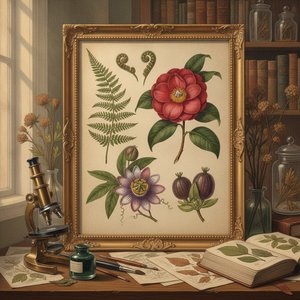
The Timeless Elegance of Victorian Botanical Painting: A Journey Through Nature's Intricate Detail and Scientific Artistry
Discover the exquisite world of Victorian botanical painting, where scientific precision meets profound aesthetic grace. Explore a journey through nature's intricate details, from legendary illustrators to the untamed beauty of Marianne North’s vibrant floral masterpieces.
Odkryj dzieła sztuki uporządkowane według tematów, stylów i cech charakterystycznych.