

 Podgląd w skali 1:1
 Wyślij jako kartkę
 Udostępnij
 Szczegóły dzieła
 Przewodnik

 Pobierz obraz
 Podobne obiekty
 RTG
RTG Pokaz slajdów
 Pytania i odpowiedzi
 Statystyki
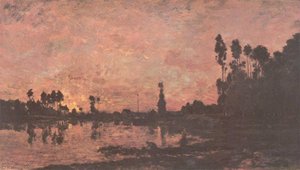
Evening on the Oise

- 99.0 x 200.0 cm


Experience Charles-François Daubigny’s serene ‘Evening on the Oise,’ a captivating 1863 landscape painting showcasing atmospheric impressionism and a tranquil river scene perfect for art lovers to admire or own.
 Rozwiń treść
Charles-François Daubigny (1817-1878) – francuski malarz Barbizon, prekursor impresjonizmu. Jego pejzaże oddają atmosferę i światło Francji. Odkryj jego dzieła na TopImpressionists!
Giclée / Wydruk artystyczny
Wydruki giclée lub płótna o jakości muzealnej, szybka realizacja i szeroki wybór opcji wykończenia. ( Zamów ręcznie malowaną reprodukcję Przejdź do wersji cyfrowej)




P118B zł10

P118H zł10

P118W zł10

P438Z zł10

P508JH zł12

P508YH zł12

P805H zł10

P805Z zł10

P919BZ zł10

P919G zł10

P919XJ zł10

P959ZH zł10

P968JZ zł12

W106C zł8

W218G zł10

W218JH zł8

W218Y zł10

W307PJ zł10

W316G zł10

W316PJ zł8

W316Y zł10

W398PJ zł8

W4111J zł10

W500HY zł15

W500JH zł15

W692G zł12

W849H zł8

W940BG zł15

W953PJ zł8




Standardowy format
personalizowane
CM
INCH
Wybierz spośród naszych standardowych rozmiarów, które zachowują oryginalne proporcje dzieła sztuki.
Loading sizes...

szerokość
wysokość
Wpisz wymaganą szerokość i wysokość, aby dopasować grafikę do ramy lub ściany. Wydruk można jedynie przyciąć, nigdy nie powiększając go poza oryginalny obraz, dlatego format o innych proporcjach spowoduje utratę części kompozycji. Przed rozpoczęciem druku prześlemy Ci cyfrowy podgląd do zatwierdzenia. Obraz wyświetlany na tej stronie nie pokazuje rzeczywistego przycięcia — jedynie podgląd oddaje ten efekt.
Dostawa na cały świat () w ciągu 2 tygodni zamiast standardowych 4/5 tygodni. (5 Listopad)

Bezpłatna ekspresowa wysyłka na cały świat

Wysokiej jakości płótno lniane

Pełne ubezpieczenie przesyłki

Gwarancja zwrotu należności celnych i podatków importowych

Gwarancja wiernego odwzorowania kolorów

100-dniowa polityka zwrotów (tylko w przypadku wad)

Gwarancja 100% zwrotu pieniędzy

Zniżka przy zakupie wielu sztuk
 Opcja ze szkłem jest dostępna wyłącznie w rozmiarach poniżej 110 cm

Evening on the Oise
Giclée / Wydruk artystyczny
Wymiary reprodukcji
-


Cena całkowita
zł 272
Charles-François Daubigny’s “Evening on the Oise”: A Symphony of Light and Leisure
Evening on the Oise, painted in 1863 by Charles-François Daubigny, is more than just a depiction of a riverbank; it's a carefully constructed meditation on light, atmosphere, and the simple pleasures of rural life. Measuring 99 x 200 cm, this canvas captures a quintessential French scene – the Oise River meandering through a verdant landscape, dotted with figures engaged in quiet pursuits. Daubigny, a pivotal figure in the development of Atmospheric Impressionism, masterfully translates his observations of nature into a work brimming with nuanced color and a palpable sense of tranquility.
- A Pioneer’s Vision: Daubigny's artistic journey was marked by a deliberate rejection of rigid academic conventions. Influenced by his travels to Italy – particularly the landscapes of the region – he sought to represent nature not as an idealized subject for historical or mythological narratives, but as it existed in its raw, fleeting beauty.
- Technique and Color: The painting’s remarkable luminosity stems from Daubigny's innovative use of color and brushwork. He employed broken strokes and juxtaposed complementary hues – blues and oranges, greens and purples – to create a shimmering effect, mimicking the play of light on water and foliage. This technique, anticipating the later developments of Impressionism, prioritizes the immediate sensory experience over precise representation.
The Essence of Atmospheric Impressionism
Daubigny’s approach aligns perfectly with the burgeoning movement of Atmospheric Impressionism, which sought to capture not just the subject matter but also the *impression* of a scene – its mood, light, and atmosphere. Unlike earlier landscape painters who meticulously rendered every detail, Daubigny focused on conveying the ephemeral qualities of the environment. The hazy evening light, diffused through the trees, is particularly striking, creating a sense of depth and mystery. Notice how he uses subtle gradations of color to suggest the movement of water and the shifting shadows cast by the foliage.
- Plein Air Painting: Daubigny was a fervent advocate for *plein air* painting – working directly outdoors – believing it essential for accurately capturing natural light. This commitment is evident in the freshness and immediacy of his brushwork.
- Social Context: The mid-19th century witnessed a growing interest in leisure activities and the beauty of the French countryside. Daubigny’s painting reflects this trend, depicting figures enjoying a peaceful evening by the river – a scene that resonated with the aspirations of a burgeoning middle class.
Symbolism and Emotional Impact
Beyond its technical brilliance, Evening on the Oise possesses a quiet emotional resonance. The scattered figures, engaged in simple activities like boating and sketching, evoke a sense of serenity and connection with nature. The river itself symbolizes fluidity, change, and the passage of time – themes frequently explored in art throughout history. The composition invites the viewer to step into the scene, to share in the tranquility and contemplate the beauty of the natural world. Daubigny’s ability to evoke such a profound sense of peace is a testament to his artistic skill and his deep understanding of the human condition.
- Historical Significance: This painting represents a crucial moment in the development of French landscape art, foreshadowing the innovations of Impressionism.
- Perfect for Your Space: A hand-painted reproduction of this artwork will bring a touch of timeless elegance and tranquility to any interior space – from a formal living room to a serene bedroom.
Pytania i odpowiedzi
Do czego zaleca się wykorzystanie wydruku "Evening on the Oise"?
Reprodukcja dzieła „Evening on the Oise” – Charles-François Daubigny jest polecana do Accent. Sugestia ta wynika z tematyki, nastroju oraz kolorystyki pracy.
Jaką harmonię kolorów prezentuje „Evening on the Oise” – Charles-François Daubigny?
„Evening on the Oise” – Charles-François Daubigny prezentuje Unified Palette harmonię kolorystyczną.
Jaki kolor najbardziej dominuje w "Evening on the Oise"?
Kolorem, który najbardziej wyróżnia się w "Evening on the Oise", jest Gray (#8e826b). Dominujący kolor ułatwia dopasowanie dzieła sztuki do wnętrza.
Podobne dzieła


Biografia artysty
A Pioneer of Atmospheric Impressionism: The Life and Art of Charles-François Daubigny
Charles-François Daubigny, born in Paris in 1817, emerged from a family deeply rooted in artistic tradition—his father, Edmé François Daubigny, and uncle, Pierre Daubigny, both painters, provided him with an early foundation. However, young Charles quickly sought to forge his own distinctive path, moving beyond the constraints of academic painting toward a more direct engagement with the natural world. His initial training under Paul Delaroche instilled technical proficiency, yet it was a journey through Italy in 1836, undertaken independently with fellow artist Henri Mignan, that truly ignited his artistic vision. This experience fostered an profound appreciation for landscape and a desire to capture its essence not as idealized scenery, but as a vibrant, living entity. Returning to Paris, Daubigny balanced commercial commissions—illustrating books and decorating panels—with his burgeoning passion for *plein air* painting, a practice that would become the cornerstone of his career. He found himself part of a thriving artistic community at the Rue des Amandiers-Popincourt, fostering collaboration and shared exploration of innovative approaches to art.The Barbizon Circle and the Embrace of Nature
Daubigny’s artistic trajectory took a significant turn in 1843 when he settled in Barbizon, a small hamlet nestled within the Forest of Fontainebleau. This marked his formal association with the Barbizon School, a group of artists who deliberately rejected the polished artifice of academic painting in favor of direct observation and honest representation of rural life and landscape. Unlike earlier landscape painters who often sketched outdoors and completed their works in the studio, the Barbizon artists—including Théodore Rousseau, Jean-François Millet, and Camille Corot—embraced *en plein air* painting as a fundamental principle. Daubigny’s friendship with Corot proved particularly influential; together they explored the forests of Fontainebleau, meticulously capturing the subtle nuances of light and atmosphere. This shared pursuit led to a deep understanding of how light interacts with surfaces, creating an illusion of depth and volume that was central to their artistic vision. Daubigny's innovative approach involved utilizing his own “Botin,” a specially constructed boat, which he used as a mobile studio to navigate the rivers of France—primarily the Seine and the Oise—allowing him unparalleled access to diverse landscapes and fostering an intimate connection with nature. This unique method became synonymous with his artistic practice, symbolizing his commitment to painting directly from life and experiencing the world firsthand.A Bridge Between Realism and Impressionism
Daubigny’s work occupies a fascinating and somewhat ambiguous position in 19th-century art history—he served as a crucial bridge between the realism of the Barbizon School and the nascent impressionistic movement. While firmly rooted in the Barbizon tradition's emphasis on faithful representation and sincerity, his paintings increasingly incorporated elements that foreshadowed the innovations of Monet, Renoir, and their contemporaries. He began to prioritize capturing fleeting moments of light, subjective perception, and atmospheric effects—qualities that would become hallmarks of impressionism. Daubigny experimented with techniques such as *cliché verre*, a process combining photography and printmaking, demonstrating an openness to new technologies and artistic possibilities. This experimentation allowed him to capture the ephemeral qualities of light and weather in ways previously unseen. Paintings like “Harvest” (1857) and "The Ponds of Gylieu" (1864) exemplify his ability to evoke a sense of mood and atmosphere, transporting the viewer into the heart of the French countryside. He wasn’t merely recording what he saw; he was conveying *how* it felt to be present in that moment—the warmth of the sun, the coolness of the shade, the subtle shifts in color.Notable Works and Lasting Influence
Charles-François Daubigny left behind a rich artistic legacy that continues to resonate today. His influence extended beyond his immediate circle of students—including his son Karl, Achille Oudinot, and Hippolyte Camille Delpy—to inspire generations of landscape painters. He played a pivotal role in fostering connections between the Barbizon School and the burgeoning Impressionist movement, introducing artists like Claude Monet and Paul Cézanne to new ways of seeing and painting. His commitment to *plein air* painting, his masterful rendering of atmospheric effects, and his willingness to embrace innovation paved the way for the radical artistic transformations that would define the late 19th century. Daubigny’s paintings are now held in prestigious museums around the world, including the Musée d'Orsay in Paris and the Cincinnati Art Museum, serving as a testament to his enduring contribution to the history of art. He remains a pivotal figure—a master of atmospheric realism who anticipated the arrival of Impressionism and helped shape the course of modern painting.- Harvest (1857): A quintessential example of Daubigny’s ability to capture rural life and atmosphere, now housed in the Musée d'Orsay.
- The Ponds of Gylieu (1864): Demonstrates his mastery of landscape painting and atmospheric perspective, currently at the Cincinnati Art Museum.
- Moonlight (1865): Showcases Daubigny’s skill in rendering nocturnal scenes with subtle light effects.
- Auvers-sur-Oise (1868): A captivating depiction of the French countryside, reflecting his deep connection to the region.
- Seascape (1876): An impressionistic depiction of waves and coastal beauty.
Key Characteristics of Daubigny’s Art
Atmospheric Perspective:** Daubigny was particularly adept at creating a sense of depth and distance through the skillful manipulation of light, color, and texture. Use of Light:* He meticulously observed how light transformed landscapes throughout the day, capturing fleeting moments of brilliance and shadow. Direct Observation:** Daubigny’s paintings are rooted in direct observation of nature, reflecting his commitment to *plein air* painting. Innovative Techniques:* His experimentation with *cliché verre* demonstrated a willingness to embrace new technologies and artistic approaches. Subject Matter:* Primarily focused on rural landscapes, rivers, and the French countryside.
Charles-François Daubigny
1817 - 1878 , Francja
Krótka nota
- Artistic Movement Or Style: Szkoła Barbizon, Impresjonizm
- Artists Or Movements Influenced By This Artist:
- Impresjonizm
- Szkoła Barbizon
- Artists Who Influenced This Artist:
- Camille Corot
- Gustaw Courbet
- Date Of Birth: 15 lutego 1817
- Date Of Death: 19 lutego 1878
- Full Name: Charles-François Daubigny
- Nationality: Francuz
- Notable Artworks:
- Żniwo (1857)
- Stawy Gylieu (1864)
- Światło księżyca (1865)
- Auvers-sur-Oise (1868)
- Place Of Birth: Paryż, Francja
Powiązane artykuły

Capturing the Light: A Journey Through the Soul of American Impressionism and the Hudson River School
Explore the luminous beauty of American Impressionism and the Hudson River School. Discover a curated journey through light, landscape, and history, celebrating the enduring legacy of masters through exquisite, hand-painted oil reproductions for the discerning art lover.
Odkryj dzieła sztuki uporządkowane według tematów, stylów i cech charakterystycznych.


