


 Zobacz w skali 1:1
 Wyślij
 Udostępnij
 Szczegóły
 Przewodnik

 Pobierz plik obrazu
 Podobne obiekty
 RTG
RTG Pokaz slajdów
 Statystyki
Shoreline
 Painting
- Contemporary Realism
 1991
1991- Contemporary
 183.0 x 176.0 cm
 Queen's University Belfast
A serene ocean scene featuring crashing waves and a coastal house comes to life in this 1991 painting by Clement McAleer, inviting you to bring the tranquil beauty of the Irish coastline into your home.
 Czytaj więcej
Clement McAleer: Irish artist known for evocative polyptychs exploring themes of nature, spirituality & the human condition. Discover his layered narratives.
Dzieło sztuki prezentowane na tej stronie podlega ochronie prawem autorskim, co oznacza, że nie mamy prawa do tworzenia ani sprzedaży jego identycznej reprodukcji. Ochrona ta jest egzekwowana na mocy umów międzynarodowych, takich jak Konwencja berneńska oraz przez przepisy prawa krajowego, w tym te określone w Prawo autorskie USA – Tytuł 17.
Metoda ta jest w pełni zgodna z przepisami prawa autorskiego, ponieważ nie polega na kopiowaniu ani powielaniu chronionego dzieła. Stanowi ona kreatywną reinterpretację – nowy obraz, który czerpie inspirację z oryginału, ale nie jest z nim tożsamy.
Giclée / Wydruk artystyczny
Wydruki giclée lub płótna o jakości muzealnej, szybka realizacja i szeroki wybór opcji wykończenia. ( Kup ręcznie malowany obraz Przełącz na wersję cyfrową)




P118B zł10

P118H zł10

P118W zł10

P438Z zł10

P508JH zł12

P508YH zł12

P805H zł10

P805Z zł10

P919BZ zł10

P919G zł10

P919XJ zł10

P959ZH zł10

P968JZ zł12

W106C zł8

W218G zł10

W218JH zł8

W218Y zł10

W307PJ zł10

W316G zł10

W316PJ zł8

W316Y zł10

W398PJ zł8

W4111J zł10

W500HY zł15

W500JH zł15

W692G zł12

W849H zł8

W940BG zł15

W953PJ zł8




Standardowy
na zamówienie
CM
INCH
Wybierz spośród naszych standardowych rozmiarów, które zachowują oryginalne proporcje dzieła sztuki.
Loading sizes...

szerokość
wysokość
Wpisz wymaganą szerokość i wysokość, aby dopasować grafikę do ramy lub ściany. Wydruk można jedynie przyciąć, nigdy nie powiększając go poza oryginalny obraz, dlatego format o innym proporcji spowoduje utratę części kompozycji. Przed rozpoczęciem druku prześlemy Ci cyfrowy podgląd do zatwierdzenia. Obraz wyświetlany na tej stronie nie pokazuje rzeczywistego przycięcia — jedynie podgląd oddaje ten efekt.
Dostawa na cały świat () w ciągu 2 tygodni zamiast standardowych 4/5 tygodni. (16 Październik)

Bezpłatna ekspresowa wysyłka na cały świat

Wysokiej jakości płótno lniane

Pełne ubezpieczenie transportowe

Gwarancja zwrotu należności celnych i podatków importowych

Gwarancja idealnego odwzorowania barw

100-dniowy okres na zwrot dzieła w przypadku wykrycia wad produkcyjnych

Gwarancja 100% zwrotu pieniędzy

Oferta przy zakupie wielu sztuk
 Opcja ze szkłem jest dostępna wyłącznie w rozmiarach poniżej 110 cm

Shoreline
Giclée / Wydruk artystyczny
Rozmiar reprodukcji
-


Suma do zapłaty
zł 262
A Symphony of Sea and Sky
In his evocative masterpiece Shoreline, Clement McAleer invites the viewer into a realm where the boundaries between the physical world and the spiritual landscape begin to blur. Created in 1991, this expansive work serves as a breathtaking window onto a coastal sanctuary, capturing the rhythmic pulse of the Atlantic spirit. The painting presents a serene seascape where the ocean’s waves crash gently against the shore, their movement rendered with a sense of eternal motion. Above this maritime dance, a clear blue sky stretches toward the horizon, bathing the entire scene in a tranquil, luminous light that evokes a profound sense of peace and clarity.
The composition is masterfully balanced, anchored by a solitary house situated near the water's edge. This architectural element provides a poignant touch of human presence amidst the vastness of nature, suggesting a harmonious coexistence between man and the elements. Scattered throughout the undulating waters are several boats, some drifting near the shoreline while others venture into the deeper, more mysterious reaches of the ocean. These vessels do more than just populate the scene; they act as symbols of journey, exploration, and the human soul navigating the unpredictable tides of existence.
The Artistry of Layered Narratives
McAleer’s technique in Shoreline reflects his reputation as a weaver of layers. While the subject matter appears picturesque, the execution delves into a complex interplay of texture and depth. The artist utilizes a method that builds upon itself, much like the very waves he depicts, creating a surface that feels alive with light and shadow. This approach allows the blue hues of the sky and sea to resonate with a multidimensional quality, drawing the eye deeper into the painting’s heart. For the discerning collector or interior designer, this depth offers a captivating visual experience that changes depending on the light and angle of observation.
The emotional impact of the piece is one of profound serenity and contemplative stillness. There is a rhythmic quality to the brushwork that mimics the ebb and flow of the tide, inducing a meditative state in the viewer. It is an artwork that does not merely decorate a space but transforms it, bringing the restorative power of the Irish coastline into the home or gallery. Whether placed in a grand living area or a quiet study, Shoreline serves as a constant reminder of nature's enduring beauty and the quiet strength found in moments of coastal solitude.
A Timeless Addition to Fine Collections
For those seeking to curate an environment of elegance and emotional depth, this reproduction offers an unparalleled opportunity. The scale of the original work—a commanding 183 x 176 cm—is captured with meticulous attention to detail, ensuring that every crest of a wave and every subtle shift in the sky's gradient is preserved. This piece is particularly suited for high-end interior design projects where a focal point of tranquil majesty is required to anchor a room.
Investing in a work by McAleer is an investment in storytelling. Shoreline stands as a testament to his ability to capture the ephemeral beauty of the natural world while touching upon the universal themes of memory and peace. It remains a timeless treasure, offering both a sophisticated aesthetic appeal and a deep, soulful connection to the rugged landscapes that inspired its creation.
Pytania i odpowiedzi
Jaki jest dominujący odcień dzieła „Shoreline” autorstwa Clement Mcaleer?
Dominującym odcieniem dzieła „Shoreline” autorstwa Clement Mcaleer jest Green to Violet Spectrum. Odcień ten stanowi bazową tonację palety barw.
W jakim pomieszczeniu najlepiej wyeksponować "Shoreline", biorąc pod uwagę jego paletę barw?
Dzięki swojej palecie barw Dark, dzieło „Shoreline” autorstwa Clement Mcaleer jest polecane do Living Room. Kolorystyka stanowi jedną z przyczyn tej sugestii.
Kto stworzył "Shoreline" i kiedy?
Clement Mcaleer stworzył/a "Shoreline" w 1991 roku.


Biografia artysty
Clement McAleer: Weaver of Layers, Explorer of the Soul
Clement McAleer (born 1949) is a profoundly evocative Irish artist whose work has captivated audiences for decades. He’s not merely a painter; he's a storyteller, meticulously constructing layered narratives within his signature polyptychs – large-scale panel paintings that unfold like illuminated manuscripts or complex tapestries. McAleer’s art isn’t about depicting reality in a straightforward manner; it’s an invitation to delve into the depths of human experience, exploring themes of spirituality, nature's enduring power, and the intricate connections between memory, faith, and the passage of time.
Born in County Donegal, Ireland, McAleer’s artistic journey began with a deep connection to the rugged landscape and ancient traditions of his homeland. His early influences were diverse – from the vibrant colors of Celtic mythology and folklore to the stark beauty of the Irish coastline and the profound spirituality rooted in its history. This formative environment instilled within him a reverence for storytelling, symbolism, and the power of visual language to convey complex emotions and ideas. He initially studied at the Limerick School of Art & Design, but it was his subsequent travels through Europe – particularly Italy – that profoundly shaped his artistic vision. The Renaissance art he encountered there, with its emphasis on perspective, light, and narrative, became a crucial element in his own approach to composition and storytelling.
The Polyptych: A Structure of Meaning
McAleer’s most distinctive feature is undoubtedly the polyptych format. Rather than presenting a single image, he creates a series of panels – typically six or more – that are arranged in a linear sequence. Each panel contributes to a larger, interconnected narrative, building upon previous images and revealing new layers of meaning as the viewer progresses through the work. This deliberate fragmentation mirrors the way memory itself works—not as a continuous stream but as a collection of disparate fragments that coalesce into a coherent whole. The use of color is particularly significant within this structure; McAleer employs a rich, almost luminous palette, often utilizing variations in tone and hue to create a sense of depth and movement across the panels.
The technique itself is meticulously executed. He begins with an underpainting, building up layers of oil paint using both brushwork and glazing techniques. This layering process allows him to achieve incredible detail and luminosity, while also creating a subtle sense of atmosphere and texture. McAleer’s work isn't about sharp outlines or precise representation; it’s about capturing the *feeling* of a place or moment—the light, the shadows, the emotional resonance.
Themes of Faith, Nature, and Memory
While McAleer’s art is often described as abstract expressionist, it resists easy categorization. It's more accurately characterized by its deeply symbolic nature and its exploration of universal themes. Recurring motifs in his work include biblical imagery, Celtic mythology, and natural elements—particularly the sea, sky, and landscape. He frequently incorporates symbols drawn from Christian iconography – crosses, angels, saints – but rarely in a literal or didactic manner. Instead, these images serve as anchors for exploring broader questions of faith, morality, and the human condition.
McAleer’s work is deeply rooted in memory—both personal and collective. He often references his childhood experiences in Donegal, evoking a sense of nostalgia and longing for a lost past. However, he also engages with larger historical narratives, drawing inspiration from Irish folklore, religious history, and the struggles of his people. His paintings are not simply representations of these themes; they’re invitations to contemplate their enduring relevance.
Notable Works and Legacy
Among McAleer's most celebrated works is “Beach” (a polyptych from the Royal Liverpool Hospital collection), a stunning depiction of a coastal sunset that captures both the beauty and melancholy of the natural world. “San Clemente,” inspired by the Basilica in Rome, showcases his ability to blend historical references with symbolic imagery. His series "Shoreline" further explores the relationship between humanity and the environment. These works, along with many others, have been exhibited widely throughout Europe and North America, earning him critical acclaim and establishing him as one of Ireland’s leading contemporary artists.
Clement McAleer's art continues to resonate deeply with audiences today because it speaks to fundamental human concerns—our connection to nature, our search for meaning, and our enduring fascination with the past. His polyptychs are not merely paintings; they are immersive experiences that invite viewers to embark on a personal journey of discovery.

Clement Mcaleer
1949 -
Najważniejsze informacje
- Full Name: Clement McAleer
- Nationality: Irish
- Date Of Birth: 1949
- Place Of Birth: WahooArt, Ireland
- Notable Artworks:
- Beach (polyptych)
- Promenade
- Shoreline
- Artistic Movement Or Style: Polyptychs, Nature Spirituality
- Artists Who Influenced This Artist: ['Theodore Clement Steele']
Zobacz także powiązane artykuły

Katsushika Hokusai: 25 Arcydzieł Sztuki Japońskiej dla Kolekcjonerów i Miłośników Dekoracji
Odkryj 25 arcydzieł Katsushika Hokusai, mistrza ukiyo-e! Poznaj historię Wielkiej Fali i innych ikonicznych drzeworytów. Inspiracje wnętrzarskie i reprodukcje obrazów najwyższej jakości na TopImpressionists.com – sztuka japońska dla Twojego domu.

Evoking the Horizon: A Historical & Artistic Exploration of Coastal Scenes in Painting
Explore the rich history of coastal scenes in painting! Discover Impressionist masterpieces, American realism & contemporary visions. Learn about renowned artists and find your perfect seascape at TopImpressionists.
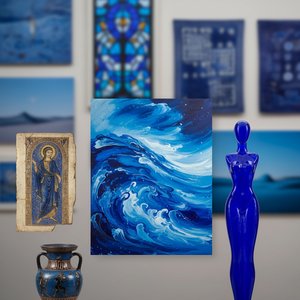
Błękit w Sztuce: Symbolika, Historia i Psychologiczne Oddziaływanie Koloru
Odkryj fascynującą historię błękitu w sztuce! Poznaj symbolikę, psychologię i wpływ tego koloru na arcydzieła renesansu i współczesne trendy. Ekspercka analiza dla miłośników sztuki.

Azure Visions: Exploring Representations of the Blue Dress in Western Art History
Explore the rich history of the blue dress in Western art! Discover its symbolism, from Renaissance masterpieces to modern interpretations by artists like Martin & Schiele. Uncover cultural meanings and artistic techniques.

Top 10 Sławnych Obrazów w Odcieniach Szaroniebieskiego – Inspiracje dla Wnętrz | TopImpressionists.com
Odkryj 10 najsłynniejszych obrazów w odcieniach szaroniebieskiego! Poznaj historie Claude Moneta, Degasa i Van Gogha. Inspiracje wnętrzarskie i reprodukcje najwyższej jakości na TopImpressionists.com – sztuka dla Twojego domu.