Pracownia — Darmowa wysyłka na cały świat — Czas dostawy: 2–6 tygodni
Obraz ze zdjęcia Lista życzeń Koszyk
Kup wydruk Kup wydrukKup ręcznie malowany obraz Kup ręcznie malowany obraz Wyślij jako kartkęWyślij jako kartkę
Szczegóły dziełaSzczegóły dzieła Dodaj do ulubionych Dodaj do ulubionych PobierzPobierz Podobne obiektyPodobne obiekty Pokaz slajdówPokaz slajdów

Pere Ubu

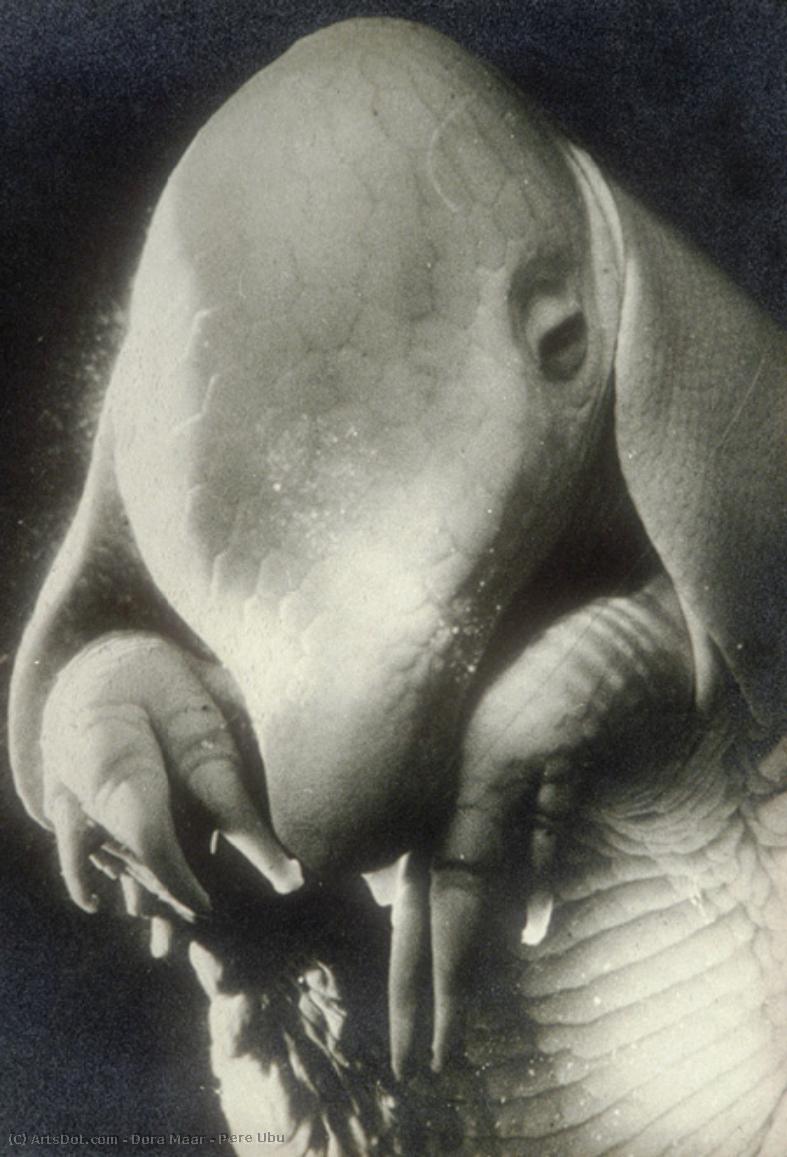
Dora Maar's haunting 'Pere Ubu' (1936) is a surrealist portrait of a nightmarish hybrid, capturing unease and psychological depth through dramatic lighting & texture – a key work by the visionary artist.

Dora Maar (1907-1973) was a French photographer & painter known for her Surrealist work, politically charged imagery of the Depression era, and iconic documentation of Picasso's *Guernica*. Explore her portraits, fashion photography, and influence on

Kup wysokiej rozdzielczości, ulepszony obraz cyfrowy o znacznie wyższej jakości niż podgląd online.

Każdy plik jest starannie przygotowywany przez naszych specjalistów przy użyciu zaawansowanych narzędzi oraz profesjonalnej, ręcznej retuszy. Dbamy o to, aby każdy obraz cechował się wyjątkową ostrością, precyzyjnym odwzorowaniem kolorów i subtelnymi detalami.

Ostateczny plik dostarczany jest drogą mailową w ciągu 72 godzin, zoptymalizowany do natychmiastowego wykorzystania w profesjonalnych zastosowaniach redakcyjnych i poligraficznych. To ta sama jakość, której ufają czołowe studia projektowe, wydawnictwa oraz galerie sztuki.

Obraz cyfrowy

Pobierz plik o wysokiej rozdzielczości do osobistego wyświetlania, druku oraz projektów kreatywnych. (Kup wydruk Kup wydrukKup ręcznie malowany obraz Kup ręcznie malowany obraz)

Suma do zapłaty

$ 24,90

W każdym zamówieniu na obraz cyfrowy znajduje się

Profesjonalna dostawa cyfrowa z gwarancją

Wybierając TopImpressionists.com, nie otrzymujesz jedynie obrazu – otrzymujesz profesjonalnie udoskonalone cyfrowe dzieło sztuki, stworzone z najwyższą precyzją i objęte gwarancją satysfakcji. Oto wszystko, co automatycznie dołączane jest do Twojego zamówienia:

shipping_icon
Błyskawiczna wysyłka e-mailowa

Plik z obrazem cyfrowym w wysokiej rozdzielczości zostanie przesłany na Twój adres e-mail w ciągu 72 godzin od złożenia zamówienia – gotowy do natychmiastowego użycia.

canvas_icon
Plik cyfrowy wzbogacony przez AI

Twoja grafika została profesjonalnie zoptymalizowana przy użyciu zaawansowanych narzędzi AI oraz ręcznej edycji, co zapewnia maksymalną szczegółowość, klarowność i wierność kolorów.

insurance_icon
Dożywotnia darmowa ponowna dostawa

Przypadkowo usunąłeś lub zgubiłeś swój plik? Bez obaw – prześlemy go Tobie ponownie w dowolnym momencie, bez żadnych opłat.

tax_icon
Bez opłat importowych – zawsze

Ciesz się swoją sztuką natychmiast, bez żadnych opłat celnych, należności ani kosztów dostawy – pliki cyfrowe są zawsze wolne od podatku.

color_icon
Gwarancja wierności kolorów

Dzięki zastosowaniu profesjonalnych narzędzi i procesów zarządzania barwą zapewniamy, że Twoje cyfrowe zdjęcie odzwierciedla oryginalne kolory tak wiernie, jak to tylko możliwe.

return_icon
60-dniowa gwarancja satysfakcji

Jeśli nie będziesz zadowolony ze swojego cyfrowego obrazu, dokonamy jego poprawki lub zwrócimy 100% kosztów w ciągu 60 dni – bez żadnych pytań.

guarantee_icon
100% Gwarancja zwrotu pieniędzy

Nie jesteś zadowolony? Otrzymaj pełny zwrot kosztów w ciągu 60 dni od otrzymania pliku cyfrowego – bez zbędnych pytań.

discount_icon
Rabaty przy zamówieniach hurtowych

Kup 3 obrazy, oszczędź 10% - Kup 5, oszczędź 15% - Kup 10+, oszczędź 20%. Idealne do projektów kreatywnych, galerii i agencji.

Szybki podgląd

  • Subject or theme: Hybrid creature, unease
  • Influences: Jarry's Ubu Roi
  • Year: 1936
  • Notable elements: Distorted features, sharp teeth
  • Artist: Dora Maar
  • Title: Pere Ubu
  • Location: Metropolitan Museum of Art

Quiz o sztuce

Do każdego pytania dotyczy tylko jedna poprawna odpowiedź.

Pytanie 1:
What artistic movement is most closely associated with Dora Maar’s ‘Pere Ubu’?
Pytanie 2:
The photograph 'Pere Ubu' primarily utilizes what photographic technique to create its unsettling effect?
Pytanie 3:
What is the likely symbolic meaning of the bars in the chair depicted in ‘Pere Ubu’?
Pytanie 4:
In what year was Dora Maar’s ‘Pere Ubu’ created?
Pytanie 5:
Dora Maar was a significant figure in the Surrealist movement, primarily known for her work as a:

Opis kolekcjonerski

The Grotesque Embrace: Dora Maar’s ‘Pere Ubu’ – A Surrealist Nightmare

Dora Maar’s “Pere Ubu,” painted in 1936, isn't merely a portrait; it’s an unsettling plunge into the subconscious, a meticulously crafted tableau of primal fear and distorted humanity. This arresting image, rendered in stark monochrome with a dramatic interplay of light and shadow, captures the essence of Surrealism at its most potent – a deliberate disruption of reality designed to evoke profound emotional responses. The painting immediately confronts the viewer with a hybrid creature, a grotesque amalgamation of human and animal features, embodying the spirit of Alfred Jarry’s chaotic and darkly humorous play, “Ubu Roi.” Maar masterfully translates this theatrical absurdity into a tangible visual experience, forcing us to confront uncomfortable questions about identity, power, and the darker aspects of our own nature.

The composition itself is deliberately jarring. The subject, positioned slightly off-center within a tightly cropped frame, dominates the space, creating an immediate sense of intimacy and unease. Maar’s use of texture is particularly striking; the skin appears rough and uneven, almost scabrous in places, while patches of fur or hair add to the creature's unsettling physicality. This tactile quality invites close inspection, drawing the viewer into a world where the boundaries between human and animal blur, and where the familiar becomes disturbingly alien. The sharp angles of the teeth, prominently displayed, contribute significantly to the painting’s menacing aura – a silent threat lurking beneath the surface.

A Study in Dramatic Lighting and Form

Maar's technical skill is evident in her masterful manipulation of light and shadow. A single, powerful light source, positioned seemingly above and slightly to the left, casts deep shadows across the creature’s face, emphasizing its contours and creating a sense of dramatic depth. This strategic use of chiaroscuro not only highlights key features but also contributes significantly to the painting's overall mood – a blend of mystery, menace, and psychological intensity. The flattened perspective, characteristic of Surrealist art, further intensifies this effect, drawing the viewer’s attention directly to the subject’s face and its unsettling expression.

The creature’s form itself is a carefully constructed distortion of reality. Maar employs angular lines to define the features – the sharp cheekbones, the elongated limbs, the gaping mouth filled with menacing teeth – creating an image that feels both vaguely familiar and profoundly disturbing. The overall effect is one of fragmentation and instability, mirroring the chaotic themes explored in Jarry’s play. It's a deliberate rejection of traditional portraiture, prioritizing emotional impact over realistic representation.

Symbolism and Historical Context

“Pere Ubu” resonates deeply within the context of its time – the turbulent years leading up to World War II. Surrealism emerged as a direct response to the horrors of the First World War and the growing anxieties surrounding fascism and political instability. Maar’s work, like that of many other artists of her generation, reflects this atmosphere of uncertainty and disillusionment. The creature in “Pere Ubu” can be interpreted as a symbol of societal decay, representing the breakdown of traditional values and the rise of irrationality and violence.

Furthermore, the painting’s connection to Jarry's play is crucial to understanding its symbolic weight. "Ubu Roi" satirizes power, greed, and ignorance, portraying a monstrous figure who embodies the worst aspects of human nature. Maar’s portrait captures this essence perfectly, transforming the theatrical caricature into a tangible image of primal fear. The inclusion of the reference “Portrait d'Ubu” on the mount further emphasizes this connection, grounding the painting within its literary and artistic lineage.

A Timeless Exploration of the Unconscious

Ultimately, "Pere Ubu" is more than just a portrait; it’s an exploration of the unconscious mind. Maar skillfully utilizes distortion, symbolism, and dramatic lighting to create an image that taps into our deepest fears and anxieties. It's a testament to her artistic vision and her ability to translate complex psychological themes into a visually arresting work of art. Reproductions of this powerful piece offer a unique opportunity to bring this unsettling yet captivating world into your home or office, serving as a constant reminder of the enduring power of Surrealism and its profound insights into the human condition.


Biografia artysty

Dora Maar: A Surrealist Visionary and Political Witness

Dora Maar (Henriette Theodora Markovitch, 1907-1997) remains a captivating figure in the annals of 20th-century art – a photographer, painter, and intellectual whose life was inextricably intertwined with the turbulent currents of Surrealism, political activism, and the passionate intensity of her relationship with Pablo Picasso. Often overshadowed by the brilliance of her collaborator, Maar’s unique vision, marked by psychological depth, social critique, and a strikingly unconventional approach to both photography and painting, deserves far greater recognition. Her story is not merely one of a muse; it's that of an artist who forged her own path amidst a world grappling with war, revolution, and the shifting landscapes of artistic expression.

  • Early Life and Artistic Beginnings: Born in Paris to a Croatian architect father and a French mother, Maar’s early years were spent in Buenos Aires. She began her artistic journey formally at the École de Beaux-Arts and the Académie Julian in Paris, honing her skills in painting before gravitating towards photography. Her initial work focused on commercial assignments for fashion magazines and advertising campaigns, providing a crucial foundation for her later explorations of form and composition.
  • Collaboration with Kéfer and Cartier-Bresson: A pivotal moment arrived in 1930 when she joined forces with Pierre Kéfer, establishing a shared studio that became a hub for artistic experimentation. This collaboration extended to the influential photographer Brassaï, with whom she shared the darkroom, absorbing his techniques and developing her own distinctive style.

The Surrealist Years: Politics, Photography, and Picasso’s Influence

Maar's involvement in the Surrealist movement was profound, extending beyond mere aesthetic affiliation to encompass a deep engagement with its political ideals. Following her introduction to Pablo Picasso in 1935, she became deeply involved in leftist groups like “masses” and the Union of Intellectuals against Fascism, reflecting a commitment to social justice that permeated much of her work. This period witnessed a significant shift in her artistic practice, influenced by both Picasso’s mentorship and her own evolving sensibilities.

  • Political Activism: Her participation in demonstrations, convocations, and the signing of manifestos like ‘When Surrealists Were Right’ demonstrated her unwavering commitment to anti-fascist causes. She documented the social and economic hardships of the Depression era through her photography, offering a starkly realistic portrayal of poverty and displacement.
  • The Picasso Connection: Her relationship with Picasso was complex and transformative. He recognized her unique perspective and incorporated her influence into his work, most notably in *Guernica*, where her photographic documentation played a crucial role. However, Maar herself acknowledged that Picasso’s portraits often obscured her true identity, stating, “All his portraits of me are lies. They're all Picassos. Not one is Dora Maar.”
  • Photographic Innovations: During this time, Maar experimented with photographic techniques, pushing the boundaries of the medium through photomontage and exploring themes of psychology, dreams, and inner states. Her work in the darkroom was particularly innovative, utilizing unconventional methods to create hauntingly evocative images.

A Photographic Legacy: Portraits, Fashion, and Social Commentary

Maar’s photographic output spanned a diverse range of subjects, from glamorous fashion shoots to poignant depictions of social unrest. Her portraits are particularly striking – characterized by their psychological intensity, fragmented forms, and often unsettling gazes. She possessed an uncanny ability to capture the essence of her subjects, revealing both their beauty and their vulnerability.

  • Iconic Portraits: Among her most celebrated photographs are portraits of Jacqueline Lamba (Picasso’s wife), André Breton, and, of course, Pablo Picasso himself. These images are not merely representations of appearance but rather explorations of personality and inner life.
  • Fashion and Advertising: Her work in the fashion industry showcased a keen eye for composition and an understanding of visual aesthetics, while her documentary photographs documented the realities of poverty and social inequality during the Depression.
  • The ‘Weeping Woman’ Influence: Picasso's iconic *Weeping Woman* series, inspired by Maar’s own emotional state, stands as a testament to the profound impact she had on his artistic vision.

Beyond Picasso: A Lasting Artistic Contribution

While often remembered primarily as Picasso's muse and lover, Dora Maar’s artistic legacy extends far beyond this association. Her pioneering work in photography – particularly her exploration of psychological themes and unconventional techniques – established her as a significant figure within the Surrealist movement. Her commitment to social justice and political activism further enriched her artistic practice, imbuing her work with a powerful sense of empathy and critical awareness. Today, Maar’s photographs continue to resonate with viewers, offering a glimpse into a complex and fascinating life—a testament to an artist who defied expectations and left an indelible mark on the world of art.

Dora Maar

Dora Maar

1907 - 1973 , France

Krótka nota

  • Artistic Movement Or Style: Surrealist Photography
  • Artists Or Movements Influenced By This Artist:
    • Pablo Picasso
    • André Breton
  • Artists Who Influenced This Artist:
    • Brassaï
    • Louis-Victor Emmanuel Sougez
  • Date Of Birth: November 22, 1907
  • Date Of Death: July 16, 1997
  • Full Name: Henriette Theodora Markovitch
  • Nationality: French
  • Notable Artworks:
    • Portrait of Dora Maar
    • Female Bust (Portrait de Dora Maar)
    • Dora Maar au Chat
  • Place Of Birth: Paris, France
© TopImpressionists.com — Wszelkie prawa zastrzeżone  ·  100% Ręcznie malowane · Gwarancja satysfakcji · Darmowa wysyłka na cały świat
VISA MASTERCARD

