

Shown: · With its frame:
 Podgląd w skali 1:1
 Wyślij jako kartkę
 Udostępnij
 Szczegóły dzieła
 Przewodnik

 Pobierz obraz
 Podobne obiekty
 RTG
RTG Pokaz slajdów
 Q&A
Q&A Statystyki

zł 1046
Ręcznie malowana reprodukcja olejowa
Ręcznie malowany obraz olejny na płótnie, wykonany na zamówienie przez naszych artystów w wybranym przez Ciebie wymiarze i oprawie. ( Przełącz na wydania drukowane Przejdź do wersji cyfrowej)
Size
·Standardowy format
personalizowane
CM
INCH
Wybierz spośród naszych standardowych rozmiarów, które zachowują oryginalne proporcje dzieła sztuki.
Loading sizes...

szerokość
wysokość
Wpisz wymaganą szerokość i wysokość, aby obraz pasował do Twojej ramy lub ściany. Ponieważ jest to dzieło malowane ręcznie, w przypadku rozmiaru o innych proporcjach artysta może domalować nieco więcej wokół obrazu lub przyciąć jego fragmenty — wybór należy do Ciebie. Przed rozpoczęciem pracy prześlemy Ci cyfrową wizualizację do zatwierdzenia. Obraz widoczny na tej stronie nie przedstawia rzeczywistego efektu — jedynie wizualizacja oddaje realny rezultat.
 Dowiedz się więcej
Finish
·
White zł1

Blurside zł1

Extended zł1

P118B zł10

P118H zł10

P118W zł10

P438Z zł10

P508JH zł12

P508YH zł12

P805H zł10

P805Z zł10

P919BZ zł10

P919G zł10

P919XJ zł10

P959ZH zł10

P968JZ zł12

W106C zł8

W218G zł10

W218JH zł8

W218Y zł10

W307PJ zł10

W316G zł10

W316PJ zł8

W316Y zł10

W398PJ zł8

W4111J zł10

W500HY zł15

W500JH zł15

W692G zł12

W849H zł8

W940BG zł15

W953PJ zł8

H24-GOLD zł30

H24-SILVER zł30

H36-GOLD zł45

H36-SILVER zł45
Shipped in a protective tube, ready for your own framer.
Above 105 cm the frame is shipped as a kit for a professional framer — read the details.
Extras
optionalWhat do the extras include?
Examples of what can be changed: Replace face with customer photo; Add pet (e.g., replace cat with dog); Include hidden message in background; Change background landscape or elements.
After order, TopImpressionists.com team will email client for instructions and provide a mockup preview
After order, TopImpressionists.com team will email client for instructions and provide a mockup preview
Dostawa na całym świecie () w ciągu 3–4 tygodni zamiast standardowych 5 tygodni. (1 Listopad). Bez kompromisów w kwestii jakości.
Lakier ochronny
Etykieta obiektu
Szczegóły grawerowanej brązowej tabliczki
This elegant plaque features the artist's name and the title of the artwork, finely engraved for a timeless presentation.
It is made from bronze with a refined, elegant finish. The text is precisely laser-engraved for a sharp and permanent result. Measuring 9x2 cm, the plaque is compact yet easy to read. It's built to be durable and scratch-resistant, offering a professional, museum-quality look. Mounting is simple thanks to the included adhesive backing.
Szczegóły przezroczystej tabliczki akrylowej
The plaque includes essential engraved details such as the artist's name, the title of the artwork, the date it was created, the type of media used-like oil on canvas or watercolor-a brief description of the piece, and a QR code that links to the complete artwork information.
It is crafted from clear acrylic, offering a sleek, modern appearance. The text is UV-engraved in black to ensure strong visual contrast. With a size of 10x15 cm, it ensures optimal readability. It comes equipped with two metal hooks for secure wall mounting. The plaque is designed to be weather-resistant, making it suitable for various environments, and it includes interactive features that work seamlessly with smartphone scanning.
Szczegóły czarnej tabliczki akrylowej
This elegant plaque includes engraved information such as the artist's name, the title of the artwork, the date it was created, the type of media used (like oil on canvas or watercolor), a short description of the artwork, and a QR code for quick access to more information.
The plaque itself is made from refined black acrylic with a premium finish. The text is laser-engraved in white for high contrast and readability. Its size is 10x15 cm, designed to be easy to read. It comes with two metal hooks for professional mounting. The design is sleek and fits any interior style. It is also weather-resistant and durable, with built-in digital integration for mobile compatibility.
Opcja ze szkłem jest dostępna wyłącznie w rozmiarach poniżej 110 cm
 Opcja ze szkłem jest dostępna wyłącznie w rozmiarach poniżej 110 cm
- Bezpłatna ekspresowa wysyłka na cały świat
- Wysokiej jakości płótno lniane
- Pełne ubezpieczenie przesyłki
- Gwarancja zwrotu należności celnych i podatków importowych
- Gwarancja wiernego odwzorowania kolorów
- 100-dniowa polityka zwrotów (tylko w przypadku wad)
- Gwarancja 100% zwrotu pieniędzy
- Zniżka przy zakupie wielu sztuk


Opis obiektu
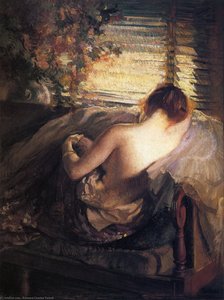
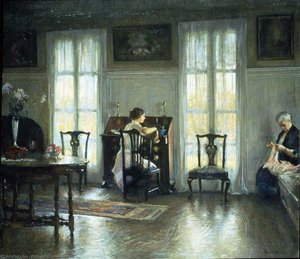
Explore Edmund Tarbell’s ‘Mary Reading,’ a realistic oil painting of quiet domesticity & intellectual pursuit. Admire its Impressionistic brushwork & dramatic lighting – a serene masterpiece.
Biografia artysty
Edmund Charles Tarbell (1862-1938) – amerykański malarz impresjonistyczny i członek grupy „Dziesięciu Amerykańskich Malarzy”. Jego twórczość skupia się na obrazach wnętrz i codziennego życia, z wykorzystaniem delikatnych kolorów i światła. Znane dzieła: „Sad”, „Portret Samotnego Żołnierza”.
About the painting
Quick facts and art quiz
About Edmund Tarbell

Edmund Tarbell
1862 - 1938, Stany Zjednoczone
Biografia artysty
Early Life and Education
Edmund Charles Tarbell, a name synonymous with the serene beauty of American Impressionism, was born in Groton, Massachusetts, in 1862 – a town steeped in history and nestled amidst the rolling hills of New England. His early life, however, was marked by profound loss; his father, Edmund Whitney Tarbell, tragically succumbed to typhoid fever just a few years after his birth, leaving young Edmund and his sister, Nellie Sophia, under the care of their mother, Mary Sophia Fernald, who later remarried. This formative experience undoubtedly shaped his sensitivity and empathy, qualities that would profoundly influence his artistic vision. His initial artistic training began at the Massachusetts Normal Art School, a respected institution dedicated to nurturing aspiring artists. From there, he sought further refinement through an apprenticeship with Forbes Lithographic Company in Boston – a crucial step for a young man eager to hone his skills in the burgeoning world of commercial art. It was during this period that Tarbell’s eye began to develop a keen appreciation for detail and composition, laying the groundwork for his later mastery. A pivotal moment arrived in 1879 when he had the extraordinary opportunity to study under Otto Grundmann at the School of the Museum of Fine Arts in Boston. This mentorship proved transformative; Grundmann, a German-born artist known for his meticulous realism and masterful use of light, instilled in Tarbell a deep respect for traditional techniques while simultaneously encouraging him to explore new approaches. The influence of Grundmann’s teachings is evident throughout Tarbell's oeuvre, particularly in the careful rendering of surfaces and the subtle interplay of light and shadow.Artistic Career and Style
Tarbell’s artistic journey spanned a remarkable range of mediums and subjects – from illustration and private art instruction to portrait painting. In 1888, he embarked on a new chapter by marrying Emeline Souther, an artist in her own right, who became his lifelong companion and frequent muse. Their shared passion for art fostered a creative environment filled with intellectual stimulation and mutual support. Tarbell’s artistic style is most accurately described as American Impressionism – a movement that sought to capture the fleeting moments of light and atmosphere characteristic of the natural world. Unlike some of his European counterparts, Tarbell was deeply rooted in the traditions of American art, drawing inspiration from both the Romantic landscapes of the Hudson River School and the burgeoning realism of the Ashcan School. His paintings are characterized by a luminous quality, achieved through the careful layering of colors and the use of broken brushstrokes to create an impressionistic effect. He became particularly renowned for his portraits, capturing the essence of his subjects with remarkable sensitivity and insight. Yet, it was his depictions of domestic scenes – intimate glimpses into the lives of ordinary families – that truly resonated with audiences. His paintings often featured women engaged in everyday activities: reading, knitting, playing musical instruments, or simply enjoying a quiet moment together. These scenes were imbued with a sense of warmth, nostalgia, and timeless beauty. A defining work in Tarbell’s career is *In the Orchard* (1891), a masterpiece that perfectly encapsulates his artistic vision. The painting depicts a family gathered amidst an apple orchard, bathed in the golden light of late afternoon. The figures are rendered with remarkable detail and realism, yet they possess a dreamlike quality – as if suspended in time. *In the Orchard* is considered a seminal work not only for its technical brilliance but also for its ability to evoke a powerful sense of nostalgia and connection to the past. Tarbell’s later works explored interior scenes, often depicting Colonial Revival interiors filled with antique furniture, lace curtains, and delicate porcelain objects. These paintings were imbued with a subtle elegance and a quiet dignity, reflecting Tarbell's fascination with American history and tradition. He skillfully blended elements of realism and Impressionism to create images that were both visually stunning and emotionally resonant.Membership in "Ten American Painters" and Guild of Boston Artists
In 1897, Tarbell became a founding member of the influential group known as “Ten American Painters.” This collective, comprised of artists like John H. White, Joseph Penway Dodge, and others, emerged as a counterpoint to the established art institutions of the time. The "Ten" sought to promote American art and provide an alternative exhibition venue for their work – a bold move that challenged the dominance of European artistic styles. The group’s commitment to portraying contemporary life with realism and Impressionistic techniques helped to elevate the status of American painting on the international stage. Tarbell's membership in "Ten American Painters" solidified his position as a leading figure in the Boston School of painters, a movement characterized by its focus on capturing the beauty of everyday life and its rejection of academic conventions. In 1914, Tarbell further demonstrated his dedication to supporting fellow artists by co-founding the Guild of Boston Artists – an organization dedicated to fostering artistic community and providing opportunities for local painters. He served as its first president until 1924, guiding the guild through its formative years and establishing it as a vital resource for artists in the Boston area.Major Achievements and Legacy
Throughout his career, Edmund Charles Tarbell’s work garnered widespread acclaim and recognition. His paintings are held in prestigious collections around the world – including the Smithsonian American Art Museum, the Corcoran Gallery of Art, the National Academy of Design, and numerous private collections. His ability to capture the essence of domestic life and portray individuals with warmth and authenticity earned him a devoted following among collectors and art enthusiasts alike. Tarbell’s legacy extends far beyond his individual paintings; he played a crucial role in shaping the development of American Impressionism and fostering a vibrant artistic community in Boston. His influence can be seen in subsequent generations of artists who embraced his focus on everyday subjects and his commitment to portraying life with honesty and sensitivity. He is remembered not only as a gifted painter but also as a dedicated teacher, mentor, and advocate for the arts.Historical Significance
As a member of “Ten American Painters,” Tarbell contributed significantly to challenging the dominance of European artistic styles and promoting a distinctly American aesthetic. His work reflects the changing social landscape of late 19th and early 20th century America – capturing the values, aspirations, and anxieties of a burgeoning middle class. Tarbell’s legacy is intertwined with the broader narrative of American art history, serving as a testament to the enduring power of observation, empathy, and artistic vision. His paintings offer a poignant glimpse into the past, reminding us of the beauty and complexity of human experience.Quick facts about Edmund Tarbell
- Artistic Movement Or Style: Impresjonizm amerykański
- Artists Or Movements Influenced By This Artist: ['Boston School']
- Artists Who Influenced This Artist:
- Otto Grundmann
- Johannes Vermeer
- Date Of Birth: 26 kwietnia 1862
- Date Of Death: 1 sierpnia 1938
- Full Name: Edmund Charles Tarbell
- Nationality: Amerykański
- Notable Artworks:
- Sad w Ogrodzie
- Pośędzie
- Po Balu
- Place Of Birth: Groton, USA
Podobne dzieła




Odkryj dzieła sztuki uporządkowane według tematów, stylów i cech charakterystycznych.


Edmund Tarbell
Mary Reading
() ·
With its frame: · Hand-painted in oil on linen
Total