
Przedstawiony: · Wraz z ramą:
 Podgląd w skali 1:1
 Wyślij jako kartkę
 Udostępnij
 Szczegóły dzieła
 Przewodnik

 Pobierz obraz
 Podobne obiekty
 RTG
RTG Pokaz slajdów
 Pytania i odpowiedzi
 Statystyki
- 187.0 x 107.0 cm


zł 1053
Ręcznie malowana reprodukcja olejowa
Ręcznie malowany obraz olejny na płótnie, wykonany na zamówienie przez naszych artystów w wybranym przez Ciebie wymiarze i oprawie. ( Przełącz na wydania drukowane Przejdź do wersji cyfrowej)
Wymiar
·Standardowy format
personalizowane
CM
INCH
Wybierz spośród naszych standardowych rozmiarów, które zachowują oryginalne proporcje dzieła sztuki.
Ładowanie rozmiarów...

szerokość
wysokość
Wpisz wymaganą szerokość i wysokość, aby obraz pasował do Twojej ramy lub ściany. Ponieważ jest to dzieło malowane ręcznie, w przypadku rozmiaru o innych proporcjach artysta może domalować nieco więcej wokół obrazu lub przyciąć jego fragmenty — wybór należy do Ciebie. Przed rozpoczęciem pracy prześlemy Ci cyfrową wizualizację do zatwierdzenia. Obraz widoczny na tej stronie nie przedstawia rzeczywistego efektu — jedynie wizualizacja oddaje realny rezultat.
 Dowiedz się więcej
Wykończenie
·
Białe krawędzie zł1

rozmyte krawędzie zł1

Przedłużony zł1

P118B zł10

P118H zł10

P118W zł10

P438Z zł10

P508JH zł12

P508YH zł12

P805H zł10

P805Z zł10

P919BZ zł10

P919G zł10

P919XJ zł10

P959ZH zł10

P968JZ zł12

W106C zł8

W218G zł10

W218JH zł8

W218Y zł10

W307PJ zł10

W316G zł10

W316PJ zł8

W316Y zł10

W398PJ zł8

W4111J zł10

W500HY zł15

W500JH zł15

W692G zł12

W849H zł8

W940BG zł15

W953PJ zł8

H24-GOLD zł30

H24-SILVER zł30

H36-GOLD zł45

H36-SILVER zł45
Dostarczane w ochronnej tubie, gotowe do oprawienia przez Twojego ramiarza.
Dodatki
opcjonalneCo obejmują dodatki?
Przykłady możliwych zmian: Zastąpienie twarzy zdjęciem klienta; Dodanie zwierzęcia (np. zamiana kota na psa); Ukrycie wiadomości w tle; Zmiana krajobrazu lub elementów tła.
Po złożeniu zamówienia zespół TopImpressionists.com skontaktuje się z klientem drogą mailową w celu uzyskania instrukcji i prześle podgląd projektu
Po złożeniu zamówienia zespół TopImpressionists.com skontaktuje się z klientem drogą mailową w celu uzyskania instrukcji i prześle podgląd projektu
Dostawa na całym świecie () w ciągu 3–4 tygodni zamiast standardowych 5 tygodni. (10 Listopad). Bez kompromisów w kwestii jakości.
Lakier ochronny
Etykieta obiektu
Szczegóły grawerowanej brązowej tabliczki
This elegant plaque features the artist's name and the title of the artwork, finely engraved for a timeless presentation.
It is made from bronze with a refined, elegant finish. The text is precisely laser-engraved for a sharp and permanent result. Measuring 9x2 cm, the plaque is compact yet easy to read. It's built to be durable and scratch-resistant, offering a professional, museum-quality look. Mounting is simple thanks to the included adhesive backing.
Szczegóły przezroczystej tabliczki akrylowej
The plaque includes essential engraved details such as the artist's name, the title of the artwork, the date it was created, the type of media used-like oil on canvas or watercolor-a brief description of the piece, and a QR code that links to the complete artwork information.
It is crafted from clear acrylic, offering a sleek, modern appearance. The text is UV-engraved in black to ensure strong visual contrast. With a size of 10x15 cm, it ensures optimal readability. It comes equipped with two metal hooks for secure wall mounting. The plaque is designed to be weather-resistant, making it suitable for various environments, and it includes interactive features that work seamlessly with smartphone scanning.
Szczegóły czarnej tabliczki akrylowej
This elegant plaque includes engraved information such as the artist's name, the title of the artwork, the date it was created, the type of media used (like oil on canvas or watercolor), a short description of the artwork, and a QR code for quick access to more information.
The plaque itself is made from refined black acrylic with a premium finish. The text is laser-engraved in white for high contrast and readability. Its size is 10x15 cm, designed to be easy to read. It comes with two metal hooks for professional mounting. The design is sleek and fits any interior style. It is also weather-resistant and durable, with built-in digital integration for mobile compatibility.
Opcja ze szkłem jest dostępna wyłącznie w rozmiarach poniżej 110 cm
 Opcja ze szkłem jest dostępna wyłącznie w rozmiarach poniżej 110 cm
- Bezpłatna ekspresowa wysyłka na cały świat
- Wysokiej jakości płótno lniane
- Pełne ubezpieczenie przesyłki
- Gwarancja zwrotu należności celnych i podatków importowych
- Gwarancja wiernego odwzorowania kolorów
- 100-dniowa polityka zwrotów (tylko w przypadku wad)
- Gwarancja 100% zwrotu pieniędzy
- Zniżka przy zakupie wielu sztuk


Opis obiektu
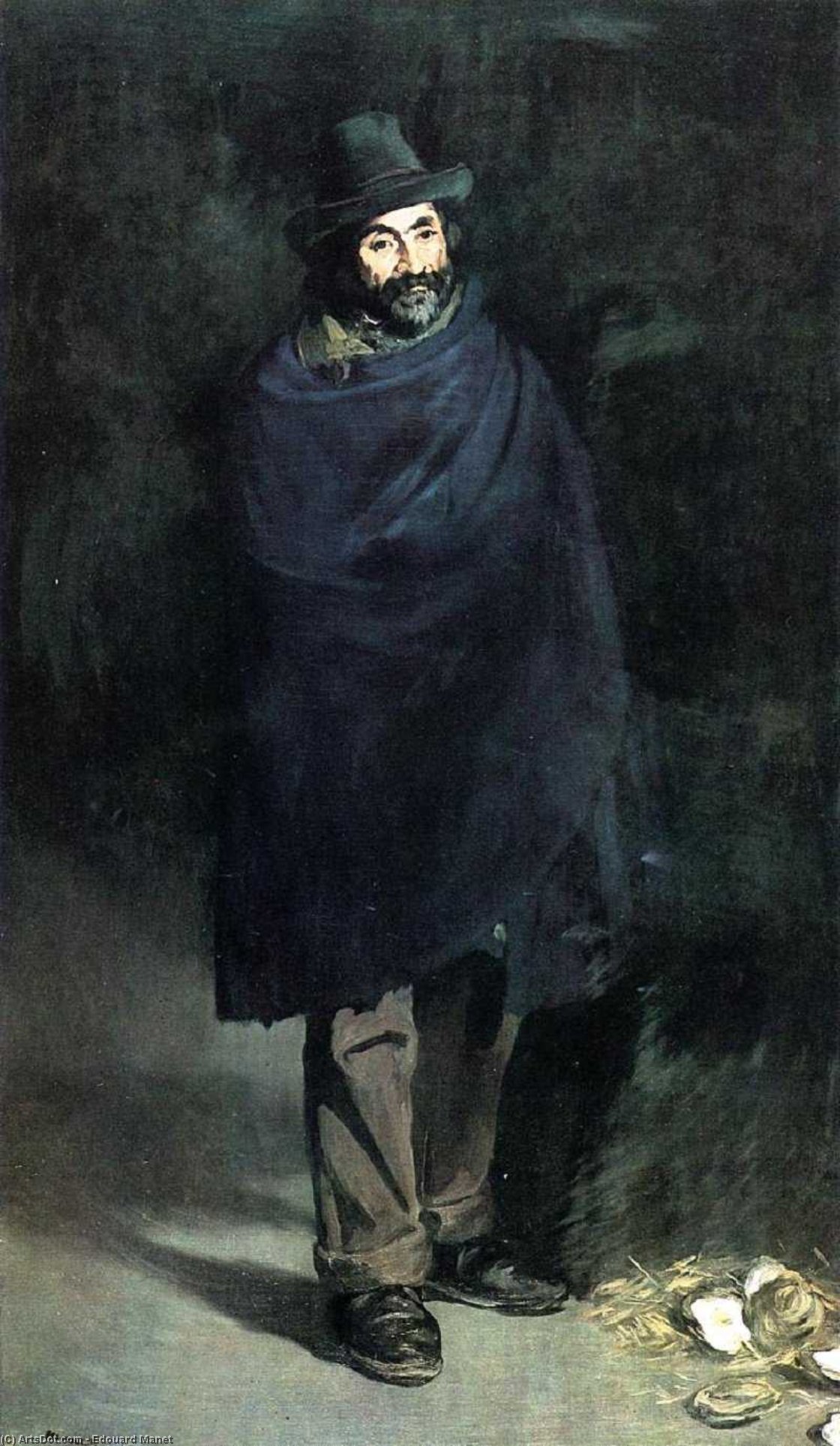
Édouard Manet's 'The Philosopher' (1867) captures a contemplative figure amidst nature, blending Realism and Impressionism. Explore the painting’s symbolism, artistic context, and legacy at The Art Institute of Chicago.
Biografia artysty
Manet połączył realizm z impresjonizmem dzięki Olympi. Odkryj rewolucyjne dzieła tego paryskiego mistrza.
O obrazie
The Philosopher: A Window into Manet’s Modern Soul
Édouard Manet's *The Philosopher*, painted in 1867, isn’t merely a portrait; it’s a carefully constructed tableau that encapsulates the burgeoning spirit of modern art. This oil-on-canvas work, measuring a substantial 187 x 107 cm, invites us into a quiet contemplation, a moment suspended between observation and thought. The subject, a man draped in a long coat and hat – a figure instantly recognizable as embodying intellectualism – stands on a Parisian street, his hands tucked casually into his pockets, radiating an aura of profound introspection. Yet, it’s not the individual that commands our attention entirely, but rather the subtle orchestration of elements surrounding him: the birds perched above, the clock subtly hinting at time's passage, and the carefully chosen background details. These aren’t merely decorative flourishes; they contribute to a layered narrative, inviting us to consider the nature of existence itself. The painting emerged from a pivotal moment in art history – a period of intense transition between Realism and Impressionism. Manet, already known for his provocative works like *Le Déjeuner sur l'herbe* and *Olympia*, was pushing boundaries with each new creation. He deliberately challenged academic conventions by depicting everyday life, often featuring ordinary people in unidealized ways. *The Philosopher* exemplifies this approach, eschewing the polished surfaces and heroic narratives favored by earlier generations of artists. Instead, Manet presents a scene stripped bare of sentimentality, focusing on the raw reality of urban existence. The muted palette – dominated by browns, grays, and ochres – reinforces this sense of understated observation. Notice how he employs loose brushstrokes, characteristic of his style, creating an almost hazy effect that softens the edges and contributes to the painting’s contemplative mood. Manet's stylistic choices are deeply rooted in both Realism and Impressionism. He retains a degree of realism in his depiction of the subject and setting, meticulously rendering the details of the man’s clothing and the streetscape. However, he also embraces the Impressionist emphasis on capturing fleeting moments of light and color. The dappled sunlight filtering through the background suggests movement and atmosphere, while the subtle shifts in tone create a sense of depth and spatial ambiguity. This blending of styles – realism tempered by impressionistic sensitivity – is what makes Manet such a revolutionary figure. He wasn’t simply painting what he saw; he was actively shaping how we perceive the world around us. The inclusion of birds, for instance, adds a layer of symbolic richness. Birds are often associated with freedom and intellect, further reinforcing the subject's philosophical nature. The historical context surrounding *The Philosopher* is crucial to understanding its significance. Manet’s work coincided with a period of rapid social and economic change in Paris – the rise of industrialization, urbanization, and a growing sense of alienation. His paintings reflected this turbulent atmosphere, capturing the anxieties and uncertainties of modern life. The painting's placement within the broader context of Manet's career reveals his deliberate attempt to challenge established artistic norms and pave the way for future generations of artists. *The Philosopher* stands as a testament to Manet’s innovative spirit and his profound impact on the development of modern art, ultimately finding its home in the prestigious Art Institute of Chicago, where it continues to captivate viewers with its quiet intensity and enduring relevance.Artistic Details & Symbolism
Let's delve deeper into the specific details that contribute to *The Philosopher’s* evocative power. The man himself is presented in a state of profound contemplation, his gaze directed towards an unseen horizon. His beard and mustache lend him an air of intellectual authority, solidifying his role as a philosopher. Note the careful rendering of his clothing – the long coat, the hat, the simple pocket watch – each element contributing to a sense of timelessness and dignity. The background is equally significant. The two birds perched above suggest a connection to nature, while the clock subtly reminds us of the relentless passage of time. These seemingly minor details are carefully orchestrated to create a harmonious whole, inviting viewers to engage in their own interpretations.Manet’s Legacy & Influence
Édouard Manet's influence on subsequent generations of artists is undeniable. His willingness to challenge conventions and depict modern life with unflinching honesty paved the way for Impressionism and beyond. Artists like Claude Monet, Pierre-Auguste Renoir, and Edgar Degas were deeply influenced by Manet’s techniques and his approach to subject matter. *The Philosopher*, in particular, demonstrates Manet's ability to capture a fleeting moment of human experience with remarkable sensitivity and insight. His work continues to inspire artists today, reminding us of the power of art to challenge our perceptions and expand our understanding of the world.Reproductions & Viewing Experience
TopImpressionists offers meticulously crafted hand-painted reproductions of *The Philosopher*, capturing the essence of Manet’s original masterpiece with unparalleled fidelity. Our skilled artisans employ traditional oil painting techniques, carefully recreating every brushstroke and nuance of color. These reproductions are not merely copies; they are works of art in their own right, imbued with the same spirit and emotion as the original. Whether you choose a large-scale statement piece for your home or a smaller, more intimate reproduction to adorn your office, our hand-painted versions will bring this iconic artwork into your space, allowing you to appreciate its beauty and complexity for years to come. Explore our collection today and experience *The Philosopher* in a whole new light.Pytania i odpowiedzi
Kto jest autorem dzieła "The philosopher"?
Autorem dzieła „The philosopher” jest Édouard Manet. Praca ta figuruje w katalogu pod nazwiskiem Édouard Manet.
Jaki to rodzaj dzieła sztuki: „The philosopher” – Édouard Manet?
„The philosopher” – Édouard Manet jest klasyfikowane jako Sztuka ścienna. Kategoria ta określa rodzaj dzieła, jakim jest oryginał.
Czy dzieło „The philosopher” autorstwa Édouard Manet znajduje się w domenie publicznej i dlaczego?
Status praw autorskich do dzieła „The philosopher” – należy do domeny publicznej – autorskie prawa majątkowe wygasły – wynika z faktu, że artysta zmarł w 1883.
Najważniejsze informacje i quiz o sztuce
O Édouard Manet

Édouard Manet
1832 - 1883, Francja
Biografia artysty
Wczesne lata, rodzina i kształcenie
Édouard Manet urodził się w Paryżu 23 stycznia 1832 roku. Dorastał w zamożnym domu, jako najstarszy syn człowieka piastującego ważne stanowisko w francuskim Ministerstwie Sprawiedliwości. Ojciec wyobrażał sobie dla niego zupełnie inną ścieżkę życiową – jedną, która prowadziłaby przez marynarkę wojenną lub prawo. Chłopiec próbował podążać tym wyznaczonym szlakiem, jednak dwukrotnie nie zdołał zdać egzaminów wstępnych do akademii morskiej. To niepowodzenie nieoczekiwanie skierowało jego uwagę ku pracowni malarskiej. Ostatecznie, aby udowodnić ojcu swoje oddanie sztuce, przedstawił mu portfolio swoich prac, zyskując w ten sposób upragnioną zgodę na formalne studia artystyczne.
W latach 1850–1856 kształcił się w pracowni Thomasa Couture’a. Choć to właśnie tam zgłębiał techniczne fundamenty malarstwa akademickiego, jego wzrok nieustannie uciekał w stronę Luwru. Większość czasu spędzał w tamtejszych galeriach, stając przed płótnami dawnych mistrzów i kopiując ich metody. Analizował sposób, w jaki operowali światłem i formą, chłonąc lekcje przeszłości, podczas gdy w duchu przygotowywał się do odnalezienia własnej, unikalnej drogi. Ten okres intensywnej nauki zapewnił mu solidne podstawy warsztatowe, które stały się fundamentem dla jego późniejszych, rewolucyjnych odejść od artystycznej tradycji.
Technika i styl artystyczny
Powierzchnia płótna zdradza świadome odejście od wygładzonego, niemal niewidocznego wykończenia, jakiego wymagał oficjalny Salon. Zamiast zacierać ślady pędzla, artysta stosuje widoczną, pełną energii aplikację pigmentu, znaną jako facture. Takie podejście stawia na fizyczną rzeczywistość samej farby. Dzięki zastosowaniu techniki alla prima, czyli malowania na mokro, kolory nakładane są, gdy są jeszcze świeże, co pozwala uchwycić ulotną jakość i unikać powolnego, warstwowego budowania obrazu, charakterystycznego dla tradycyjnych metod akademickich. Ta metoda wprowadza do dzieła pewną spontaniczność w sposobie, w jaki rejestrowane jest światło i atmosfera.
W sposobie konstruowania form można dostrzec wyraźną płaskość. Swobodne prowadzenie pędzla pozwala uniknąć ciężkiego modelunku, służącego tworzeniu głębokich, trójwymiarowych iluzji. Zamiast tego, przestrzeń malarska często sprawia wrażenie skompresowanej. Efekt ten potęgują silne, kontrastowe tony. Zamiast polegać na łagodnych przejściach tonalnych w celu zdefiniowania kształtu, artysta często wykorzystuje gwałtowne zmiany waloru, aby zasugerować pofragmentowane, nowoczesne światło miasta. To odrzucenie matematycznej perspektywy i płynnego blendowania tworzy poczucie bezpośredniości, jakby obraz składał się na naszych oczach w samym momencie patrzenia.
Skandal nowoczesnej tematyki
Połowa lat 60. XIX wieku przyniosła serię konfrontacji z opinią publiczną. W 1863 roku Salon Odrzuconych (Salon des Refusés) stał się sceną dla dzieł, które zostały odrzucone przez oficjalne jury. Wśród nich znalazło się Le Déjeuner sur l'herbe, obraz, który wywołał natychmiastowe poruszenie. Nie szukał on ucieczki w typowych dla epoki mitologicznych czy biblijnych usprawiedliwieniach dla przedstawiania nagości; zamiast tego umieścił nagą kobietę w scenerii pikniku u boku dwóch w pełni ubranych mężczyzn. Ten brak historycznego lub boskiego kontekstu pozostawił widza sam na sam z surową obecnością współczesnego życia.
Napięcie tylko wzrosło w 1865 roku wraz z wystawą Olympia. Dzieło to uznano za najbardziej szokujący element Salonu. Artysta wziął kompozycję z Wenus z Urbino Tycjana, lecz zdjął z niej ochronną warstwę mitu, zastępując boginię współczesną prostytutką. Nie odwracała ona wzroku i nie zapraszała do podziwiania; patrzyła prosto na widza z bezpośredniością, którą wielu uznało za niepokojącą. Krytycy skupili swoją furię na tym braku idealizacji oraz na bezpśredniości samej tematyki.
Poza samym wyborem tematów, na ciężką krytykę narażony został sposób nakładania farby. Wielu obserwatorów atakowało widoczne, pełne energii pociągnięcia pędzla oraz brak wygładzonego, jednolitego wykończenia. Dostrzegano błędy w perspektywie i niedopełnienie tradycyjnych zasad decorum. To, co niektórzy nazywali niekompetencją, inni rozpoznawali jako świadomy wybór, mający na celu ukazanie rzeczywistej materii farby na płótnie, zamiast tworzenia okna do świata snów.
Kluczowe dzieła i najważniejsze obrazy
W 1861 roku stworzył Śpiewaczkę hiszpańską, dzieło, które przyniosło mu wyróżnienie na Salonie. Obraz przedstawia modelkę w andaluzyjskim kostiumie, trzymającą gitarę w sposób sugerujący, że struny dociska leworęczny muzyk, mimo że instrument jest nastrojony dla praworęcznego gracza. Ten drobny, celowy błąd współistnieje ze stereotypową hiszpańską martwą naturą, umieszczoną u stóp modelki.
Jego pociągnięcia pędzla często dotykały spraw bieżących i politycznych. W 1867 roku namalował Egzekucję cesarza Maksymiliana Meksykańskiego. Później, gdy pod koniec lat 70. jego zdrowie zaczęło podupadać, uwaga artysty przesunęła się ku mniejszym, bardziej intymnym tematom. Do 1882 roku ukończył Bar w Folies-Bergère, obraz, który z niezwykłą siłą oddaje atmosferę nowoczesnej kawiarni, przesyconą poczuciem psychologicznej niejednoznaczności. Pod koniec życia, około 1883 roku, Édouard Manet zwrócił się ku martwym naturze, takim jak Dwie róże na obrusie.
- Śpiewaczka hiszpańska (1861)
- Egzekucja cesarza Maksymiliana Meksykańskiego (1867)
- Bar w Folies-Bergère (1882)
- Dwie róże na obrusie (ok. 1883)
Krąg, rywale i inspiracje
Jego sposób prowadzenia pędzla niesie w sobie ciężar mistrzów, których studiował w Luwrze. Szukając nowej drogi wyrazu, zwracał się ku dramatycznemu światłocieniowi Caravaggia oraz płynnym, ciemnym tonom Velázqueza. Od Goyi przejął zaś pewną surową bezpośredniość, która pozwalała mu pominąć potrzebę akademickiego wygładzenia i polerowania powierzchni obrazu. Nie były to dla niego jedynie ćwiczenia warsztatowe; były to narzędzia, za pomocą których systematycznie demontował sztywne oczekiwania Salonu. Zamiast mozolnego, stopniowego mieszania barw, wolał mocną, uderzającą obecność pojedynczego koloru.
W paryskich kawiarniach i kręgach intelektualnych Édouard Manet poruszał się wśród ludzi, którzy mieli na zawsze przedefiniować tę epokę. Dzielił przestrzeń i idee z takimi artystami jak Claude Monet oraz Edgar Degas – ludźmi, którzy również nieustannie przesuwali granice tego, czym może być malarstwo. Jego życie prywatne było równie mocno splecione z awangardą; jego szwagierką była wybitna malarka Berthe Morisot. Choć często zabiegał o uznanie oficjalnych instytucji, jego prawdziwymi rówieśnikami byli ci, którzy tworzyli w cieniu ugruntowanych akademii.
Wczesnym, żarliwym obrońcą jego twórczości został pisarz, który w jego kontrowersyjnych płótnach dostrzegł zapowiedź nadchodzącej przyszłości. Ten mecenas publikował pełne zachwytu relacje z jego prac, pomagając osadzić artystę w dynamicznie zmieniającym się świecie sztuki. Nawet gdy opinia publiczna reagowała wrogością na jego nowoczesną tematykę, to właśnie to wsparcie stanowiło niezbędną przeciwwagę dla krytyków, którzy wytykali mu niedokończony styl lub niewłaściwą tematykę. Édouard Manet pozostał postacią zawieszoną między starym światem Akademii a nową, niespokojną energią paryskich ulic.
Krótkie informacje o Édouard Manet
- Artistic Movement Or Style: Realizm, Impresjonizm, Awangarda
- Artists Or Movements Influenced By This Artist:
- Impresjonizm
- Awangarda
- Claude Monet
- Berthe Morisot
- Edgar Degas
- Gauguin
- Artists Who Influenced This Artist:
- Caravaggio
- Diego Velázquez
- Francisco Goya
- Titian
- Raphael
- Frans Hals
- Peter Paul Rubens
- Date Of Birth: 1832
- Date Of Death: 1883
- Full Name: Édouard Manet
- Nationality: Francuski
- Notable Artworks:
- Olympia
- Śniadanie na trawie
- Bar w Folies-Bergère
- Place Of Birth: Paryż, Francja
Podobne dzieła


Odkryj dzieła sztuki uporządkowane według tematów, stylów i cech charakterystycznych.


Édouard Manet
The philosopher
() ·
Wraz z ramą: · Ręcznie malowane farbami olejnymi na płótnie lnianym
Suma