

Shown: · With its frame:
 Podgląd w skali 1:1
 Wyślij jako kartkę
 Udostępnij
 Szczegóły dzieła
 Przewodnik

 Pobierz obraz
 Podobne obiekty
 RTG
RTG Pokaz slajdów
 Q&A
Q&A Statystyki
 Painting
- Vorticism
 1934
1934- Modern
 14.0 x 17.0 cm
 Pallant House Gallery
zł 1045
Ręcznie malowana reprodukcja olejowa
Ręcznie malowany obraz olejny na płótnie, wykonany na zamówienie przez naszych artystów w wybranym przez Ciebie wymiarze i oprawie. ( Przełącz na wydania drukowane Przejdź do wersji cyfrowej)
Size
·Standardowy format
personalizowane
CM
INCH
Wybierz spośród naszych standardowych rozmiarów, które zachowują oryginalne proporcje dzieła sztuki.
Loading sizes...

szerokość
wysokość
Wpisz wymaganą szerokość i wysokość, aby obraz pasował do Twojej ramy lub ściany. Ponieważ jest to dzieło malowane ręcznie, w przypadku rozmiaru o innych proporcjach artysta może domalować nieco więcej wokół obrazu lub przyciąć jego fragmenty — wybór należy do Ciebie. Przed rozpoczęciem pracy prześlemy Ci cyfrową wizualizację do zatwierdzenia. Obraz widoczny na tej stronie nie przedstawia rzeczywistego efektu — jedynie wizualizacja oddaje realny rezultat.
 Dowiedz się więcej
Finish
·
White zł1

Blurside zł1

Extended zł1

P118B zł10

P118H zł10

P118W zł10

P438Z zł10

P508JH zł12

P508YH zł12

P805H zł10

P805Z zł10

P919BZ zł10

P919G zł10

P919XJ zł10

P959ZH zł10

P968JZ zł12

W106C zł8

W218G zł10

W218JH zł8

W218Y zł10

W307PJ zł10

W316G zł10

W316PJ zł8

W316Y zł10

W398PJ zł8

W4111J zł10

W500HY zł15

W500JH zł15

W692G zł12

W849H zł8

W940BG zł15

W953PJ zł8

H24-GOLD zł30

H24-SILVER zł30

H36-GOLD zł45

H36-SILVER zł45
Shipped in a protective tube, ready for your own framer.
Above 105 cm the frame is shipped as a kit for a professional framer — read the details.
Extras
optionalWhat do the extras include?
Examples of what can be changed: Replace face with customer photo; Add pet (e.g., replace cat with dog); Include hidden message in background; Change background landscape or elements.
After order, TopImpressionists.com team will email client for instructions and provide a mockup preview
After order, TopImpressionists.com team will email client for instructions and provide a mockup preview
Dostawa na całym świecie () w ciągu 3–4 tygodni zamiast standardowych 5 tygodni. (30 Październik). Bez kompromisów w kwestii jakości.
Lakier ochronny
Etykieta obiektu
Szczegóły grawerowanej brązowej tabliczki
This elegant plaque features the artist's name and the title of the artwork, finely engraved for a timeless presentation.
It is made from bronze with a refined, elegant finish. The text is precisely laser-engraved for a sharp and permanent result. Measuring 9x2 cm, the plaque is compact yet easy to read. It's built to be durable and scratch-resistant, offering a professional, museum-quality look. Mounting is simple thanks to the included adhesive backing.
Szczegóły przezroczystej tabliczki akrylowej
The plaque includes essential engraved details such as the artist's name, the title of the artwork, the date it was created, the type of media used-like oil on canvas or watercolor-a brief description of the piece, and a QR code that links to the complete artwork information.
It is crafted from clear acrylic, offering a sleek, modern appearance. The text is UV-engraved in black to ensure strong visual contrast. With a size of 10x15 cm, it ensures optimal readability. It comes equipped with two metal hooks for secure wall mounting. The plaque is designed to be weather-resistant, making it suitable for various environments, and it includes interactive features that work seamlessly with smartphone scanning.
Szczegóły czarnej tabliczki akrylowej
This elegant plaque includes engraved information such as the artist's name, the title of the artwork, the date it was created, the type of media used (like oil on canvas or watercolor), a short description of the artwork, and a QR code for quick access to more information.
The plaque itself is made from refined black acrylic with a premium finish. The text is laser-engraved in white for high contrast and readability. Its size is 10x15 cm, designed to be easy to read. It comes with two metal hooks for professional mounting. The design is sleek and fits any interior style. It is also weather-resistant and durable, with built-in digital integration for mobile compatibility.
Opcja ze szkłem jest dostępna wyłącznie w rozmiarach poniżej 110 cm
 Opcja ze szkłem jest dostępna wyłącznie w rozmiarach poniżej 110 cm
- Bezpłatna ekspresowa wysyłka na cały świat
- Wysokiej jakości płótno lniane
- Pełne ubezpieczenie przesyłki
- Gwarancja zwrotu należności celnych i podatków importowych
- Gwarancja wiernego odwzorowania kolorów
- 100-dniowa polityka zwrotów (tylko w przypadku wad)
- Gwarancja 100% zwrotu pieniędzy
- Zniżka przy zakupie wielu sztuk


Opis obiektu
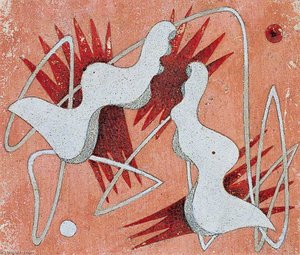
Vibrant shapes and bold colors define this 1934 abstract masterpiece Composition on a Pink Background by British Vorticist Edward Alexander Wadsworth, offering a unique opportunity to bring modern history into your home.
Biografia artysty
Edward Wadsworth (1889–1949) – angielski malarz i grafik vortycystyczny, znany z abstrakcyjnych obrazów oraz projektów kamuflażu dazzle podczas I Wojny Światowej. Jego twórczość inspirowana morzem i surrealizmem.
About the painting
A Symphony of Color and Form
In the vibrant landscape of early twentieth-century abstraction, few works capture the playful yet structured essence of modernism quite like Edward Alexander Wadsworth’s Composition on a Pink Background. Created in 1934, this captivating piece serves as a window into a period where the boundaries between reality and geometry began to dissolve. At first glance, the viewer is greeted by a striking palette dominated by a warm, luminous pink backdrop that breathes life into the entire canvas. Against this soft, inviting field, a rhythmic dance of reds, oranges, and yellows unfolds, creating a sense of kinetic energy that feels both spontaneous and meticulously orchestrated.
The composition is anchored by two central figures, standing side by side in a way that suggests a quiet, shared moment amidst a whirlwind of shapes. While the figures provide a human touch, they are integrated into a larger tapestry of abstract elements. Small, bright white accents punctuate the scene, offering much-needed visual breath and sharp contrast against the warmer tones. A curious detail—a solitary ball nestled near the upper right corner—adds an element of whimsy and mystery, inviting the observer to wonder about the narrative hidden within these geometric arrangements.
The Vorticist Legacy and Abstract Mastery
To understand the depth of this work, one must look toward the artistic soul of Wadsworth himself. As a prominent figure in the Vorticist movement, Wadsworth was a master of utilizing sharp lines and dynamic compositions to reflect the mechanical energy of the modern age. In this particular 1934 composition, we see a more lyrical evolution of his style. The rigid, aggressive edges often associated with Vorticism have softened into something more melodic and decorative, yet the underlying structural integrity remains. His technique demonstrates a profound command over balance, where every shape and color choice contributes to a cohesive, pulsating whole.
For the discerning collector or interior designer, this piece offers a unique opportunity to introduce a sense of historical prestige and avant-garde sophistication into a space. The artwork does not merely sit upon a wall; it interacts with its environment. Its warm tones can breathe warmth into a minimalist contemporary room, while its bold, abstract geometry provides a sophisticated focal point for more traditional settings. Owning a high-quality reproduction of such a significant piece allows one to possess a fragment of the radical spirit that redefined British modernism.
Emotional Resonance and Visual Impact
Beyond its technical brilliance, Composition on a Pink Background possesses an undeniable emotional magnetism. There is a profound sense of optimism embedded in its bright, sun-drenched hues. The interplay of light and color evokes feelings of joy and curiosity, making it an ideal selection for spaces designed for inspiration and creativity. It is a work that rewards prolonged gazing; the more one observes, the more the subtle layers of composition reveal themselves—the way the orange tones bleed into the red, or how the white shapes create a sense of depth within the flat plane.
This painting stands as a testament to the power of abstraction to communicate complex human emotions through simple, elegant forms. It is an invitation to step away from the literal and embrace the evocative. Whether you are drawn to its historical significance as a product of the interwar period or simply captivated by its radiant aesthetic, this masterpiece remains a timeless jewel of abstract art, promising to bring a sophisticated, energetic, and soulful atmosphere to any curated collection.
Pytania i odpowiedzi
Jaki jest dominujący kolor w „Composition on a Pink Background” – Edward Alexander Wadsworth?
Kolorem, który najbardziej wyróżnia się w "Composition on a Pink Background", jest Brown (#89312f). Dominujący kolor ułatwia dopasowanie dzieła sztuki do wnętrza.
Czy istnieje karta informacyjna o „Composition on a Pink Background” – Edward Alexander Wadsworth przeznaczona dla studentów?
Przewodnik po "Composition on a Pink Background" to strona Karta informacyjna dla uczniów dzieła sztuki – nadrukowalna karta informacyjna zawierająca opis utworu, informacje o autorstwie oraz tabelę danych (artysta, daty, technika, wymiary oryginału, kolekcja).
Kiedy powstało i w jakim nurcie utrzymane jest dzieło „Composition on a Pink Background” – Edward Alexander Wadsworth?
„Composition on a Pink Background” – Edward Alexander Wadsworth datowane jest na 1934 rok i reprezentuje nurt Vorticism.
Quick facts and art quiz
About Edward Alexander Wadsworth

Edward Alexander Wadsworth
1889 - 1949, Wielka Brytania
Biografia artysty
Edward Wadsworth (1889–1949) – Pionier Vorticizmu i Surrealizmu
Edward Alexander Wadsworth, urodzony 19 października 1889 roku w Cleckheaton, West Yorkshire, doświadczył dzieciństwa naznaczonego wcześniejszą śmiercią matki, co głęboko wpłynęło na jego wychowanie i pozostawiło go głównie pod opieką ciotki Annie oraz ojca, który prowadził rodzinny biznes – młyn Darnford Mill specjalizujący się w przędzeniu włosów lustrzanych dla produkcji uniformów. Ta nieco samotna młodość sprzyjała refleksyjnej naturze, co prawdopodobnie położyło fundament pod późniejszą introspektywność jego twórczości.
Jego edukacja rozpoczęła się w Szkole Gimnazjalnej Fettes College w Edynburgu w 1903 roku. Szkoła słynie z tego, że była „najtwardszą szkołą na wyspie”, a Edward nie przepisywał sobie większości czasu tam. Jego ojciec miał nadzieję, że Edward przejąłby rodzinny biznes i prawdopodobnie dlatego młyn Darnford Mill posiadał ważne klientelę w Niemczech, co skłoniło Edwarda do studiowania inżynierii oraz języka niemieckiego w Monachium między 1906 a 1907 rokiem. Nie ukończył jednak dyplomu inżynieryjnego, lecz nauczył się niemieckiego i przede wszystkim studiował sztukę podczas wolnych chwil w Szkole Sztuki Knirr w Monachiu. Tutaj nauczył się rytmu drzeworytowego oraz rysunku. Monachum był miejscem kulturalnym centrum i Edward został wprowadzony do żywej atmosfery twórczej intelektualnej.
Rozpoznanie Artystyczne i Inspiracje
Kolejną istotną zmianą w jego życiu było poznanie Wyndham Lewisa oraz rozwijającego się ruchu vortycystów. Początkowo zainspirowany ekspozycjami Roger Fry’a, który zrewolucjonizował sztukę nowoczesną, szybko przyjął energię vortycystów – radykalną estetykę skupioną na uchwyceniu dynamiki epoki nowoczesnej poprzez abstrakcję i elementy geometryczne. Stał się kluczowym twórcą ruchu, podpisując Manifest Vortycystów w 1914 roku i prezentując prace, które wyrażały jego charakterystyczny styl – fragmentację oraz dominację linii prostych.
Ruch vortycysta miał ogromny wpływ na Wadswortha. Jego twórczość odniosła inspirację filozofią Nietzschego oraz sztuką ekspresjonizmu niemieckiego. Szczególnie zainteresował się twórczością Paula Cézanne’a i jego analizą kształtów oraz przestrzeni. Wadsworth był jednym z najważniejszych przedstawicieli ruchu vortycystów i jego prace stały się symbolem nowoczesnej sztuki angielskiej.
Dazzle Camouflage i Współpraca z Armią Królewską
W czasie I Wojny Światowej Wadsworth został wcielony do Rezerwisty Obrony Królestwa Wielkiego Brytanii, gdzie wykorzystał swoje umiejętności artystyczne w sposób niezwykle praktyczny. Został powołany do zaprojektowania kamuflażu dazzle – znanego również jako razzle dazzle – dla okrętów Marynarki Królewskiej Wielkiej Brytanii. Jego zadaniem było stworzenie wzorów abstrakcyjnych i zakłócających wzrok, które miały utrudnić niemieckim podwodnym łodziom określenie kursu i prędkości statków oraz zmniejszyć skuteczność celowania. Projekt dazzle był pionierskim przedsięwzięciem łączącym sztukę z technologią wojskową i stanowi doskonałym przykładem wykorzystania abstrakcyjnego myślenia w czasie konfliktu.
Zmiany Stylu Po Wojnie Światowej i Surrealizm
Po zakończeniu wojny Wadsworth stopniowo odchodził od abstrakcji, koncentrując się na reprezentacyjnym podejściu do sztuki. Jego zainteresowanie pejzażami oraz obrazami abstrakcyjnymi pozostało jednak niezmienne. Inspiracją dla jego twórczości stały się dzieła surrealistów takich jak André Breton oraz Max Ernst. Wadsworth wykorzystał elementy surrealizmu w swoich obrazach, tworząc atmosferę tajemnicy i niepokoju.
Dziedzictwo Artystyczne i Współczesna Znaczenie
Edward Wadsworth zmarł 21 czerwca 1949 roku w Londynie pozostawiając po sobie bogate dziedzictwo artystyczne. Jego prace znajdują się w kolekcjach muzeów na całym świecie, a jego twórczość jest ceniona za oryginalność oraz umiejętność połączenia abstrakcji z sugestywnym realizmem. Wadsworth był jednym z najważniejszych przedstawicieli sztuki angielskiej XX wieku i jego dzieła inspirują kolejne pokolenia artystów.
Quick facts about Edward Alexander Wadsworth
- Artistic Movement Or Style: Vortycizm i Surrealizm
- Artists Who Influenced This Artist:
- Roger Fry
- Wyndham Lewis
- Date Of Birth: 19 października 1889
- Date Of Death: 21 czerwca 1949
- Full Name: Edward Alexander Wadsworth
- Nationality: Brytyjczyk
- Notable Artworks:
- Dazzle-ships in Drydock at Liverpool
- Sussex Pastoral
- Place Of Birth: Cleckheaton, Wielka Brytania
Edward Alexander Wadsworth
Composition on a Pink Background
() ·
With its frame: · Hand-painted in oil on linen
Total