

Przedstawiony: · Wraz z ramą:
 Podgląd w skali 1:1
 Wyślij jako kartkę
 Udostępnij
 Szczegóły dzieła
 Przewodnik

 Pobierz obraz
 Podobne obiekty
 RTG
RTG Pokaz slajdów
 Pytania i odpowiedzi
 Statystyki

zł 1052
Ręcznie malowana reprodukcja olejowa
Ręcznie malowany obraz olejny na płótnie, wykonany na zamówienie przez naszych artystów w wybranym przez Ciebie wymiarze i oprawie. ( Przełącz na wydania drukowane Przejdź do wersji cyfrowej)
Ten utwór podlega ochronie prawem autorskim
Dzieło sztuki prezentowane na tej stronie podlega ochronie prawem autorskim, co oznacza, że nie mamy prawa do tworzenia ani sprzedaży jego identycznej reprodukcji. Ochrona ta jest egzekwowana na mocy umów międzynarodowych, takich jak Konwencja berneńska oraz przez przepisy prawa krajowego, w tym te określone w Prawo autorskie USA – Tytuł 17.
Jako pełną szacunku i legalną alternatywę oferujemy personalizowane, malowane ręcznie dzieła sztuki inspirowane oryginałem. Nasi wykwalifikowani i profesjonalni artyści starannie analizują styl, nastrój oraz artystyczną esencję pierwowzoru, aby stworzyć nowe, unikalne dzieło, które przywołuje te same emocje – pozostając jednocześnie w pełni oryginalną kreacją.
Metoda ta jest w pełni zgodna z przepisami prawa autorskiego, ponieważ nie polega na kopiowaniu ani powielaniu chronionego dzieła. Stanowi ona kreatywną reinterpretację – nowy obraz, który czerpie inspirację z oryginału, ale nie jest z nim tożsamy.
 Dowiedz się więcej
Wymiar
·Standardowy format
personalizowane
CM
INCH
Wybierz spośród naszych standardowych rozmiarów, które zachowują oryginalne proporcje dzieła sztuki.
Ładowanie rozmiarów...

szerokość
wysokość
Wpisz wymaganą szerokość i wysokość, aby obraz pasował do Twojej ramy lub ściany. Ponieważ jest to dzieło malowane ręcznie, w przypadku rozmiaru o innych proporcjach artysta może domalować nieco więcej wokół obrazu lub przyciąć jego fragmenty — wybór należy do Ciebie. Przed rozpoczęciem pracy prześlemy Ci cyfrową wizualizację do zatwierdzenia. Obraz widoczny na tej stronie nie przedstawia rzeczywistego efektu — jedynie wizualizacja oddaje realny rezultat.
Wykończenie
·
Białe krawędzie zł1

rozmyte krawędzie zł1

Przedłużony zł1

P118B zł10

P118H zł10

P118W zł10

P438Z zł10

P508JH zł12

P508YH zł12

P805H zł10

P805Z zł10

P919BZ zł10

P919G zł10

P919XJ zł10

P959ZH zł10

P968JZ zł12

W106C zł8

W218G zł10

W218JH zł8

W218Y zł10

W307PJ zł10

W316G zł10

W316PJ zł8

W316Y zł10

W398PJ zł8

W4111J zł10

W500HY zł15

W500JH zł15

W692G zł12

W849H zł8

W940BG zł15

W953PJ zł8

H24-GOLD zł30

H24-SILVER zł30

H36-GOLD zł45

H36-SILVER zł45
Dostarczane w ochronnej tubie, gotowe do oprawienia przez Twojego ramiarza.
Dodatki
opcjonalneCo obejmują dodatki?
Przykłady możliwych zmian: Zastąpienie twarzy zdjęciem klienta; Dodanie zwierzęcia (np. zamiana kota na psa); Ukrycie wiadomości w tle; Zmiana krajobrazu lub elementów tła.
Po złożeniu zamówienia zespół TopImpressionists.com skontaktuje się z klientem drogą mailową w celu uzyskania instrukcji i prześle podgląd projektu
Po złożeniu zamówienia zespół TopImpressionists.com skontaktuje się z klientem drogą mailową w celu uzyskania instrukcji i prześle podgląd projektu
Dostawa na całym świecie () w ciągu 3–4 tygodni zamiast standardowych 5 tygodni. (3 Listopad). Bez kompromisów w kwestii jakości.
Lakier ochronny
Etykieta obiektu
Szczegóły grawerowanej brązowej tabliczki
This elegant plaque features the artist's name and the title of the artwork, finely engraved for a timeless presentation.
It is made from bronze with a refined, elegant finish. The text is precisely laser-engraved for a sharp and permanent result. Measuring 9x2 cm, the plaque is compact yet easy to read. It's built to be durable and scratch-resistant, offering a professional, museum-quality look. Mounting is simple thanks to the included adhesive backing.
Szczegóły przezroczystej tabliczki akrylowej
The plaque includes essential engraved details such as the artist's name, the title of the artwork, the date it was created, the type of media used-like oil on canvas or watercolor-a brief description of the piece, and a QR code that links to the complete artwork information.
It is crafted from clear acrylic, offering a sleek, modern appearance. The text is UV-engraved in black to ensure strong visual contrast. With a size of 10x15 cm, it ensures optimal readability. It comes equipped with two metal hooks for secure wall mounting. The plaque is designed to be weather-resistant, making it suitable for various environments, and it includes interactive features that work seamlessly with smartphone scanning.
Szczegóły czarnej tabliczki akrylowej
This elegant plaque includes engraved information such as the artist's name, the title of the artwork, the date it was created, the type of media used (like oil on canvas or watercolor), a short description of the artwork, and a QR code for quick access to more information.
The plaque itself is made from refined black acrylic with a premium finish. The text is laser-engraved in white for high contrast and readability. Its size is 10x15 cm, designed to be easy to read. It comes with two metal hooks for professional mounting. The design is sleek and fits any interior style. It is also weather-resistant and durable, with built-in digital integration for mobile compatibility.
Opcja ze szkłem jest dostępna wyłącznie w rozmiarach poniżej 110 cm
 Opcja ze szkłem jest dostępna wyłącznie w rozmiarach poniżej 110 cm
- Bezpłatna ekspresowa wysyłka na cały świat
- Wysokiej jakości płótno lniane
- Pełne ubezpieczenie przesyłki
- Gwarancja zwrotu należności celnych i podatków importowych
- Gwarancja wiernego odwzorowania kolorów
- 100-dniowa polityka zwrotów (tylko w przypadku wad)
- Gwarancja 100% zwrotu pieniędzy
- Zniżka przy zakupie wielu sztuk


Opis obiektu
A poignant study of solitude featuring a woman at her craft, this 1921 masterpiece by Edward Hopper uses masterful light and realism to evoke quiet introspection, inviting you to bring this timeless moment into your home.
Biografia artysty
Edward Hopper – mistrz amerykańskiego realizmu, maluje samotność i miejski krajobraz z wyczarującym światłem i cieniem. Odkryj jego ikoniczne obrazy, takie jak Nighthawks!
O obrazie
A Window into Solitude: The Quiet Mastery of Edward Hopper
In the quiet corners of American modernism, few images resonate with as much profound stillness as Edward Hopper’s "Girl at Sewing Machine." Painted in 1921, this evocative oil on canvas serves as a masterclass in the art of observation, capturing a moment that feels both intensely private and universally relatable. The scene presents a young woman immersed in her craft, seated before a sewing machine that anchors her within an urban domestic interior. As she works, bathed in the soft, directional light filtering through a nearby window, the viewer is invited into a space where time seems to decelerate. It is not merely a depiction of a daily chore; it is a poetic exploration of the human condition, rendered with a clarity that bridges the gap between simple realism and deep psychological insight.
Hopper’s technique in this piece demonstrates his burgeoning ability to manipulate light as a physical presence within the room. The sunlight, streaming from a window that reveals glimpses of yellow New York brickwork, does more than illuminate the subject; it sculpts the very atmosphere of the room. This interplay of light and shadow—a hallmark of Hopper’s signature style—creates a dramatic tension between the bright, sun-drenched surfaces and the deep, receding shadows of the interior. The way the light catches the texture of the fabric and the woman's hair adds a tactile dimension to the canvas, making the scene feel remarkably tangible. Through meticulous layering of oil paints, Hopper achieves subtle tonal gradations that lend the composition a luminous, almost breathing quality.
The Symbolism of Light and Isolation
Beyond its technical brilliance, "Girl at Sewing Machine" is rich with symbolic weight. The window, a recurring motif in Hopper’s oeuvre, acts as both a connection to the outside world and a barrier that reinforces the subject's isolation. While the bright day outside suggests the bustling energy of New York City, the interior remains a sanctuary of quietude. This juxtaposition highlights one of the most poignant themes in Hopper’s work: the experience of urban alienation. The woman, with her long hair partially obscuring her face, appears lost in an internal landscape, her focus entirely directed toward the rhythmic motion of her needle. In this sense, the sewing machine becomes a symbol of both industriousness and a meditative retreat from the external pressures of modern life.
For collectors and interior designers alike, this painting offers a unique emotional resonance. It possesses a "quiet strength" that can anchor a room, providing a focal point that encourages contemplation rather than distraction. The composition, which draws inspiration from the light-filled interiors of the Dutch masters, brings a sense of classical stability to a modern subject. Whether placed in a contemporary gallery setting or a sophisticated residential study, the artwork radiates an aura of dignified resilience. It is a piece that does not demand attention through loud colors or chaotic movement, but rather earns it through a steady, captivating presence that lingers in the mind long after the viewer has turned away.
Pytania i odpowiedzi
Jaka jest luminancja dzieła „Girl at Sewing Machine” – Edward Hopper?
Jasność zarejestrowana dla „Girl at Sewing Machine” – Edward Hopper wynosi Gentle Luminance.
Jak mogę pobrać obraz „Girl at Sewing Machine” – Edward Hopper?
Możliwość pobrania dzieła „Girl at Sewing Machine”: strona Pobierz plik cyfrowy oferuje wysokiej rozdzielczości cyfrowe zdjęcie do pobrania.
W jaki sposób „Girl at Sewing Machine” – Edward Hopper łączy American Realism z krajem pochodzenia artysty?
Dzieło z nurtu American Realism, zatytułowane "Girl at Sewing Machine", zostało stworzone przez artystę urodzonego w Stany Zjednoczone.
Najważniejsze informacje i quiz o sztuce
O Edward Hopper

Edward Hopper
1931 - 1967, Stany Zjednoczone
Biografia artysty
A Solitude Observed: The Life and Art of Edward Hopper
Edward Hopper, a name inextricably linked to the quietude and subtle melancholy that permeated 20th-century American life, wasn’t simply a painter of scenes; he was a poet of light and shadow, a chronicler of modern isolation. Born in Nyack, New York, in 1882, to middle-class parents of Dutch ancestry, Hopper's early years provided a stable upbringing that nurtured his artistic inclinations. From childhood sketches meticulously dated and signed, it became evident that keen observation and an innate talent for drawing were central to his being. Though initially encouraged towards commercial illustration – a pragmatic suggestion from his parents – Hopper’s ambitions leaned toward fine art, leading him to the New York School of Art where he studied under William Merritt Chase and Robert Henri. These formative years instilled not only technical skill but also an appreciation for realism and a commitment to depicting the world as he saw it—unvarnished and honest. The writings of Ralph Waldo Emerson resonated deeply with Hopper, reinforcing his sense of individualism and acute observation – qualities that would become hallmarks of his artistic vision. Early travels to Paris exposed him to Impressionism, yet Hopper quickly diverged from its fleeting brushstrokes, forging a path uniquely his own.Finding His Voice: Realism and the American Scene
Hopper’s artistic journey wasn't immediate or effortless. He grappled with discovering his distinctive voice, experimenting with various styles before settling into the realism that would define his career. This wasn’t mere replication of reality; it was a distillation of its essence, stripping away extraneous detail to reveal underlying emotional truths. His paintings began to focus on everyday scenes – houses, diners, offices, hotel rooms – imbued with a sense of stillness and often, loneliness. He possessed an extraordinary ability to capture the psychological states of his subjects, hinting at narratives without explicitly stating them. The precise rendering of light and shadow became crucial, not merely as descriptive elements but as emotional cues, creating atmospheres that were both captivating and unsettling. House by the Railroad (1925), an early masterpiece, exemplifies this approach—a seemingly simple composition radiating a profound sense of isolation and mystery. Hopper’s printmaking, often overlooked, ran parallel to his painting, sharing similar themes and stylistic qualities, demonstrating his mastery across mediums. He wasn't interested in grand historical narratives or allegorical symbolism; he focused on the mundane, elevating it through careful observation and emotional resonance.Iconic Visions: Nighthawks and Beyond
While Hopper’s career unfolded gradually, certain works catapulted him to widespread recognition. Nighthawks (1942), arguably his most famous painting, became an instant icon of American culture. The late-night diner scene, bathed in stark fluorescent light, perfectly encapsulates the alienation and anonymity of modern urban life. The figures within are lost in their own thoughts, disconnected from one another despite their proximity—a poignant commentary on the human condition. Gas (1940), with its striking portrayal of a roadside gas station, showcases Hopper’s fascination with American landscapes and the burgeoning automobile culture. Other notable works like *Automat*, *Office in a Small City*, and *Summertime* each offer unique insights into the complexities of 20th-century American society. These paintings weren't merely depictions of places; they were explorations of mood, psychology, and the subtle dramas unfolding within ordinary settings. His wife, Josephine Nivison Hopper, played a vital role not only as his lifelong companion but also as a frequent model, contributing significantly to the characterization of his female figures.Themes and Legacy: A Lasting Influence
Several recurring themes permeate Hopper’s oeuvre. Urban isolation is perhaps the most prominent—the sense of loneliness experienced by individuals even amidst crowds. He explored the American landscape, both rural and urban, often emphasizing its starkness and emptiness. His work delves into psychological realism, probing the inner lives of his subjects with a sensitivity that transcends mere representation. There’s also an undercurrent of nostalgia for a simpler past, juxtaposed with an acknowledgement of the complexities and anxieties of modern life. Hopper's influence on subsequent artists is undeniable. His unique style has inspired countless painters, including Pierre Sanford Ross, and continues to resonate with contemporary artists seeking to capture the essence of human experience. His paintings remain highly sought after by collectors and are exhibited in major museums worldwide, solidifying his place as a pivotal figure in American art history. More than just an artist, Edward Hopper was a visual philosopher, offering profound insights into the human condition through his masterful use of light, shadow, and composition.- His legacy lies not only in the beauty of his paintings but also in their enduring ability to provoke thought, evoke emotion, and remind us of the quiet solitude that often defines our lives.
- Hopper’s work continues to captivate audiences because it speaks to universal themes of loneliness, isolation, and the search for meaning in a rapidly changing world.
- His paintings have become iconic representations of American culture, often used to symbolize the anxieties and aspirations of the 20th century—and beyond.
- Hopper’s aesthetic has profoundly influenced filmmakers (like Alfred Hitchcock) and writers, inspiring countless works that explore similar themes of alienation and psychological tension.
Krótkie informacje o Edward Hopper
- Artistic Movement Or Style: Realizm
- Artists Or Movements Influenced By This Artist: ['Ross']
- Artists Who Influenced This Artist:
- Chase
- Henri
- Date Of Birth: 22 lipca 1882
- Date Of Death: 15 maja 1967
- Full Name: Edward Hopper
- Nationality: Amerykański
- Notable Artworks:
- Nighthawks
- Dom samotny
- Gas
- Place Of Birth: Nyack, USA
Odkryj dzieła sztuki uporządkowane według tematów, stylów i cech charakterystycznych.


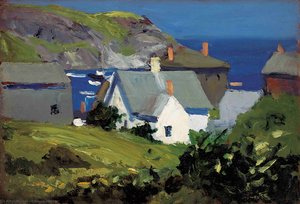


Edward Hopper
Girl at Sewing Machine
() ·
Wraz z ramą: · Ręcznie malowane farbami olejnymi na płótnie lnianym
Suma