


 Podgląd w skali 1:1
 Wyślij jako kartkę
 Udostępnij
 Szczegóły dzieła
 Przewodnik

 Pobierz obraz
 Podobne obiekty
 RTG
RTG Pokaz slajdów
 Statystyki
Alone
 Oil On Canvas
- WallArt
- Post-Impressionist Movement
 1893
1893- 19th Century
 50.0 x 73.0 cm
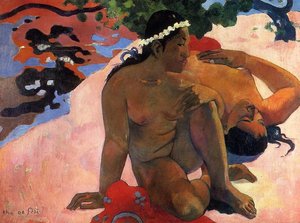
Paul Gauguin’s "Alone," a captivating Post-Impressionist painting from 1893, depicts a serene woman resting in a warm yellow field, showcasing the artist's signature cloisonnism style. Discover this iconic artwork and bring its tranquil beauty into your space.
 Rozwiń treść
Paul Gauguin: rewolucyjny malarz postimpresjonistyczny znany z jaskrawych kolorów, egzotycznych tematów i symbolizmu. Odkryj jego podróż od finansów do legendy sztuki!
Giclée / Wydruk artystyczny
Wydruki giclée lub płótna o jakości muzealnej, szybka realizacja i szeroki wybór opcji wykończenia. ( Zamów ręcznie malowaną reprodukcję Przejdź do wersji cyfrowej)




P118B zł10

P118H zł10

P118W zł10

P438Z zł10

P508JH zł12

P508YH zł12

P805H zł10

P805Z zł10

P919BZ zł10

P919G zł10

P919XJ zł10

P959ZH zł10

P968JZ zł12

W106C zł8

W218G zł10

W218JH zł8

W218Y zł10

W307PJ zł10

W316G zł10

W316PJ zł8

W316Y zł10

W398PJ zł8

W4111J zł10

W500HY zł15

W500JH zł15

W692G zł12

W849H zł8

W940BG zł15

W953PJ zł8




Standardowy format
personalizowane
CM
INCH
Wybierz spośród naszych standardowych rozmiarów, które zachowują oryginalne proporcje dzieła sztuki.
Loading sizes...

szerokość
wysokość
Wpisz wymaganą szerokość i wysokość, aby dopasować grafikę do ramy lub ściany. Wydruk można jedynie przyciąć, nigdy nie powiększając go poza oryginalny obraz, dlatego format o innych proporcjach spowoduje utratę części kompozycji. Przed rozpoczęciem druku prześlemy Ci cyfrowy podgląd do zatwierdzenia. Obraz wyświetlany na tej stronie nie pokazuje rzeczywistego przycięcia — jedynie podgląd oddaje ten efekt.
Dostawa na cały świat () w ciągu 2 tygodni zamiast standardowych 4/5 tygodni. (26 Październik)

Bezpłatna ekspresowa wysyłka na cały świat

Wysokiej jakości płótno lniane

Pełne ubezpieczenie przesyłki

Gwarancja zwrotu należności celnych i podatków importowych

Gwarancja wiernego odwzorowania kolorów

100-dniowa polityka zwrotów (tylko w przypadku wad)

Gwarancja 100% zwrotu pieniędzy

Zniżka przy zakupie wielu sztuk
 Opcja ze szkłem jest dostępna wyłącznie w rozmiarach poniżej 110 cm

Alone
Giclée / Wydruk artystyczny
Wymiary reprodukcji
-


Cena całkowita
zł 265
Alone: A Portrait of Quietude by Paul Gauguin
Paul Gauguin’s “Alone,” painted in 1893, is more than just a depiction of a woman resting; it's an immersive exploration of solitude and the profound stillness that can be found within. Measuring a modest 50 x 73 cm, this oil-on-canvas work invites viewers into a world of contemplative serenity, a hallmark of Gauguin’s mature style and a poignant reflection of his own increasingly isolated existence.
- Subject Matter: The central figure, a woman lying prone with her head cradled in her arm, exudes an immediate sense of peace. Her relaxed posture suggests either slumber or deep contemplation – the ambiguity adds to the painting’s evocative power. Scattered around her are other figures, smaller and less defined, contributing to the overall impression of isolation rather than distracting from the primary theme.
- Style & Technique: Gauguin masterfully employs the style of Cloisonnism, characterized by bold outlines and flattened planes of color. This technique, reminiscent of stained glass, creates a striking visual impact, emphasizing the geometric forms and contributing to the painting’s tranquil atmosphere. The use of warm yellow in the background field further enhances this sense of calm and adds depth to the composition.
- Historical Context: “Alone” emerged during a pivotal moment in Gauguin's artistic journey, firmly rooted within the Post-Impressionist movement. Influenced by artists like Van Gogh and Bernard, he sought to move beyond mere representation, aiming instead to capture subjective emotions and spiritual truths. The painting’s themes of isolation resonate with the anxieties and uncertainties of the late 19th century, a period marked by rapid social change and increasing urbanization.
Decoding Symbolism: A Journey Within
Beyond its surface beauty, “Alone” is rich in symbolic potential. The woman’s posture immediately evokes feelings of vulnerability and introspection. Her placement on the ground suggests a surrender to the moment, a willingness to embrace solitude rather than resist it. The expansive yellow field surrounding her isn't merely a backdrop; it represents an open space, a realm of possibility, perhaps even a metaphor for the unconscious mind. The smaller figures, though indistinct, could symbolize fleeting memories or the echoes of past experiences – reminders of connections that have faded into the background.
- Color Palette: Gauguin’s deliberate use of warm yellows and earthy tones contributes significantly to the painting's emotional impact. Yellow, often associated with optimism and enlightenment, is tempered by the muted colors, creating a sense of both hope and melancholy.
- Compositional Elements: The diagonal lines created by the woman’s body and the horizon line contribute to the dynamic feel of the composition, preventing it from feeling static or lifeless. This careful arrangement guides the viewer's eye and reinforces the painting's central theme of movement – not physical movement, but rather the internal journey of contemplation.
Gauguin’s Legacy: A Timeless Exploration
"Alone" stands as a testament to Gauguin’s profound understanding of human emotion and his ability to translate complex feelings onto canvas. It's a painting that invites viewers to pause, reflect, and consider the beauty and significance of solitude. Its influence can be seen in countless works of art that followed, solidifying Gauguin’s place as one of the most important artists of the modern era.
A hand-painted reproduction of “Alone” offers a unique opportunity to bring this iconic artwork into your home or office. Each reproduction is meticulously crafted by skilled artisans, ensuring exceptional detail and color accuracy. Whether you are an art collector, interior designer, or simply someone who appreciates beauty, this stunning piece will undoubtedly become a cherished addition to your collection.
Pytania i odpowiedzi
Jaka jest technika i wymiary oryginału „Alone” – Paul Gauguin?
Technika wykonania dzieła „Alone” – Paul Gauguin to Oil On Canvas, a jego wymiary to 50 x 73 cm.
Jaki jest ogólny nastrój dzieła „Alone” – Paul Gauguin?
"Alone" ma Calm atmosferę.
W jaki sposób styl dzieła "Alone" odnosi się do epoki jego twórcy?
W „Alone” – Paul Gauguin nurt Post-Impressionist Movement łączy się z epoką – Wiek XIX.
Podobne dzieła




Biografia artysty
Eugène Henri Paul Gauguin: A Revolutionary Journey Through Color and Spirit
Eugène Henri Paul Gauguin, a name synonymous with vibrant color, rebellious spirit, and a profound shift in the landscape of modern art, stands as one of the most influential figures of the late 19th and early 20th centuries. Born in Paris in 1848, his life was anything but conventional—a tapestry woven from unexpected threads of aristocratic heritage, financial ambition, and an unwavering pursuit of artistic authenticity. Gauguin’s journey wasn't merely a career change; it represented a fundamental transformation of worldview, a rejection of the constraints of European society in favor of exploring alternative cultures and expressing deeply personal emotions through his art.From Parisian Stockbroker to Bohemian Artist
Gauguin’s early years were shaped by an unusual upbringing. His father, a journalist known for his radical views, and his mother, descended from Peruvian aristocracy—her grandmother, Flora Tristan, a pioneering feminist and socialist writer— instilled in him a unique perspective that would profoundly influence his artistic vision. This heritage fostered a lifelong fascination with cultures beyond the confines of Europe, fueling a desire to find truth and beauty in places untouched by Western conventions. After receiving a formal education, Gauguin unexpectedly found himself drawn to the burgeoning world of finance, becoming a stockbroker—a profession seemingly at odds with the creative aspirations simmering within him. However, this period proved to be a crucial testing ground, exposing him to the pressures and disappointments of bourgeois society, ultimately pushing him towards a radical departure. The financial crisis of 1882 served as a catalyst, forcing him to abandon his lucrative career and wholeheartedly embrace the artistic calling he had long suppressed. This wasn’t simply a profession change; it was a complete reimagining of his life's purpose. He sought guidance from Camille Pissarro, who recognized his potential and introduced him to the avant-garde circles of Paris, but Gauguin quickly surpassed Impressionism, yearning for something more—a means of conveying not just what he *saw*, but what he *felt*.The Allure of Brittany and the Seeds of Tahiti
Initially influenced by the Impressionists’ exploration of light and color, Gauguin soon grew frustrated with their focus on capturing fleeting moments of reality. He sought a deeper connection to his subjects, a way to express universal truths through symbolic imagery. This led him to Brittany, where he spent several years immersing himself in the rugged landscapes and deeply rooted traditions of its people. During this period, he began experimenting with flattened forms, bold outlines, and a simplification of composition—techniques that moved him further away from naturalism and closer to a more expressive style. He was particularly captivated by Breton folklore and mythology, incorporating elements of these stories into his paintings. This exploration laid the groundwork for his future journey to Tahiti, where he hoped to find inspiration in Polynesian culture.Tahitian Dreams: A Quest for Authenticity
In 1891, Gauguin embarked on a transformative voyage to Tahiti, seeking refuge from the perceived superficiality of European society and hoping to discover a more authentic way of life. This wasn’t merely a vacation; it was a deliberate attempt to immerse himself in a culture untouched by Western influence. He meticulously documented his experiences through painting, depicting Polynesian women, landscapes, and religious practices with an intensity that bordered on obsession. His use of color became increasingly bold and non-naturalistic, serving not to replicate reality but to express emotion and spiritual meaning. Iconic paintings like “Vahine no te miti” (Woman with Mango), “Manao Tupapau” (Watched by the Spirit of the Dead), and “The Day of Gods emerged from this period, solidifying his reputation as a visionary artist. However, Gauguin’s time in Tahiti was not without its complexities. His relationships with young Polynesian women sparked controversy and raised ethical questions that continue to be debated today.Symbolism, Synthetism, and the Legacy of a Rebel
Gauguin's artistic style evolved throughout his career, encompassing elements of Symbolism, Synthetism, and Post-Impressionism. He rejected traditional academic painting techniques, favoring bold colors, simplified forms, and flattened perspectives—techniques that challenged conventional notions of representation. His work is characterized by a sense of mystery and emotional intensity, often conveying themes of spirituality, death, and the search for meaning. Gauguin’s influence extended far beyond his own lifetime, inspiring generations of artists to break free from established conventions and explore new ways of expressing themselves. Artists such as Pablo Picasso, Henri Matisse, and countless others owe a debt to his pioneering spirit and innovative approach to art. Despite facing financial difficulties and declining health during his time in Tahiti and later on the Marquesas Islands, Gauguin remained relentlessly dedicated to his artistic vision. He died in 1903 on Hiva Oa, a remote island in the Marquesas archipelago, largely unrecognized for his genius—a tragic irony considering the profound impact of his work. Today, Paul Gauguin is celebrated as a revolutionary artist who fundamentally altered the course of modern art, leaving behind a legacy that continues to captivate and inspire.Key Artistic Characteristics
- Bold Color Palette: Employed vibrant, non-naturalistic colors to express emotion and symbolism.
- Simplified Forms: Reduced forms to their essential elements, creating a sense of abstraction.
- Flattened Perspective: Challenged traditional perspective by flattening the picture plane.
- Symbolic Imagery: Used recurring motifs and symbols to convey deeper meanings.
- Influence of Japanese Prints (Japonisme): Incorporated elements of Japanese art, such as flattened perspectives and decorative patterns.

Paul Gauguin
1848 - 1903 , Francja
Krótka nota
- Artistic Movement Or Style: Postimpresjonizm, Symbolizm
- Artists Or Movements Influenced By This Artist:
- Pablo Picasso
- Henri Matisse
- Artists Who Influenced This Artist: ['Camille Pissarro']
- Date Of Birth: 7 czerwca 1848
- Date Of Death: 8 maja 1903
- Full Name: Eugène Henri Paul Gauguin
- Nationality: Francuz
- Notable Artworks:
- Kiedy się pobierzesz
- Dwie kobiety na plaży
- Krajobraz
- Place Of Birth: Paryż, Francja
Powiązane artykuły

The Enduring Legacy of Printmaking: Techniques, Themes & Artistic Innovation Across Centuries
Explore the rich history of printmaking with TopImpressionists. Discover techniques from intaglio to lithography, learn about collecting valuable prints & find museum-quality reproductions. Expert insights for art enthusiasts and collectors.

Odbitki Giclée: Jakość Archiwalna i Estetyczne Niuanse dla Wymagającego Kolekcjonera
Poznaj sekrety druku giclée – technologii zapewniającej najwyższą jakość reprodukcji sztuki i trwałość archiwalaną. Poradnik dla wymagających kolekcjonerów o wyborze papieru, tuszy i profilach kolorystycznych.

The Enduring Legacy of Fine Art Prints: Technique, History & Aesthetic Impact
Explore the rich history & techniques of fine art prints. Discover investment potential, assess authenticity, and learn how to preserve your collection with expert guidance. Trusted insights for discerning collectors.

Echoes of Time: Exploring the Enduring Appeal & Historical Context of Vintage Art Prints
Explore the captivating world of vintage art prints! Discover their history, collecting tips & enduring appeal. Expert insights on chromolithography and building a legacy collection with TopImpressionists.
Top 10 Arcydzieł w Odcieniach Chromowej Żółci – Inspiracje do Wnętrz od TopImpressionists
Odkryj 10 arcydzieł sztuki, w których króluje chromowa żółć! Van Gogh, Monet, Renoir i inni mistrzowie. Inspiracje wnętrzarskie i reprodukcje obrazów najwyższej jakości na TopImpressionists.com. Eksploruj pełną kolekcję online!
Odkryj dzieła sztuki uporządkowane według tematów, stylów i cech charakterystycznych.


