


 Zobacz w skali 1:1
 Wyślij
 Udostępnij
 Szczegóły
 Przewodnik

 Pobierz plik obrazu
 Podobne obiekty
 RTG
RTG Pokaz slajdów
 Statystyki
July 20th


Fernando Botero's "July 20th" captures a vibrant street scene with exaggerated figures and bold colors, reflecting Colombian culture & Botero’s signature style. Explore this iconic painting!
 Czytaj więcej
Fernando Botero – słynny kolumbijski artysta znany z charakterystycznego stylu 'Boterismo' – monumentalne figury, żywe kolory i satyryczne komentarze społeczne. Odkryj jego ikoniczne rzeźby i obrazy!
Giclée / Wydruk artystyczny
Wydruki giclée lub płótna o jakości muzealnej, szybka realizacja i szeroki wybór opcji wykończenia. ( Kup ręcznie malowany obraz Przełącz na wersję cyfrową)




P118B zł10

P118H zł10

P118W zł10

P438Z zł10

P508JH zł12

P508YH zł12

P805H zł10

P805Z zł10

P919BZ zł10

P919G zł10

P919XJ zł10

P959ZH zł10

P968JZ zł12

W106C zł8

W218G zł10

W218JH zł8

W218Y zł10

W307PJ zł10

W316G zł10

W316PJ zł8

W316Y zł10

W398PJ zł8

W4111J zł10

W500HY zł15

W500JH zł15

W692G zł12

W849H zł8

W940BG zł15

W953PJ zł8




Standardowy
na zamówienie
CM
INCH
Wybierz spośród naszych standardowych rozmiarów, które zachowują oryginalne proporcje dzieła sztuki.
Loading sizes...

szerokość
wysokość
Możesz wprowadzić własne wymiary, aby dopasować dzieło do konkretnej ramy lub przestrzeni. Jeśli wybrany rozmiar nie będzie odpowiadał proporcjom oryginalnego obrazu, przytniecie dzieło lub rozszerzymy obraz za pomocą odbicia lustrzanego lub jednolitego wypełnienia krawędzi. Przed rozpoczęciem produkcji prześlemy cyfrową wizualizację do Twojej akceptacji.
Prosimy pamiętać, że podgląd na ekranie nie odzwierciedla faktycznego przycinania ani rozszerzania. Tylko wizualizacja dokładnie pokaże końcową kompozycję.
Mimo dostępności niestandardowych rozmiarów, zalecamy wybór wymiaru z listy zdefiniowanej, aby zachować oryginalne proporcje.
Dostawa na cały świat () w ciągu 2 tygodni zamiast standardowych 4/5 tygodni. (2 Październik)

Bezpłatna ekspresowa wysyłka na cały świat

Wysokiej jakości płótno lniane

Pełne ubezpieczenie transportowe

Gwarancja zwrotu należności celnych i podatków importowych

Gwarancja idealnego odwzorowania barw

100-dniowy okres na zwrot dzieła w przypadku wykrycia wad produkcyjnych

Gwarancja 100% zwrotu pieniędzy

Oferta przy zakupie wielu sztuk
 Opcja ze szkłem jest dostępna wyłącznie w rozmiarach poniżej 110 cm

July 20th
Giclée / Wydruk artystyczny
Rozmiar reprodukcji
-


Suma do zapłaty
zł 257
The Weight of the Moment: Unpacking "July 20th"
Fernando Botero’s “July 20th,” painted in 1984, isn't merely a depiction of two figures on a street; it’s a carefully constructed tableau brimming with quiet drama and subtle social commentary. The painting immediately arrests the eye with its monumental scale – a characteristic hallmark of Botero’s signature style, often referred to as “Boterismo.” Here, however, the exaggeration isn't purely for spectacle. Instead, it serves to amplify the emotional weight of the scene, drawing us into an intimate moment of interaction amidst the bustling backdrop of Medellín.
The composition is deceptively simple: a man in a fedora and sporting a baseball bat stands alongside a woman whose hand instinctively rises to her face. Their positioning – close but not touching – suggests a conversation held just short of revelation, a shared experience suspended in time. A few secondary figures populate the periphery, hinting at a larger urban life unfolding beyond this immediate exchange. The inclusion of a handbag and a small child adds layers of domesticity, grounding the scene within the everyday realities of Colombian society.
The Language of Volume: Botero’s Distinctive Technique
Botero's genius lies in his masterful manipulation of volume – a technique he honed during his early years observing the Baroque churches and vibrant street life of Medellín. “July 20th” exemplifies this perfectly. The figures are rendered with thick, almost sculptural brushstrokes, their forms ballooning outwards, creating an illusion of immense size and solidity. This deliberate distortion isn’t about literal representation; it's a conscious choice to emphasize the subjects’ presence and imbue them with a sense of weight and importance. Notice how the man’s bat seems to expand into a formidable weapon, while the woman’s gesture – a subtle shield against an unseen force – adds another layer of complexity.
- Bold Outlines: Botero frequently employs strong outlines to define the shapes and forms within his paintings.
- Exaggerated Proportions: Figures are often depicted with disproportionately large bodies, contributing to the overall sense of monumentality.
- Rich Color Palette: The painting utilizes a vibrant yet restrained color palette, dominated by earthy tones punctuated by pops of red and yellow – colors that evoke both warmth and a subtle undercurrent of tension.
Historical Context & The Spirit of Medellín
Painted in 1984, “July 20th” reflects the social and political climate of Colombia at the time. The country was grappling with internal conflict and economic instability, and Botero’s work often engaged with themes of violence, inequality, and the complexities of Colombian identity. The painting can be interpreted as a meditation on human connection amidst societal pressures – a quiet moment of intimacy within a world marked by uncertainty. It's also worth noting that July 20th is Colombia's Independence Day, adding another layer of cultural significance to the scene.
The choice of Medellín as the setting is crucial. The city’s rich artistic heritage and its distinctive architectural style – characterized by ornate facades and a sense of grandeur – undoubtedly influenced Botero’s aesthetic sensibilities. “July 20th” captures this spirit, transporting us to a vibrant urban landscape where everyday life unfolds against a backdrop of historical and cultural richness.
A Moment Frozen in Time: Emotional Resonance
Despite its seemingly simple composition, “July 20th” possesses a remarkable emotional depth. The ambiguity of the interaction between the two figures invites speculation – are they lovers? Friends? Strangers caught in a fleeting moment of connection? The painting’s power lies in its ability to evoke a sense of nostalgia and quiet contemplation. It's a reminder that even within the most chaotic of environments, moments of genuine human connection can emerge, offering a glimpse into the complexities of the human experience. The painting’s enduring appeal stems from its ability to resonate with viewers on a deeply personal level, prompting them to reflect on their own relationships and experiences.
Pytania i odpowiedzi
Czy „July 20th” autorstwa Fernando Botero znajduje się w domenie publicznej?
„July 20th” autorstwa Fernando Botero znajduje się w nadal chronione prawem autorskim. Status ten określa zasady reprodukcji obrazu tego dzieła.
Ile lat miał(a) Fernando Botero, tworząc "July 20th" w 1984 roku?
Fernando Botero stworzył/a "July 20th" w wieku 52 lat. Artysta urodził/a się w 1932, a datowanie dzieła to 1984.
W którym roku powstało dzieło "July 20th"?
Dzieło „July 20th” autorstwa Fernando Botero powstało w 1984.
O czym jest "July 20th" i jaką ma atmosferę?
"July 20th" przedstawia fernando botero, colombian art, volume, figures, street scene, 1984, urban life, baroque, a jego nastrojowy charakter można określić jako Dramatic.
Czy dzieło „July 20th” autorstwa Fernando Botero, znajdujące się w zbiorach Muzeum Narodowe w Kolumbii, może być legalnie reprodukowane?
Dzieło „July 20th” autorstwa Fernando Botero, znajdujące się w zbiorach Muzeum Narodowe w Kolumbii, znajduje się w nadal chronione prawem autorskim. Status ten określa, czy możliwe jest tworzenie reprodukcji obrazu.
Do jakiego wnętrza polecane jest dzieło „July 20th” autorstwa Fernando Botero?
Dzieło „July 20th” autorstwa Fernando Botero jest rekomendowane do Living Room. Sugestia ta opiera się na tematyce, kolorystyce oraz nastroju pracy.
Kto jest autorem dzieła "July 20th"?
Autorem dzieła „July 20th” jest Fernando Botero. Praca ta figuruje w katalogu pod nazwiskiem Fernando Botero.
Biografia artysty
Fernando Botero: A Colombian Visionary – Shaping Volume and Challenging Perspectives
Fernando Botero Angulo, a name synonymous with vibrant color, monumental forms, and a subtly subversive wit, emerged from the bustling city of Medellín in Colombia as one of Latin America’s most internationally recognized artists. His journey wasn't forged within the rigid confines of traditional art academies but rather blossomed amidst the rich Baroque architecture and dynamic urban life of his native home – an experience that profoundly shaped his distinctive artistic vision. Initially drawn to the drama of bullfighting, Botero quickly realized his true calling lay in exploring the fundamental principles of form and volume, a pursuit that would ultimately define his unique style, now universally known as “Boterismo.”The Seeds of Boterismo: Influences and Early Development
Botero’s artistic development wasn't a sudden revelation but rather a gradual evolution rooted in a deliberate rejection of European modernism. After periods studying in Madrid and Paris – experiences he later described as disillusioning due to the perceived superficiality of prevailing avant-garde movements – he returned to Colombia, seeking inspiration in the art that had deeply resonated with him during his formative years. He turned back to the Old Masters—Velázquez, Goya, and Titian—and rediscovered the power of classical form, a path that led directly to the birth of Boterismo. This wasn’t simply about depicting “fat people,” as some critics simplistically suggested; it was a conscious manipulation of proportion, an intentional exaggeration designed to evoke a sense of abundance, sensuality, and often, subtle social commentary. His early works, particularly those created in the 1950s and 60s, were heavily influenced by the vibrant colors and dynamic compositions of Latin American folk art, alongside the meticulous detail and masterful technique of Renaissance masters. The ornate colonial churches of Medellín, with their lavish decorations and dramatic lighting, served as a constant source of inspiration, imbuing his work with a sense of theatricality and grandeur.The Sculptural Expansion: From Painting to Three Dimensions
While Botero initially gained international recognition for his captivating paintings—works that immediately captured attention with their monumental scale and exaggerated forms—his artistic ambition extended far beyond the canvas. In 1973, he embarked on a transformative journey into sculpture, establishing a studio in Paris and embracing the challenge of translating his distinctive style into three dimensions. This transition proved remarkably successful, allowing him to further explore the principles of volume and form while simultaneously creating monumental public artworks that became beloved landmarks in cities around the world—from New York’s Park Avenue to Florence's Piazza della Signoria. His sculptures weren’t merely scaled-up versions of his paintings; they possessed a unique physicality, inviting viewers to engage with them on a tactile level and often imbued with a playful sense of humor.Themes of Identity and Social Commentary
Throughout his career, Botero consistently addressed themes deeply rooted in Colombian culture and society. His work frequently explored the complexities of national identity, celebrating the beauty and resilience of his homeland while simultaneously critiquing its political realities. He tackled sensitive subjects such as corruption, violence, and social inequality with a deftness that balanced humor and pathos. Notably, his *Violence* series (2000), created in response to Colombia’s ongoing drug-related conflicts, stands as a powerful testament to his commitment to using art as a vehicle for social commentary. Similarly, his *Abu Ghraib* series (2005) directly confronted the disturbing events at the Iraqi prison, demonstrating his willingness to engage with difficult and controversial issues on an international stage. These works weren’t simply artistic statements; they were acts of conscience, reflecting Botero's deep concern for human rights and social justice.Legacy and Recognition: A Global Icon
Fernando Botero’s impact on the art world is undeniable. He became a cultural icon in Colombia, donating generously to museums and public spaces, solidifying his place as a national treasure. His work has been exhibited extensively throughout the world, captivating audiences with its unique blend of sensuality, humor, and social commentary. He received numerous accolades, including the International Sculpture Center’s Lifetime Achievement Award in 2012, recognizing his profound contribution to contemporary sculpture. Botero's legacy extends beyond his artistic achievements; he inspired a generation of Latin American artists to embrace their own unique voices and perspectives on the world. His distinctive style continues to influence artists today, ensuring that his vision—one characterized by an appreciation for volume, a celebration of sensuality, and a commitment to social engagement—will endure for generations to come.
Fernando Botero
1932 - 1959 , Kolumbia
Najważniejsze informacje
- Artistic Movement Or Style: Boterismo
- Artists Or Movements Influenced By This Artist:
- Barok
- Folk art
- Artists Who Influenced This Artist:
- Velázquez
- Goya
- Rivera
- Date Of Birth: 19 Apr 1932
- Date Of Death: 15 Sep 2023
- Full Name: Fernando Botero Angulo
- Nationality: Kolombijczyk
- Notable Artworks:
- Mona Lisa, Age Twelve
- Rodzinny prezydent
- Tancerze
- Place Of Birth: Medellín, Kolumbia
Zobacz także powiązane artykuły

High-Volume Art Prints: A Professional Procurement Guide to Quality, Scale, and Archival Durability for Hospitality Design
A professional procurement guide for hotel designers and managers. Learn to navigate high-volume art orders with ease, focusing on Giclée quality, archival durability, scalable sizing, and efficient global logistics for large-scale hospitality projects.
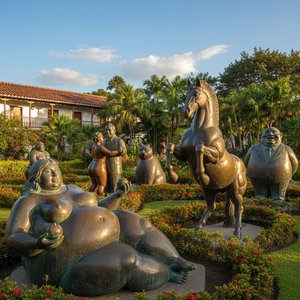
Fernando Botero: Celebrating Volume, Form & Colombian Identity
Explore the captivating world of Fernando Botero! Discover his iconic 'Boterismo' style, Colombian influences, investment potential & lasting legacy. Expert insights for art collectors.

Curating Excellence: Premium High-Volume Art Solutions for Luxury Hotels & Global Gallery Dealers
Elevate your hospitality brand with TopImpressionists’s premium high-volume art solutions. We provide hotel directors and dealers with museum-quality, hand-painted oil reproductions, bespoke architectural murals, and seamless global logistics to transform luxury spaces into timeless legacies.

Giotto di Bondone: 25 Arcydzieł Sztuki Niezmieniających Historii | TopImpressionists.com
Odkryj 25 arcydzieł Giotta di Bondone – renesansowego mistrza fresków. Poznaj historię, techniki i emocje w jego najsłynniejszych dziełach. Reprodukcje obrazów najwyższej jakości na TopImpressionists.com. Eksploruj pełną kolekcję online!

Scale Your Gallery Globally: Professional Art Curation & High-Volume Sales with TopImpressionists
Scale your art business globally with TopImpressionists. Access a verified marketplace for high-volume sales of museum-quality hand-painted reproductions and digital prints. Leverage our professional curation, expert craftsmanship, and worldwide logistics to build an enduring global art legacy.
Odkryj dzieła sztuki uporządkowane według tematów, stylów i cech charakterystycznych.

