

 Podgląd w skali 1:1
 Wyślij jako kartkę
 Udostępnij
 Szczegóły dzieła
 Przewodnik

 Pobierz obraz
 Podobne obiekty
 RTG
RTG Pokaz slajdów
 Statystyki
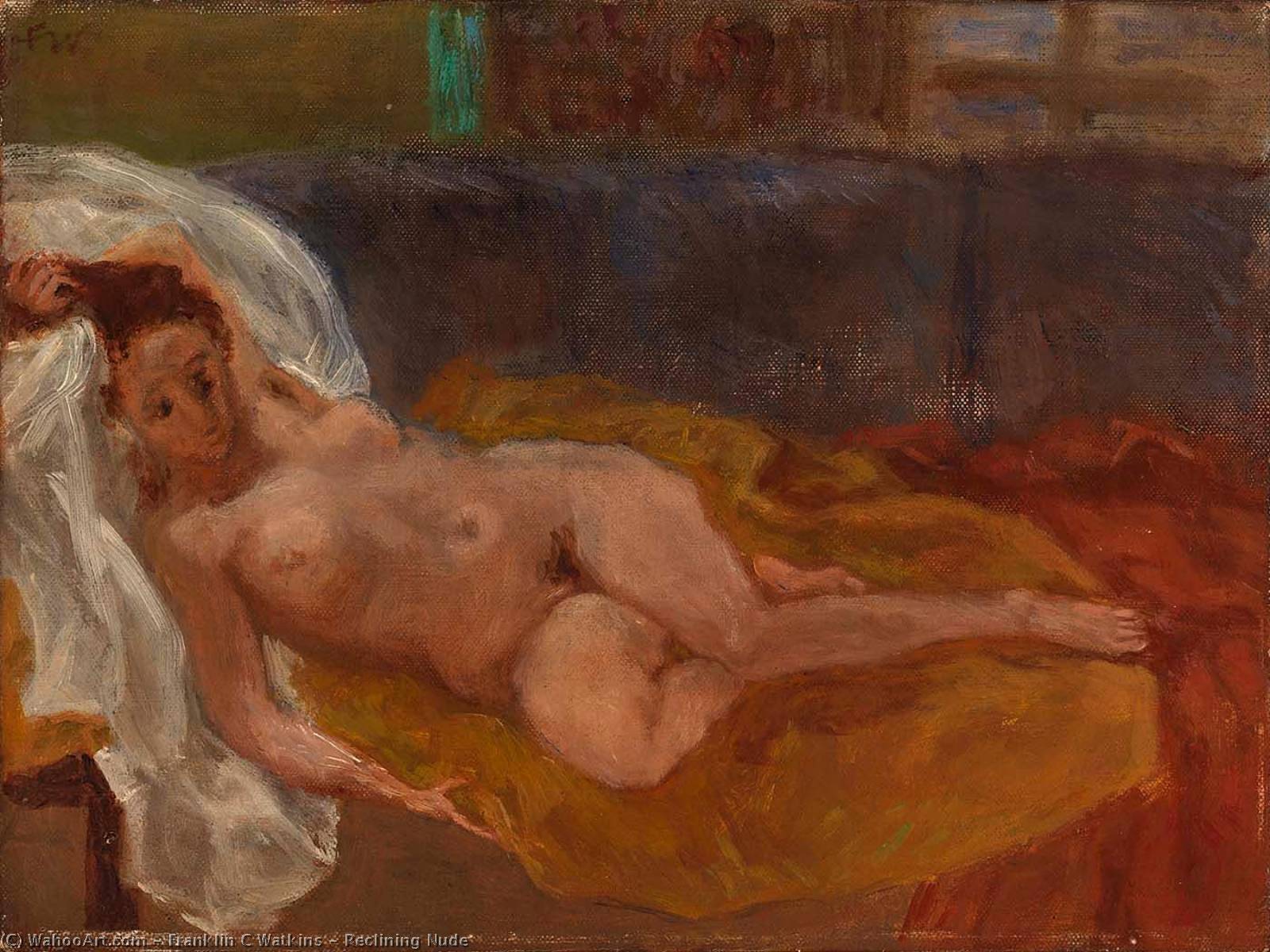
Reclining Nude
 Post-Impressionism
 23.0 x 31.0 cm
Reclining Nude by Franklin C. Watkins: An impressionistic masterpiece featuring a sensual female figure in warm tones. Explore post-impressionism & timeless beauty.
Explore the iconic architecture of Franklin C. Watkins! This American architect designed over 240 schools & buildings in the West, including Carnegie libraries. Discover his legacy.
 Rozwiń treść
Otrzymaj plik gotowy do druku, którego jakość znacznie przewyższa podgląd internetowy. Każdy sprzedawany przez nas obraz cyfrowy pochodzi z wysokorozdzielczego pliku wzorcowego w naszej bazie — zazwyczaj o szerokości od 5 000 do 15 000 pikseli — dzięki czemu możesz drukować w dużym formacie, mocno kadrować lub z pełnym przekonaniem odwzorowywać najdrobniejsze detale.
Żaden plik nie opuszcza naszego studia bez odpowiedniej obróbki. Ekspert ds. cyfrowych sprawdza kolory pod kątem zgodności z oryginałem i w razie potrzeby je koryguje, a następnie za pomocą profesjonalnych narzędzi do retuszu poprawia ostrość i szczegółowość — zawsze zachowując wierność pociągnięciom pędzla i stylowi artysty. Rezultatem jest obraz, który wygląda jak prawdziwy obraz, a nie jak przefiltrowany skan.
Zatwierdzasz przed finalizacją: nasz ekspert prześle obraz drogą mailową w ciągu 72 godzin do Twojego wglądu. Nie jesteś zadowolony? Poproś o poprawki lub korektę, bądź o zwrot kosztów, jeśli jakość nie spełnia oczekiwań.
To jakość, na której polegają wydawcy, studia projektowe, galerie oraz drukarnie.
Obraz cyfrowy
Pobierz plik o wysokiej rozdzielczości do osobistego użytku, druku oraz projektów kreatywnych. ( Przełącz na wydania drukowane Zamów ręcznie malowaną reprodukcję)
W każdym zamówieniu na obraz cyfrowy znajduje się
Profesjonalna dostawa cyfrowa z gwarancją
Wybierając TopImpressionists.com, nie otrzymujesz jedynie obrazu – otrzymujesz profesjonalnie udoskonalone cyfrowe dzieło sztuki, stworzone z najwyższą precyzją i objęte gwarancją satysfakcji. Oto wszystko, co automatycznie dołączane jest do Twojego zamówienia:

Błyskawiczna wysyłka e-mailowa
Plik z obrazem cyfrowym w wysokiej rozdzielczości zostanie przesłany na Twój adres e-mail w ciągu 72 godzin od złożenia zamówienia – gotowy do natychmiastowego użycia.

Plik cyfrowy wzbogacony przez AI
Twoja grafika została profesjonalnie zoptymalizowana przy użyciu zaawansowanych narzędzi AI oraz ręcznej edycji, co zapewnia maksymalną szczegółowość, klarowność i wierność kolorów.

Darmowe ponowne przesyłki dożywotnio
Przypadkowo usunąłeś lub zgubiłeś swój plik? Bez obaw – prześlemy go Tobie ponownie w dowolnym momencie, bez żadnych opłat.

Bez opłat importowych – zawsze
Ciesz się swoją sztuką natychmiast, bez żadnych opłat celnych, należności ani kosztów dostawy – pliki cyfrowe są zawsze wolne od podatku.

Gwarancja wierności kolorów
Dzięki zastosowaniu profesjonalnych narzędzi i procesów zarządzania barwą zapewniamy, że Twoje cyfrowe zdjęcie odzwierciedla oryginalne kolory tak wiernie, jak to tylko możliwe.

Gwarancja satysfakcji przez 100 dni
Jeśli nie będziesz zadowolony ze swojego cyfrowego obrazu, dokonamy jego poprawki lub zwrócimy 100% kosztów w ciągu 100 dni – bez zbędnych pytań.

100% Gwarancja zwrotu pieniędzy
Nie jesteś zadowolony? Otrzymaj pełny zwrot kosztów w ciągu 100 dni od otrzymania pliku cyfrowego – bez zbędnych pytań.

Rabaty przy zamówieniach hurtowych
Kup 3 obrazy, oszczędź 10% - Kup 5, oszczędź 15% - Kup 10+, oszczędź 20%. Idealne do projektów kreatywnych, galerii i agencji.
Podobne dzieła


Biografia artysty
A Legacy Etched in Stone: The Architectural Vision of Franklin C. Watkins
Franklin C. Watkins stands as a pivotal, yet often unsung, figure in the architectural landscape of the American West. His name isn’t immediately recognizable to many outside specialist circles, but his influence is profoundly visible – etched into the brick and mortar of over 240 schools, libraries, and public buildings that define towns and cities across Utah, Idaho, Wyoming, Nevada, and beyond. Born in a time of rapid expansion and community building, Watkins dedicated his career to crafting structures that weren’t merely functional spaces but embodiments of civic pride and educational aspiration. He wasn't an architect who sought grand monuments to personal glory; instead, he focused on the practical needs of burgeoning communities, leaving behind a remarkable portfolio of buildings that speak volumes about the spirit of the Intermountain West during the late 19th and early 20th centuries.Early Life and Formative Influences
Details surrounding Watkins’s earliest life remain somewhat scarce, a testament to his unassuming nature and dedication to his work rather than self-promotion. What is known is that he established his architectural practice in Salt Lake City, Utah, around the turn of the 20th century. This location proved crucial to his development as an architect. The region was experiencing significant growth fueled by railroad expansion, mining booms, and agricultural settlements. The demand for public buildings – schools to educate a growing population, libraries to foster intellectual pursuits, and commercial structures to support economic activity – was immense. Watkins quickly recognized this need and positioned himself to become a leading provider of these essential services. His early work demonstrates a clear understanding of prevailing architectural styles of the time, particularly those influenced by Victorian eclecticism and the emerging Prairie School movement. However, he wasn’t simply a mimic; he adapted these styles to suit the unique climate, materials, and cultural context of the Intermountain West.The Carnegie Library Boom & Watkins's Signature Style
Watkins truly distinguished himself through his prolific work designing Carnegie libraries. Andrew Carnegie’s philanthropic efforts provided funding for over 1,600 libraries across the United States, and Franklin C. Watkins secured a significant number of commissions to design these institutions throughout the West. This partnership allowed him to refine his architectural vision and develop a signature style characterized by practicality, durability, and understated elegance. His Carnegie libraries weren’t imposing structures; they were welcoming community hubs designed to encourage learning and civic engagement. He frequently employed red brick construction – readily available and well-suited to the region's climate – and incorporated large windows to maximize natural light. A hallmark of his designs was a symmetrical façade, often adorned with simple yet refined detailing such as decorative brickwork, cornices, and prominent entrances that emphasized the library’s role as a public institution. Beyond Carnegie libraries, Watkins designed numerous schoolhouses, courthouses, commercial buildings, and even residences, consistently applying these principles of functional design and regional sensitivity.A Commitment to Intermountain Design
Watkins's architectural philosophy was deeply rooted in a commitment to the specific needs and characteristics of the Intermountain West. He understood that buildings designed for eastern cities wouldn’t necessarily translate well to this rugged landscape. He prioritized materials that were locally sourced, construction techniques that were appropriate for the climate, and designs that reflected the cultural values of the communities he served. This pragmatic approach extended beyond mere aesthetics; Watkins was known for his meticulous attention to detail, ensuring that his buildings were structurally sound, energy-efficient, and adaptable to changing needs. He often incorporated features such as wide eaves to protect against harsh sunlight and snow loads, and strategically placed windows to maximize ventilation.- Schoolhouse Designs: Watkins designed hundreds of schoolhouses, each tailored to the specific size and needs of the local community.
- Courthouse Architecture: His courthouses were often built in a classical revival style, symbolizing justice and civic authority.
- Commercial Buildings: Watkins’s commercial structures blended functionality with aesthetic appeal, contributing to the economic vitality of western towns.
