

Shown: · With its frame:
 Podgląd w skali 1:1
 Wyślij jako kartkę
 Udostępnij
 Szczegóły dzieła
 Przewodnik

 Pobierz obraz
 Podobne obiekty
 RTG
RTG Pokaz slajdów
 Q&A
Q&A Statystyki

zł 1048
Ręcznie malowana reprodukcja olejowa
Ręcznie malowany obraz olejny na płótnie, wykonany na zamówienie przez naszych artystów w wybranym przez Ciebie wymiarze i oprawie. ( Przełącz na wydania drukowane Przejdź do wersji cyfrowej)
Size
·Standardowy format
personalizowane
CM
INCH
Wybierz spośród naszych standardowych rozmiarów, które zachowują oryginalne proporcje dzieła sztuki.
Loading sizes...

szerokość
wysokość
Wpisz wymaganą szerokość i wysokość, aby obraz pasował do Twojej ramy lub ściany. Ponieważ jest to dzieło malowane ręcznie, w przypadku rozmiaru o innych proporcjach artysta może domalować nieco więcej wokół obrazu lub przyciąć jego fragmenty — wybór należy do Ciebie. Przed rozpoczęciem pracy prześlemy Ci cyfrową wizualizację do zatwierdzenia. Obraz widoczny na tej stronie nie przedstawia rzeczywistego efektu — jedynie wizualizacja oddaje realny rezultat.
 Dowiedz się więcej
Finish
·
White zł1

Blurside zł1

Extended zł1

P118B zł10

P118H zł10

P118W zł10

P438Z zł10

P508JH zł12

P508YH zł12

P805H zł10

P805Z zł10

P919BZ zł10

P919G zł10

P919XJ zł10

P959ZH zł10

P968JZ zł12

W106C zł8

W218G zł10

W218JH zł8

W218Y zł10

W307PJ zł10

W316G zł10

W316PJ zł8

W316Y zł10

W398PJ zł8

W4111J zł10

W500HY zł15

W500JH zł15

W692G zł12

W849H zł8

W940BG zł15

W953PJ zł8

H24-GOLD zł30

H24-SILVER zł30

H36-GOLD zł45

H36-SILVER zł45
Shipped in a protective tube, ready for your own framer.
Above 105 cm the frame is shipped as a kit for a professional framer — read the details.
Extras
optionalWhat do the extras include?
Examples of what can be changed: Replace face with customer photo; Add pet (e.g., replace cat with dog); Include hidden message in background; Change background landscape or elements.
After order, TopImpressionists.com team will email client for instructions and provide a mockup preview
After order, TopImpressionists.com team will email client for instructions and provide a mockup preview
Dostawa na całym świecie () w ciągu 3–4 tygodni zamiast standardowych 5 tygodni. (2 Listopad). Bez kompromisów w kwestii jakości.
Lakier ochronny
Etykieta obiektu
Szczegóły grawerowanej brązowej tabliczki
This elegant plaque features the artist's name and the title of the artwork, finely engraved for a timeless presentation.
It is made from bronze with a refined, elegant finish. The text is precisely laser-engraved for a sharp and permanent result. Measuring 9x2 cm, the plaque is compact yet easy to read. It's built to be durable and scratch-resistant, offering a professional, museum-quality look. Mounting is simple thanks to the included adhesive backing.
Szczegóły przezroczystej tabliczki akrylowej
The plaque includes essential engraved details such as the artist's name, the title of the artwork, the date it was created, the type of media used-like oil on canvas or watercolor-a brief description of the piece, and a QR code that links to the complete artwork information.
It is crafted from clear acrylic, offering a sleek, modern appearance. The text is UV-engraved in black to ensure strong visual contrast. With a size of 10x15 cm, it ensures optimal readability. It comes equipped with two metal hooks for secure wall mounting. The plaque is designed to be weather-resistant, making it suitable for various environments, and it includes interactive features that work seamlessly with smartphone scanning.
Szczegóły czarnej tabliczki akrylowej
This elegant plaque includes engraved information such as the artist's name, the title of the artwork, the date it was created, the type of media used (like oil on canvas or watercolor), a short description of the artwork, and a QR code for quick access to more information.
The plaque itself is made from refined black acrylic with a premium finish. The text is laser-engraved in white for high contrast and readability. Its size is 10x15 cm, designed to be easy to read. It comes with two metal hooks for professional mounting. The design is sleek and fits any interior style. It is also weather-resistant and durable, with built-in digital integration for mobile compatibility.
Opcja ze szkłem jest dostępna wyłącznie w rozmiarach poniżej 110 cm
 Opcja ze szkłem jest dostępna wyłącznie w rozmiarach poniżej 110 cm
- Bezpłatna ekspresowa wysyłka na cały świat
- Wysokiej jakości płótno lniane
- Pełne ubezpieczenie przesyłki
- Gwarancja zwrotu należności celnych i podatków importowych
- Gwarancja wiernego odwzorowania kolorów
- 100-dniowa polityka zwrotów (tylko w przypadku wad)
- Gwarancja 100% zwrotu pieniędzy
- Zniżka przy zakupie wielu sztuk


Opis obiektu
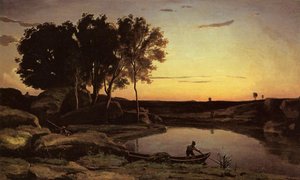
Experience the beauty of twilight with Friedrich Blümner's 'Sunset, Gutenberg.' This Impressionistic landscape captures a radiant sunset over a rural scene – a timeless masterpiece.
Biografia artysty
Odkryj pełne życia krajobrazy i odważne kolory Oscara Bluemnera (1867-1938), kluczowego amerykańskiego modernisty łączącego sztukę europejską z unikalną tematyką amerykańską.
About the painting
A Golden Farewell: "Sunset, Gutenberg" by Friedrich Julius Oskar Blümner
Immerse yourself in the tranquil beauty of "Sunset, Gutenberg," a captivating landscape painting from 1909 by German-American artist Friedrich Julius Oskar Blümner. This evocative work transports viewers to a serene rural scene bathed in the warm glow of twilight, offering a moment of quiet contemplation and appreciation for nature's fleeting splendor.
Impressionistic Technique & Visual Harmony
Blümner masterfully employs an Impressionistic style, characterized by loose, expressive brushstrokes that capture the ephemeral effects of light and color. Rather than striving for photographic realism, he prioritizes conveying a subjective impression of the scene. Notice how the vibrant hues of orange, pink, purple, and yellow blend seamlessly in the sky, creating a dramatic sunset effect. The foreground features lush greenery and trees, gradually transitioning into fields and distant houses along the horizon. Lines are used not to define shapes precisely but rather expressively, contributing to the painting's dynamic energy. The visible brushwork adds texture and depth, enhancing the overall visual interest. Oil paints on canvas were likely utilized, judging by the rich blending and textural qualities.
Subject & Composition: A Pathway to Reflection
The composition is thoughtfully structured around a central pathway that leads directly towards the radiant sun – the undeniable focal point of the artwork. This path serves as both a visual guide for the eye and a symbolic representation of journey or transition. The organic shapes—trees, hills, fields—are simplified yet recognizable, grounding the scene in reality while allowing Blümner's artistic interpretation to shine through. The flattened perspective, typical of Impressionism, emphasizes atmosphere over strict spatial accuracy, drawing the viewer into the mood and feeling of the moment.
Historical Context & Symbolism
Created in 1909, "Sunset, Gutenberg" reflects a period when artists were increasingly drawn to capturing fleeting moments and subjective experiences. Blümner, having emigrated from Germany, brought his European training to America, contributing to the burgeoning American Modernist movement. The title itself, “Gutenberg,” hints at a possible connection to Place Gutenberg in Strasbourg, France – a location honoring Johannes Gutenberg and the printing press, suggesting themes of knowledge, communication, or perhaps simply a cherished memory for the artist. Symbolically, the setting sun often represents transition, closure, or hope—a poignant reminder of the beauty found even as day turns to night.
Emotional Impact & Artistic Legacy
“Sunset, Gutenberg” evokes a sense of peace and tranquility, inviting viewers to pause and appreciate the simple beauty of nature. The warm color palette and gentle light create an emotionally resonant experience, while Blümner’s skillful technique demonstrates his mastery of Impressionistic principles. This piece is not merely a depiction of a sunset; it's a window into a moment of quiet reflection, capturing the essence of twilight with remarkable sensitivity and artistic flair.
Pytania i odpowiedzi
Czy kolory w „Sunset, Gutenberg” – Oscar Bluemner są nasycone, czy stonowane?
Kolory dzieła „Sunset, Gutenberg” – Oscar Bluemner charakteryzują się Clear Color Presence nasyceniem. Nasycenie określa, jak żywe lub stonowane są barwy.
Do jakiego etapu kariery Oscar Bluemner odpowiada data powstania dzieła „Sunset, Gutenberg” (1909)?
"Sunset, Gutenberg", powstałe w 1909, należy do Mature Period w twórczości Oscar Bluemner.
Kto stworzył "Sunset, Gutenberg" i kiedy?
Autorem dzieła "Sunset, Gutenberg" jest Oscar Bluemner, a datowanie pracy pochodzi z 1909 roku.
Quick facts and art quiz
About Oscar Bluemner

Oscar Bluemner
1867 - 1938, Niemcy
Biografia artysty
Świetlista wizja Oscara Bluemnera
Friedrich Julius Oskar Blümner, znany światu sztuki jako Oscar Bluemner, jawi się jako postać kluczowa w historii amerykańskiego modernizmu, stanowiąc fascynujące zbieżne miejsce europejskich ruchów awangardowych i wyraźnie amerykańskiej wrażliwości artystycznej. Urodzony w 1867 roku w Prenzlau w Niemczech, Blümner wyruszył w artystyczną podróż, która ostatecznie pozwoliła mu ugruntować pozycję jednego z najgłębszych malarzy swojej epoki. Jego życie było nieustannym dialogiem między ustrukturyzowaną tradycją jego niemieckiego dziedzictwa a ekspansywnymi, atmosferycznymi możliwościami amerykańskiego krajobrazu. Poprzez swoją twórczość jesteśmy świadkami dziedzictwa charakteryzującego się odważnymi paletami barw i innowacyjnymi technikami kompozycyjnymi, które dążyły do uchwycenia nie tylko świata widzialnego, ale samej duszy światła i przestrzeni.
Lata formacyjne Blümnera były głęboko zakorzenione w rygorystycznych tradycjach akademickich Europy. Studiując w Düsseldorf Kunstakademie pod okiem Wilhelma Leibla, chłonął ideały impresjonistyczne, które wówczas przekształcały niemieckie kręgi artystyczne. Ta wczesna edukacja zaszczepiła w nim głęboki szacunek do chwytania ulotnych momentów naturalnego piękna poprzez świetlisty kolor i precyzyjną obserwację. Gdy jego podróż prowadziła przez kulturalne epicentra Francji i Włoch, więź Blümnera z impresjonizmem oraz postimpresjonizmem uległa umocnieniu. Dzieła mistrzów takich jak Claude Monet czy Vincent van Gogh służyły mu jako kluczowe inspiracje, zachęcając do eksperymentowania z ekspresyjnym pociągnięciem pędzla i bardziej emocjonalnym wykorzystaniem pigmentu, co później zdefiniowało jego dojrzały styl.
Synteza dwóch światów
Rok 1893 przyniósł przełomowy rozdział w życiu Blümnera, kiedy to powrócił do Stanów Zjednoczonych, przywożąc ze sobą wyrafinowaną europejską perspektywę, która wkrótce miała połączyć się z amerykańską tematyką. Poświęcił się dokumentowaniu różnorodnych krajobrazów amerykańskiego Zachodu i Północnego Wschodu, promując charakterystyczne podejście często określane mianem impresjonizmu amerykańskiego. W jego rękach krajobraz stał się naczyniem dla tonalnej harmonii i perspektywy atmosferycznej. Zamiast dążyć do czystej fotograficznej dokładności, Blümner priorytetyzował przekazywanie nastroju i emocji, używając koloru do przywołania ciężaru powietrza oraz temperatury światła.
Wraz z postępem XX wieku, artystyczna ewolucja Blümnera przybrała jeszcze bardziej radykalny obrót. Zaczął on przyjmować geometryczne złożoności kubizmu, odnajdując wspólny język z rewolucyjnymi postac𝘪ami, takimi jak Georges Braque czy Pablo Picasso. Ta stylistyczna zmiana pozwoliła mu na przełamanie tradycyjnej perspektywy poprzez zastosowanie ustrukturyzowanych form i spłaszczonych płaszczyzn. W arcydziełach takich jak „South Peterson Snow”, można zaobserwować, jak geometryczne kształty oddziałują na siebie, tworząc poczucie rytmicznego napięcia. Ten okres jego twórczości reprezentuje głębokie intelektualne zaangażowanie w nowoczesność, w której granice między obiektem a przestrzenią zaczęły zacierać się w jednej, spójnej wizji.
Dziedzictwo i znaczenie artystyczne
Trwała ranga Oscara Bluemnera tkwi w jego zdolności do budowania mostu między starym a nowym światem. Jego dorobek służy jako żywy łącznik między europejską awangardą a rozkwitającym amerykańskim ruchem modernistycznym. Bez względu na to, czy uwieczniał ciszę wioski w New Jersey, czy przemysłowy rytm miejskiego krajobrazu, jego praca pozostawała zakotwiczona w unikalnej fascynacji motywem przestrzeni i formy.
Jego wkład w historię sztuki można podsumować poprzez kilka kluczowych osiągnięć:
- Mistrzostwo koloru: Jego zdolność do używania odważnych, nasyconych palet w celu wywołania rezonansu emocjonalnego.
- Innowacja strukturalna: Bezszwowa integracja kubistycznej geometrii ze światłem impresjonistycznym.
- Głębia atmosferyczna: Unikalna technika w impresjonizmie amerykańskim, która przedkładała „odczucie” krajobrazu nad jego dosłowny opis.
Dziś twórczość Blümnera wciąż zachwyca odbiorców, oferując okno na czasy ogromnych przemian artystycznych. Jego obrazy pozostają żywym świadectwem potęgi koloru i formy, zdolnych przekraczać granice i pozostawiać niezatarty ślad w tkance sztuki nowoczesnej.
Quick facts about Oscar Bluemner
- Artistic Movement Or Style: Modernizm amerykański
- Artists Or Movements Influenced By This Artist: ['Kubizm']
- Artists Who Influenced This Artist:
- Georges Seurat
- Paul Cézanne
- Date Of Birth: 1867
- Full Name: Friedrich Julius Oskar Blümner
- Nationality: Niemiec
- Notable Artworks:
- Radiant Night
- 'Morning Light (Dover Hills, October)
- South Peterson Snow
- Place Of Birth: Prenzlau, Niemcy
Podobne dzieła




Oscar Bluemner
Sunset, Gutenberg
() ·
With its frame: · Hand-painted in oil on linen
Total