


 Zobacz w skali 1:1
 Wyślij
 Udostępnij
 Szczegóły
 Przewodnik

 Pobierz plik obrazu
 Podobne obiekty
 RTG
RTG Pokaz slajdów
 Statystyki
Shooting for the Beef


George Caleb Bingham (1811-1879), known as "the Missouri Artist," was a pivotal figure in American art. Born in Virginia and later settling in Missouri, Bingham dedicated his career to portraying scenes of life along the Missouri River. His work is c
 Czytaj więcej
George Caleb Bingham (1811-1879) – amerykański malarz pejzażowy i portretysta, znany z obrazów z życia pionirów i polityki na zachodzie USA. Odkryj jego unikalny styl!
Ręcznie malowana reprodukcja olejowa
Ręcznie malowany obraz olejny na płótnie, wykonany na zamówienie przez naszych artystów w wybranym przez Ciebie wymiarze i oprawie. ( Przełącz na wersję drukowaną Przełącz na wersję cyfrową)




P118B zł10

P118H zł10

P118W zł10

P438Z zł10

P508JH zł12

P508YH zł12

P805H zł10

P805Z zł10

P919BZ zł10

P919G zł10

P919XJ zł10

P959ZH zł10

P968JZ zł12

W106C zł8

W218G zł10

W218JH zł8

W218Y zł10

W307PJ zł10

W316G zł10

W316PJ zł8

W316Y zł10

W398PJ zł8

W4111J zł10

W500HY zł15

W500JH zł15

W692G zł12

W849H zł8

W940BG zł15

W953PJ zł8




Standardowy
na zamówienie
CM
INCH
Wybierz spośród naszych standardowych rozmiarów, które zachowują oryginalne proporcje dzieła sztuki.
Loading sizes...

szerokość
wysokość
Wpisz wymaganą szerokość i wysokość, aby obraz pasował do Twojej ramy lub ściany. Ponieważ jest to dzieło malowane ręcznie, w przypadku rozmiaru o innym proporcji artysta może domalować nieco więcej wokół obrazu lub przyciąć fragmenty — wybór należy do Ciebie. Przed rozpoczęciem pracy prześlemy Ci cyfrową wizualizację do zatwierdzenia. Obraz widoczny na tej stronie nie przedstawia rzeczywistego efektu — jedynie wizualizacja oddaje realny rezultat.
Przykłady możliwych zmian: Zamień twarz na zdjęcie klienta; Dodaj zwierzę domowe (np. zamień kota na psa); Ukryj wiadomość w tle; Zmień krajobraz lub elementy tła.
Po złożeniu zamówienia zespół TopImpressionists.com skontaktuje się z klientem drogą mailową w celu uzyskania instrukcji i prześle wizualizację projektu
Po złożeniu zamówienia zespół TopImpressionists.com skontaktuje się z klientem drogą mailową w celu uzyskania instrukcji i prześle wizualizację projektu
Dostawa na całym świecie () w ciągu 3–4 tygodni zamiast standardowych 5 tygodni. (23 Październik). Bez kompromisów w kwestii jakości.

Bezpłatna ekspresowa wysyłka na cały świat

Wysokiej jakości płótno lniane

Pełne ubezpieczenie transportowe

Gwarancja zwrotu należności celnych i podatków importowych

Gwarancja idealnego odwzorowania barw

100-dniowy okres na zwrot dzieła w przypadku wykrycia wad produkcyjnych

Gwarancja 100% zwrotu pieniędzy

Oferta przy zakupie wielu sztuk
 Opcja ze szkłem jest dostępna wyłącznie w rozmiarach poniżej 110 cm

Shooting for the Beef
Technika wykonania
Rozmiar reprodukcji
-


Suma do zapłaty
zł 1709
A Snapshot of the American West
George Caleb Bingham’s “Shooting for the Beef,” painted around 1850, isn't merely a hunting scene; it’s a vibrant tableau vivant—a captured moment brimming with the spirit and complexities of mid-19th century Missouri. Bingham, deeply rooted in the American Regionalist tradition, eschewed the polished formality of European art to instead immerse himself in the lives of his neighbors along the mighty Missouri River. This painting offers an intimate glimpse into a world where survival, community, and the pursuit of sustenance intertwined with a rugged individualism that would define the frontier experience.
The Composition: A Dynamic Dance
The canvas explodes with activity, yet possesses a remarkable sense of balance. Bingham masterfully employs a horizontal format, emphasizing the vastness of the landscape—a rolling expanse of prairie punctuated by the distant silhouette of a building, likely a hunting lodge or trading post. The central figure, a man poised to fire his rifle, isn’t rigidly posed but rather caught in a fleeting moment of action, lending an immediacy and realism to the scene. Notice how he's slightly off-center, drawing the eye naturally across the composition, while other figures—observers, loaders, and those preparing for their turn—are arranged with deliberate care, creating a visual narrative that unfolds before us.
Color and Texture: Earthy Echoes of the Frontier
Bingham’s palette is dominated by the muted tones of the American heartland – browns, ochres, greens, and yellows. These earthy hues evoke the soil, timber, and hides that formed the foundation of life on the frontier. The warm sunset glow bathing the sky—streaks of pink and orange—adds a touch of romanticism to the scene, suggesting both the beauty and the inherent dangers of this untamed landscape. Furthermore, observe how Bingham utilizes visible brushstrokes; they aren’t meticulously blended but rather applied with a confident hand, creating a palpable sense of texture – rough bark on the building, the worn leather of the rifles, and the slightly weathered faces of the men themselves. This technique contributes significantly to the painting's feeling of authenticity.
Symbolism and Narrative
“Shooting for the Beef” is more than just a depiction of hunting; it’s a meditation on masculinity, community, and the relationship between humans and nature. The act of shooting itself represents both skill and necessity—a means of providing sustenance in a challenging environment. The men aren't portrayed as bloodthirsty hunters but rather as fellow members of a tight-knit community, sharing a common purpose and a shared experience. The inclusion of observers suggests the importance of social interaction and camaraderie within this rugged setting. It’s a scene that speaks to the values of self-reliance, resourcefulness, and the enduring spirit of the American West.
A Legacy in American Art
George Caleb Bingham remains a pivotal figure in American art history, celebrated for his ability to capture the essence of everyday life along the Missouri River. “Shooting for the Beef” stands as one of his most iconic works, offering a timeless portrait of frontier America—a world of hardship and beauty, community and solitude. Reproductions of this captivating painting continue to resonate with viewers today, transporting us back to a time when the American West was being forged in the fires of exploration, settlement, and self-discovery.
Pytania i odpowiedzi
Jak intensywne są kolory dzieła "Shooting for the Beef"?
Dzieło „Shooting for the Beef” autorstwa George Caleb Bingham zostało utrwalone z nasyceniem na poziomie Balanced Soft oraz intensywnością Balanced.
Do jakiego nurtu w sztuce należy „Shooting for the Beef” autorstwa George Caleb Bingham?
„Shooting for the Beef” autorstwa George Caleb Bingham należy do nurtu Luminism. Nurt ten stanowi stylistyczny kontekst dzieła.
Czy dzieło „Shooting for the Beef” autorstwa George Caleb Bingham znajduje się w kraju pochodzenia artysty?
Tak – dzieło znajduje się w kraju pochodzenia artysty. George Caleb Bingham urodził(a) się w Stany Zjednoczone, a oryginał dzieła „Shooting for the Beef” znajduje się w muzeum w Stany Zjednoczone.
Biografia artysty
A Life Painted on the American Frontier
George Caleb Bingham, born in 1811 amidst the rolling landscapes of Virginia, wasn’t destined for a life steeped in artistic convention. His early years were marked by movement and adaptation, a family relocation to the burgeoning Missouri frontier shaping his perspective in profound ways. This shift from the established East to the raw energy of the West became the very bedrock of his artistic vision. The hardships faced by his family instilled within him an acute awareness of the struggles and triumphs inherent in the American experience – themes that would dominate his canvases for decades to come. A pivotal encounter at age nine with Chester Harding, a traveling portraitist passing through Franklin, Missouri, ignited a spark. This brief exposure wasn’t merely an introduction to technique; it was a revelation of art's power to capture not just likeness but the very essence of human character. Though largely self-taught initially, Bingham honed his skills through apprenticeships with cabinet makers, learning meticulous draftsmanship and an eye for detail – qualities that would become hallmarks of his mature style. By nineteen, he was already earning a living as a portrait painter, demonstrating an innate talent that quickly established him within the local community. This early success propelled him towards St. Louis, a vibrant hub where he sought to refine his skills and immerse himself in a growing artistic milieu.The Luminist Touch and American Realism
Bingham’s artistic journey wasn't confined by formal training; it was deeply interwoven with the world around him – the majestic Mississippi and Missouri Rivers, the bustling river towns teeming with life, and the diverse individuals who navigated this dynamic landscape. He became a keen observer of American society, particularly along these vital waterways that served as arteries of commerce and migration. His style gradually evolved, embracing elements of Luminism, an artistic movement characterized by its emphasis on atmospheric effects and the subtle interplay of light. This is strikingly evident in works like Order at the Border (1850), where the golden hues of the setting sun illuminate a tense negotiation between settlers and Native Americans, imbuing the scene with both beauty and underlying tension. However, Bingham wasn’t simply a Luminist painter; he infused his work with a powerful dose of realism, striving to depict American life with unflinching honesty and authenticity. Family Life on the Frontier (1845) exemplifies this approach, offering a tender yet realistic portrayal of domesticity amidst the challenges of pioneer existence. He wasn’t interested in idealizing the frontier; he sought to portray it as it was – a place of opportunity, hardship, and constant change. His paintings offer a valuable historical record, providing insights into the social customs, political attitudes, and daily lives of Americans during a pivotal period in their history. The County Election (1844) stands out as perhaps his most iconic representation of this approach – a vibrant tableau capturing the boisterous energy and democratic spirit of frontier politics. The painting isn’t merely a depiction of an event; it's a social commentary, offering insights into the values, anxieties, and aspirations of 19th-century Americans. His ability to capture the essence of American culture is also powerfully displayed in St. Louis Jockey, on the Battlefield (1862), a poignant reflection on the Civil War’s impact on everyday life, revealing the subtle scars left upon the nation's psyche.Themes of Frontier Life and Social Commentary
Throughout his career, Bingham consistently returned to themes central to the American experience: westward expansion, political participation, the rhythms of river life, and the complexities of human interaction. He wasn’t afraid to tackle difficult subjects, often embedding subtle social commentary within seemingly straightforward depictions of everyday scenes. His paintings weren't simply aesthetically pleasing; they were narratives, offering glimpses into the moral and ethical dilemmas facing a young nation grappling with its identity. Consider Raftsmen Playing Cards, or The Checker Players, both capturing moments of leisure but also hinting at the hardships and uncertainties faced by those who worked the rivers. These works demonstrate Bingham’s skill in imbuing seemingly mundane activities with a sense of depth and significance. He skillfully blended elements of portraiture, landscape, and narrative to create scenes that resonated deeply with his audience. Lighter Relieving the Steamboat Aground (1853) is a prime example, depicting a scene of rural American life while subtly commenting on the challenges faced by those living along the riverbanks. His work often served as a visual record of the era, capturing the spirit and struggles of a nation in transition.Technique and Influences
Bingham’s artistic style was shaped by a unique combination of influences. While he largely eschewed formal training, his apprenticeship with a cabinet maker instilled in him a meticulous attention to detail and an appreciation for craftsmanship. His early exposure to Chester Harding's portraiture provided him with the foundational skills necessary to capture likenesses accurately. However, it was his immersion in the frontier environment that truly informed his artistic vision. He studied the landscapes of Missouri with a keen eye, meticulously observing the way light interacted with the terrain and the subtle nuances of color. He also drew inspiration from the works of European artists, particularly those associated with the Düsseldorf school, known for their mastery of tonal painting and atmospheric effects. This influence is evident in his use of muted colors and soft brushstrokes, which create a sense of depth and realism.Rediscovery and Lasting Legacy
Despite his prominence during his lifetime, Bingham’s work experienced a period of relative obscurity following his death in 1879. It wasn't until the 1930s that a renewed interest in his art emerged, fueled by a growing appreciation for American Regionalism and Realism. This rediscovery led to a reevaluation of his contributions to American art history, recognizing him as one of the greatest American painters of the 19th century. By the time of his bicentennial in 2011, George Caleb Bingham had firmly established himself as a significant figure in American art, and his paintings continue to be celebrated for their historical accuracy, emotional depth, and artistic merit. His legacy extends beyond his individual paintings; he helped define a distinctly American artistic voice, one that celebrated the nation’s unique character and confronted its challenges with honesty and insight.- Canvassing for a Vote: A powerful depiction of political engagement on the frontier.
- Order No. 11: Illustrates the complexities of interactions between settlers and Native Americans.
- Lighter Relieving the Steamboat Aground: Captures a moment of rural American life with stunning detail.

George Caleb Bingham
1811 - 1879 , Stany Zjednoczone
Najważniejsze informacje
- Artistic Movement Or Style: Luminizm, Realizm
- Artists Or Movements Influenced By This Artist: ['Düsseldorf school']
- Artists Who Influenced This Artist: ['Chester Harding']
- Date Of Birth: 1811
- Date Of Death: 1879
- Full Name: George Caleb Bingham
- Nationality: Amerykański
- Notable Artworks:
- Order No. 11
- Raftsmen Playing Cards
- Family Life on Frontier
- Place Of Birth: Augusta County, USA
Zobacz także powiązane artykuły

The Unvarnished Truth: A Cultural Journey Through the Soul of American Realism
Explore the profound beauty of American Realism. From the Ashcan School's urban grit to intimate portraits, discover how artists captured the authentic soul of a nation through unvarnished truth and masterful observation.
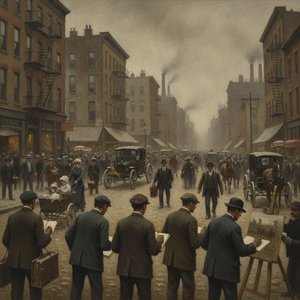
The Ashcan School: Capturing the Raw, Unfiltered Soul of Urban Life through American Realism
Discover the raw beauty of the Ashcan School. Explore how masters like Bellows and Henri captured the gritty, vibrant soul of early 20th-century New York through profound American Realism and evocative urban landscapes.