


 Podgląd w skali 1:1
 Wyślij jako kartkę
 Udostępnij
 Szczegóły dzieła
 Przewodnik

 Pobierz obraz
 Podobne obiekty
 RTG
RTG Pokaz slajdów
 Statystyki
Two Comanche Girls
 Oil On Canvas
- WallArt
- American Romanticism
 1834
1834- 19th Century
 74.0 x 61.0 cm
Capture the proud spirit of Two Comanche Girls with this evocative 1834 portrait by George Catlin; discover this historic American masterpiece today.
 Rozwiń treść
George Catlin – malarz dokumentujący życie i kulturę Indian w XIX wieku. Jego obrazy to unikalne świadectwa zanikających plemien Ameryki Północnej. Odkryj jego niezwykłą twórczość!
Giclée / Wydruk artystyczny
Wydruki giclée lub płótna o jakości muzealnej, szybka realizacja i szeroki wybór opcji wykończenia. ( Zamów ręcznie malowaną reprodukcję Przejdź do wersji cyfrowej)




P118B zł10

P118H zł10

P118W zł10

P438Z zł10

P508JH zł12

P508YH zł12

P805H zł10

P805Z zł10

P919BZ zł10

P919G zł10

P919XJ zł10

P959ZH zł10

P968JZ zł12

W106C zł8

W218G zł10

W218JH zł8

W218Y zł10

W307PJ zł10

W316G zł10

W316PJ zł8

W316Y zł10

W398PJ zł8

W4111J zł10

W500HY zł15

W500JH zł15

W692G zł12

W849H zł8

W940BG zł15

W953PJ zł8




Standardowy format
personalizowane
CM
INCH
Wybierz spośród naszych standardowych rozmiarów, które zachowują oryginalne proporcje dzieła sztuki.
Loading sizes...

szerokość
wysokość
Wpisz wymaganą szerokość i wysokość, aby dopasować grafikę do ramy lub ściany. Wydruk można jedynie przyciąć, nigdy nie powiększając go poza oryginalny obraz, dlatego format o innych proporcjach spowoduje utratę części kompozycji. Przed rozpoczęciem druku prześlemy Ci cyfrowy podgląd do zatwierdzenia. Obraz wyświetlany na tej stronie nie pokazuje rzeczywistego przycięcia — jedynie podgląd oddaje ten efekt.
Dostawa na cały świat () w ciągu 2 tygodni zamiast standardowych 4/5 tygodni. (25 Październik)

Bezpłatna ekspresowa wysyłka na cały świat

Wysokiej jakości płótno lniane

Pełne ubezpieczenie przesyłki

Gwarancja zwrotu należności celnych i podatków importowych

Gwarancja wiernego odwzorowania kolorów

100-dniowa polityka zwrotów (tylko w przypadku wad)

Gwarancja 100% zwrotu pieniędzy

Zniżka przy zakupie wielu sztuk
 Opcja ze szkłem jest dostępna wyłącznie w rozmiarach poniżej 110 cm

Two Comanche Girls
Giclée / Wydruk artystyczny
Wymiary reprodukcji
-


Cena całkowita
zł 265
A Glimpse into Vanishing Worlds: The Spirit of Two Comanche Girls
To stand before George Catlin's depiction of "Two Comanche Girls" is not merely to observe a painting; it is to step across the threshold of time, into a moment suspended between vibrant cultural life and inevitable change. Painted in 1834, this work transcends simple portraiture. It is a profound ethnographic document imbued with the dignity and resilience of a people whose way of life was rapidly transforming under the relentless march of history. The composition centers on two magnificent Comanche women, their presence commanding attention. Their gaze, directed outward toward the viewer, is not passive; it carries the weight of tradition, a palpable sense of pride, perhaps even defiance, that resonates across the centuries.
The Artistry and Technique of Catlin
George Catlin, an artist whose career spanned the volatile intersection of American expansion and indigenous cultures, employed a masterful technique to capture this scene. While the details suggest meticulous observation—the drape of the traditional garments reaching gracefully to their ankles, the careful rendering of every facial nuance—the overall effect is one of immediacy. His skill allowed him to document not just figures, but an entire ecosystem of culture. The inclusion of surrounding elements—a watchful child near the teepee, another figure on the periphery, and a loyal dog resting nearby—grounds the portrait in reality. These secondary subjects enrich the narrative, suggesting the rhythm of daily life around the central, powerful tableau.
Historical Resonance and Cultural Depth
The year 1834 places this painting at a critical juncture for Native American tribes. Catlin’s dedication to recording these cultures was both an artistic endeavor and, perhaps, a poignant act of preservation. The scene evokes the richness of life before overwhelming external pressures reshaped the landscape. Viewing it today allows us a privileged, if filtered, window into Comanche society—a world rich with ceremony, community, and deep connection to the land. It compels us to consider what we risk losing when history moves too quickly.
Symbolism and Emotional Echoes for the Modern Collector
For the contemporary collector or designer seeking art that speaks volumes without uttering a word, this piece offers immense emotional depth. The symbolism here is potent: it speaks of enduring spirit, maternal strength, and cultural continuity. When considering a high-quality reproduction of "Two Comanche Girls," one acquires more than just wall decor; one acquires a conversation starter, an object imbued with narrative weight. It serves as a powerful reminder to pause, to look closely, and to appreciate the beauty found in steadfast tradition.
Pytania i odpowiedzi
Gdzie mogę pobrać „Two Comanche Girls” – George Catlin?
Możliwość pobrania dzieła „Two Comanche Girls”: strona Pobierz plik cyfrowy oferuje wysokiej rozdzielczości cyfrowe zdjęcie do pobrania.
Co przedstawia i jaką atmosferę oddaje „Two Comanche Girls” – George Catlin?
„Two Comanche Girls” – George Catlin przedstawia native american, portraiture, teepee, cultural life, frontier scene, indigenous people, wprowadzając Nostalgic nastrój. Tematyka i atmosfera wspólnie definiują to dzieło.
Na którym etapie kariery George Catlin znajduje się dzieło „Two Comanche Girls”, biorąc pod uwagę jego datę powstania?
"Two Comanche Girls", powstałe w 1834, należy do Early Career w twórczości George Catlin.
Biografia artysty
Early Life and the Call of the Frontier
George Catlin, born in Wilkes-Barre, Pennsylvania, in 1796, was destined for a life profoundly shaped by the frontier—a world both alluring and perilous, vividly etched into his memory through the tales spun by his mother, Polly Sutton. Her own harrowing experience as a captive during an Indian raid ignited within young Catlin a deep fascination with the West, a land perceived not merely as distant but as imbued with a unique spirit, a culture rapidly fading from view. Initially trained in law, he found himself drawn to a different path—a desire to capture and preserve the essence of Native American life before it disappeared entirely. This wasn’t simply an artistic pursuit; it was driven by a sense of urgency, a premonition that westward expansion would irrevocably alter these vibrant cultures, silencing their voices and erasing their traditions. His early work, primarily engravings depicting scenes along the Erie Canal, demonstrated a remarkable technical skill and attention to detail—qualities he would later hone into his ambitious project. These initial endeavors served as a crucial foundation, sharpening his observational abilities and solidifying his commitment to visual storytelling, laying the groundwork for his future explorations of the American West.Documenting a Vanishing World: The Indian Gallery
Catlin’s most enduring legacy is undoubtedly “The Indian Gallery,” an extraordinary collection of over 500 paintings meticulously documenting Native American life and culture. Beginning in the 1830s, he embarked on five arduous expeditions into the heart of the American West, traversing vast territories inhabited by tribes such as the Mandan, Sioux, Blackfeet, and Choctaw. These journeys weren’t merely observational; Catlin immersed himself within these communities, participating in ceremonies, witnessing daily life, and forging genuine relationships with tribal leaders—a rare and deeply respectful approach for an outsider at that time. He sought to understand their customs, beliefs, and social structures, translating this knowledge onto canvas with remarkable accuracy and sensitivity. His paintings are not simply portraits; they’re windows into a vanishing world, capturing the dignity, complexity, and profound connection between these people and their environment. Works like Sham Fight, Mandan Boys (1832-1833) vividly portray a playful mock battle among young warriors, showcasing their athleticism and communal spirit, while Medicine Buffalo of the Sioux (1839) captures the solemnity and power of a prominent leader. Catlin’s meticulous attention to detail—from the elaborate clothing and weaponry to the evocative landscapes—provides invaluable insights into the lives of these tribes.A Journey West: Challenges and Artistic Development
Catlin's expeditions were fraught with challenges – logistical difficulties, harsh weather conditions, and the inherent complexities of navigating unfamiliar cultures. He faced skepticism from some quarters, who viewed his work as romanticized or even exploitative. Despite this, he persevered, driven by a deep conviction that documenting these cultures was an urgent necessity. During his travels, Catlin’s artistic style evolved significantly. Initially influenced by European academic painting, he gradually developed a more expressive and dynamic approach—a technique characterized by bold colors, dramatic lighting, and a focus on capturing movement and emotion. He experimented with different mediums, including oil paint, watercolor, and lithography, adapting his techniques to suit the subject matter and environment. His work became increasingly infused with a sense of immediacy and authenticity, reflecting his deep engagement with the people he was portraying. The portraits he created were not merely likenesses; they were attempts to convey the spirit and character of each individual, capturing their unique presence and dignity.Recognition and Legacy
Despite facing financial difficulties and initial resistance from the art establishment, Catlin’s “Indian Gallery” eventually garnered international acclaim. His exhibitions in London, Paris, and Berlin captivated audiences with their unprecedented portrayal of Native American life. The success of these tours provided him with much-needed financial support and solidified his reputation as a pioneering artist and ethnographer. However, he never achieved the level of recognition or compensation he felt was due to him. In 1872, shortly before his death, Catlin donated his collection to the Smithsonian Institution in Washington D.C., hoping it would serve as a lasting testament to his work and a valuable resource for future generations. Today, George Catlin is remembered not only as a talented painter but also as a courageous advocate for Native American rights and a vital chronicler of a vanishing culture. His paintings offer invaluable insights into the lives, customs, and beliefs of the Plains Indians—a legacy that continues to inspire artists, historians, and anyone interested in understanding the complex history of the American West.Key Works
- Sham Fight, Mandan Boys (1832-1833): A lively depiction of a playful mock battle among young Mandan warriors.
- Mrs. George Catlin (Clara Bartlett Gregory) (1850): A portrait showcasing the artist’s wife, offering insight into his personal life.
- Pipestone Quarry, Coteau Des Prairies (1848): Illustrates a sacred site for many tribes and their spiritual connection to the land.
- Medicine Buffalo of the Sioux (1839): A striking portrait capturing the dignity and power of a prominent Sioux leader.
- Prairie Meadows Burning (1832): Depicts a dramatic scene of controlled burning, highlighting the relationship between Native Americans and their environment.
- Little Wolf, A Famos Warrior (1844): A powerful portrait of a Native American warrior, symbolizing strength and resilience.

George Catlin
1796 - 1872 , Stany Zjednoczone
Krótka nota
- Artistic Movement Or Style: Malba frontierowa
- Artists Or Movements Influenced By This Artist: ['']
- Artists Who Influenced This Artist: ['']
- Date Of Birth: 26 lipca 1796
- Date Of Death: 23 grudnia 1872
- Full Name: George Catlin
- Nationality: Amerykański
- Notable Artworks:
- Sham Fight
- Prairie
- Pipestone
- Buffalo
- Eagle Dance
- Place Of Birth: Wilkes-Barre, USA
Powiązane artykuły

Georges Seurat: 25 Arcydzieł Punktalizmu dla Twojego Domu | TopImpressionists.com
Odkryj 25 arcydzieł Georges'a Seurata! Poznaj historię punktalizmu, impresjonistyczne pejzaże i fascynującą technikę malarską. Reprodukcje obrazów najwyższej jakości na TopImpressionists.com – inspiracje do Twojego wnętrza. Eksploruj pełną kolekcję online!

Amerykański Realizm: 10 Arcydzieł, Które Zdefiniowały Epokę | TopImpressionists
Poznaj 10 arcydzieł amerykańskiego realizmu! Odkryj historie Winslowa Homera, Edwarda Hoppera i innych mistrzów. Reprodukcje obrazów najwyższej jakości – inspiracje do Twojego wnętrza na TopImpressionists.com

John George Brown: Capturing American Life & Sentiment in 19th-Century Genre Painting
Explore the captivating genre paintings of John George Brown, celebrated for his realistic depictions of 19th-century American life. Discover his legacy & find museum-quality reproductions at TopImpressionists.
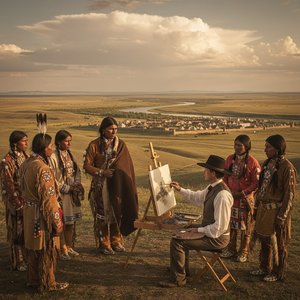
George Catlin: Witnessing & Representing Indigenous Life on the American Frontier
Explore the captivating art of George Catlin, renowned for his vivid portraits & landscapes documenting Native American life on the frontier. Discover a vanishing world through stunning paintings and historical context.

Georges Braque: 25 Arcydzieł Kubizmu i Nowoczesnej Sztuki | TopImpressionists.com
Odkryj 25 arcydzieł Georges'a Braque – pioniera kubizmu i malarstwa nowoczesnego. Poznaj historię, techniki i inspiracje za jego najsłynniejszymi obrazami. Reprodukcje najwyższej jakości na TopImpressionists.com! Eksploruj pełną kolekcję online.
Odkryj dzieła sztuki uporządkowane według tematów, stylów i cech charakterystycznych.

