

 Zobacz w skali 1:1
 Wyślij
 Udostępnij
 Szczegóły
 Przewodnik

 Pobierz plik obrazu
 Podobne obiekty
 RTG
RTG Pokaz slajdów
 Statystyki
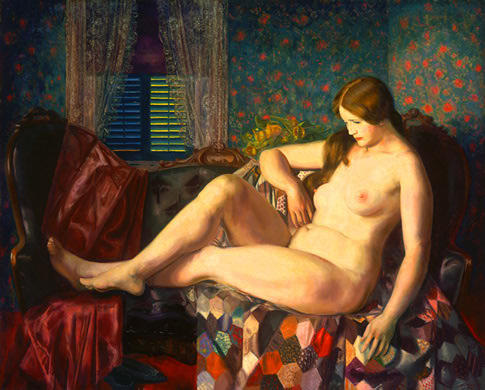
Nude with Hexagonal Quilt


Discover George Bellows’ iconic ‘Nude with Hexagonal Quilt’ (1924). This Ashcan School masterpiece features a unique quilt design and captures the raw energy of early 20th-century America.
 Czytaj więcej
George Bellows – wybitny malarz amerykański, znany z realistycznych obrazów życia miejskiego i dynamicznych scen bokserskich. Jego twórczość odzwierciedla energię i surowość początku XX wieku.
Kup wysokiej rozdzielczości, ulepszony obraz cyfrowy o jakości znacznie przewyższającej podgląd online.
Każdy plik jest starannie przygotowywany przez naszych specjalistów przy użyciu zaawansowanych narzędzi oraz profesjonalnej, ręcznej retuszy. Dbamy o to, aby każdy obraz cechował się wyjątkową ostrością, precyzyjnym odwzorowaniem kolorów i subtelnymi detalami.
Ostateczny plik dostarczany jest drogą mailową w ciągu 72 godzin, zoptymalizowany do natychmiastowego wykorzystania w profesjonalnych zastosowaniach redakcyjnych i poligraficznych. To ta sama jakość, której ufają czołowe studia projektowe, wydawnictwa oraz galerie sztuki.
Obraz cyfrowy
Pobierz plik o wysokiej rozdzielczości do osobistego użytku, druku oraz projektów kreatywnych. ( Przełącz na wersję drukowaną Kup ręcznie malowany obraz)
W każdym zamówieniu na obraz cyfrowy znajduje się
Profesjonalna dostawa cyfrowa z gwarancją
Wybierając TopImpressionists.com, nie otrzymujesz jedynie obrazu – otrzymujesz profesjonalnie udoskonalone cyfrowe dzieło sztuki, stworzone z najwyższą precyzją i objęte gwarancją satysfakcji. Oto wszystko, co automatycznie dołączane jest do Twojego zamówienia:

Błyskawiczna dostawa e-mailowa
Plik z obrazem cyfrowym w wysokiej rozdzielczości zostanie przesłany na Twój adres e-mail w ciągu 72 godzin od złożenia zamówienia – gotowy do natychmiastowego użycia.

Plik cyfrowy ulepszony przez AI
Twoja grafika została profesjonalnie zoptymalizowana przy użyciu zaawansowanych narzędzi AI oraz ręcznej edycji, co zapewnia maksymalną szczegółowość, klarowność i wierność kolorów.

Bezpłatna dożywotnia ponowna dostawa
Przypadkowo usunąłeś lub zgubiłeś swój plik? Bez obaw – prześlemy go Tobie ponownie w dowolnym momencie, bez żadnych opłat.

Bez opłat importowych – zawsze
Ciesz się swoją sztuką natychmiast, bez żadnych opłat celnych, należności ani kosztów dostawy – pliki cyfrowe są zawsze wolne od podatku.

Gwarancja odwzorowania kolorów
Dzięki zastosowaniu profesjonalnych narzędzi i procesów zarządzania barwą zapewniamy, że Twoje cyfrowe zdjęcie odzwierciedla oryginalne kolory tak wiernie, jak to tylko możliwe.

100 dni na satysfakcję
Jeśli nie będziesz zadowolony ze swojego cyfrowego obrazu, poprawimy go lub zwrócimy 100% kosztów w ciągu 100 dni – bez zbędnych pytań.

100% Gwarancja zwrotu pieniędzy
Nie jesteś zadowolony? Otrzymaj pełny zwrot kosztów w ciągu 100 dni od otrzymania pliku cyfrowego – bez zbędnych pytań.

Rabaty przy zamówieniach hurtowych
Kup 3 obrazy, oszczędź 10% - Kup 5, oszczędź 15% - Kup 10+, oszczędź 20%. Idealne do projektów kreatywnych, galerii i agencji.
Nude with Hexagonal Quilt: A Study in Domesticity and Modernity
George Wesley Bellows’s “Nude with Hexagonal Quilt,” painted in 1924, is more than just a depiction of a reclining woman; it's a carefully constructed tableau that encapsulates the burgeoning complexities of American life at the cusp of the 20th century. Emerging from the heart of the Ashcan School movement, Bellows masterfully blends realism with a subtle undercurrent of social commentary and psychological depth, all within a remarkably intimate domestic setting. The painting immediately draws the eye to its central figure – a woman lying on a bed, her posture relaxed yet subtly defiant, radiating an aura of quiet contemplation. This isn’t a classical nude intended for idealized beauty; instead, Bellows presents a figure grounded in reality, her form rendered with a deliberate roughness that reflects the gritty textures of urban existence.
The Quilt as Symbol
The most striking element of the composition is undoubtedly the hexagonal quilt draped across the bed. This isn’t merely decorative; it's a potent symbol, layered with meaning. Quilts were traditionally associated with domesticity, warmth, and family – emblems of rural life and a connection to heritage. However, Bellows subverts this expectation by presenting a complex, geometric pattern, almost jarringly modern in its design. The hexagonal shape itself can be interpreted as representing the fractured nature of contemporary society, hinting at a sense of unease beneath the surface of apparent comfort. Some art historians suggest that the quilt’s intricate design reflects Bellows' own fascination with patterns and textures, mirroring his interest in capturing the visual richness of urban environments.
Contextualizing the Ashcan School
“Nude with Hexagonal Quilt” firmly places itself within the context of the Ashcan School. This movement, which flourished in New York City during the early 20th century, rejected the idealized subjects and polished surfaces of academic art, instead focusing on depicting everyday life – often the less glamorous aspects – with unflinching honesty. Bellows’ work aligns perfectly with this ethos, portraying a scene that feels remarkably unvarnished and authentic. The inclusion of the simple bed, the worn wallpaper, and the modest furnishings all contribute to this sense of realism, grounding the nude figure within a relatable, if slightly unconventional, domestic space. It's a deliberate departure from the heroic narratives typically found in art history.
Technique and Emotional Resonance
Bellows’ technique is characterized by bold brushstrokes and a masterful use of light and shadow. He employs a loose, expressive style that captures the immediacy of the scene while simultaneously conveying a sense of underlying tension. The colors are muted yet vibrant, creating a rich tapestry of textures and tones. Notice how he uses short, choppy strokes to define the quilt’s pattern, contrasting with the smoother application of paint on the woman's skin. This juxtaposition highlights the interplay between the familiar comfort of domesticity and the inherent vulnerability of the human form. The painting evokes a feeling of quiet introspection—a moment of stillness amidst the relentless energy of city life. It invites the viewer to contemplate the complexities of identity, sexuality, and the search for meaning in a rapidly changing world.
TopImpressionists offers meticulously hand-painted reproductions of “Nude with Hexagonal Quilt,” allowing you to bring this iconic work of art into your home or office. Each reproduction is created by skilled artists using archival quality materials, ensuring that it captures the original’s beauty and detail for generations to come.
Pytania i odpowiedzi
Ile światła zdają się odbijać kolory dzieła "Nude with Hexagonal Quilt"?
Kolory dzieła "Nude with Hexagonal Quilt" wykazują luminancję na poziomie Soft Shadow.
Jaką paletę barw i jakie emocje łączy ze sobą "Nude with Hexagonal Quilt"?
Paleta Earthy dzieła „Nude with Hexagonal Quilt” autorstwa George Wesley Bellows współgra z jego Melancholic wydźwiękiem emocjonalnym. Kolor jest jednym ze sposobów, w jakie praca przekazuje uczucia.
Dla kogo „Nude with Hexagonal Quilt” autorstwa George Wesley Bellows będzie polecanym prezentem?
„Nude with Hexagonal Quilt” jest sugerowany jako prezent dla Birthday.
Biografia artysty
A Bold Vision of American Life: The World of George Bellows
George Wesley Bellows, a name synonymous with the raw energy and burgeoning modernity of early 20th-century America, emerged as a pivotal figure in realist painting. Born in Columbus, Ohio, on August 12 or 19, 1882, his journey from athletic promise to artistic renown is a testament to the power of passion and unwavering dedication. Even before formal schooling, young George displayed an innate talent for drawing, filling notebooks with sketches that hinted at the observant eye and burgeoning skill within. His upbringing wasn’t solely focused on art; he excelled in sports, playing both baseball and basketball at Ohio State University – a duality that would profoundly influence his artistic perspective, imbuing his work with a sense of dynamic movement and physicality. This athletic background instilled in him not only discipline but also an appreciation for the human form in action, a theme that would become central to his most celebrated paintings. He left university just before graduating, driven by an irresistible pull towards New York City and the promise of artistic training.Forging a Path: The Ashcan School and Beyond
Arriving in New York in 1904, Bellows quickly found mentorship under Robert Henri, a leading figure of the Ashcan School. This group of artists – including John Sloan, William Glackens, and George Luks – deliberately turned away from academic conventions, choosing instead to depict the gritty realities of urban life: crowded tenements, bustling streets, and the everyday struggles of working-class Americans. Bellows embraced this ethos wholeheartedly, initially mirroring Henri’s loose brushwork and commitment to social realism. However, he wasn't content merely to replicate his teacher’s style; he possessed an ambition to forge his own distinct artistic voice. He established a studio with fellow artist Edward Keefe in 1906, marking the beginning of a prolific period of experimentation and growth. His early works, like those exhibited in 1908, were met with mixed reactions – some critics found them crude, while others recognized their audacious boldness and innovative spirit. Bellows’s subject matter was often controversial for its time, challenging prevailing notions of what constituted “acceptable” art. He didn't shy away from portraying the less glamorous aspects of city life, capturing scenes of poverty, labor, and leisure with unflinching honesty.The Arena of Life: Boxing and Urban Spectacle
While Bellows’s oeuvre encompassed a wide range of subjects – portraits, landscapes, seascapes – he is perhaps best known for his powerful depictions of boxing matches. These weren't merely sporting events to him; they were microcosms of human drama, embodying themes of struggle, resilience, and the primal instincts that drive competition. He frequented smoky boxing clubs, meticulously studying the movements of fighters, the intensity of their gaze, and the raw energy of the crowd. Paintings like *Both Members of This Club* (1909) and *Stag at Sharkey’s* (1909) are masterful examples of his ability to capture this atmosphere, utilizing dramatic lighting, dynamic compositions, and a palpable sense of tension. The boxing scenes weren't simply about the sport itself; they were metaphors for life’s battles, reflecting the social Darwinism prevalent in American society at the time. Beyond boxing, Bellows also found inspiration in other spectacles of urban life – parades, circuses, and crowded streets – all offering opportunities to explore themes of movement, energy, and the collective experience.Evolving Style and Lasting Legacy
As Bellows matured as an artist, his style underwent a subtle but significant evolution. While he retained his commitment to realism, he began to move away from the loose brushwork of his early years, adopting a more stylized aesthetic characterized by smooth curves, monumental forms, and a heightened sense of drama. This shift is evident in later works like *Dempsey and Firpo* (1924), a monumental canvas capturing the climactic moment of a legendary boxing match with breathtaking intensity. He also experimented with lithography, producing a series of striking prints that showcased his mastery of line and tone. Despite achieving considerable success during his lifetime – including election to the National Academy of Design in 1913 – Bellows remained committed to pushing artistic boundaries and challenging conventional norms. His untimely death in 1925 at the age of 42 cut short a promising career, but his legacy endures as one of America’s most important realist painters. *He left behind a body of work that continues to resonate with audiences today*, offering a powerful and unflinching portrait of American life in the early 20th century – a world brimming with energy, conflict, and the enduring spirit of humanity. His influence can be seen in subsequent generations of artists who sought to capture the dynamism and complexity of modern urban experience.Major Works & Recognition
- *Both Members of This Club* (1909) – A seminal work capturing the atmosphere of a boxing club.
- *Stag at Sharkey’s* (1909) – Another iconic depiction of a boxing match, renowned for its dramatic lighting and composition.
- *Men of the Docks* (1912) – A powerful portrayal of working-class laborers, showcasing Bellows's skill in capturing physicality and texture.
- *The Germans Arrive* (1918) – A series of lithographs depicting the atrocities committed during World War I, demonstrating his engagement with social and political issues.
- *Dempsey and Firpo* (1924) – A monumental canvas capturing a pivotal moment in boxing history, showcasing Bellows’s evolved style and mastery of composition.

George Wesley Bellows
1882 - 1925 , Stany Zjednoczone
Najważniejsze informacje
- Artistic Movement Or Style: Realizm, Ashcan School
- Artists Or Movements Influenced By This Artist: ['Ashcan School']
- Artists Who Influenced This Artist: ['Robert Henri']
- Date Of Birth: 1882
- Date Of Death: 1925
- Full Name: George Wesley Bellows
- Nationality: Amerykański
- Notable Artworks:
- Both Members
- Stag at Shark
- Men of the Docks
- Place Of Birth: Columbus, USA