

Shown: · With its frame:
 Podgląd w skali 1:1
 Wyślij jako kartkę
 Udostępnij
 Szczegóły dzieła
 Przewodnik

 Pobierz obraz
 Podobne obiekty
 RTG
RTG Pokaz slajdów
 Q&A
Q&A Statystyki
- 16.0 x 25.0 cm


zł 1048
Ręcznie malowana reprodukcja olejowa
Ręcznie malowany obraz olejny na płótnie, wykonany na zamówienie przez naszych artystów w wybranym przez Ciebie wymiarze i oprawie. ( Przełącz na wydania drukowane Przejdź do wersji cyfrowej)
Size
·Standardowy format
personalizowane
CM
INCH
Wybierz spośród naszych standardowych rozmiarów, które zachowują oryginalne proporcje dzieła sztuki.
Loading sizes...

szerokość
wysokość
Wpisz wymaganą szerokość i wysokość, aby obraz pasował do Twojej ramy lub ściany. Ponieważ jest to dzieło malowane ręcznie, w przypadku rozmiaru o innych proporcjach artysta może domalować nieco więcej wokół obrazu lub przyciąć jego fragmenty — wybór należy do Ciebie. Przed rozpoczęciem pracy prześlemy Ci cyfrową wizualizację do zatwierdzenia. Obraz widoczny na tej stronie nie przedstawia rzeczywistego efektu — jedynie wizualizacja oddaje realny rezultat.
 Dowiedz się więcej
Finish
·
White zł1

Blurside zł1

Extended zł1

P118B zł10

P118H zł10

P118W zł10

P438Z zł10

P508JH zł12

P508YH zł12

P805H zł10

P805Z zł10

P919BZ zł10

P919G zł10

P919XJ zł10

P959ZH zł10

P968JZ zł12

W106C zł8

W218G zł10

W218JH zł8

W218Y zł10

W307PJ zł10

W316G zł10

W316PJ zł8

W316Y zł10

W398PJ zł8

W4111J zł10

W500HY zł15

W500JH zł15

W692G zł12

W849H zł8

W940BG zł15

W953PJ zł8

H24-GOLD zł30

H24-SILVER zł30

H36-GOLD zł45

H36-SILVER zł45
Shipped in a protective tube, ready for your own framer.
Above 105 cm the frame is shipped as a kit for a professional framer — read the details.
Extras
optionalWhat do the extras include?
Examples of what can be changed: Replace face with customer photo; Add pet (e.g., replace cat with dog); Include hidden message in background; Change background landscape or elements.
After order, TopImpressionists.com team will email client for instructions and provide a mockup preview
After order, TopImpressionists.com team will email client for instructions and provide a mockup preview
Dostawa na całym świecie () w ciągu 3–4 tygodni zamiast standardowych 5 tygodni. (3 Listopad). Bez kompromisów w kwestii jakości.
Lakier ochronny
Etykieta obiektu
Szczegóły grawerowanej brązowej tabliczki
This elegant plaque features the artist's name and the title of the artwork, finely engraved for a timeless presentation.
It is made from bronze with a refined, elegant finish. The text is precisely laser-engraved for a sharp and permanent result. Measuring 9x2 cm, the plaque is compact yet easy to read. It's built to be durable and scratch-resistant, offering a professional, museum-quality look. Mounting is simple thanks to the included adhesive backing.
Szczegóły przezroczystej tabliczki akrylowej
The plaque includes essential engraved details such as the artist's name, the title of the artwork, the date it was created, the type of media used-like oil on canvas or watercolor-a brief description of the piece, and a QR code that links to the complete artwork information.
It is crafted from clear acrylic, offering a sleek, modern appearance. The text is UV-engraved in black to ensure strong visual contrast. With a size of 10x15 cm, it ensures optimal readability. It comes equipped with two metal hooks for secure wall mounting. The plaque is designed to be weather-resistant, making it suitable for various environments, and it includes interactive features that work seamlessly with smartphone scanning.
Szczegóły czarnej tabliczki akrylowej
This elegant plaque includes engraved information such as the artist's name, the title of the artwork, the date it was created, the type of media used (like oil on canvas or watercolor), a short description of the artwork, and a QR code for quick access to more information.
The plaque itself is made from refined black acrylic with a premium finish. The text is laser-engraved in white for high contrast and readability. Its size is 10x15 cm, designed to be easy to read. It comes with two metal hooks for professional mounting. The design is sleek and fits any interior style. It is also weather-resistant and durable, with built-in digital integration for mobile compatibility.
Opcja ze szkłem jest dostępna wyłącznie w rozmiarach poniżej 110 cm
 Opcja ze szkłem jest dostępna wyłącznie w rozmiarach poniżej 110 cm
- Bezpłatna ekspresowa wysyłka na cały świat
- Wysokiej jakości płótno lniane
- Pełne ubezpieczenie przesyłki
- Gwarancja zwrotu należności celnych i podatków importowych
- Gwarancja wiernego odwzorowania kolorów
- 100-dniowa polityka zwrotów (tylko w przypadku wad)
- Gwarancja 100% zwrotu pieniędzy
- Zniżka przy zakupie wielu sztuk


Opis obiektu
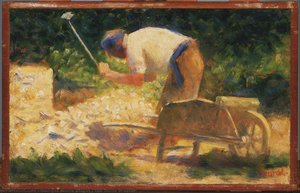
Experience the luminous tranquility of Georges Seurat's The Mower, a Post-Impressionist masterpiece utilizing Pointillism to capture light and nature, now available as a stunning hand-painted reproduction for your home.
Biografia artysty
Odkryj Georges'a Seurata (1859-1891), pioniera pointylizmu i neoimpresjonizmu! Zobacz 'Niedzielę na wyspie Grande Jatte' i jego rewolucyjną teorię koloru. Zamów reprodukcje!
About the painting
Georges Pierre Seurat: A Symphony of Light and Precision – Exploring “The Mower”
Georges Pierre Seurat, a name synonymous with innovation and meticulous observation within the Post-Impressionist movement, irrevocably altered the landscape of painting in late 19th century France. Born in Paris on December 2nd, 1859, his artistic journey began amidst a burgeoning fascination for scientific principles – specifically optics – which would ultimately propel him to create one of the most recognizable and influential artworks of his era: “The Mower.” Now housed at The Metropolitan Museum of Art in New York City, this deceptively simple depiction holds profound significance beyond its tranquil subject matter.
- Composition & Technique
- Artistic Significance – Pointillism’s Delicate Dance
- Context Within Seurat's Oeuvre – A Prelude to Grandeur
- Relevance in Modern Art – Echoes of Genius Across Generations
Composition & Technique: Capturing Tranquility Through Scientific Precision
"The Mower," measuring just 16 x 25 cm, is executed with remarkable care using oil on canvas. Seurat’s genius lay not merely in capturing a rural scene but in applying his groundbreaking technique – Pointillism – to achieve an unprecedented level of luminosity and color vibrancy. Unlike Impressionists who blended pigments wet-on-wet, Seurat painstakingly applied tiny dots of pure pigment onto the canvas surface. This method, rooted in Helmholtz’s theory of color perception, aimed to stimulate the eye's ability to synthesize colors optically, resulting in a shimmering effect that transcends mere representation.
- Detailed Observation
- Optical Mixing – Illusion of Depth and Texture
- The Role of Color Theory
Artistic Significance – Pointillism’s Delicate Dance
While “The Mower” doesn't showcase the full extent of Seurat’s later explorations into Chromoluminarism—where he utilized a broader palette and manipulated tonal gradations—it represents an essential step in establishing Pointillism as his signature style. The painting brilliantly portrays a solitary farmer diligently cutting grass with a scythe, bathed in dappled sunlight. A bird soaring overhead introduces a subtle element of dynamism against the backdrop of stillness, emphasizing the artist’s focus on capturing not just what is seen but how it feels—a profound sense of calm and contemplative engagement.
- Symbolism – Labor and Rural Life
- Emotional Resonance – Serenity and Mindfulness
Context Within Seurat's Oeuvre – A Prelude to Grandeur
"The Mower" precedes Seurat’s monumental masterpiece, “A Sunday Afternoon on the Island of La Grande Jatte,” marking a pivotal moment in his artistic development. However, it stands alone as an exemplary embodiment of his early aesthetic sensibilities—a desire to distill complex visual information into its purest form. Alongside this serene depiction are other notable works like Landscape at Saint-Ouen and The Gardener, all residing within The Musée de l'Annonciade and numerous private collections. These pieces underscore Seurat’s unwavering commitment to exploring the interplay between observation and artistic expression.
- Influence on Later Artists
- Connecting Impressionism & Avant-garde Movements
Relevance in Modern Art – Echoes of Genius Across Generations
Georges Seurat’s legacy extends far beyond the confines of 19th century France. His innovative techniques and stylistic vision continue to inspire artists today, demonstrating the enduring power of artistic experimentation and intellectual curiosity. “The Mower,” with its masterful use of color and composition, serves as a testament to Seurat's ability to transform everyday life into an extraordinary visual experience—a timeless reminder that beauty can be found in simplicity and precision.
Pytania i odpowiedzi
Jakie są rzeczywiste wymiary dzieła „The Mower” – Georges Pierre Seurat?
Wymiary dzieła „The Mower” – Georges Pierre Seurat to 16 x 25 cm. Reprodukcje można zamówić w innych rozmiarach, zachowując te same proporcje.
Co to za dzieło: "The Mower"?
"The Mower" to WallArt.
W którym roku powstało dzieło "The Mower"?
"The Mower" powstało w 1882 roku. Data ta pozwala umiejscowić dzieło w kontekście twórczości Georges Pierre Seurat oraz epoki, w której powstało.
Quick facts and art quiz
About Georges Pierre Seurat

Georges Pierre Seurat
1859 - 1891, Francja
Biografia artysty
Przełomowy Wizjoner Światła i Koloru: Życie i Sztuka Georges’a Seurata
Georges Pierre Seurat, urodzony w Paryżu 2 grudnia 1859 roku, wyłonił się jako kluczowa postać w przejściu od impresjonizmu do sztuki nowoczesnej. Jego krótkie, lecz niezwykle intensywne życie artystyczne zrewolucjonizowało malarstwo poprzez rozwój pointylizmu – techniki opartej na zasadach naukowych i nieustannym dążeniu do prawdy optycznej. Historia Seurata to opowieść o skrupulatnej obserwacji, intelektualnej rygorze oraz głębokiej wrażliwości na niuanse światła i koloru – cechy, które odróżniły go od jego ówczesnych współtwórców i wciąż urzekają odbiorców. Jego dzieciństwo, choć pozornie konwencjonalne, położyło fundamenty pod przyszłe artystyczne poszukiwania. Rodzina przeniosła się na Boulevard de Magenta krótko po jego urodzeniu, a jego ojciec, Antoine Chrysostome Seurat, emerytowany urzędnik prawny i spekulant nieruchomościami, zapewnił młodemu Georgesowi komfortowe wychowanie, umożliwiające dostęp do edukacji artystycznej. Rozpoczął formalne szkolenie w École Municipale de Sculpture et Dessin pod okiem rzeźbiarza Justina Lequiena, a następnie zapisał się na prestiżową École des Beaux-Arts w 1878 roku, studiując pod kierunkiem Henri Lehmanna. Te lata kształtowania charakteru wpoiły mu solidne podstawy tradycyjnych technik, jednak nawet wtedy zaczynał kształtować się jego unikalny charakter artystyczny – połączenie delikatnej wrażliwości i rodzącego się zamiłowania do systematycznej analizy.Od Korzeni Akademickich do Chromoluminaryzmu
Rozwój artystyczny Seurata nie był nagłym skokiem w innowację, lecz raczej stopniową ewolucją napędzaną intelektualną ciekawością i rygorystycznymi eksperymentami. Początkowo jego prace odzwierciedlały akademickie standardy tamtej epoki, demonstrując biegłość w rysunku i szacunek dla ustalonych zasad kompozycyjnych. Wkrótce jednak zaczął kwestionować te konwencje, poszukując bardziej naukowego podejścia do malarstwa. Zanurzył się w rozwijającej się dziedzinie teorii koloru, studiując pisma takich naukowców jak Michel Eugène Chevreul i Ogden Rood, którzy badali optyczne efekty zestawionych kolorów. To badanie stało się kamieniem węgielnym jego rewolucyjnej techniki – chromoluminaryzmu – nauki o kolorze i jej praktycznego zastosowania, pointylizmu. Sedno idei było zaskakująco proste: nakładanie małych, odrębnych kropek czystych kolorów na płótno, polegając na oku widza, aby optycznie je połączyły i stworzyły żywy, luminescencyjny efekt. Nie chodziło tu jedynie o osiągnięcie jaśniejszych kolorów; chodziło o zrozumienie, jak ludzki układ wzrokowy postrzega światło i kolor oraz wykorzystanie tej wiedzy do stworzenia bardziej dynamicznego i angażującego doświadczenia malarskiego. Skrupulatnie przygotowywał się do swoich monumentalnych kompozycji rysunkami w Conté na papierze o szorstkiej fakturze, starannie planując umiejscowienie każdej kropki, demonstrując niemal matematyczną precyzję w swoim procesie artystycznym.Kamienie Milowe Innowacji: Główne Dzieła i Wizja Artystyczna
Kulminacją jego badań i eksperymentów jest prawdopodobnie A Sunday Afternoon on the Island of La Grande Jatte (1884-1886), monumentalne dzieło, które zapoczątkowało neoimpresjonizm. To ikoniczne malowidło przedstawiające paryżan spędzających leniwe popołudnie nad Sekwaną, w pełni demonstruje jego technikę pointylistyczną. Postacie, oddane starannie rozmieszczonym kropkom koloru, zdają się mienić i pulsować światłem, tworząc atmosferę spokojnego bezruchu. Alfalfa, Saint-Denis (1886-1887) demonstruje zastosowanie teorii kolorów do krajobrazu wiejskiego, podczas gdy wcześniejsze prace, takie jak Landscape at Saint-Ouen (1882-1883), ukazują jego ewoluujący styl i rosnące zainteresowanie uchwyceniem efektów światła i atmosfery. Nawet przedstawienia nowoczesnego życia paryskiego, takie jak The Eiffel Tower (1889), zostały przekształcone dzięki jego unikalnej technice, prezentując harmonijną fuzję industrialnej nowoczesności i artystycznej innowacji. Bathers at Asnières (1884), kolejne znaczące dzieło, badał tematy rekreacji i życia nowoczesnego w swoim charakterystycznym stylu, zapowiadając bardziej dopracowane podejście widoczne w *La Grande Jatte*. Te obrazy nie były jedynie reprezentacjami scen; były starannie skonstruowanymi eksperymentami wizualnymi zaprojektowanymi do badania możliwości koloru i percepcji.Trwałe Dziedzictwo: Wpływ i Znaczenie Historyczne
Pomimo tragicznie krótkiego życia – Seurat zmarł w wieku 31 lat w 1891 roku – jego wpływ na świat sztuki był głęboki i dalekosiężny. Jego praca podważała tradycyjne konwencje artystyczne, otwierając drogę dla wielu kolejnych ruchów. Nacisk na subiektywne wyrażenie i eksplorację nowych technik rezonował z artystami dążącymi do zerwania z ograniczeniami akademickimi. Wpływ Seurata można dostrzec w pracach fowistów, którzy przyjęli odważne kolory i ekspresyjne pociągnięcia pędzla; kubistów, którzy dekonstruowali formy na geometryczne kształty oraz ekspresjonistów abstrakcyjnych, którzy priorytetyzowali emocjonalną intensywność i spontaniczny gest. Jego naukowe podejście do malarstwa, choć początkowo kontrowersyjne, ostatecznie poszerzyło definicję możliwości artystycznych. Udowodnił, że sztuka może być zarówno intelektualnie rygorystyczna, jak i emocjonalnie poruszająca – synteza, która wciąż inspiruje artystów dzisiaj. Dziedzictwo Seurata wykracza poza jego innowacje techniczne; pozostawił po sobie dorobek, który uchwycił esencję nowoczesnego życia z niezrównaną precyzją i pięknem, umacniając swoją pozycję jako prawdziwego pioniera sztuki nowoczesnej. Jego obrazy pozostają świadectwem mocy obserwacji, eksperymentowania i trwałego ludzkiego pragnienia zrozumienia świata wokół nas poprzez pryzmat artystycznego wyrazu.Quick facts about Georges Pierre Seurat
- Artyści Wpływający:
- Michel Eugène Chevreul
- Ogden Rood
- Data Urodzenia: 2 grudnia 1859
- Data Śmierci: 29 marca 1891
- Miejsce Urodzenia: Paryż, Francja
- Narodowość: Francuski
- Pełne Imię: Georges Pierre Seurat
- Ruch Artystyczny: Neoimpresjonizm, Pointylizm
- Ruchy/Artyści Pod Wpływem:
- Fawizm
- Kubizm
- Abstrakcyjny ekspresjonizm
- Znaczące Dzieła:
- Niedzielne popołudnie na wyspie Grande Jatte
- Kąpiące się w Asnières
- Alfalfa, Saint-Denis
- Wieża Eiffla
Podobne dzieła



Odkryj dzieła sztuki uporządkowane według tematów, stylów i cech charakterystycznych.


Georges Pierre Seurat
The Mower
() ·
With its frame: · Hand-painted in oil on linen
Total