


 Zobacz w skali 1:1
 Wyślij
 Udostępnij
 Szczegóły
 Przewodnik

 Pobierz plik obrazu
 Podobne obiekty
 RTG
RTG Pokaz slajdów
 Statystyki
Elephants

A vibrant circus scene by Gifford Beal! Admire two elephants & performers in this captivating Realist painting. Explore modern American art – a unique investment opportunity.
Gifford Beal (1879-1956) was an American painter known for his vibrant scenes of modern life, circus performers, cityscapes & still lifes. Explore his Realist and Impressionistic style paintings.
 Czytaj więcej
Giclée / Wydruk artystyczny
Wydruki giclée lub płótna o jakości muzealnej, szybka realizacja i szeroki wybór opcji wykończenia. ( Kup ręcznie malowany obraz Przełącz na wersję cyfrową)




P118B $10

P118H $10

P118W $10

P438Z $10

P508JH $12

P508YH $12

P805H $10

P805Z $10

P919BZ $10

P919G $10

P919XJ $10

P959ZH $10

P968JZ $12

W106C $8

W218G $10

W218JH $8

W218Y $10

W307PJ $10

W316G $10

W316PJ $8

W316Y $10

W398PJ $8

W4111J $10

W500HY $15

W500JH $15

W692G $12

W849H $8

W940BG $15

W953PJ $8




Standardowy
na zamówienie
CM
INCH
Wybierz spośród naszych standardowych rozmiarów, które zachowują oryginalne proporcje dzieła sztuki.
Loading sizes...

szerokość
wysokość
Możesz wprowadzić własne wymiary, aby dopasować dzieło do konkretnej ramy lub przestrzeni. Jeśli wybrany rozmiar nie będzie odpowiadał proporcjom oryginalnego obrazu, przytniecie dzieło lub rozszerzymy obraz za pomocą odbicia lustrzanego lub jednolitego wypełnienia krawędzi. Przed rozpoczęciem produkcji prześlemy cyfrową wizualizację do Twojej akceptacji.
Prosimy pamiętać, że podgląd na ekranie nie odzwierciedla faktycznego przycinania ani rozszerzania. Tylko wizualizacja dokładnie pokaże końcową kompozycję.
Mimo dostępności niestandardowych rozmiarów, zalecamy wybór wymiaru z listy zdefiniowanej, aby zachować oryginalne proporcje.
Dostawa na cały świat () w ciągu 2 tygodni zamiast standardowych 4/5 tygodni. (25 Wrzesień)

Bezpłatna ekspresowa wysyłka na cały świat

Wysokiej jakości płótno lniane

Pełne ubezpieczenie transportowe

Gwarancja zwrotu należności celnych i podatków importowych

Gwarancja idealnego odwzorowania barw

100-dniowy okres na zwrot dzieła w przypadku wykrycia wad produkcyjnych

Gwarancja 100% zwrotu pieniędzy

Oferta przy zakupie wielu sztuk
 Opcja ze szkłem jest dostępna wyłącznie w rozmiarach poniżej 110 cm

Elephants
Giclée / Wydruk artystyczny
Rozmiar reprodukcji
-


Suma do zapłaty
$ 69


Biografia artysty
A Life Captured in Motion: The Vibrant World of Gifford Beal
Born into a family where the brush and palette were part of the daily rhythm, Gifford Beal emerged from New York City as one of the most spirited voices in American art during the early twentieth century. As the youngest son in an artistic household, his path was paved by the creative legacies of his brother, Reynolds Beal, and a deep-seated connection to the burgeoning modernism of his era. From his earliest years, Beal possessed an innate understanding of light and movement, a talent nurtured through rigorous studies under masters like William Merritt Chase at the Shinnecock Hills Summer School of Art. This foundational period instilled in him a reverence for the Impressionist tradition, yet his spirit was far too restless to be confined by mere imitation.
After graduating from Princeton University, Beal immersed himself in the vibrant energy of the Art Students League of New York, studying under George Brandt Bridgman and Frank Vincent DuMond. These years were transformative, as he began to synthesize classical technique with a burgeoning interest in the pulse of modern life. His work would soon become a celebration of the ephemeral—the joyous chaos of a traveling circus, the rhythmic bustle of urban parks, and the salt-sprayed tranquility of the New England coast. There is a palpable sense of theater in his canvases; he did not merely observe scenes, he staged them with a bold, blocky form and a palette that could shift from the delicate, broken brushwork of Impressionism to the vigorous, muscular strokes of a more modern, representational style.
Mastery of Light and the American Spirit
Beal’s artistic evolution was marked by an extraordinary ability to capture the "cheerful tone" of existence, even amidst the shifting social landscapes of his time. His subject matter often wandered from the bustling streets of New York to the serene fishing villages of Maine and Massachusetts, always seeking that perfect intersection of light and human emotion. He possessed a unique gift for portraying the spectacle—whether it was the dramatic tension of a circus performer or the quiet dignity of local fisherfolk. This versatility allowed him to navigate various artistic movements, absorbing the influence of modernist masters while maintaining a steadfast commitment to representational storytelling.
His career was decorated with the highest honors of the American art establishment, reflecting his profound impact on the national scene:
- The National Academy of Design: A prestigious member who received numerous accolades, including the Hallgarten Prize and the Samuel Finley Breese Morse gold medal.
- International Recognition: His talent resonated far beyond American shores, earning him a silver medal at the 1937 Exposition Internationale des Arts et Techniques dans la Vie Moderne in Paris.
- Leadership in Art: Demonstrating his dedication to the artistic community, Beal served as the President of the Art Students League of New York for much of the period between 1920 and 1930, the longest tenure in its history.
A Lasting Legacy of Color and Vitality
Beyond his technical prowess, Gifford Beal’s significance lies in his role as a chronicler of the American experience. During the Great Depression, his work took on new dimensions through commissions for the U.S. Department of something, contributing to the cultural fabric of a nation in transition. His ability to find beauty in the mundane and grandeur in the festive ensured that his paintings remained deeply relatable and emotionally resonant.
Today, we look back at Beal not just as a painter of scenes, but as a composer of visual energy. His work remains a testament to a period of immense artistic experimentation, where the boundaries between tradition and modernity were being joyfully redrawn. Through his vibrant watercolors, intricate printmaking, and sweeping murals, Gifford Beal left behind a legacy that continues to invite viewers into a world of color, movement, and an enduring, optimistic light.

gifford beal
1879 - 1956 , United States of America
Najważniejsze informacje
- Artistic Movement Or Style: Expressionism, Surrealism
- Artists Who Influenced This Artist: ['Leonardo da Vinci],\n "Artists or movements influenced by this artist": ["Wassily Kandinsky"]\n}']
- Date Of Birth: 18 December 1879
- Date Of Death: 29 June 1940
- Full Name: Paul Klee
- Nationality: Swiss-German
- Notable Artworks:
- Angelus Novus
- Senecio
- Twittering Machine
- Place Of Birth: Münchenbuchsee, Switzerland
Zobacz także powiązane artykuły

The Raw Truth: A Definitive Guide to the Power and Legacy of Social Realism Art
Explore the profound impact of Social Realism. Discover how masters like Courbet rejected idealism to capture the raw, socio-political truths of the working class through powerful, unvarnished art history and enduring visual critique.

The Unvarnished Truth: A Cultural Journey Through the Soul of American Realism
Explore the profound beauty of American Realism. From the Ashcan School's urban grit to intimate portraits, discover how artists captured the authentic soul of a nation through unvarnished truth and masterful observation.
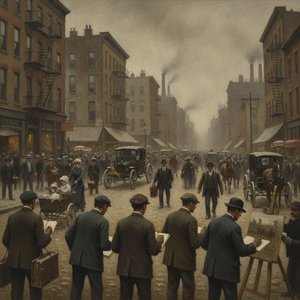
The Ashcan School: Capturing the Raw, Unfiltered Soul of Urban Life through American Realism
Discover the raw beauty of the Ashcan School. Explore how masters like Bellows and Henri captured the gritty, vibrant soul of early 20th-century New York through profound American Realism and evocative urban landscapes.