

 Zobacz w skali 1:1
 Wyślij
 Udostępnij
 Szczegóły
 Przewodnik

 Pobierz plik obrazu
 Podobne obiekty
 RTG
RTG Pokaz slajdów
 Statystyki
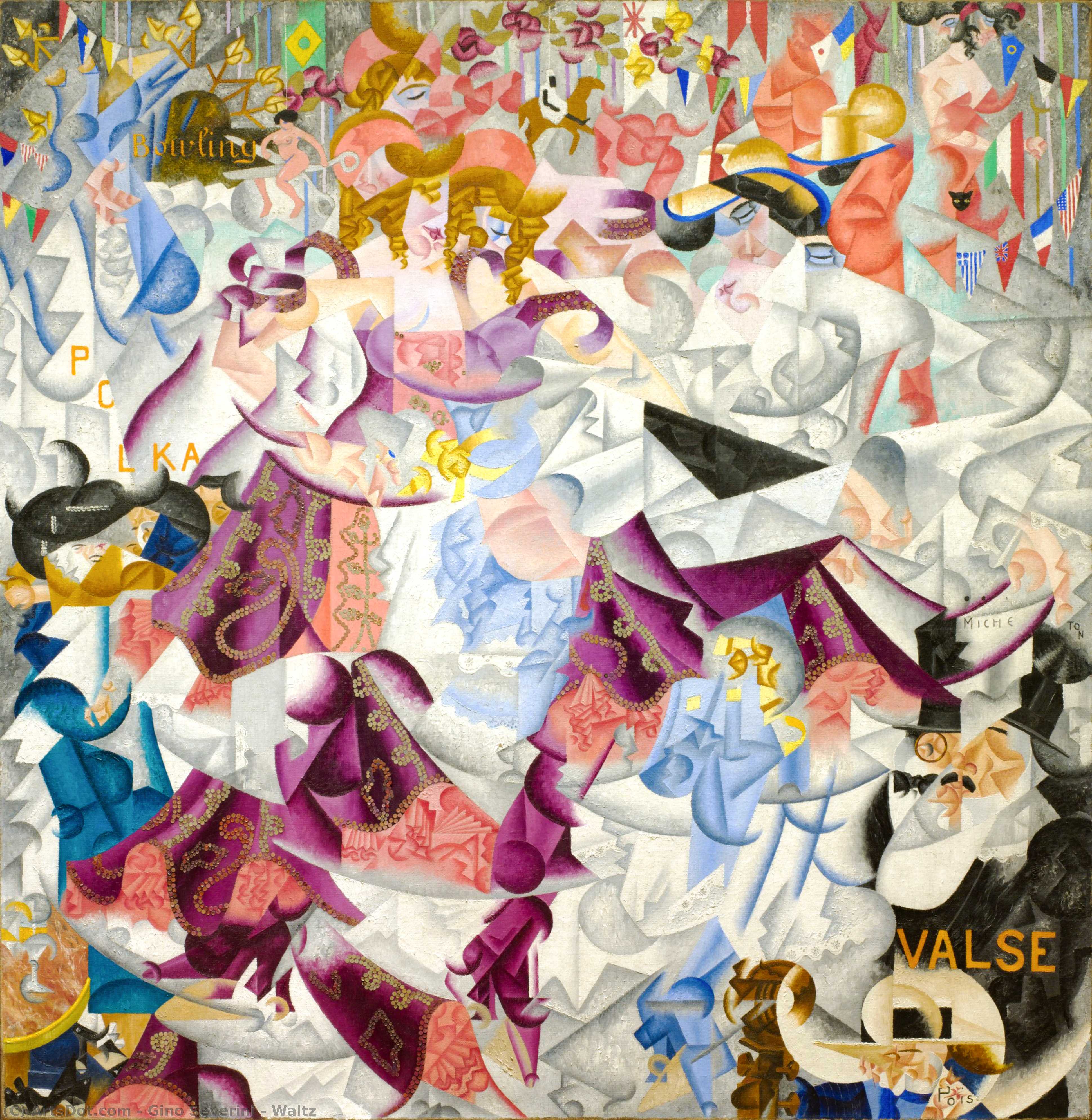
Waltz


Experience the vibrant energy of Gino Severini's Futurist waltz capturing a dizzying Parisian dance floor; discover this dynamic masterpiece today.
 Czytaj więcej
Gino Severini (1883-1966) był włoskim malarzem pionierą futurizmu i kubizmu, znanym z dynamicznych obrazów uchwycących ruch i energię miasta oraz życia codziennego. Jego twórczość pozostaje inspiracją dla współczesnych artystów.
Dzieło sztuki prezentowane na tej stronie podlega ochronie prawem autorskim, co oznacza, że nie mamy prawa do tworzenia ani sprzedaży jego identycznej reprodukcji. Ochrona ta jest egzekwowana na mocy umów międzynarodowych, takich jak Konwencja berneńska oraz przez przepisy prawa krajowego, w tym te określone w Prawo autorskie USA – Tytuł 17.
Metoda ta jest w pełni zgodna z przepisami prawa autorskiego, ponieważ nie polega na kopiowaniu ani powielaniu chronionego dzieła. Stanowi ona kreatywną reinterpretację – nowy obraz, który czerpie inspirację z oryginału, ale nie jest z nim tożsamy.
Giclée / Wydruk artystyczny
Wydruki giclée lub płótna o jakości muzealnej, szybka realizacja i szeroki wybór opcji wykończenia. ( Kup ręcznie malowany obraz Przełącz na wersję cyfrową)




P118B zł10

P118H zł10

P118W zł10

P438Z zł10

P508JH zł12

P508YH zł12

P805H zł10

P805Z zł10

P919BZ zł10

P919G zł10

P919XJ zł10

P959ZH zł10

P968JZ zł12

W106C zł8

W218G zł10

W218JH zł8

W218Y zł10

W307PJ zł10

W316G zł10

W316PJ zł8

W316Y zł10

W398PJ zł8

W4111J zł10

W500HY zł15

W500JH zł15

W692G zł12

W849H zł8

W940BG zł15

W953PJ zł8




Standardowy
na zamówienie
CM
INCH
Wybierz spośród naszych standardowych rozmiarów, które zachowują oryginalne proporcje dzieła sztuki.
Loading sizes...

szerokość
wysokość
Możesz wprowadzić własne wymiary, aby dopasować dzieło do konkretnej ramy lub przestrzeni. Jeśli wybrany rozmiar nie będzie odpowiadał proporcjom oryginalnego obrazu, przytniecie dzieło lub rozszerzymy obraz za pomocą odbicia lustrzanego lub jednolitego wypełnienia krawędzi. Przed rozpoczęciem produkcji prześlemy cyfrową wizualizację do Twojej akceptacji.
Prosimy pamiętać, że podgląd na ekranie nie odzwierciedla faktycznego przycinania ani rozszerzania. Tylko wizualizacja dokładnie pokaże końcową kompozycję.
Mimo dostępności niestandardowych rozmiarów, zalecamy wybór wymiaru z listy zdefiniowanej, aby zachować oryginalne proporcje.
Dostawa na cały świat () w ciągu 2 tygodni zamiast standardowych 4/5 tygodni. (12 Październik)

Bezpłatna ekspresowa wysyłka na cały świat

Wysokiej jakości płótno lniane

Pełne ubezpieczenie transportowe

Gwarancja zwrotu należności celnych i podatków importowych

Gwarancja idealnego odwzorowania barw

100-dniowy okres na zwrot dzieła w przypadku wykrycia wad produkcyjnych

Gwarancja 100% zwrotu pieniędzy

Oferta przy zakupie wielu sztuk
 Opcja ze szkłem jest dostępna wyłącznie w rozmiarach poniżej 110 cm

Waltz
Giclée / Wydruk artystyczny
Rozmiar reprodukcji
-


Suma do zapłaty
zł 257
The Whirlwind Energy of Modern Life
To gaze upon Gino Severini’s "Waltz" is not merely to observe a dance; it is to be swept into its very current. This painting captures the exhilarating, almost breathless energy of a Parisian nightclub in the early 20th century. The scene pulses with life—a dizzying confluence of bodies caught in the rhythmic embrace of the waltz. Severini has masterfully translated the ephemeral nature of movement into solid pigment, creating a visual symphony where every swirling form contributes to an overwhelming sense of joyous abandon. It speaks directly to the modern experience: vibrant, chaotic, and utterly captivating.
Embracing the Futurist Spirit
This work stands as a quintessential artifact of the Futurist movement, an avant-garde explosion born from Italy’s desire to shed the weight of tradition and leap headfirst into the roaring promise of the machine age. The Futurists were revolutionaries in every sense—artistic, cultural, and even political. They worshipped speed, technology, and the raw dynamism of contemporary urban existence. In "Waltz," this philosophy manifests not through depictions of engines or skyscrapers, but through the very structure of the dance itself. The composition fragments, angles collide, and perspectives overlap, mirroring the sensory overload of a modern metropolis where multiple realities intersect at once.
Technique and Visual Alchemy
Severini’s technique here is nothing short of electrifying. He employs a vibrant, almost feverish palette—deep purples mingle with electric blues, punctuated by flashes of fiery red and acidic yellow. These colors do not simply decorate the figures; they seem to emanate from the very motion, suggesting light refracting off silk gowns and sweat under the club's glow. The brushwork itself is energetic, visible, and purposeful, lending a palpable texture to the air around the dancers. It is a masterful exercise in capturing kinetic energy, making the viewer feel the centrifugal force pulling them into the heart of the dance floor.
Symbolism of Motion and Modernity
Beyond the spectacle of the waltz, "Waltz" carries deeper symbolic weight. The dance itself represents humanity’s attempt to find order and connection amidst the accelerating pace of industrial modernity. Yet, this apparent structure is always on the verge of dissolution—a beautiful tension that defines the early 20th century spirit. For collectors and designers alike, owning this piece means acquiring a conversation starter; it suggests an appreciation for art that refuses stillness, embracing instead the glorious, messy momentum of life itself.
Bringing the Nightlife Home
For those seeking to infuse a space with intellectual vigor and undeniable drama, a reproduction of "Waltz" offers unparalleled depth. It functions as more than mere decoration; it is an emotional anchor, suggesting stories of glamour, rebellion, and unstoppable vitality. Whether placed in a grand hall or a richly decorated lounge, this artwork commands attention, inviting every passerby to slow down, look closer, and feel the irresistible urge to join the dance.
Pytania i odpowiedzi
Jaki poziom luminancji ma „Waltz” autorstwa Gino Severini?
Kolory dzieła "Waltz" wykazują luminancję na poziomie Bright Balance.
Jakie pochodzenie narodowe stoi za Futurism dzieła "Waltz"?
Dzieło z nurtu Futurism, zatytułowane "Waltz", zostało stworzone przez artystę urodzonego w Włochy.
Jakie miejsce zajmuje „Waltz” wśród powracających motywów w twórczości Gino Severini?
„Waltz” przedstawia waltz, dancers, nightlife, movement, futurism, energy, paris, podczas gdy utrwalone motywy Gino Severini to futurist energy of modern life, celebration of speed and technology, break from traditional values. Porównanie tych dwóch elementów ukazuje, jak dzieło odnosi się do typowej dla tego artysty tematyki.
What aliases or alternate names does Gino Severini have?
Gino Severini is also known as Gino Severinij.
Z której epoki pochodzi "Waltz"?
"Waltz" pochodzi z epoki Modern.
Gdzie mogę znaleźć dzieła sztuki podobne do „Waltz” autorstwa Gino Severini?
Dzieła podobne do „Waltz” autorstwa Gino Severini zostały zgromadzone na stronie Podobne dzieła danego dzieła.
Jaki nastrój oddaje „Waltz” autorstwa Gino Severini w ramach nurtu Futurism?
W ramach nurtu Futurism, dzieło „Waltz” zostało utrwalone w Energetic tonie.
Do czego zaleca się wykorzystanie wydruku "Waltz"?
Sugerowanym zastosowaniem dla „Waltz” autorstwa Gino Severini jest Statement. Może on jednak służyć również do innych celów.
Biografia artysty
Early Life and the Seeds of Artistic Rebellion
Gino Severini emerged into the world on April 7, 1883, in the picturesque Tuscan town of Cortona, Italy. His beginnings were humble; his father a junior court official, his mother a dressmaker – a background that instilled in him both a sensitivity to form and an awareness of societal structures. Formal education proved ill-fitting for the young Severini’s restless spirit. Expelled at fifteen alongside classmates for a youthful indiscretion involving stolen exam papers, he found himself cast adrift from conventional schooling. This expulsion, however, wasn't a derailment but rather a catalyst, freeing him to pursue his burgeoning artistic inclinations independently while working as a shipping clerk. The move to Rome in 1899 marked a turning point; it was there, amidst the ancient ruins and vibrant street life, that he began formal art classes, quickly becoming captivated by the shimmering effects of Divisionism – a technique championed by artists like Giacomo Balla and Umberto Boccioni, who would soon become pivotal figures in his artistic journey. These formative years laid the essential groundwork for Severini’s eventual embrace of Futurism, igniting within him a desire to capture the dynamism of modern life.Embracing the Velocity of Futurism
The invitation to join Filippo Tommaso Marinetti and Umberto Boccioni in the burgeoning Futurist movement proved transformative for Severini. He became a signatory of the *Manifesto of the Futurist Painters* in 1910, aligning himself with a revolutionary ideology that celebrated speed, technology, and the intoxicating energy of modernity. This wasn’t merely an artistic choice; it was a philosophical commitment to shattering tradition and forging a new aesthetic language for a rapidly changing world. Severini played a crucial role in disseminating Futurist ideas internationally, notably organizing the movement's first exhibition outside Italy at Galerie Bernheim-Jeune in Paris in 1912. His work during this period, exemplified by paintings like *North-South* (1915), embodies the Futurist obsession with capturing motion and energy through fragmented forms and a vibrant, almost explosive palette. Unlike some of his colleagues who focused on machines, Severini often turned to urban scenes and dancers as subjects, reflecting his fascination with portraying the rhythms and sensations of modern life – the swirling skirts, the flashing lights, the pulsating crowds. He helped to organize the first Futurist exhibition outside Italy at Galerie Bernheim-Jeune, Paris, in February 1912 and participated in subsequent Futurist shows in Europe and the United States. Severini’s unwavering belief in Futurism extended beyond mere artistic expression; it fueled his conviction that art should serve as a vehicle for social change, propelling him to engage actively with intellectual debates and cultural developments of his time.A Synthesis of Styles: Cubism and Beyond
Severini’s artistic style was never confined by rigid dogma; it was a constantly evolving synthesis of influences. While deeply rooted in the Futurist aesthetic, his work also demonstrated a profound engagement with Cubism, particularly after his pivotal visit to Paris in 1911. He absorbed elements of geometric abstraction and fragmented perspectives, incorporating them into his compositions to create dynamic arrangements that conveyed a sense of simultaneity and movement. Artists like Umberto Boccioni, Carlo Carrà, and Giovanni Francesco Romanelli were significant influences, but Severini’s unique vision allowed him to forge his own path. *Waltz*, for instance, showcases this masterful fusion of styles – the swirling energy of dance rendered through a Cubist lens, resulting in a painting that feels both chaotic and harmonious. He was adept at capturing fleeting moments and conveying emotional intensity, utilizing bold colors and unconventional brushstrokes to achieve remarkable expressive power. Severini’s exploration of abstraction wasn't driven by theoretical considerations alone; it stemmed from an instinctive desire to distill the essence of visual experience into its most fundamental components.Notable Achievements and Legacy
Severini achieved considerable recognition during his lifetime, securing commissions for murals and exhibitions that showcased his distinctive artistic vision. His paintings gained acclaim for their innovative use of color and form, establishing him as a leading figure in the avant-garde movement. He continued to produce artwork until his death in Paris on February 26, 1966, leaving behind an impressive oeuvre that continues to inspire artists and scholars today. Gino Severini’s contribution to Italian art history is undeniable; he stands as a testament to the transformative potential of artistic experimentation and unwavering dedication to one's creative ideals. His paintings reside in prominent museums across Europe and America, ensuring that his legacy will endure for generations to come.Later Years and Enduring Legacy
The years following the First World War saw Severini continuing to experiment with diverse artistic media, including mosaic and fresco, expanding his creative horizons beyond the canvas. He divided his time between Paris and Rome, producing works that reflected both his Italian heritage and his immersion in Parisian culture. Beyond his painting, he became a prolific writer on art theory, contributing significantly to the intellectual discourse surrounding modernism. Severini’s artistic explorations encompassed a wide range of styles and techniques—from Pointillism to Cubism to Surrealism—demonstrating an openness to new ideas and approaches. His unwavering belief in Futurism remained central to his artistic worldview, shaping his creative output throughout his career. Gino Severini passed away in Paris on February 26, 1966, at the age of 83, leaving behind a rich and multifaceted body of work. His legacy as a key figure in the Futurist movement – and a significant contributor to 20th-century Italian art – endures. Today, his paintings are held in prominent museums worldwide, including the Galleria Civica di Arte Moderna in Venice, serving as testaments to his lasting impact on the development of modern art and continuing to inspire generations of artists and viewers alike.
Gino Severini
1883 - 1966 , Włochy
Najważniejsze informacje
- Artistic Movement Or Style: Futurizm, Kubizm
- Artists Or Movements Influenced By This Artist: ['Marino Parenti']
- Artists Who Influenced This Artist:
- Giacomo Balla
- Umberto Boccionim
- Date Of Birth: 7 kwietnia 1883
- Date Of Death: 26 lutego 1966
- Full Name: Gino Severini
- Nationality: Włoski
- Notable Artworks:
- Formy tancerki w świetle
- Błękitna tancerka
- Pociąg pancerny
- Place Of Birth: Cortona, Italia
Zobacz także powiązane artykuły

Speed, Power, and Motion: A Journey Through the Energetic Soul of Futurism
Explore the exhilarating energy of Futurism. From Italian dynamism to Russian Cubo-Futurism, journey through a masterclass in speed, power, and motion in art history with our expert cultural reflections.