

Przedstawiony: · Wraz z ramą:
 Podgląd w skali 1:1
 Wyślij jako kartkę
 Udostępnij
 Szczegóły dzieła
 Przewodnik

 Pobierz obraz
 Podobne obiekty
 RTG
RTG Pokaz slajdów
 Pytania i odpowiedzi
 Statystyki
- 71.0 x 91.0 cm

zł 1052
Ręcznie malowana reprodukcja olejowa
Ręcznie malowany obraz olejny na płótnie, wykonany na zamówienie przez naszych artystów w wybranym przez Ciebie wymiarze i oprawie. ( Przełącz na wydania drukowane Przejdź do wersji cyfrowej)
Wymiar
·Standardowy format
personalizowane
CM
INCH
Wybierz spośród naszych standardowych rozmiarów, które zachowują oryginalne proporcje dzieła sztuki.
Ładowanie rozmiarów...

szerokość
wysokość
Wpisz wymaganą szerokość i wysokość, aby obraz pasował do Twojej ramy lub ściany. Ponieważ jest to dzieło malowane ręcznie, w przypadku rozmiaru o innych proporcjach artysta może domalować nieco więcej wokół obrazu lub przyciąć jego fragmenty — wybór należy do Ciebie. Przed rozpoczęciem pracy prześlemy Ci cyfrową wizualizację do zatwierdzenia. Obraz widoczny na tej stronie nie przedstawia rzeczywistego efektu — jedynie wizualizacja oddaje realny rezultat.
 Dowiedz się więcej
Wykończenie
·
Białe krawędzie zł1

rozmyte krawędzie zł1

Przedłużony zł1

P118B zł10

P118H zł10

P118W zł10

P438Z zł10

P508JH zł12

P508YH zł12

P805H zł10

P805Z zł10

P919BZ zł10

P919G zł10

P919XJ zł10

P959ZH zł10

P968JZ zł12

W106C zł8

W218G zł10

W218JH zł8

W218Y zł10

W307PJ zł10

W316G zł10

W316PJ zł8

W316Y zł10

W398PJ zł8

W4111J zł10

W500HY zł15

W500JH zł15

W692G zł12

W849H zł8

W940BG zł15

W953PJ zł8

H24-GOLD zł30

H24-SILVER zł30

H36-GOLD zł45

H36-SILVER zł45
Dostarczane w ochronnej tubie, gotowe do oprawienia przez Twojego ramiarza.
Dodatki
opcjonalneCo obejmują dodatki?
Przykłady możliwych zmian: Zastąpienie twarzy zdjęciem klienta; Dodanie zwierzęcia (np. zamiana kota na psa); Ukrycie wiadomości w tle; Zmiana krajobrazu lub elementów tła.
Po złożeniu zamówienia zespół TopImpressionists.com skontaktuje się z klientem drogą mailową w celu uzyskania instrukcji i prześle podgląd projektu
Po złożeniu zamówienia zespół TopImpressionists.com skontaktuje się z klientem drogą mailową w celu uzyskania instrukcji i prześle podgląd projektu
Dostawa na całym świecie () w ciągu 3–4 tygodni zamiast standardowych 5 tygodni. (8 Listopad). Bez kompromisów w kwestii jakości.
Lakier ochronny
Etykieta obiektu
Szczegóły grawerowanej brązowej tabliczki
This elegant plaque features the artist's name and the title of the artwork, finely engraved for a timeless presentation.
It is made from bronze with a refined, elegant finish. The text is precisely laser-engraved for a sharp and permanent result. Measuring 9x2 cm, the plaque is compact yet easy to read. It's built to be durable and scratch-resistant, offering a professional, museum-quality look. Mounting is simple thanks to the included adhesive backing.
Szczegóły przezroczystej tabliczki akrylowej
The plaque includes essential engraved details such as the artist's name, the title of the artwork, the date it was created, the type of media used-like oil on canvas or watercolor-a brief description of the piece, and a QR code that links to the complete artwork information.
It is crafted from clear acrylic, offering a sleek, modern appearance. The text is UV-engraved in black to ensure strong visual contrast. With a size of 10x15 cm, it ensures optimal readability. It comes equipped with two metal hooks for secure wall mounting. The plaque is designed to be weather-resistant, making it suitable for various environments, and it includes interactive features that work seamlessly with smartphone scanning.
Szczegóły czarnej tabliczki akrylowej
This elegant plaque includes engraved information such as the artist's name, the title of the artwork, the date it was created, the type of media used (like oil on canvas or watercolor), a short description of the artwork, and a QR code for quick access to more information.
The plaque itself is made from refined black acrylic with a premium finish. The text is laser-engraved in white for high contrast and readability. Its size is 10x15 cm, designed to be easy to read. It comes with two metal hooks for professional mounting. The design is sleek and fits any interior style. It is also weather-resistant and durable, with built-in digital integration for mobile compatibility.
Opcja ze szkłem jest dostępna wyłącznie w rozmiarach poniżej 110 cm
 Opcja ze szkłem jest dostępna wyłącznie w rozmiarach poniżej 110 cm
- Bezpłatna ekspresowa wysyłka na cały świat
- Wysokiej jakości płótno lniane
- Pełne ubezpieczenie przesyłki
- Gwarancja zwrotu należności celnych i podatków importowych
- Gwarancja wiernego odwzorowania kolorów
- 100-dniowa polityka zwrotów (tylko w przypadku wad)
- Gwarancja 100% zwrotu pieniędzy
- Zniżka przy zakupie wielu sztuk


Opis obiektu
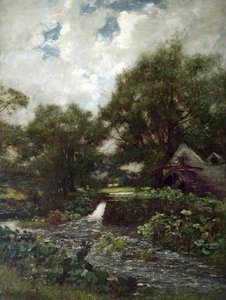
Discover 'The Mill' by Grosvenor Thomas – an Impressionistic landscape painting of serene river valley & weathered building. Oil on canvas, textured brushwork evokes tranquility. A beautiful piece for art lovers.
Biografia artysty
Discover Grosvenor Thomas’s evocative landscapes & portraits (1856-1923). Explore his Victorian art, influenced by Thornycroft, and find timeless beauty in his works.
O obrazie
Najważniejsze informacje i quiz o sztuce
O Grosvenor Thomas

Grosvenor Thomas
1856 - 1923
Biografia artysty
George Grosvenor Thomas: A Painter of Light and Scottish Landscapes
Born in Sydney, Australia, in 1856, George Grosvenor Thomas’s artistic journey took a dramatic turn when he emigrated to the United Kingdom in 1885. Driven by a desire for greater opportunities within the art world, he settled in Glasgow, a city already burgeoning with artistic innovation and profoundly influenced by the Barbizon School of painting. This pivotal move marked the beginning of a career dedicated to capturing the beauty of the British countryside – particularly its landscapes and still lifes – through a distinctly Impressionistic lens.
Thomas’s early years in Glasgow were shaped by his association with the Glasgow Boys, a group of young artists who challenged the established artistic conventions of the time. While not formally part of their core circle, he was deeply influenced by their spirit of experimentation and their embrace of contemporary techniques. This exposure to new ideas, combined with his own innate talent, propelled him towards a unique style characterized by loose brushwork, vibrant colors, and an emphasis on capturing fleeting moments of light and atmosphere. He quickly mastered both oil painting and watercolor, demonstrating versatility in his chosen mediums.
A Painter’s Palette: Influences and Technique
Thomas’s artistic development was profoundly shaped by a diverse range of influences. The Barbizon School, with its focus on plein air painting and the depiction of rural life, provided a foundational understanding of landscape representation. He also drew inspiration from the works of Jean-Baptiste-Camille Corot and Charles-François Daubigny, both masters of capturing atmospheric effects and employing broken color techniques to create a sense of luminosity. His brushwork was often characterized by short, expressive strokes applied with rapid succession, allowing him to quickly convey the essence of a scene – the dappled sunlight filtering through trees, the shimmering surface of water, or the subtle shifts in color caused by changing light conditions.
He meticulously observed nature, studying how light interacted with different surfaces and materials. This dedication to realism is evident in his detailed renderings of foliage, rocks, and water, but always tempered by an Impressionistic sensibility. His use of complementary colors – blues and oranges, greens and reds – created a vibrant and dynamic effect, while his skillful handling of atmospheric perspective conveyed the depth and scale of the landscapes he depicted.
Subjects and Exhibitions: A Broad Range of Artistic Expression
While primarily known for his landscape paintings, Thomas’s oeuvre encompassed a surprisingly diverse range of subjects. He frequently painted rural scenes – farms, fields, and woodlands – but also explored urban settings, capturing the bustle of city life and the quiet intimacy of domestic interiors. He was equally adept at creating still lifes, arranging flowers and fruit in carefully considered compositions that celebrated their beauty and transience. His work appeared regularly in prestigious exhibitions across Britain and on the continent, including those held by the Royal Academy, Royal Scottish Academy, and Royal Scottish Society of Painters in Watercolour.
His travels to Munich and Dresden resulted in gold medals recognizing his artistic merit, solidifying his reputation as a skilled and accomplished painter. He maintained connections with the Glasgow Boys throughout his career, continuing to exchange ideas and influence each other’s work.
Legacy and Recognition
George Grosvenor Thomas died in London in 1923, leaving behind a substantial body of work that continues to be admired for its beauty, sensitivity, and technical skill. His paintings offer a captivating glimpse into the landscapes and lives of Victorian Britain, capturing both the grandeur of nature and the quiet dignity of everyday life. Today, his works are held in prominent collections around the world, including the Glasgow, Budapest, and Weimar Art Galleries, ensuring that his artistic legacy endures.
Krótkie informacje o Grosvenor Thomas
- Artistic Movement Or Style: Impressionism, Landscape
- Artists Or Movements Influenced By This Artist: ['Glasgow Boys']
- Artists Who Influenced This Artist:
- Jean-Baptiste-Camille Corot
- Charles-François Daubigny
- Date Of Birth: 1856
- Date Of Death: 1923
- Full Name: George Grosvenor Thomas
- Nationality: Australian, Scottish
- Notable Artworks:
- The watermill
- River landscape
- Place Of Birth: Sydney, Australia
Podobne dzieła




Grosvenor Thomas
The Mill
() ·
Wraz z ramą: · Ręcznie malowane farbami olejnymi na płótnie lnianym
Suma