

Shown: · With its frame:
 Podgląd w skali 1:1
 Wyślij jako kartkę
 Udostępnij
 Szczegóły dzieła
 Przewodnik

 Pobierz obraz
 Podobne obiekty
 RTG
RTG Pokaz slajdów
 Q&A
Q&A Statystyki
- 66.0 x 82.0 cm


zł 1048
Ręcznie malowana reprodukcja olejowa
Ręcznie malowany obraz olejny na płótnie, wykonany na zamówienie przez naszych artystów w wybranym przez Ciebie wymiarze i oprawie. ( Przełącz na wydania drukowane Przejdź do wersji cyfrowej)
Size
·Standardowy format
personalizowane
CM
INCH
Wybierz spośród naszych standardowych rozmiarów, które zachowują oryginalne proporcje dzieła sztuki.
Loading sizes...

szerokość
wysokość
Wpisz wymaganą szerokość i wysokość, aby obraz pasował do Twojej ramy lub ściany. Ponieważ jest to dzieło malowane ręcznie, w przypadku rozmiaru o innych proporcjach artysta może domalować nieco więcej wokół obrazu lub przyciąć jego fragmenty — wybór należy do Ciebie. Przed rozpoczęciem pracy prześlemy Ci cyfrową wizualizację do zatwierdzenia. Obraz widoczny na tej stronie nie przedstawia rzeczywistego efektu — jedynie wizualizacja oddaje realny rezultat.
 Dowiedz się więcej
Finish
·
White zł1

Blurside zł1

Extended zł1

P118B zł10

P118H zł10

P118W zł10

P438Z zł10

P508JH zł12

P508YH zł12

P805H zł10

P805Z zł10

P919BZ zł10

P919G zł10

P919XJ zł10

P959ZH zł10

P968JZ zł12

W106C zł8

W218G zł10

W218JH zł8

W218Y zł10

W307PJ zł10

W316G zł10

W316PJ zł8

W316Y zł10

W398PJ zł8

W4111J zł10

W500HY zł15

W500JH zł15

W692G zł12

W849H zł8

W940BG zł15

W953PJ zł8

H24-GOLD zł30

H24-SILVER zł30

H36-GOLD zł45

H36-SILVER zł45
Shipped in a protective tube, ready for your own framer.
Above 105 cm the frame is shipped as a kit for a professional framer — read the details.
Extras
optionalWhat do the extras include?
Examples of what can be changed: Replace face with customer photo; Add pet (e.g., replace cat with dog); Include hidden message in background; Change background landscape or elements.
After order, TopImpressionists.com team will email client for instructions and provide a mockup preview
After order, TopImpressionists.com team will email client for instructions and provide a mockup preview
Dostawa na całym świecie () w ciągu 3–4 tygodni zamiast standardowych 5 tygodni. (2 Listopad). Bez kompromisów w kwestii jakości.
Lakier ochronny
Etykieta obiektu
Szczegóły grawerowanej brązowej tabliczki
This elegant plaque features the artist's name and the title of the artwork, finely engraved for a timeless presentation.
It is made from bronze with a refined, elegant finish. The text is precisely laser-engraved for a sharp and permanent result. Measuring 9x2 cm, the plaque is compact yet easy to read. It's built to be durable and scratch-resistant, offering a professional, museum-quality look. Mounting is simple thanks to the included adhesive backing.
Szczegóły przezroczystej tabliczki akrylowej
The plaque includes essential engraved details such as the artist's name, the title of the artwork, the date it was created, the type of media used-like oil on canvas or watercolor-a brief description of the piece, and a QR code that links to the complete artwork information.
It is crafted from clear acrylic, offering a sleek, modern appearance. The text is UV-engraved in black to ensure strong visual contrast. With a size of 10x15 cm, it ensures optimal readability. It comes equipped with two metal hooks for secure wall mounting. The plaque is designed to be weather-resistant, making it suitable for various environments, and it includes interactive features that work seamlessly with smartphone scanning.
Szczegóły czarnej tabliczki akrylowej
This elegant plaque includes engraved information such as the artist's name, the title of the artwork, the date it was created, the type of media used (like oil on canvas or watercolor), a short description of the artwork, and a QR code for quick access to more information.
The plaque itself is made from refined black acrylic with a premium finish. The text is laser-engraved in white for high contrast and readability. Its size is 10x15 cm, designed to be easy to read. It comes with two metal hooks for professional mounting. The design is sleek and fits any interior style. It is also weather-resistant and durable, with built-in digital integration for mobile compatibility.
Opcja ze szkłem jest dostępna wyłącznie w rozmiarach poniżej 110 cm
 Opcja ze szkłem jest dostępna wyłącznie w rozmiarach poniżej 110 cm
- Bezpłatna ekspresowa wysyłka na cały świat
- Wysokiej jakości płótno lniane
- Pełne ubezpieczenie przesyłki
- Gwarancja zwrotu należności celnych i podatków importowych
- Gwarancja wiernego odwzorowania kolorów
- 100-dniowa polityka zwrotów (tylko w przypadku wad)
- Gwarancja 100% zwrotu pieniędzy
- Zniżka przy zakupie wielu sztuk


Opis obiektu
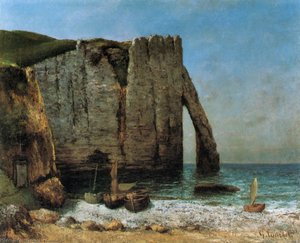
Experience Gustave Courbet's iconic Cliffs at Étretat! This stunning oil painting captures Normandy’s rugged beauty with raw realism & dramatic coastal views. A masterpiece of the Realist movement.
Biografia artysty
Gustave Courbet (1819-1877): Żegnaj Gustave Courbet! Ikona Realizmu. Odkryj monumentalne pejzaże i obraz „Żegnaj Gustave Courbet” oraz jego wpływ na sztukę XIX wieku!
About the painting
A Vision of Normandy’s Rugged Beauty: Gustave Courbet's Cliffs at Étretat
Gustave Courbet, a Rebel’s Brush: The Life and Legacy of Gustave Courbet Born in the quiet village of Ornans, France, in 1819, Jean Désiré Gustave Courbet emerged as a defiant force against the established artistic norms of his time. His story isn't simply one of paint and canvas; it’s a narrative woven with threads of social commentary, political conviction, and an unwavering commitment to portraying the world exactly as he saw it – unidealized, raw, and profoundly real. Growing up in a relatively prosperous bourgeois family, Courbet received encouragement from his mother to pursue his artistic inclinations, a nurturing that would ultimately fuel a revolution in the art world. His formal training began at the École des Beaux-Arts in Paris in 1839, but he quickly found himself chafing against the academic conventions and Romantic idealism prevalent there. While acknowledging influences like Eugène Delacroix and Théodore Géricault, Courbet forged his own path, one that prioritized observation over imitation—a stance that would define his artistic identity for decades to come.The Landscape of Realism: Context and Conception
Courbet’s Cliffs at Étretat embodies the core tenets of the Realist movement, a reaction against Romantic sentimentality and academic formalism. Artists like Courbet rejected idealized depictions of nature and instead sought to capture the tangible world with unflinching accuracy. Étretat, a dramatic chalk cliff coastline in Normandy, served as inspiration for this monumental canvas—a deliberate choice reflecting Courbet’s fascination with the natural environment and his desire to represent it without embellishment. The painting emerged during a period marked by social unrest and political upheaval, mirroring Courbet's own rebellious spirit and aligning him with artists who championed artistic independence and challenged societal expectations.Composition and Technique: Capturing Movement and Texture
Courbet’s masterful technique is immediately apparent upon viewing Cliffs at Étretat. Employing thick impasto—a technique involving applying paint in heavy layers—he achieved remarkable textural richness, conveying the ruggedness of the cliffs and the turbulent sea with palpable immediacy. The pyramidal composition draws the viewer's eye upwards towards the towering cliffs, while horizontal bands delineate the shoreline and emphasize the expansive vista. Courbet skillfully utilized atmospheric perspective to create depth, subtly blurring distant elements and enhancing the sense of grandeur. Furthermore, he incorporated figures—a boat, people, and a dog—to ground the scene in reality and suggest human interaction with the landscape.Symbolism Within Nature: A Reflection of Courage and Resilience
Beyond its technical brilliance, Cliffs at Étretat carries symbolic weight. The cliffs themselves represent strength and permanence, mirroring Courbet’s own unwavering conviction in portraying the world truthfully. The turbulent sea symbolizes challenges and uncertainties—themes that resonated deeply with Courbet's artistic vision. The presence of a solitary dog adds an element of vulnerability amidst the imposing landscape, hinting at the human spirit's capacity for perseverance and appreciation for beauty even in difficult circumstances.A Legacy Enduring Inspiration
Gustave Courbet’s Cliffs at Étretat remains a cornerstone of Realist art and continues to inspire artists today. Its uncompromising realism challenged artistic conventions and solidified Courbet’s position as a pioneer of modern painting. Explore the masterpiece's profound impact on subsequent generations of artists—a testament to Courbet’s enduring legacy as an artist who dared to confront beauty with unflinching honesty. TopImpressionists.com offers handmade oil painting reproductions of Gustave Courbet's works, allowing art enthusiasts to bring a piece of history into their homes.Pytania i odpowiedzi
Czy dostępny jest plik do pobrania w wysokiej rozdzielczości dla "Cliffs at Étretat"?
„Cliffs at Étretat” jest dostępny jako wysokiej rozdzielczości cyfrowe zdjęcie do pobrania; można go nabyć bezpośrednio na stronie Cyfrowy obraz.
Jaki nastrój i emocje wyraża „Cliffs at Étretat” – Gustaw Courbet?
„Cliffs at Étretat” – Gustaw Courbet emanuje Tranquil emocjami, wpisując się w ogólnie Serene nastrój.
Jakie są wymiary oryginalnego dzieła „Cliffs at Étretat” – Gustaw Courbet?
Oryginalny utwór „Cliffs at Étretat” – Gustaw Courbet ma wymiary 66 x 82 cm.
Quick facts and art quiz
About Gustaw Courbet

Gustaw Courbet
1819 - 1877, Francja
Biografia artysty
Pędzel buntownika: Życie i dziedzictwo Gustave'a Courbeta
Urodzony w cichej wiosce Ornans we Francji w 1819 roku, Jean Désiré Gustave Courbet wyłonił się jako siła sprzeciwu wobec ustalonych norm artystycznych swoich czasów. Jego historia to nie tylko opowieść o farbie i płótnie; to narracja utkany z nici komentarza społecznego, przekonań politycznych i niezachwianego oddania przedstawianiu świata dokładnie takim, jakim go widział – nieidealizowanym, surowym i głęboko prawdziwym. Dorastając w stosunkowo zamożnej rodzinie burżuazyjnej, Courbet otrzymał od matki wsparcie w rozwijaniu swoich artystycznych skłonności, co ostatecznie stało się paliwem dla rewolucją w świecie sztuki. Jego formalne wykształcenie rozpoczęło się w École des Beaux-Arts w Paryżu w 1839 roku, lecz szybko poczuł opór wobec panujących tam akademickich konwencji i romantycznego idealizmu. Choć uznawał wpływy takich mistrzów jak Eugène Delacroix czy Théodore Géricault, Courbet wykuł własną ścieżkę – taką, która przedkładała obserwację nad wyobraźnię, a prawdę nad tradycję.Narodziny realizmu: Rzucenie wyzwania konwencjom artystycznym
Rozwój artystyczny Courbeta charakteryzował się celowym odrzuceniem dominujących standardów estetycznych. Nie interesowały go mityczne narracje ani heroiczne alegorie; jego wzrok utkwiony był w codziennym życiu zwykłych ludzi, szczególnie tych zaangażowanych w trud pracy i wiejską egzystencję. To oddanie w ukazywaniu świata bez upiększeń – co później przeszło do historii jako realizm – początkowo spotkało się z pogardą i drwiną krytyków przyzwyczajonych do bardziej wygładzonych i idealizowanych przedstawień. Wczesne prace eksplorowały pejzaże i portrety, lecz wkrótce zwróciły się ku scenom z życia klasy robotniczej, ukazowanym w monumentalnej skali, tradycyjnie zarezerwowanej dla malarstwa historycznego lub religijnego. Ten świadomy wybór nie był jedynie zabiegiem stylistycznym; był to manifest dotyczący przyrodzonej godności i ważności tych często pomijanych tematów. Kamieniarze, ukończone w 1849 roku, lecz tragicznie zniszczone podczas II wojny światowej, stanowiły przykład tego podejścia – surowy obraz dwóch robotników ciężko pracujących, których twarze są przesłonięte przez wycieńczenie i trud. Ten obraz, wraz z innymi, takimi jak Pogrzeb w Ornans (1850), rzucił wyzwanie samej definicji tego, co uznawano za „godny” temat dla sztuki wysokiej.Główne dzieła i filozofia artystyczna
Pogrzeb w Ornans, kolosalne płótno przedstawiające prowincjonalną ceremonię pogrzebową, wywołało skandal podczas wystawy w latach 1850-5ł. Jego ogrom – zazwyczaj zarezerwowany dla wielkich obrazów historycznych – w połączeniu z nieustępliwym realizmem i brakiem emocjonalnej idealizacji, zaszokował publiczność. Courbet nie przedstawił żałobników jako szlachetnych czy pogrążonych w rozpaczy postaci; ukazał ich jako zwykłych ludzi, których twarze naznaczone były mieszanką smutku, znużenia i rezygnacji. Ta szczerość była rewolucyjna. Jego filozofia artystyczna wykraczała poza sam temat, obejmując również technikę. Preferował bezpośredni styl impastowy – nakładanie grubej warstwy farby na płótno – co podkreślało materialność samego medium. Pracownia malarza (1855), dzieło alegoryczne odzwierciedlające jego przekonania artystyczne i zaangażowanie w ówczesne problemy społeczne, jeszcze bardziej ugruntowało jego reputację jako prowokującego i niezależnego artysty. Jego udział w Salon des Refusés w 1863 roku – wystawie prac odrzuconych przez oficjalny Salon – przypieczętował jego status buntownika i obrońcy wolności artystycznej. Nawet pejzaże, takie jak Widok w lesie Fontainebleau (1855), były przesiąknięte poczuciem realizmu, chwytając naturalne piękno lasu bez jego romantyzowania.Dziedzictwo i znaczenie historyczne
Wpływ Gustave'a Courbeta na późniejsze nurty artystyczne jest niezaprzeczalny. Choć czerpał inspirację z wcześniejszych mistrzów, takich jak Caravaggio, ze względu na ich dramatyczny realizm oraz operowanie światłem i cieniem, jego oddziaływanie wykraczało daleko poza zwykłe naśladownictwo. W głęboki sposób wpłynął na impresjonistów i postimpresjonistów, uwalniając ich od ograniczeń tradycyjnego przedstawiania rzeczywistości i zachęcając do poszukiwania nowych sposobów widzenia i ukazywania świata. Jego nacisk na komentarz społeczny utorował drogę późniejszym artystom zaangażowanym społecznie, którzy wykorzystywali swoją twórczość jako platformę dla aktywizmu politycznego. Courbet nie był tylko malarzem; był głośnym rzecznikiem wolności artystycznej i zmian politycznych, aktywnie uczestnicząc w burzliwych wydarzeniach swoich czasów, w tym w Komunie Paryskiej w 1871 roku – co doprowadziło do okresu wygnania w Szwajcarii. Zmarł w 1877 roku, pozostawiając po sobie dorobek, który do dziś inspiruje i prowokuje odbiorców.- Pionier realizmu
- Rzucił wyzwanie konwencjom akademickim
- Wpłynął na impresjonizm i postimpresjonizm
- Obrońca wolności artystycznej
Quick facts about Gustaw Courbet
- Artistic Movement Or Style: Realizm
- Artists Or Movements Influenced By This Artist:
- Impressionizm
- Post-Impressionizm
- Artists Who Influenced This Artist:
- Eugène Delacroix
- Théodore Géricault
- Caravaggio
- Date Of Birth: 10 czerwca 1819
- Full Name: Gustave Courbet
- Nationality: Francuz
- Notable Artworks:
- Żegnaj Gustave Courbet
- Rocky Seashore
- Château du Chillon
- Place Of Birth: Ornans, Francja
Podobne dzieła


Odkryj dzieła sztuki uporządkowane według tematów, stylów i cech charakterystycznych.


Gustaw Courbet
Cliffs at Étretat
() ·
With its frame: · Hand-painted in oil on linen
Total