


 Zobacz w skali 1:1
 Wyślij
 Udostępnij
 Szczegóły
 Przewodnik

 Pobierz plik obrazu
 Podobne obiekty
 RTG
RTG Pokaz slajdów
 Statystyki
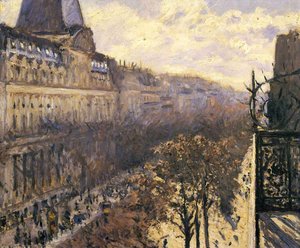
Balcony w Paryżu
 Olej na płótnie
- Sztuka ścienna
- Impressionist Realism
 1881
1881- XIX wiek
 55.0 x 39.0 cm
Zanurz się w spokojnej atmosferze Paryża! Obraz Gustave'a Caillebotta "Balcony w Paryżu" – impresjonistyczna perełka z widokiem na miasto z balkonu. Odkryj piękno i subtelność.
 Czytaj więcej
Gustave Caillebotte (1848-1894): Francuski malarz, mistrz realistycznego i impresjonistycznego oddawania życia paryskiej ulicy. Znany z obrazu 'Paris Street; Rainy Day'.
Giclée / Wydruk artystyczny
Wydruki giclée lub płótna o jakości muzealnej, szybka realizacja i szeroki wybór opcji wykończenia. ( Kup ręcznie malowany obraz Przełącz na wersję cyfrową)




P118B zł10

P118H zł10

P118W zł10

P438Z zł10

P508JH zł12

P508YH zł12

P805H zł10

P805Z zł10

P919BZ zł10

P919G zł10

P919XJ zł10

P959ZH zł10

P968JZ zł12

W106C zł8

W218G zł10

W218JH zł8

W218Y zł10

W307PJ zł10

W316G zł10

W316PJ zł8

W316Y zł10

W398PJ zł8

W4111J zł10

W500HY zł15

W500JH zł15

W692G zł12

W849H zł8

W940BG zł15

W953PJ zł8




Standardowy
na zamówienie
CM
INCH
Wybierz spośród naszych standardowych rozmiarów, które zachowują oryginalne proporcje dzieła sztuki.
Loading sizes...

szerokość
wysokość
Wpisz wymaganą szerokość i wysokość, aby dopasować grafikę do ramy lub ściany. Wydruk można jedynie przyciąć, nigdy nie powiększając go poza oryginalny obraz, dlatego format o innym proporcji spowoduje utratę części kompozycji. Przed rozpoczęciem druku prześlemy Ci cyfrowy podgląd do zatwierdzenia. Obraz wyświetlany na tej stronie nie pokazuje rzeczywistego przycięcia — jedynie podgląd oddaje ten efekt.
Dostawa na cały świat () w ciągu 2 tygodni zamiast standardowych 4/5 tygodni. (23 Październik)

Bezpłatna ekspresowa wysyłka na cały świat

Wysokiej jakości płótno lniane

Pełne ubezpieczenie transportowe

Gwarancja zwrotu należności celnych i podatków importowych

Gwarancja idealnego odwzorowania barw

100-dniowy okres na zwrot dzieła w przypadku wykrycia wad produkcyjnych

Gwarancja 100% zwrotu pieniędzy

Oferta przy zakupie wielu sztuk
 Opcja ze szkłem jest dostępna wyłącznie w rozmiarach poniżej 110 cm

Balcony w Paryżu
Giclée / Wydruk artystyczny
Rozmiar reprodukcji
-


Suma do zapłaty
zł 266
O Balconie w Paryżu – Ujęcie Serenity w Sercu Miasta
Gustave Caillebotte’s “A Balcony in Paris,” stworzony w 1881 roku, to więcej niż tylko obraz przedstawiający widok z balkonu. To moment zatrzymany w czasie, zaproszenie do kontemplacji i poczucia spokoju w samym sercu Paryża. Obraz ten, emanujący subtelną elegancją i spokojem, jest doskonałym przykładem tego, jak Caillebotte łączył w swojej twórczości realizm z impresjonistycznym oddziaływaniem światła i atmosfery. Z perspektywy jego własnego balkonu na Boulevard Haussmann, artysta uchwycił esencję miasta – harmonijną grę architektury i natury, która oferuje ucieczkę od zgiełku codzienności.
Impressionistyczny Realizm: Połączenie Dwa Światy
Caillebotte był artystą wyjątkowym, który zręcznie łączył w swojej pracy elementy impresjonizmu z silnym realizmem. “A Balcony in Paris” jest tego doskonałym dowodem. Zamiast teatralnych efektów i idealizowanych przedstawień, Caillebotte skupił się na wiernym oddaniu rzeczywistości, jaką widział – na tym, co ulotne i przemijające, a jednocześnie trwałe. Jego charakterystyczny styl charakteryzuje się widocznymi pociągnięciami pędzla i stonowaną paletą barw, tworząc wrażenie bezpośredniości i intymności. Obraz nie jest tylko przedstawieniem krajobrazu; to zapis chwili, uchwycony w czasie.
Kompozycja i Technika: Linia i Światło
Kompozycja obrazu jest starannie skonstruowana, dzieląc się na dwie wyraźne części. Na pierwszym planie znajduje się imponujący balkonowy poręcz – jego mocne, poziome linie prowadzą wzrok widza przez całą przestrzeń, tworząc poczucie głębi i perspektywy. Caillebotte zręcznie wykorzystuje luźną, ekspresyjną technikę malarską, szczególnie wyraźnie widoczną w nierównych powierzchniach budynków i detalu poręczy. To właśnie dzięki temu widz czuje fakturę, niemalże dotyka obrazu. Subtelne odcienie brązu, beżu i ochry tworzą spójną harmonię kolorystyczną, a delikatne zielenie drzew nad rzeką dodają elementu natury do miejskiego krajobrazu. Kluczem jest również sposób oświetlenia – miękkie, rozproszone światło sugeruje pochmurny dzień lub późny popołudnie, malując miasto złotym blaskiem i wzmacniając atmosferę spokoju.
Kontekst Historyczny i Wpływ Fotografii
Caillebotte był członkiem i mecenasem impresjonistów, choć jego styl miał tendencję bardziej realistyczną. Jego wczesny zainteresowanie fotografią – wówczas nową i fascynującą technologię – miało ogromny wpływ na jego twórczość. Caillebotte, podobnie jak wielu artystów tamtej epoki, eksperymentował z perspektywami i kadrowaniem, czerpiąc inspirację z fotografii w celu uchwycenia ulotnych momentów. “A Balcony in Paris” to świadectwo tego wpływu – charakterystyczne dla jego prac są wysokie punkty widzenia i precyzyjne kadracja. Obraz ten jest nie tylko portretem miasta, ale także zapisem epoki, w której fotografia zaczynała zmieniać sposób, w jaki postrzegaliśmy świat.
Symbolizm i Emocjonalny Wpływ
“A Balcony in Paris” to obraz, który wywołuje poczucie nostalgii i spokoju. Widok z balkonu, obserwacja miasta z bezpiecznej odległości – to motyw powtarzający się w sztuce impresjonistycznej. Obraz ten zaprasza do refleksji nad pięknem codzienności, nad spokojem, który można znaleźć nawet w tętniącym życiem mieście. To ucieczka od zgiełku i stresu, moment wytchnienia i kontemplacji. Reprodukcja tego arcydzieła Caillebotte’a może stać się inspiracją do stworzenia harmonijnej przestrzeni, która oddaje spokój i elegancję francuskiego krajobrazu.
Pytania i odpowiedzi
Czy mogę zobaczyć „Balcony w Paryżu” autorstwa Gustaw Caillebotte na własnej ścianie przed zakupem?
Dzieło „Balcony w Paryżu” autorstwa Gustaw Caillebotte można przymierzyć na własnej ścianie dzięki stronie Podgląd AR, wykorzystując rozszerzoną rzeczywistość na kompatybilnym urządzeniu.
Kto jest autorem i z jakiego roku pochodzi "Balcony w Paryżu"?
Autorem dzieła "Balcony w Paryżu" jest Gustaw Caillebotte, a datowanie pracy pochodzi z 1881 roku.
Dla kogo „Balcony w Paryżu” autorstwa Gustaw Caillebotte będzie polecanym prezentem?
Jako prezent polecamy „Balcony w Paryżu” autorstwa Gustaw Caillebotte dla Rocznica. Doskonale sprawdzi się on również przy innych okazjach.
Podobne dzieła




Biografia artysty
A Parisian of the New Age: The Life and Art of Gustave Caillebotte
Gustave Caillebotte, born into a prosperous Parisian family in 1848, was an artist uniquely positioned to capture the dramatic transformations reshaping his city. His father, Martial Caillebotte, inherited a successful textile business and served as a judge, providing Gustave with both financial security and a vantage point from which to observe the burgeoning modern world. While initially pursuing legal studies – earning degrees in law in 1868 and 1870 – Caillebotte’s true calling lay within the realm of art. He began serious training under Léon Bonnat, immersing himself in painting while simultaneously developing a keen interest in photography, an emerging medium that would profoundly influence his artistic vision. This early exposure to photographic principles—its framing, perspective, and capturing of fleeting moments—would become hallmarks of his distinctive style. Caillebotte wasn’t merely documenting change; he was actively engaging with the aesthetic possibilities it presented.Realism Infused with Impressionist Light
Caillebotte's artistic path diverged from strict academic tradition, yet he never fully embraced the purely optical explorations of many of his Impressionist contemporaries. He found kinship with artists like Edgar Degas and Giuseppe de Nittis, sharing a fascination with modern life but approaching it through a lens of meticulous realism. His early masterpiece, Les Raboteurs de Parquet (The Floor Scrapers), exhibited at the 1875 Salon, immediately established his reputation as a bold and unconventional painter. The work depicts three laborers painstakingly scraping a wooden floor, rendered with an unflinching honesty that shocked some viewers while captivating others. It wasn’t simply the subject matter—the working class rarely graced the canvases of high art—but also the composition: cropped, almost jarringly direct, and devoid of sentimental idealization. This commitment to portraying contemporary life without embellishment continued in works like View of Rooftops (Snow), where he masterfully captured the industrial landscape of a rapidly changing Paris. The influence of photography is particularly evident in his use of sharp lines, precise detail, and carefully constructed viewpoints—elements that anticipate the developments of early modernism. However, Caillebotte wasn’t immune to the allure of Impressionism; his palette gradually lightened, and he began experimenting with broken brushstrokes and atmospheric effects, particularly noticeable in his evocative depictions of Parisian rooftops bathed in snow – a testament to his ability to synthesize realism and fleeting light.A Patron and a Pioneer: Navigating the Art World
Beyond his own artistic endeavors, Caillebotte played a crucial role in supporting the Impressionist movement. His financial independence, stemming from his family’s wealth, allowed him to become a significant patron, purchasing works by Monet, Renoir, Pissarro, Cézanne, and Degas at a time when their art was largely rejected by the official Salon. He wasn't merely a collector; he actively championed these artists, organizing and financing several of the Impressionist exhibitions that defied conventional artistic norms. This dedication to fostering innovation extended to his own collection, which he bequeathed to the French state upon his death in 1894—a bequest initially met with resistance but ultimately forming the cornerstone of the Musée d’Orsay's renowned Impressionist holdings. Caillebotte’s unique perspective also manifested in his compositions; works like Boulevard vu d’en haut (Boulevard Seen from Above), painted in 1880, demonstrate a strikingly modern sensibility, employing an elevated viewpoint and dynamic cropping that subtly foreshadow the photographic perspectives of the 20th century. This innovative approach to composition, possibly influenced by Japanese prints and his own photographic experiments, set him apart as a true pioneer—a bridge between realism and the emerging visual language of modernity.Notable Works
- Les Raboteurs de Parquet (The Floor Scrapers) (1875): A groundbreaking work showcasing Caillebotte’s realism and unconventional composition.
- View of Rooftops (Snow) (1878): Demonstrates his use of high vantage points and atmospheric effects, influenced by photography and Japanese prints.
- Boulevard vu d’en haut (Boulevard Seen from Above) (1880): A strikingly modern composition with a dynamic perspective.
- Paris Street; Rainy Day (1877): Perhaps his most famous work, capturing the bustling energy of Parisian life in a unique and evocative manner.
- The Bezique Game(1881) : A captivating Impressionist painting of Parisian leisure.
Legacy and Rediscovery: A Modern Master Reclaimed
For decades following his death, Caillebotte’s work remained relatively obscure, overshadowed by the more celebrated figures of Impressionism. It wasn't until the late 20th century that a comprehensive reassessment of his art began to take place, fueled by scholarly research and major exhibitions. This rediscovery revealed an artist of remarkable technical skill, intellectual depth, and visionary insight. Caillebotte’s paintings are not simply depictions of modern life; they are profound meditations on the complexities of urban existence, the changing social landscape, and the evolving relationship between art and reality. His ability to seamlessly blend realism with Impressionist techniques, his innovative compositions, and his unwavering commitment to portraying the world around him have secured his place as a pivotal figure in 19th-century art. Today, Caillebotte’s works are celebrated for their unique perspective, their masterful execution, and their enduring relevance—a testament to an artist who dared to capture the spirit of a new age.
Gustaw Caillebotte
1848 - 1894 , Francja
Najważniejsze informacje
- Artistic Movement Or Style: Impressionizm, Realizm
- Artists Or Movements Influenced By This Artist: ['Impressioniści']
- Artists Who Influenced This Artist:
- Bonnat
- Degas
- Date Of Birth: 19 sierpnia 1848
- Date Of Death: 21 lutego 1894
- Full Name: Gustave Caillebotte
- Nationality: Francuz
- Notable Artworks:
- Les Raboteurs
- Rooftop
- Boulevard
- Place Of Birth: Paryż, Francja
Zobacz także powiązane artykuły

Capturing the Drama: How Impressionist Light and Shadow Transform Your Living Space
Discover how the luminous light and dramatic shadows of Impressionist masterpieces can transform your home. Explore expert insights on using Renoir, Monet, and Cézanne to create a serene, culturally rich sanctuary through museum-quality, hand-painted oil reproductions.

Capturing the Soul: The Ethereal Magic and Timeless Technique of Impressionist Portraiture
Discover the ethereal beauty of Impressionist portraiture. Explore how masters like Monet and Renoir captured light and soul through brushwork, and learn how to bring this timeless magic into your home with exquisite, hand-painted oil reproductions from TopImpressionists.com.

Capturing the Light of Amsterdam: A Journey Through Impressionist Masterpieces of the Dutch Canals
Embark on a visual journey through the luminous Amsterdam canals. Discover how Impressionist masters captured the fleeting light of the Dutch landscape through evocative brushwork and color. Explore the timeless beauty of these masterpieces for your private art collection.

Dining Room Elegance: Transforming Your Space with Impressionist Masterpieces
Elevate your dining room with the luminous beauty of Impressionist masterpieces. Discover how hand-painted Claude Monet and Renoir reproductions can transform your space into a sanctuary of light, color, and timeless elegance for your home.
Odkryj dzieła sztuki uporządkowane według tematów, stylów i cech charakterystycznych.


