

 Podgląd w skali 1:1
 Wyślij jako kartkę
 Udostępnij
 Szczegóły dzieła
 Przewodnik

 Pobierz obraz
 Podobne obiekty
 RTG
RTG Pokaz slajdów
 Q&A
Q&A Statystyki
Cattle by a Pond

- 35.0 x 25.0 cm


Henry Childe Pocock’s ‘Cattle by a Pond’ (1933) is a serene Impressionistic landscape of rural England. Explore its soft colors, detailed brushwork & tranquil scene – a beautiful piece for art lovers.
 Rozwiń treść
Henry Childe Pocock (1854-1934) was a British artist renowned for his detailed depictions of Mill Hill, England. Explore his evocative landscapes & rural scenes.
Giclée / Wydruk artystyczny
Wydruki giclée lub płótna o jakości muzealnej, szybka realizacja i szeroki wybór opcji wykończenia. ( Zamów ręcznie malowaną reprodukcję Przejdź do wersji cyfrowej)




































Standardowy format
personalizowane
CM
INCH
Wybierz spośród naszych standardowych rozmiarów, które zachowują oryginalne proporcje dzieła sztuki.
Loading sizes...

szerokość
wysokość
Wpisz wymaganą szerokość i wysokość, aby dopasować grafikę do ramy lub ściany. Wydruk można jedynie przyciąć, nigdy nie powiększając go poza oryginalny obraz, dlatego format o innych proporcjach spowoduje utratę części kompozycji. Przed rozpoczęciem druku prześlemy Ci cyfrowy podgląd do zatwierdzenia. Obraz wyświetlany na tej stronie nie pokazuje rzeczywistego przycięcia — jedynie podgląd oddaje ten efekt.
Dostawa na cały świat () w ciągu 2 tygodni zamiast standardowych 4/5 tygodni. (2 Listopad)

Bezpłatna ekspresowa wysyłka na cały świat

Wysokiej jakości płótno lniane

Pełne ubezpieczenie przesyłki

Gwarancja zwrotu należności celnych i podatków importowych

Gwarancja wiernego odwzorowania kolorów

100-dniowa polityka zwrotów (tylko w przypadku wad)

Gwarancja 100% zwrotu pieniędzy

Zniżka przy zakupie wielu sztuk
 Opcja ze szkłem jest dostępna wyłącznie w rozmiarach poniżej 110 cm

Cattle by a Pond
Giclée / Wydruk artystyczny
Wymiary reprodukcji
-


Cena całkowita
zł 269
The painting Cattle by a Pond by Henry Childe Pocock is a stunning example of a serene and peaceful scene, showcasing the artist's unique style and technique. Created in 1933, this artwork measures 35 x 25 cm and is painted on canvas. The painting is currently located at the Barnet Local Studies - Archives in London, United Kingdom.
Other notable artists whose work can be found on https://TopImpressionists.com include Charles François Daubigny, known for his Spring Landscape painting, and Paula Modersohn Becker, famous for her Girl With Tiger Lilies artwork. For more information on these artists and their work, visit /art/list/?Filter=spring+landscape,spring,landscape& and /art/list/?Filter=girl+with+tiger+lilies,girl,with,tiger,lilies&.
A Closer Look at the Painting
The scene depicts three cows standing in the water near trees, creating a sense of tranquility and harmony with nature. The cows appear to be enjoying their time in the water, possibly cooling off or drinking from it. The backdrop of trees adds to the natural ambiance of the scene, making it a beautiful representation of rural life. Key Features of the painting include:- The use of soft colors to create a calming atmosphere
- The attention to detail in the depiction of the cows and their surroundings
- The sense of depth and dimension created by the trees and the water
Henry Childe Pocock's Style
Henry Childe Pocock was a British artist known for his landscape and animal paintings. His style is characterized by his attention to detail and his ability to capture the beauty of nature. For more information on Henry Childe Pocock and his artwork, visit https://TopImpressionists.com/@/Henry-Childe-Pocock.Other notable artists whose work can be found on https://TopImpressionists.com include Charles François Daubigny, known for his Spring Landscape painting, and Paula Modersohn Becker, famous for her Girl With Tiger Lilies artwork. For more information on these artists and their work, visit /art/list/?Filter=spring+landscape,spring,landscape& and /art/list/?Filter=girl+with+tiger+lilies,girl,with,tiger,lilies&.
Pytania i odpowiedzi
Czy dostępna jest prezentacja w formie pokazu slajdów dla „Cattle by a Pond” – Henry Childe Pocock?
Dzieło „Cattle by a Pond” – Henry Childe Pocock można obejrzeć w formie pokazu slajdów na stronie Prezentacja slajdów danego dzieła.
Jaki kolor najbardziej dominuje w "Cattle by a Pond"?
Dominującym kolorem dzieła „Cattle by a Pond” – Henry Childe Pocock jest Gray (#98986f).
Do jakiego nurtu należy "Cattle by a Pond"?
„Cattle by a Pond” to dzieło należące do nurtu Impressionism. Nurt ten określa tradycję artystyczną, w której osadzone jest dzieło.
Podobne dzieła


Biografia artysty
The Pastoral Vision of Henry Childe Pocock
In the heart of the Victorian era, a period defined by rapid industrialization and shifting social landscapes, Henry Childe Pocock (1854–1934) emerged as a steadfast guardian of the English countryside. A painter of profound sensitivity, Pocock dedicated much of his life to chronicling the serene, untouched beauty of Mill Hill, Hertfordshire. His work serves as more than mere documentation; it is an emotional journey into a pastoral ideal, where the rolling hills and sun-drenched meadows of rural England are rendered with a reverence that borders on the spiritual. Born in London, Pocock’s artistic soul was shaped by the rigorous traditions of British fine art, yet his vision remained uniquely tethered to the quiet, rhythmic life of the landscapes he called home.
The foundation of Pocock’s mastery can be traced back to his formative years at the Slade School of Fine Art. Under the tutelage of the celebrated Pre-Raphaelite master Frederence Leighton, Pocock imbibed a philosophy of meticulous observation and idealized representation. This training instilled in him an unwavering commitment to capturing the natural world with both accuracy and emotional resonance. Influenced by the critical eye of John Ruskin and the vibrant realism of William Holman Hunt, Pocock learned to see the landscape not just as scenery, but as a complex tapestry of light, texture, and atmosphere. This academic rigor allowed him to bridge the gap between classical precision and a more fluid, impressionistic approach that would characterize his later, most evocative works.
Technique and the Luminosity of Light
Pocock’s technical prowess was defined by a remarkable ability to manipulate oil paints to achieve a sense of luminous depth. He often employed the painstaking method of layering thin glazes over the canvas, a technique that allowed light to penetrate the upper layers and reflect back, creating a glowing, translucent effect on the surface of his landscapes. This mastery of tonal subtlety enabled him to capture the fleeting nuances of English weather—the soft haze of a summer morning, the heavy moisture of a damp meadow, or the sharp clarity of a coastal breeze. His compositions frequently utilized horizontal formats, which emphasized the breadth of the horizon and invited the viewer to step into an expansive, open world.
Beyond his technical skill, Pocock’s work is noted for its ability to evoke specific moods through texture and color:
- Atmospheric Precision: His ability to render atmospheric conditions, such as seen in his depictions of Uphill Farm, where the air itself feels palpable.
- Textural Richness: A profound attention to the tactile qualities of nature, from the soft fur of cattle to the rugged bark of ancient trees.
- Tonal Harmony: The use of muted, nostalgic tones in works like Old Cottages, Holcombe Hill to evoke a sense of timelessness and peace.
A Legacy of Rural Tranquility
The significance of Henry Childe Pocock lies in his role as a chronicler of a vanishing way of life. As the world around him grew increasingly urbanized, his canvases remained sanctuaries of stillness. Whether depicting the lively summer energy of The Sheepwash or the quiet, reflective moment of Cattle by a Pond, his work captures a harmony between animals and their environment that feels both eternal and fragile. His paintings are not merely landscapes; they are portraits of a specific English identity, rooted in the soil and the seasons.
Today, Pocock’s legacy continues to resonate through his ability to transport the viewer to a more tranquil era. His works, held in esteemed collections such as the Barnet Local Studies Archives, stand as enduring testaments to the beauty of the English pastoral tradition. Through his eyes, we are reminded that even in the midst of change, there is a profound, lasting grace to be found in the quiet corners of the world.

Henry Childe Pocock
1854 - 1934
Krótka nota
- Artistic Movement Or Style: Romantic Landscape Painting
- Artists Or Movements Influenced By This Artist: ['Hudson Lowe']
- Artists Who Influenced This Artist: ['John Constable']
- Date Of Birth: 1854
- Date Of Death: 1934
- Full Name: Henry Childe Pocock
- Nationality: British
- Notable Artworks: ['Uphill Farm, Mill Hill']
- Place Of Birth: Barnet, England
Powiązane artykuły
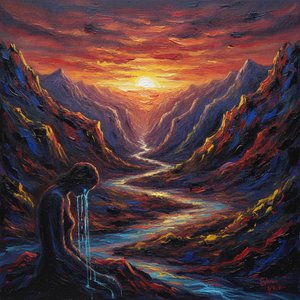
Capturing Emotion: A Journey Through the Soul of Expressionist Landscapes
Explore the profound emotional depth of Expressionist landscapes. Discover how Post-Impressionist masters moved beyond light to capture the soul through vibrant color and form. A curated journey for true art lovers seeking the beauty of expressive mastery.