

Shown: · With its frame:
 Podgląd w skali 1:1
 Wyślij jako kartkę
 Udostępnij
 Szczegóły dzieła
 Przewodnik

 Pobierz obraz
 Podobne obiekty
 RTG
RTG Pokaz slajdów
 Q&A
Q&A Statystyki
- 72.0 x 92.0 cm


zł 1242
Ręcznie malowana reprodukcja olejowa
Ręcznie malowany obraz olejny na płótnie, wykonany na zamówienie przez naszych artystów w wybranym przez Ciebie wymiarze i oprawie. ( Przełącz na wydania drukowane Przejdź do wersji cyfrowej)
Size
·Standardowy format
personalizowane
CM
INCH
Wybierz spośród naszych standardowych rozmiarów, które zachowują oryginalne proporcje dzieła sztuki.
Loading sizes...

szerokość
wysokość
Wpisz wymaganą szerokość i wysokość, aby obraz pasował do Twojej ramy lub ściany. Ponieważ jest to dzieło malowane ręcznie, w przypadku rozmiaru o innych proporcjach artysta może domalować nieco więcej wokół obrazu lub przyciąć jego fragmenty — wybór należy do Ciebie. Przed rozpoczęciem pracy prześlemy Ci cyfrową wizualizację do zatwierdzenia. Obraz widoczny na tej stronie nie przedstawia rzeczywistego efektu — jedynie wizualizacja oddaje realny rezultat.
 Dowiedz się więcej
Finish
·
White zł1

Blurside zł1

Extended zł1

P118B zł10

P118H zł10

P118W zł10

P438Z zł10

P508JH zł12

P508YH zł12

P805H zł10

P805Z zł10

P919BZ zł10

P919G zł10

P919XJ zł10

P959ZH zł10

P968JZ zł12

W106C zł8

W218G zł10

W218JH zł8

W218Y zł10

W307PJ zł10

W316G zł10

W316PJ zł8

W316Y zł10

W398PJ zł8

W4111J zł10

W500HY zł15

W500JH zł15

W692G zł12

W849H zł8

W940BG zł15

W953PJ zł8

H24-GOLD zł30

H24-SILVER zł30

H36-GOLD zł45

H36-SILVER zł45
Shipped in a protective tube, ready for your own framer.
Above 105 cm the frame is shipped as a kit for a professional framer — read the details.
Extras
optionalWhat do the extras include?
Examples of what can be changed: Replace face with customer photo; Add pet (e.g., replace cat with dog); Include hidden message in background; Change background landscape or elements.
After order, TopImpressionists.com team will email client for instructions and provide a mockup preview
After order, TopImpressionists.com team will email client for instructions and provide a mockup preview
Dostawa na całym świecie () w ciągu 3–4 tygodni zamiast standardowych 5 tygodni. (2 Listopad). Bez kompromisów w kwestii jakości.
Lakier ochronny
Etykieta obiektu
Szczegóły grawerowanej brązowej tabliczki
This elegant plaque features the artist's name and the title of the artwork, finely engraved for a timeless presentation.
It is made from bronze with a refined, elegant finish. The text is precisely laser-engraved for a sharp and permanent result. Measuring 9x2 cm, the plaque is compact yet easy to read. It's built to be durable and scratch-resistant, offering a professional, museum-quality look. Mounting is simple thanks to the included adhesive backing.
Szczegóły przezroczystej tabliczki akrylowej
The plaque includes essential engraved details such as the artist's name, the title of the artwork, the date it was created, the type of media used-like oil on canvas or watercolor-a brief description of the piece, and a QR code that links to the complete artwork information.
It is crafted from clear acrylic, offering a sleek, modern appearance. The text is UV-engraved in black to ensure strong visual contrast. With a size of 10x15 cm, it ensures optimal readability. It comes equipped with two metal hooks for secure wall mounting. The plaque is designed to be weather-resistant, making it suitable for various environments, and it includes interactive features that work seamlessly with smartphone scanning.
Szczegóły czarnej tabliczki akrylowej
This elegant plaque includes engraved information such as the artist's name, the title of the artwork, the date it was created, the type of media used (like oil on canvas or watercolor), a short description of the artwork, and a QR code for quick access to more information.
The plaque itself is made from refined black acrylic with a premium finish. The text is laser-engraved in white for high contrast and readability. Its size is 10x15 cm, designed to be easy to read. It comes with two metal hooks for professional mounting. The design is sleek and fits any interior style. It is also weather-resistant and durable, with built-in digital integration for mobile compatibility.
Opcja ze szkłem jest dostępna wyłącznie w rozmiarach poniżej 110 cm
 Opcja ze szkłem jest dostępna wyłącznie w rozmiarach poniżej 110 cm
- Bezpłatna ekspresowa wysyłka na cały świat
- Wysokiej jakości płótno lniane
- Pełne ubezpieczenie przesyłki
- Gwarancja zwrotu należności celnych i podatków importowych
- Gwarancja wiernego odwzorowania kolorów
- 100-dniowa polityka zwrotów (tylko w przypadku wad)
- Gwarancja 100% zwrotu pieniędzy
- Zniżka przy zakupie wielu sztuk


Opis obiektu
Henry Ward Ranger’s "Connecticut Woods" (1899) captures autumnal beauty in a Romantic landscape. Explore this tonalist masterpiece's impasto texture & serene scene.
Biografia artysty
Henry Ward Ranger (1858-1916) was a leading American Tonalist & Barbizon School painter known for evocative landscapes, forest interiors, and atmospheric scenes of nature. Explore his art & legacy.
About the painting
Quick facts and art quiz
About Henry Ward Ranger

Henry Ward Ranger
1858 - 1916
Biografia artysty
Early Life and Artistic Beginnings
Henry Ward Ranger, born in Sunbury, Pennsylvania, in 1858, was an artist deeply rooted in the American landscape long before it became a fashionable subject for art collectors. His early life wasn’t one of immediate artistic privilege; rather, it was steeped in the practicalities of working-class existence. He initially pursued studies at the Pennsylvania Academy of the Fine Arts in Philadelphia, but found its rigid academic style stifling to his burgeoning vision. Ranger sought a more direct connection with nature, and this led him on a path that would ultimately define his career as a pivotal figure in American Tonalism and the Barbizon School tradition.
His initial training focused on illustration, providing him with a solid technical foundation but failing to ignite his passion. A crucial turning point came during travels through Europe in the 1880s. He wasn’t drawn to the grand historical paintings or opulent portraits that dominated European salons; instead, he found himself captivated by the works of the Barbizon painters – artists like Théodore Rousseau and Jean-François Millet – who depicted rural life and landscapes with a quiet dignity and profound sense of atmosphere. This encounter proved transformative, shaping his aesthetic sensibilities and setting him on a course to capture the essence of the American wilderness.
The Embrace of Tonalism and Barbizon Influences
Upon returning to America, Ranger began to forge his own artistic identity, heavily influenced by the principles of both the Barbizon School and the emerging Tonalist movement. Tonalism, characterized by its subdued palettes, emphasis on atmospheric effects, and evocative mood, resonated deeply with Ranger’s desire to convey the spiritual qualities of nature. He wasn't interested in meticulous detail or photographic realism; instead, he sought to capture the *feeling* of a place – the stillness of a forest, the melancholy beauty of twilight, the weight of history embedded within the land.
His early works from this period often feature dark, brooding forests and quiet river scenes. He employed a limited range of colors—primarily browns, grays, greens, and blues—creating a harmonious sense of unity and emphasizing the play of light and shadow. This technique wasn’t merely about replicating visual appearances; it was about evoking an emotional response in the viewer, inviting them to contemplate the mysteries and grandeur of the natural world. He deliberately avoided bright colors or dramatic contrasts, preferring instead to create a meditative atmosphere that encouraged introspection.
Development of Style and Subject Matter
Ranger’s artistic development wasn't static; he continually refined his technique and expanded his subject matter throughout his career. While landscapes remained central to his work, he also explored scenes of rural life, depicting farmers, laborers, and the simple rhythms of agricultural existence. He became particularly known for his paintings of the Connecticut countryside, where he established a home and studio in Old Lyme.
Old Lyme quickly became an artistic haven, attracting a community of painters who shared Ranger’s appreciation for nature and commitment to Tonalist principles. He played a pivotal role in establishing the Lyme Art Colony, fostering a collaborative environment that encouraged experimentation and innovation. His influence extended beyond his own paintings; he was also a respected teacher, mentoring numerous artists and shaping the course of American landscape painting.
He experimented with different techniques to achieve his desired effects, often using a palette knife to apply thick layers of paint, creating textured surfaces that added depth and richness to his compositions. His later works demonstrate a greater emphasis on abstraction, moving away from representational accuracy towards a more expressive interpretation of nature.
Major Achievements and Historical Significance
Ranger achieved considerable recognition during his lifetime, exhibiting widely in prestigious galleries and museums across the United States. He was elected an Academician of the National Academy of Design in 1897, a testament to his artistic skill and influence. His paintings were highly sought after by collectors, and he played a significant role in popularizing American landscape painting.
However, Ranger’s historical significance extends beyond his commercial success. He was instrumental in establishing Tonalism as a distinctively American art movement, breaking away from European traditions and forging a new aesthetic identity rooted in the unique qualities of the American wilderness. His work reflects a deep reverence for nature, a commitment to artistic integrity, and a desire to capture the spiritual essence of the land.
- Pioneering Tonalism: Ranger is considered one of the founders of American Tonalism, influencing generations of landscape painters.
- The Lyme Art Colony: His role in establishing and nurturing the Old Lyme Art Colony was crucial to the development of American Impressionism and Tonalism.
- Evocative Landscapes: His paintings are celebrated for their atmospheric effects, subdued palettes, and emotional depth.
- Influence on American Identity: Ranger’s work helped to shape a distinctly American artistic vision, celebrating the beauty and grandeur of the native landscape.
Legacy and Lasting Impact
Henry Ward Ranger died in 1916, leaving behind a rich legacy that continues to inspire artists and captivate audiences today. His paintings are held in major museums across the United States, including the Metropolitan Museum of Art, the Smithsonian American Art Museum, and the Library of Congress.
Ranger’s influence can be seen in the work of numerous subsequent landscape painters, who adopted his techniques and shared his appreciation for nature. His commitment to artistic integrity and his ability to capture the spiritual qualities of the land continue to resonate with contemporary audiences, reminding us of the enduring power of art to connect us with the natural world.
Podobne dzieła


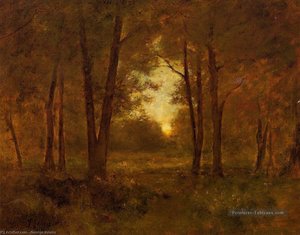


Henry Ward Ranger
Connecticut Woods
() ·
With its frame: · Hand-painted in oil on linen
Total