


 Podgląd w skali 1:1
 Wyślij jako kartkę
 Udostępnij
 Szczegóły dzieła
 Przewodnik

 Pobierz obraz
 Podobne obiekty
 RTG
RTG Pokaz slajdów
 Statystyki
Huwa
 Painting
- African Modernism
 2000
2000- Contemporary
 50.0 x 51.0 cm
 The Ramzi and Saeda Dalloul Art Foundation
A vibrant explosion of geometric rings and spiral patterns defines this captivating piece by Sudanese master Ibrahim El-Salahi, inviting you to explore the profound beauty of African Modernism for your collection.
 Rozwiń treść
Explore the captivating art of Ibrahim El-Salahi, a Sudanese master of African Modernism & Hurufiyya. His paintings blend Islamic calligraphy, abstract forms, and cultural motifs. Discover his unique visual language!
Dzieło sztuki prezentowane na tej stronie podlega ochronie prawem autorskim, co oznacza, że nie mamy prawa do tworzenia ani sprzedaży jego identycznej reprodukcji. Ochrona ta jest egzekwowana na mocy umów międzynarodowych, takich jak Konwencja berneńska oraz przez przepisy prawa krajowego, w tym te określone w Prawo autorskie USA – Tytuł 17.
Jako pełną szacunku i legalną alternatywę oferujemy personalizowane, malowane ręcznie dzieła sztuki inspirowane oryginałem. Nasi wykwalifikowani i profesjonalni artyści starannie analizują styl, nastrój oraz artystyczną esencję pierwowzoru, aby stworzyć nowe, unikalne dzieło, które przywołuje te same emocje – pozostając jednocześnie w pełni oryginalną kreacją.
Metoda ta jest w pełni zgodna z przepisami prawa autorskiego, ponieważ nie polega na kopiowaniu ani powielaniu chronionego dzieła. Stanowi ona kreatywną reinterpretację – nowy obraz, który czerpie inspirację z oryginału, ale nie jest z nim tożsamy.
Ręcznie malowana reprodukcja olejowa
Ręcznie malowany obraz olejny na płótnie, wykonany na zamówienie przez naszych artystów w wybranym przez Ciebie wymiarze i oprawie. ( Przełącz na wydania drukowane Przejdź do wersji cyfrowej)




































Standardowy format
personalizowane
CM
INCH
Wybierz spośród naszych standardowych rozmiarów, które zachowują oryginalne proporcje dzieła sztuki.
Loading sizes...

szerokość
wysokość
Wpisz wymaganą szerokość i wysokość, aby obraz pasował do Twojej ramy lub ściany. Ponieważ jest to dzieło malowane ręcznie, w przypadku rozmiaru o innych proporcjach artysta może domalować nieco więcej wokół obrazu lub przyciąć jego fragmenty — wybór należy do Ciebie. Przed rozpoczęciem pracy prześlemy Ci cyfrową wizualizację do zatwierdzenia. Obraz widoczny na tej stronie nie przedstawia rzeczywistego efektu — jedynie wizualizacja oddaje realny rezultat.
Przykłady możliwych zmian: Zamień twarz na zdjęcie klienta; Dodaj zwierzę domowe (np. zamień kota na psa); Ukryj wiadomość w tle; Zmień krajobraz lub elementy tła.
Po złożeniu zamówienia zespół TopImpressionists.com skontaktuje się z klientem drogą mailową w celu uzyskania instrukcji i prześle wizualizację projektu
Po złożeniu zamówienia zespół TopImpressionists.com skontaktuje się z klientem drogą mailową w celu uzyskania instrukcji i prześle wizualizację projektu
Dostawa na całym świecie () w ciągu 3–4 tygodni zamiast standardowych 5 tygodni. (28 Październik). Bez kompromisów w kwestii jakości.

Bezpłatna ekspresowa wysyłka na cały świat

Wysokiej jakości płótno lniane

Pełne ubezpieczenie przesyłki

Gwarancja zwrotu należności celnych i podatków importowych

Gwarancja wiernego odwzorowania kolorów

100-dniowa polityka zwrotów (tylko w przypadku wad)

Gwarancja 100% zwrotu pieniędzy

Zniżka przy zakupie wielu sztuk
 Opcja ze szkłem jest dostępna wyłącznie w rozmiarach poniżej 110 cm

Huwa
Technika reprodukcji
Wymiary reprodukcji
-


Cena całkowita
zł 1034
A Celestial Dance of Form and Color
In the mesmerizing painting Huwa, created in the year 2000, the legendary Sudanese master Ibrahim El-Salahi invites us into a cosmic playground where geometry meets spirituality. At first glance, the eye is immediately drawn to the radiant yellow core, a sun-like epicenter that radiates warmth and vitality. This luminous center is encased within a rhythmic sequence of blue and red rings, creating a visual pulse that feels both ancient and avant-garde. The presence of a delicate spiral pattern within the central orb suggests an infinite unfolding, much like the expansion of the universe itself or the cyclical nature of life. Small, orbiting circles nestled in the upper periphery add a sense of celestial movement, as if we are witnessing a planetary alignment captured in a single, breathless moment of stillness.
The Legacy of African Modernism and Hurufiyya
To truly appreciate Huwa, one must understand the profound historical weight carried by Ibrahim El-Salahi. As a pioneer of the Khartoum School, El-Salahi stands as a titan of African Modernism and the Hurufiyya movement. His work is not merely abstract; it is a sophisticated dialogue between Islamic calligraphic traditions and the bold experimentation of Western abstraction. While the painting lacks explicit lettering, its very essence embodies the spirit of calligraphy—the flow, the weight of the line, and the sacred geometry found in Arabic script. By stripping away literal text, El-Salahi allows the rhythm of the letters to manifest through color and shape, creating a universal language that transcends borders and speaks directly to the soul.
A Masterpiece for the Discerning Collector
For the interior designer or the passionate art collector, Huwa offers an unparalleled opportunity to introduce a piece of profound cultural significance into a curated space. The striking contrast between the primary hues—the fiery red, the deep blue, and the brilliant yellow—provides a powerful focal point that can anchor a room, whether in a minimalist contemporary gallery or a richly textured, classical study. The painting’s 50 x 51 cm scale makes it an intimate yet commanding presence, perfect for creating a conversation piece that stimulates thought and emotion. Owning a high-quality reproduction of this work is more than an aesthetic choice; it is an invitation to live alongside a fragment of Sudan's rich artistic heritage and the enduring legacy of a master who redefined the boundaries of modern art.
Pytania i odpowiedzi
Gdzie mogę pobrać „Huwa” – Ibrahim El-Salahi?
Możliwość pobrania dzieła „Huwa”: strona Pobierz plik cyfrowy oferuje wysokiej rozdzielczości cyfrowe zdjęcie do pobrania.
Do jakiego pomieszczenia, biorąc pod uwagę kolorystykę, polecane jest dzieło „Huwa” – Ibrahim El-Salahi?
Biorąc pod uwagę jego Neutrals kolorystykę, dzieło "Huwa" idealnie pasuje do Children's Room.
Czy obraz „Huwa” – Ibrahim El-Salahi można swobodnie reprodukować?
Jeśli chodzi o prawa autorskie, "Huwa" znajduje się w nadal objęte ochroną prawa autorskiego.
Biografia artysty
The Visionary of the Khartoum School
Born in the historic city of Omdurman, Sudan, on September 5, 1930, Ibrahim El-Salahi stands as a monumental figure in the landscape of global modernism. His life and work represent a profound intersection of cultural heritage and avant-garde experimentation. As a central pillar of the Khartoum School, El-Salahi did not merely paint; he orchestrated a visual dialogue between the ancient rhythms of Islamic calligraphy and the radical abstractions of the twentieth century. His journey is one of deep intellectual synthesis, where the boundaries between the personal, the political, and the spiritual dissolve into a singular, flowing aesthetic.
El-Salahi’s early years were marked by an expansive curiosity that transcended borders. While his roots remained firmly planted in Sudanese soil, his artistic consciousness was shaped by a globalized perspective. During the 1950s, he began to absorb the transformative energies of various international movements, finding echoes of Pablo Picasso and Edgar Degas within his own developing language. This period of exploration was further enriched by his professional life as a public servant and diplomat. Traveling through diverse landscapes allowed him to witness the pulse of different cultures, an experience that would later manifest in his work as a sophisticated layering of motifs, textures, and symbols.
The Language of Hurufiyya and Abstraction
At the heart of El-Salahi’s contribution to art history is his mastery of the Hurufiyya movement. This revolutionary approach sought to reclaim the Arabic alphabet, not merely as a tool for literacy, but as a fundamental element of abstract composition. By deconstructing calligraphic forms, he moved beyond literal meaning to explore the raw, rhythmic power of the letterform itself. His canvases became battlegrounds of beautiful tension, where geometric precision met organic fluidity. This technique allowed him to participate in the broader African Modernism movement while maintaining a distinctively Pan-Arabic identity.
His stylistic evolution is characterized by a breathtaking use of bold colors and intricate, layered compositions. In his later works, one can observe a fascinating interplay of influences, where the structural lessons of Cubism meet a more meditative, almost spiritual abstraction. The artist possesses a unique ability to weave together disparate elements—traditional Sudanese motifs, cosmic symbols, and contemporary abstract shapes—into a cohesive visual tapestry. This synthesis creates a sense of "eternal time," where the past and the present exist simultaneously within the frame of a single painting.
Legacy and Global Recognition
The significance of Ibrahim El-Salahi’s oeuvre extends far beyond the borders of Sudan, reaching the most prestigious institutions in the world. His work has been celebrated in galleries and museums such as the Tate Modern and the Today Art Museum, cementing his status as one of the most important contemporary African artists of his generation. His ability to navigate the complexities of identity—balancing the local with the universal—has made him a vital voice in the discourse of post-colonial art.
Throughout his storied career, El-Salahi has achieved several milestones that define his enduring impact:
- Pioneering African Modernism: He played a decisive role in establishing a modern visual identity for Sudan and the wider continent.
- Mastery of Calligraphic Abstraction: His refinement of the Hurufiyya style provided a blueprint for integrating traditional script into contemporary fine art.
- Cultural Diplomacy through Art: Through his unique aesthetic, he bridged the gap between Islamic traditions and Western modernist movements.
- Global Artistic Influence: His works continue to inspire new generations of artists exploring the intersection of heritage and abstraction.
Today, the legacy of Ibrahim El-Salahi lives on through the profound emotional resonance of his paintings. Whether through the haunting beauty of "Deer in a Hat" or his more recent, complex abstractions, his work remains a testament to the power of art to transcend language, culture, and time.

Ibrahim El-Salahi
1930 - , Sudan
Krótka nota
- Full Name: Ibrahim El-Salahi
- Nationality: Sudanese
- Date Of Birth: 1930
- Place Of Birth: Omdurman, Sudan
- Notable Artworks: ['Deer in a hat']
- Artistic Movement Or Style: African Modernism, Hurufiyya movement
- Artists Who Influenced This Artist:
- Edgar Degas
- Pablo Picasso
Powiązane artykuły
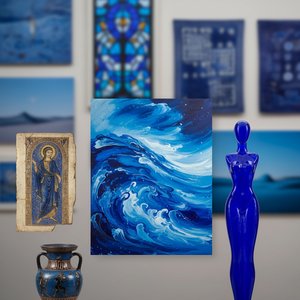
Błękit w Sztuce: Symbolika, Historia i Psychologiczne Oddziaływanie Koloru
Odkryj fascynującą historię błękitu w sztuce! Poznaj symbolikę, psychologię i wpływ tego koloru na arcydzieła renesansu i współczesne trendy. Ekspercka analiza dla miłośników sztuki.

Geometria Sztuki: 10 Arcydzieł Abstrakcji Geometrycznej | TopImpressionists.com
Odkryj 10 arcydzieł abstrakcji geometrycznej! Poznaj historię Mondriana, Kandinskiego i Maleвича. Inspiracje wnętrzarskie z malarstwem abstrakcyjnym – reprodukcje najwyższej jakości na TopImpressionists.com. Eksploruj kolekcję online!

25 Arcydzieł Kandinskiego: Kolor, Duchowość i Abstrakcja w Twoim Domu | TopImpressionists.com
Odkryj 25 arcydzieł Wassily Kandinskiego – pioniera abstrakcji i ekspresjonizmu! Poznaj historie, techniki i emocje kryjące się za jego kolorowymi kompozycjami. Reprodukcje obrazów najwyższej jakości na TopImpressionists.com. Eksploruj pełną kolekcję online!
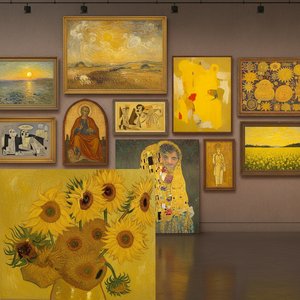
Top 10 Arcydzieł w Odcieniach Chromowej Żółci – Inspiracje do Wnętrz od TopImpressionists
Odkryj 10 arcydzieł sztuki, w których króluje chromowa żółć! Van Gogh, Monet, Renoir i inni mistrzowie. Inspiracje wnętrzarskie i reprodukcje obrazów najwyższej jakości na TopImpressionists.com. Eksploruj pełną kolekcję online!

Top 10 Sławnych Obrazów w Odcieniach Szaroniebieskiego – Inspiracje dla Wnętrz | TopImpressionists.com
Odkryj 10 najsłynniejszych obrazów w odcieniach szaroniebieskiego! Poznaj historie Claude Moneta, Degasa i Van Gogha. Inspiracje wnętrzarskie i reprodukcje najwyższej jakości na TopImpressionists.com – sztuka dla Twojego domu.