


 Zobacz w skali 1:1
 Wyślij
 Udostępnij
 Szczegóły
 Przewodnik

 Pobierz plik obrazu
 Podobne obiekty
 RTG
RTG Pokaz slajdów
 Statystyki
Walton Reach
 Oil On Panel
- Romanticism
 1805
1805- 19th Century
 73.0 x 36.0 cm
 Tate Britain
Explore J.M.W. Turner's evocative depiction of Walton Reach (1805), capturing the atmospheric beauty and tranquility of the Thames River during Romanticism. Discover details about composition, color palette, technique & more.
 Czytaj więcej
"PolishMetaDescription": "J.M.W. Turner – brytyjski malarz romantyczny, znany z ekspresyjnych krajobrazów i mistrzowskiego oddawania światła. Jego dzieła, takie jak 'Zachód słońca', wpłynęły na rozwój impresjonizmu i wciąż fascynują widzów."
Ręcznie malowana reprodukcja olejowa
Ręcznie malowany obraz olejny na płótnie, wykonany na zamówienie przez naszych artystów w wybranym przez Ciebie wymiarze i oprawie. ( Przełącz na wersję drukowaną Przełącz na wersję cyfrową)




P118B zł10

P118H zł10

P118W zł10

P438Z zł10

P508JH zł12

P508YH zł12

P805H zł10

P805Z zł10

P919BZ zł10

P919G zł10

P919XJ zł10

P959ZH zł10

P968JZ zł12

W106C zł8

W218G zł10

W218JH zł8

W218Y zł10

W307PJ zł10

W316G zł10

W316PJ zł8

W316Y zł10

W398PJ zł8

W4111J zł10

W500HY zł15

W500JH zł15

W692G zł12

W849H zł8

W940BG zł15

W953PJ zł8




Standardowy
na zamówienie
CM
INCH
Wybierz spośród naszych standardowych rozmiarów, które zachowują oryginalne proporcje dzieła sztuki.
Loading sizes...

szerokość
wysokość
Wpisz wymaganą szerokość i wysokość, aby obraz pasował do Twojej ramy lub ściany. Ponieważ jest to dzieło malowane ręcznie, w przypadku rozmiaru o innym proporcji artysta może domalować nieco więcej wokół obrazu lub przyciąć fragmenty — wybór należy do Ciebie. Przed rozpoczęciem pracy prześlemy Ci cyfrową wizualizację do zatwierdzenia. Obraz widoczny na tej stronie nie przedstawia rzeczywistego efektu — jedynie wizualizacja oddaje realny rezultat.
Przykłady możliwych zmian: Zamień twarz na zdjęcie klienta; Dodaj zwierzę domowe (np. zamień kota na psa); Ukryj wiadomość w tle; Zmień krajobraz lub elementy tła.
Po złożeniu zamówienia zespół TopImpressionists.com skontaktuje się z klientem drogą mailową w celu uzyskania instrukcji i prześle wizualizację projektu
Po złożeniu zamówienia zespół TopImpressionists.com skontaktuje się z klientem drogą mailową w celu uzyskania instrukcji i prześle wizualizację projektu
Dostawa na całym świecie () w ciągu 3–4 tygodni zamiast standardowych 5 tygodni. (23 Październik). Bez kompromisów w kwestii jakości.

Bezpłatna ekspresowa wysyłka na cały świat

Wysokiej jakości płótno lniane

Pełne ubezpieczenie transportowe

Gwarancja zwrotu należności celnych i podatków importowych

Gwarancja idealnego odwzorowania barw

100-dniowy okres na zwrot dzieła w przypadku wykrycia wad produkcyjnych

Gwarancja 100% zwrotu pieniędzy

Oferta przy zakupie wielu sztuk
 Opcja ze szkłem jest dostępna wyłącznie w rozmiarach poniżej 110 cm

Walton Reach
Technika wykonania
Rozmiar reprodukcji
-


Suma do zapłaty
zł 1036
The Luminous Embrace of Nature: Walton Reach
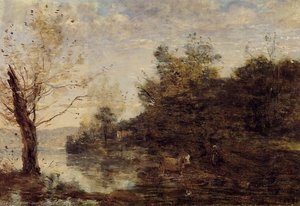
To gaze upon J.M.W. Turner's "Walton Reach" is to step directly into the breath of early nineteenth-century England, where the sublime power of nature met the burgeoning spirit of artistic freedom. This 1805 masterpiece captures more than just a river view; it encapsulates a moment suspended in time—a quiet communion between man and the vast, indifferent beauty of the landscape. Turner, ever the devoted student of light, has rendered this scene not with rigid lines, but with an almost palpable atmosphere, inviting the viewer to breathe in the damp air and hear the gentle lapping of water against the unseen bank.
A Study in Atmospheric Light and Color
The composition itself is a masterful exercise in horizontal expanse. The river dominates the foreground, its surface acting as a liquid mirror that catches the muted tones of the sky above. Notice how Turner eschews sharp definition; instead, the foliage along the banks dissolves into masses of color—earthy browns mingling with soft blues and hazy greens. This technique, characteristic of his developing plein air style, blurs the hard edges of reality, suggesting rather than stating. The palette is wonderfully restrained, dominated by those beautiful, muted tones that speak of an overcast yet luminous day. It is a visual poem written in oils, where the interplay between the cool greys of the sky and the warm ochres of the distant trees creates a profound sense of depth.
Technique: The Spontaneity of the Brushstroke
What elevates this piece beyond mere topographical record is Turner's revolutionary handling of paint. Working in oils, perhaps even on wood panel as suggested by its intimate scale, his technique is wonderfully loose and spontaneous. One can almost trace the energy of his hand—the visible brushstrokes layering color upon color to build up texture, particularly where the clouds billow or the distant trees cluster. This immediacy speaks volumes; it suggests that the artist was not merely painting from a sketch, but rather capturing the fleeting, ephemeral quality of light as it struck the water at that very moment. It is art born of direct observation and passionate execution.
Symbolism and Emotional Resonance
For the collector or admirer seeking more than just decoration, "Walton Reach" offers a deep emotional anchor. The subject matter—a tranquil river scene—has long symbolized passage, continuity, and the relentless flow of life itself. Yet, Turner imbues this tranquility with a sense of contemplation. There is an underlying feeling of sublime peace here; nature’s grandeur dwarfs human concerns, prompting a quiet moment of introspection. It speaks to the Romantic yearning for escape, for a place where the noise of civilization fades into the soft murmur of water and wind.
Bringing the Vista Home
Reproducing this work allows one to bring this specific quality of diffused light and pastoral serenity into any interior space. Whether placed above a console table or nestled within a gallery setting, its muted yet rich color story complements both traditional elegance and modern minimalism alike. It is an artwork that does not shout for attention but rather invites the viewer to pause, to breathe deeply, and to feel the quiet majesty of a river scene captured at its most perfect, fleeting moment.
Pytania i odpowiedzi
Jaki nastrój wprowadzi Walton Reach do wnętrza?
„Walton Reach” autorstwa J.M.W. Turner ma Calm atmosferę i jest polecane do Living Room. Nastrój to to, co dzieło wnosi do otaczającej je przestrzeni.
Jakiej techniki użyto do wykonania „Walton Reach” autorstwa J.M.W. Turner?
„Walton Reach” wykonano w technice Oil On Panel.
Gdzie zaleca się eksponować format Panoramic dzieła „Walton Reach”?
Dzięki formatowi Panoramic, reprodukcja dzieła „Walton Reach” idealnie sprawdzi się w Living Room.
Podobne dzieła


Biografia artysty
A Life Painted in Light: The World of J.M.W. Turner
Joseph Mallord William Turner, known to the world as J.M.W. Turner, was more than just a painter; he was a visionary who redefined landscape art and paved the way for modern abstraction. Born in Maiden Lane, Covent Garden, London, in 1775, his beginnings were humble – the son of a barber and wig maker. Yet, even as a child, a remarkable talent blossomed within him. By age fourteen, he was enrolled at the Royal Academy, exhibiting his first work just a year later. This early promise wasn’t merely technical skill; it hinted at an innate understanding of light, color, and atmosphere that would become the hallmarks of his extraordinary career. He supplemented his artistic education with practical experience as an architectural draftsman, honing his perspective and compositional abilities – skills that would prove invaluable in rendering both detailed topographical views and vast, emotive landscapes. Turner’s early life was marked by a dedication to his craft, fueled by a natural aptitude and a relentless pursuit of artistic excellence.The Romantic Tempest: Style and Influences
Turner emerged during the height of the Romantic era, but he wasn't simply a follower of its conventions. He absorbed influences from various sources – the Dutch masters like Claude Lorrain and Aelbert Cuyp for their luminous landscapes, and artists such as Richard Wilson for his poetic approach to nature. However, Turner didn’t merely imitate; he synthesized these influences into something entirely new. His work is characterized by an expressive use of color, often employing bold contrasts and vibrant hues to convey emotion and atmosphere. He was fascinated by the power and drama of nature – turbulent seascapes, fiery sunsets, and swirling storms became recurring motifs in his paintings. He wasn’t interested in simply depicting what he saw; he sought to capture the *feeling* of a place, the sublime awe inspired by the natural world. This pursuit led him to experiment with increasingly loose brushwork, dissolving forms into washes of color and light – techniques that would anticipate the Impressionist movement decades later. From 1840, his work gained significant recognition thanks to the championing of John Ruskin, who elevated landscape painting to a new level of critical acclaim.A Prolific Legacy: The Scope of Turner’s Output
The sheer volume of Turner's artistic output is astonishing. He created over 550 oil paintings, nearly 2,000 watercolors, and an astounding 30,000 works on paper. This prolificacy wasn’t simply a matter of quantity; it reflected his tireless exploration of different subjects, techniques, and styles. His paintings range from detailed topographical views of British landscapes to dramatic historical scenes and evocative maritime paintings. He was equally adept at capturing the tranquility of a pastoral scene and the terrifying power of a raging storm. Works like “Fort Vimieux” exemplify his mastery of depicting atmospheric effects – the swirling clouds, the crashing waves, and the intense light all contribute to a sense of drama and sublime beauty. Similarly, "Scene in the Campagna" showcases his ability to capture the warmth and serenity of the Italian countryside with delicate brushwork and luminous colors. Beyond painting, Turner was also a skilled printmaker, further disseminating his artistic vision through engravings and lithographs.Eccentricity and Remembrance: The Man Behind the Masterpieces
Turner’s personal life was as complex and enigmatic as his art. He remained intensely private and reclusive, often shunning social gatherings and preferring the solitude of his studio or the open road. He fathered two daughters, Evelina and Georgiana, with Sarah Danby, the wife of a fellow artist, but maintained a distant relationship with them. His later years were marked by increasing eccentricity and declining health. After his father’s death in 1829, he became increasingly morose and withdrawn, living in squalor and neglecting his appearance. He adopted the pseudonym “Mr. Booth” to avoid recognition and even rowed his boat into the Thames during a census to remain untraceable. Despite his eccentricities, or perhaps because of them, Turner remains one of Britain’s most beloved artists. His final years were spent in Chelsea where he passed away on December 19, 1851, at the age of 76. In a fitting tribute to his enduring legacy, he is buried in St Paul's Cathedral, alongside other British luminaries – a testament to his profound impact on art and culture. His work continues to inspire artists and captivate audiences worldwide, ensuring that the light of J.M.W. Turner will continue to shine for generations to come.Major Achievements
Turner’s legacy rests upon several key achievements:- Pioneering Atmospheric Effects: He mastered the depiction of light and atmosphere in a way no other artist had before, creating paintings that seem to shimmer with an inner life.
- Bridging Romanticism and Modernity: His loose brushwork, expressive color palette, and focus on subjective experience foreshadowed the Impressionist movement.
- Diverse Subject Matter: From grand historical scenes to intimate landscapes, Turner’s work encompasses a vast range of subjects and styles.
- Influence on Subsequent Artists: He inspired generations of artists with his innovative techniques and bold vision.
Historical Significance
J.M.W. Turner's paintings are not merely beautiful works of art; they are windows into the 19th century, offering insights into British society, culture, and the changing relationship between humanity and nature. His work reflects the Romantic ideals of individualism, emotion, and the sublime—values that shaped the era’s artistic and intellectual landscape. His paintings continue to be studied and admired for their technical brilliance, emotional depth, and enduring power.
J.M.W. Turner
1775 - 1851 , Wielka Brytania
Najważniejsze informacje
- Artistic Movement Or Style: Romanticizm
- Artists Or Movements Influenced By This Artist:
- Impressionizm
- Sztuka abstrakcyjna
- Artists Who Influenced This Artist:
- John Robert Cozens
- Richard Wilson
- Date Of Birth: 23 kwietnia 1775
- Date Of Death: 19 grudnia 1851
- Full Name: Joseph Mallord William Turner
- Nationality: Wielkobrytanski
- Notable Artworks:
- Fort Vimieux
- Scena w Campagnie
- Place Of Birth: Londyn, Wielka Brytania
Zobacz także powiązane artykuły

Capturing the Soul: The Emotional Magic and Sublime Grandeur of Romantic Landscape Painting
Explore the profound emotional depth of Romantic landscape painting. Discover how masters like Friedrich and Turner captured the sublime through light, shadow, and nature's power in this expert art history retrospective for discerning collectors.

Capturing the Light: A Journey Through the Soul of American Impressionism and the Hudson River School
Explore the luminous beauty of American Impressionism and the Hudson River School. Discover a curated journey through light, landscape, and history, celebrating the enduring legacy of masters through exquisite, hand-painted oil reproductions for the discerning art lover.

The Soul of Impressionism: Why Oil on Canvas Captures Eternal Light and Timeless Emotion
Discover the enchanting alchemy of Impressionism. Explore how the mastery of oil on canvas, through glazing and impasto, captures eternal light and emotion. Perfect for lovers of Monet and Van Gogh seeking the profound depth of hand-painted fine art.

Capturing Emotion: A Journey Through the Soul of Expressionist Landscapes
Explore the profound emotional depth of Expressionist landscapes. Discover how Post-Impressionist masters moved beyond light to capture the soul through vibrant color and form. A curated journey for true art lovers seeking the beauty of expressive mastery.