

Przedstawiony: · Wraz z ramą:
 Podgląd w skali 1:1
 Wyślij jako kartkę
 Udostępnij
 Szczegóły dzieła
 Przewodnik

 Pobierz obraz
 Podobne obiekty
 RTG
RTG Pokaz slajdów
 Pytania i odpowiedzi
 Statystyki


zł 1045
Ręcznie malowana reprodukcja olejowa
Ręcznie malowany obraz olejny na płótnie, wykonany na zamówienie przez naszych artystów w wybranym przez Ciebie wymiarze i oprawie. ( Przełącz na wydania drukowane Przejdź do wersji cyfrowej)
Wymiar
·Standardowy format
personalizowane
CM
INCH
Wybierz spośród naszych standardowych rozmiarów, które zachowują oryginalne proporcje dzieła sztuki.
Ładowanie rozmiarów...

szerokość
wysokość
Wpisz wymaganą szerokość i wysokość, aby obraz pasował do Twojej ramy lub ściany. Ponieważ jest to dzieło malowane ręcznie, w przypadku rozmiaru o innych proporcjach artysta może domalować nieco więcej wokół obrazu lub przyciąć jego fragmenty — wybór należy do Ciebie. Przed rozpoczęciem pracy prześlemy Ci cyfrową wizualizację do zatwierdzenia. Obraz widoczny na tej stronie nie przedstawia rzeczywistego efektu — jedynie wizualizacja oddaje realny rezultat.
 Dowiedz się więcej
Wykończenie
·
Białe krawędzie zł1

rozmyte krawędzie zł1

Przedłużony zł1

P118B zł10

P118H zł10

P118W zł10

P438Z zł10

P508JH zł12

P508YH zł12

P805H zł10

P805Z zł10

P919BZ zł10

P919G zł10

P919XJ zł10

P959ZH zł10

P968JZ zł12

W106C zł8

W218G zł10

W218JH zł8

W218Y zł10

W307PJ zł10

W316G zł10

W316PJ zł8

W316Y zł10

W398PJ zł8

W4111J zł10

W500HY zł15

W500JH zł15

W692G zł12

W849H zł8

W940BG zł15

W953PJ zł8

H24-GOLD zł30

H24-SILVER zł30

H36-GOLD zł45

H36-SILVER zł45
Dostarczane w ochronnej tubie, gotowe do oprawienia przez Twojego ramiarza.
Dodatki
opcjonalneCo obejmują dodatki?
Przykłady możliwych zmian: Zastąpienie twarzy zdjęciem klienta; Dodanie zwierzęcia (np. zamiana kota na psa); Ukrycie wiadomości w tle; Zmiana krajobrazu lub elementów tła.
Po złożeniu zamówienia zespół TopImpressionists.com skontaktuje się z klientem drogą mailową w celu uzyskania instrukcji i prześle podgląd projektu
Po złożeniu zamówienia zespół TopImpressionists.com skontaktuje się z klientem drogą mailową w celu uzyskania instrukcji i prześle podgląd projektu
Dostawa na całym świecie () w ciągu 3–4 tygodni zamiast standardowych 5 tygodni. (4 Listopad). Bez kompromisów w kwestii jakości.
Lakier ochronny
Etykieta obiektu
Szczegóły grawerowanej brązowej tabliczki
This elegant plaque features the artist's name and the title of the artwork, finely engraved for a timeless presentation.
It is made from bronze with a refined, elegant finish. The text is precisely laser-engraved for a sharp and permanent result. Measuring 9x2 cm, the plaque is compact yet easy to read. It's built to be durable and scratch-resistant, offering a professional, museum-quality look. Mounting is simple thanks to the included adhesive backing.
Szczegóły przezroczystej tabliczki akrylowej
The plaque includes essential engraved details such as the artist's name, the title of the artwork, the date it was created, the type of media used-like oil on canvas or watercolor-a brief description of the piece, and a QR code that links to the complete artwork information.
It is crafted from clear acrylic, offering a sleek, modern appearance. The text is UV-engraved in black to ensure strong visual contrast. With a size of 10x15 cm, it ensures optimal readability. It comes equipped with two metal hooks for secure wall mounting. The plaque is designed to be weather-resistant, making it suitable for various environments, and it includes interactive features that work seamlessly with smartphone scanning.
Szczegóły czarnej tabliczki akrylowej
This elegant plaque includes engraved information such as the artist's name, the title of the artwork, the date it was created, the type of media used (like oil on canvas or watercolor), a short description of the artwork, and a QR code for quick access to more information.
The plaque itself is made from refined black acrylic with a premium finish. The text is laser-engraved in white for high contrast and readability. Its size is 10x15 cm, designed to be easy to read. It comes with two metal hooks for professional mounting. The design is sleek and fits any interior style. It is also weather-resistant and durable, with built-in digital integration for mobile compatibility.
Opcja ze szkłem jest dostępna wyłącznie w rozmiarach poniżej 110 cm
 Opcja ze szkłem jest dostępna wyłącznie w rozmiarach poniżej 110 cm
- Bezpłatna ekspresowa wysyłka na cały świat
- Wysokiej jakości płótno lniane
- Pełne ubezpieczenie przesyłki
- Gwarancja zwrotu należności celnych i podatków importowych
- Gwarancja wiernego odwzorowania kolorów
- 100-dniowa polityka zwrotów (tylko w przypadku wad)
- Gwarancja 100% zwrotu pieniędzy
- Zniżka przy zakupie wielu sztuk


Opis obiektu
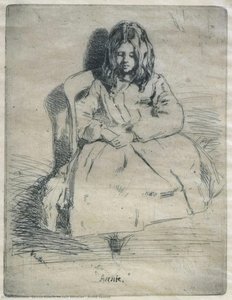
A delicate monochrome study of quiet introspection, this 1859 graphite drawing by James Abbott McNeill Whistler captures the essence of Aestheticism and invites you to experience its serene, atmospheric beauty.
Biografia artysty
James Whistler – pionier estetyzmu i tonalizmu. Jego obrazy, takie jak "Matka Whistlera", eksplorują harmonię barw i światło. Art dla sztuki! #Whistler #sztuka #estetyzm
O obrazie
A Symphony in Gray: The Intimate World of Annie Seated
In the quietude of James Abbott McNeill Whistler’s 1859 masterpiece, “Annie Seated,” we encounter a moment suspended in time, far removed from the clamor of the industrial age. This delicate work is not merely a portrait of a young woman; it is a profound meditation on atmosphere and the beauty of restraint. Through a masterful command of monochrome tones, Whistler invites us into a private sanctuary where the boundaries between subject and space begin to dissolve. The figure, likely Annie Harriet Haden, sits with a poised yet vulnerable grace, her presence anchored by the simple geometry of a wooden chair against a neutral, receding wall. There is an undeniable intimacy in this composition, a sense that we are witnessing a fleeting, silent breath captured forever in graphite and ink.
The technical brilliance of this piece lies in its subtle complexity. Utilizing the meticulous technique of drypoint etching with pencil, Whistler achieved a textural richness that defies its monochromatic palette. By layering intricate hatching and crosshatching, he built up tonal gradations that mimic the soft grain of paper and the delicate folds of fabric. This approach allows for a play of light that feels diffused and ethereal, as if the scene is viewed through a gentle morning mist. The influence of Japonisme—the mid-19th-century European fascination with Japanese aesthetics—is palpable in the way Whistler prioritizes flat planes of tone and organic, flowing lines over heavy shadows or dramatic perspective. This stylistic choice lends the artwork a modern, almost minimalist elegance that remains strikingly relevant to contemporary tastes.
The Philosophy of Aestheticism and Emotional Resonance
To understand “Annie Seated,” one must understand Whistler’s radical rebellion against the Victorian era's obsession with moralizing art. During a time when paintings were expected to tell didactic stories or convey heavy-handed social messages, Whistler championed the creed of “art for art’s sake.” He believed that the primary purpose of a work was to evoke sensory pleasure and aesthetic harmony through color, form, and composition alone. In this drawing, there is no grand narrative or historical drama; instead, the emotional weight is carried by the subject's downward gaze and the quiet stillness of her posture. This creates a sense of profound introspection and melancholy, making the piece an ideal focal point for spaces designed for contemplation and peace.
For the discerning collector or interior designer, “Annie Seated” offers a timeless versatility. Its neutral, cream-and-gray palette acts as a sophisticated anchor in any room, complementing both classical and modern decor. Whether placed in a sunlit gallery or a moody, dimly lit study, the artwork brings with it an aura of intellectual depth and understated luxury. A high-quality reproduction of this work allows one to possess not just a beautiful image, but a piece of art history—a fragment of the movement that redefined the boundaries of modern beauty and taught us to find magic in the most subtle of shadows.
Pytania i odpowiedzi
Gdzie mogę kupić cyfrową wersję dzieła „Annie Seated” – James McNeill Whistler?
Aby otrzymać plik cyfrowy dzieła „Annie Seated” – James McNeill Whistler, zamów wysokiej rozdzielczości cyfrowe zdjęcie do pobrania na stronie Cyfrowy obraz.
Czy obraz „Annie Seated” – James McNeill Whistler można swobodnie reprodukować?
Jeśli chodzi o prawa autorskie, "Annie Seated" znajduje się w należy do domeny publicznej – autorskie prawa majątkowe wygasły.
Czy dzieło „Annie Seated” – James McNeill Whistler jest jasne czy ciemne?
Postrzegana jasność dzieła „Annie Seated” – James McNeill Whistler wynosi brilliant. Można ją dopasować do oświetlenia w docelowym pomieszczeniu.
Najważniejsze informacje i quiz o sztuce
O James McNeill Whistler

James McNeill Whistler
1834 - 1903, Stany Zjednoczone
Biografia artysty
A Life Shaped by Aestheticism: The World of James Abbott McNeill Whistler
James Abbott McNeill Whistler, born in Lowell, Massachusetts in 1834, was a figure perpetually at odds with convention—a painter who championed “art for art’s sake” during an era obsessed with moralizing narratives. His early life, marked by frequent relocations due to his father's railroad engineering career, instilled within him a sense of adaptability and exposure to diverse environments. A brief, unhappy stint at West Point proved ill-suited to his artistic temperament, followed by work with the U.S. Coast and Geodetic Survey that, while delaying, did not extinguish his burgeoning passion for art. These formative years were characterized by an innate talent for drawing and a resolute desire to forge a path as a professional artist, a pursuit that would ultimately lead him across the Atlantic and into the heart of the European avant-garde. The seeds of Whistler’s artistic rebellion were sown early, nurtured by a spirit that resisted conformity and embraced aesthetic exploration above all else.Parisian Beginnings and the Cultivation of Style
The pivotal moment in Whistler's artistic journey arrived with his move to Paris in 1855. Here, under the tutelage of Sébastien Bouré, he honed his skills in oil painting, watercolor, and printmaking, absorbing the influences of French Realism and the Barbizon School painters. However, Whistler quickly transcended mere imitation, developing a distinctive style characterized by tonal harmonies and atmospheric effects. He wasn’t interested in replicating reality; rather, he sought to capture its *essence*, its fleeting moods and subtle nuances. This period marked a crucial shift from representational accuracy towards an exploration of pure aesthetic form. His early works already hinted at the delicate balance between observation and abstraction that would define his mature style. It was in Paris that Whistler began to articulate his belief that art should be judged solely on its aesthetic qualities, free from didactic or moralizing constraints—a philosophy that would become the cornerstone of his artistic practice and a defining characteristic of the Aesthetic movement. He experimented with color palettes, often favoring muted tones and subtle gradations, creating paintings that prioritized mood and atmosphere over precise detail.Nocturnes, Portraits, and the Pursuit of Harmony
Whistler’s artistic vision crystallized in several key themes and stylistic choices. He championed the concept of “art for art’s sake,” rejecting narratives laden with moral or social commentary. His work became an exercise in capturing subtle nuances of light, color, and atmosphere—a pursuit that led to his iconic *Nocturnes*. These atmospheric paintings of twilight scenes, often depicting the Thames River at night, were not intended as literal depictions but rather as evocative impressions, studies in tonal harmony and mood. He frequently employed limited palettes and delicate brushwork, creating a sense of ethereal beauty and quiet contemplation. Whistler also produced a significant body of portraiture, though he approached them with a unique sensibility. He wasn’t concerned with capturing perfect likenesses; instead, he focused on formal arrangements and tonal relationships, treating his sitters as compositional elements within a carefully constructed aesthetic framework. Works like *Arrangement in Grey and Black No. 1*—better known as *Whistler's Mother*—demonstrate this approach perfectly, transforming a familial portrait into an iconic image of Victorian motherhood through its masterful use of form and tone. The painting’s power lies not in the depiction of a specific woman but in its distillation of maternal dignity and quiet strength.Controversy, Influence, and Lasting Legacy
Whistler’s career was not without controversy. The infamous libel suit brought against him by the critic John Ruskin in 1878, sparked by *Nocturne in Black and Gold – The Falling Rocket*, became a landmark moment in art history. Whistler successfully defended his artistic autonomy, arguing that his paintings were not intended to be realistic representations but rather aesthetic arrangements of color and form. This case elevated his profile and ignited important debates about the nature of art criticism and artistic freedom. Beyond this legal battle, Whistler’s influence extended far and wide. He was deeply inspired by Japanese prints (ukiyo-e), which informed his compositional principles and emphasis on decorative patterns, as well as the tonal mastery of Spanish painters like Velázquez. His advocacy for “art for art’s sake” profoundly impacted the Aesthetic movement in England and America, paving the way for modernism and challenging conventional notions about artistic purpose. He left an indelible mark on American art, inspiring generations of artists to embrace formalist approaches and explore the expressive potential of color and composition. Whistler's work continues to be studied and admired for its innovative use of light, color, and form, solidifying his position as a key figure in the development of modern painting.- Notable Works: *The Forge* (1861), *Portrait of Charles Lang Freer* (1873), *Brown and Gold: The Gold Girl—Connie Gilchrist* (1876-77), *Arrangement in Grey and Black No. 1 (Whistler’s Mother)* (1871), *Nocturne in Black and Gold – The Falling Rocket* (1875).
- Influences: Japanese prints, Velázquez.
A Lasting Impression
James Abbott McNeill Whistler died in London in 1903, leaving behind a body of work that continues to captivate and inspire. His unwavering commitment to artistic principles and his relentless pursuit of aesthetic beauty cemented his place as a pivotal figure in the history of art. His legacy endures not only through his paintings but also through the enduring debate about the very definition of art itself—a conversation that remains relevant today.Krótkie informacje o James McNeill Whistler
- Artistic Movement Or Style: Tonalizm, Estetyzm
- Artists Or Movements Influenced By This Artist:
- Estetyzm
- Modernizm
- Artists Who Influenced This Artist:
- Velázquez
- Japońskie drzeworyty
- Date Of Birth: 10 lip 1834
- Full Name: James Abbott McNeill Whistler
- Nationality: Amerykański
- Notable Artworks:
- Matka Whistlera
- Nocturne
- Uporządkowanie
- Place Of Birth: Lowell, USA
Odkryj dzieła sztuki uporządkowane według tematów, stylów i cech charakterystycznych.


James McNeill Whistler
Annie Seated
() ·
Wraz z ramą: · Ręcznie malowane farbami olejnymi na płótnie lnianym
Suma