Pracownia — Bezpłatna wysyłka na cały świat — Dostawa w 2–6 tygodni
      Zobacz w skali 1:1 Zobacz w AR Kup ręcznie malowany obraz Przełącz na wersję cyfrową Wyślij
      Szczegóły Przewodnik Dodaj do ulubionych Pobierz plik obrazu Podobne obiekty RTG Pokaz slajdów Statystyki

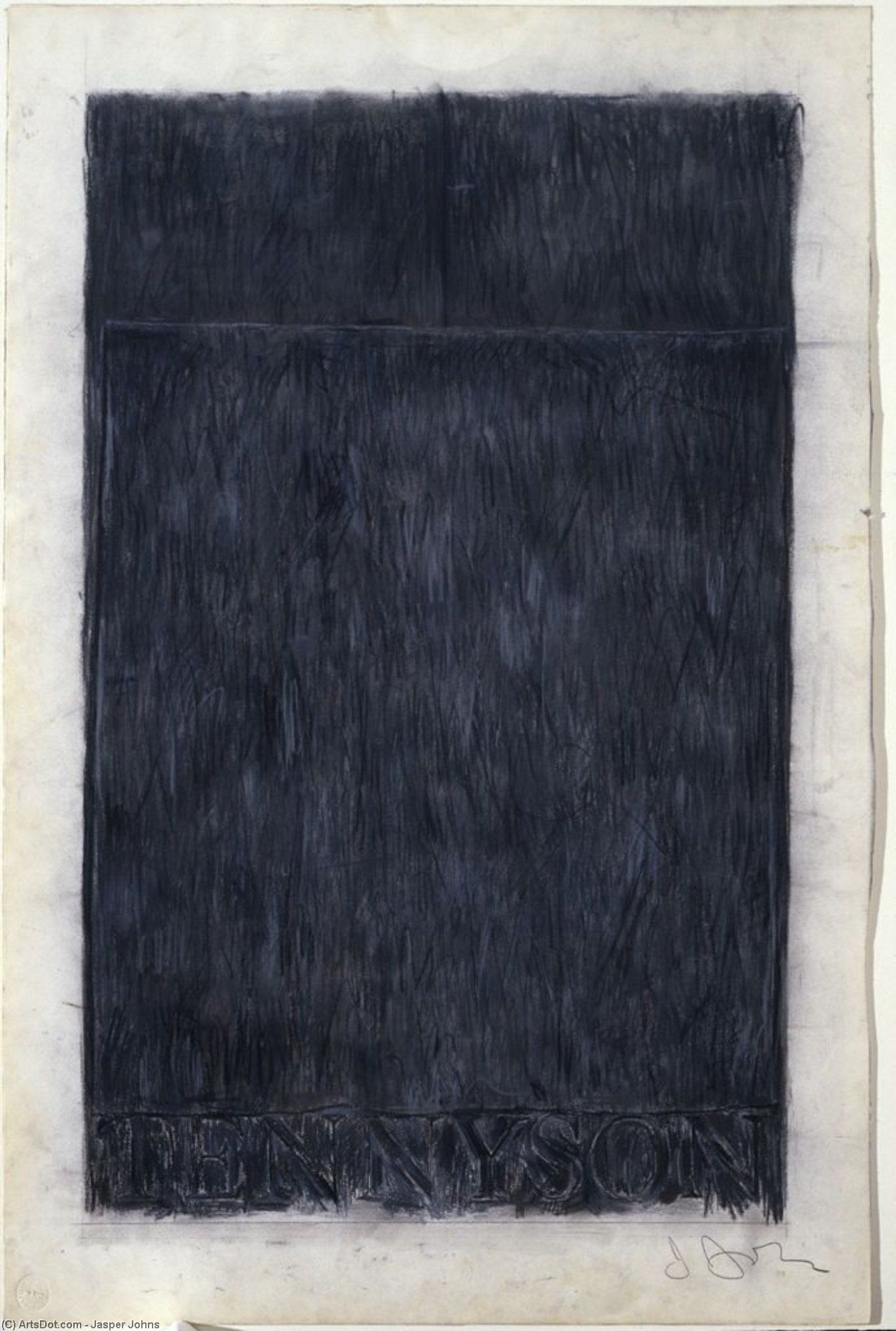
      Tennyson

      Jasper Johns' Tennyson is a haunting black and white painting embodying Abstract Expressionism’s moodiness through an intricate geometric design, reflecting the artist's exploration of identity and American iconography.

      Jasper Johns (1930) – pionier pop-artu i abstrakcjonizmu! Odkryj ikoniczne dzieła, takie jak 'Flaga', mapy i tarcze – redefinicję sztuki współczesnej.

      Dzieło sztuki prezentowane na tej stronie podlega ochronie prawem autorskim, co oznacza, że nie mamy prawa do tworzenia ani sprzedaży jego identycznej reprodukcji. Ochrona ta jest egzekwowana na mocy umów międzynarodowych, takich jak Konwencja berneńska oraz przez przepisy prawa krajowego, w tym te określone w Prawo autorskie USA – Tytuł 17.

      Metoda ta jest w pełni zgodna z przepisami prawa autorskiego, ponieważ nie polega na kopiowaniu ani powielaniu chronionego dzieła. Stanowi ona kreatywną reinterpretację – nowy obraz, który czerpie inspirację z oryginału, ale nie jest z nim tożsamy.

      Giclée / Wydruk artystyczny

      Wydruki giclée lub płótna o jakości muzealnej, szybka realizacja i szeroki wybór opcji wykończenia. ( Kup ręcznie malowany obraz Przełącz na wersję cyfrową)

      Corner sample of the P118B picture frame: moulded polystyrene, 5 cm wide and 3 cm thick
      P118B zł10
      Corner sample of the P118H picture frame: moulded polystyrene, 5 cm wide and 3 cm thick
      P118H zł10
      Corner sample of the P118W picture frame: moulded polystyrene, 5 cm wide and 3 cm thick
      P118W zł10
      Corner sample of the P438Z picture frame: moulded polystyrene, 5.5 cm wide and 3.5 cm thick
      P438Z zł10
      Corner sample of the P508JH picture frame: moulded polystyrene, 7 cm wide and 3.5 cm thick
      P508JH zł12
      Corner sample of the P508YH picture frame: moulded polystyrene, 7 cm wide and 3.5 cm thick
      P508YH zł12
      Corner sample of the P805H picture frame: moulded polystyrene, 5 cm wide and 3.5 cm thick
      P805H zł10
      Corner sample of the P805Z picture frame: moulded polystyrene, 5 cm wide and 3.5 cm thick
      P805Z zł10
      Corner sample of the P919BZ picture frame: moulded polystyrene, 7 cm wide and 3.5 cm thick
      P919BZ zł10
      Corner sample of the P919G picture frame: moulded polystyrene, 7 cm wide and 3.5 cm thick
      P919G zł10
      Corner sample of the P919XJ picture frame: moulded polystyrene, 7 cm wide and 3.5 cm thick
      P919XJ zł10
      Corner sample of the P959ZH picture frame: moulded polystyrene, 5 cm wide and 3 cm thick
      P959ZH zł10
      Corner sample of the P968JZ picture frame: moulded polystyrene, 6 cm wide and 4 cm thick
      P968JZ zł12
      Corner sample of the W106C picture frame: solid wood, 5 cm wide and 3 cm thick
      W106C zł8
      Corner sample of the W218G picture frame: solid wood, 5 cm wide and 3 cm thick
      W218G zł10
      Corner sample of the W218JH picture frame: solid wood, 5 cm wide and 3 cm thick
      W218JH zł8
      Corner sample of the W218Y picture frame: solid wood, 5 cm wide and 3 cm thick
      W218Y zł10
      Corner sample of the W307PJ picture frame: solid wood, 6 cm wide and 3 cm thick
      W307PJ zł10
      Corner sample of the W316G picture frame: solid wood, 6 cm wide and 3 cm thick
      W316G zł10
      Corner sample of the W316PJ picture frame: solid wood, 6 cm wide and 3 cm thick
      W316PJ zł8
      Corner sample of the W316Y picture frame: solid wood, 6 cm wide and 3 cm thick
      W316Y zł10
      Corner sample of the W398PJ picture frame: solid wood, 5 cm wide and 3 cm thick
      W398PJ zł8
      Corner sample of the W4111J picture frame: solid wood, 6.5 cm wide and 3.5 cm thick
      W4111J zł10
      Corner sample of the W500HY picture frame: solid wood, 7 cm wide and 5 cm thick
      W500HY zł15
      Corner sample of the W500JH picture frame: solid wood, 7 cm wide and 5 cm thick
      W500JH zł15
      Corner sample of the W692G picture frame: solid wood, 8 cm wide and 4 cm thick
      W692G zł12
      Corner sample of the W849H picture frame: solid wood, 5 cm wide and 3 cm thick
      W849H zł8
      Corner sample of the W940BG picture frame: solid wood, 7.5 cm wide and 4.5 cm thick
      W940BG zł15
      Corner sample of the W953PJ picture frame: solid wood, 6 cm wide and 3.5 cm thick
      W953PJ zł8

      Standardowy
      na zamówienie
      CM
      INCH

      Wybierz spośród naszych standardowych rozmiarów, które zachowują oryginalne proporcje dzieła sztuki.

      szerokość
      wysokość

      Możesz wprowadzić własne wymiary, aby dopasować dzieło do konkretnej ramy lub przestrzeni. Jeśli wybrany rozmiar nie będzie odpowiadał proporcjom oryginalnego obrazu, przytniecie dzieło lub rozszerzymy obraz za pomocą odbicia lustrzanego lub jednolitego wypełnienia krawędzi. Przed rozpoczęciem produkcji prześlemy cyfrową wizualizację do Twojej akceptacji.
      Prosimy pamiętać, że podgląd na ekranie nie odzwierciedla faktycznego przycinania ani rozszerzania. Tylko wizualizacja dokładnie pokaże końcową kompozycję.
      Mimo dostępności niestandardowych rozmiarów, zalecamy wybór wymiaru z listy zdefiniowanej, aby zachować oryginalne proporcje.

      Dostawa na cały świat () w ciągu 2 tygodni zamiast standardowych 4/5 tygodni. (10 Październik)

      Bezpłatna ekspresowa wysyłka na cały świat
      Wysokiej jakości płótno lniane
      Pełne ubezpieczenie transportowe
      Gwarancja zwrotu należności celnych i podatków importowych
      Gwarancja idealnego odwzorowania barw
      100-dniowy okres na zwrot dzieła w przypadku wykrycia wad produkcyjnych
      Gwarancja 100% zwrotu pieniędzy
      Oferta przy zakupie wielu sztuk

      Cena całkowita

      zł 257

      Tennyson

      Giclée / Wydruk artystyczny

      Rozmiar reprodukcji

      -

      Suma do zapłaty

      zł 257

      Kluczowe informacje

      • Year: 1959
      • Title: Tennyson
      • Notable elements or techniques: Symbolic imagery
      • Subject or theme: Iconography
      • Movement: Abstract Expressionism
      • Artistic style: Geometric abstraction

      Quiz wiedzy o sztuce

      Do każdego pytania dotyczy tylko jedna poprawna odpowiedź.

      Pytanie 1:
      What artistic movement is Jasper Johns' Tennyson painting associated with?
      Pytanie 2:
      In what year was Tennyson created by Jasper Johns?
      Pytanie 3:
      Tennyson utilizes a predominantly ____ background.
      Pytanie 4:
      Jasper Johns' Tennyson is considered an example of Pop Art due to its focus on ____.
      Pytanie 5:
      What technique is most prominently employed in Tennyson?

      A Portrait of Quiet Intensity: The Enigmatic World of Jasper Johns' Tennyson

      In the vast landscape of twentieth-century modernism, few works possess the haunting, meditative quality found in Jasper Johns’ “Tennyson,” completed in 1959. This monumental canvas serves as a profound invitation into a realm where recognizable forms dissolve into evocative suggestion, standing as a pivotal bridge between the raw, emotional energy of Abstract Expressionism and the burgeoning intellectual rigor of Pop Art. Rather than presenting a literal depiction, the painting offers a subtle, atmospheric experience that rewards the patient observer with its deep, layered mysteries.

      The technique employed by Johns in this piece is nothing short of meticulous, utilizing the ancient and demanding medium of encaustic. By mixing pigment with hot wax and layering thin sheets onto the canvas under intense heat, Johns achieved a remarkable textural quality that breathes life into the surface. Subtle ridges and depressions emerge from the dark, charcoal-gray background, creating a tactile landscape that hints at hidden depths beneath the skin of the painting. This deliberate restraint in color and form stands in stark contrast to the sprawling, gestural brushstrokes of his contemporaries like Pollock, favoring instead a sense of precision, control, and profound stillness.

      Symbolism and the Echoes of Memory

      The title of the work serves as a poetic key, referencing Alfred Lord Tennyson’s poignant poem “In Memoriam A Lay of Remembrance.” Through this connection, the painting transcends its abstract appearance to explore themes of grief, loss, and the enduring, often fragmented nature of memory. Johns avoids explicit figures or landscapes, opting instead for a visual language where the dark, somber palette symbolizes sorrow and obscurity. The textured surface of the wax becomes a metaphor for the way impressions linger in the mind—fragmented, layered, and occasionally obscured by the passage of time.

      For the collector or the interior designer, “Tennyson” offers more than mere decoration; it provides an emotional anchor for a space. Its subdued palette and monochromatic depth allow it to integrate seamlessly into sophisticated environments, acting as a focal point for contemplation. The painting does not demand immediate attention through loud colors but rather invites a slow, rhythmic engagement, making it an ideal piece for those seeking to infuse a room with a sense of intellectual depth, resilience, and quiet beauty. It remains a testament to the power of abstraction to convey the most complex human experiences through nothing more than light, shadow, and texture.

      Pytania i odpowiedzi

      Któremu artyście przypisuje się "Tennyson"?

      Dzieło "Tennyson" przypisuje się Jasper Johns.

      Czy mogę obejrzeć podgląd „Tennyson” autorstwa Jasper Johns przed złożeniem zamówienia?

      Podgląd dzieła „Tennyson” autorstwa Jasper Johns jest dostępny na stronie Podgląd danego utworu.

      Jak intensywne są kolory dzieła "Tennyson"?

      Dzieło „Tennyson” autorstwa Jasper Johns zostało utrwalone z nasyceniem na poziomie Muted oraz intensywnością Monochromatic.

      Jaka jest data powstania dzieła „Tennyson” autorstwa Jasper Johns?

      Powstanie „Tennyson” autorstwa Jasper Johns datuje się na 1959.

      Ile lat miał Jasper Johns, gdy powstało dzieło „Tennyson”?

      Jasper Johns stworzył/a "Tennyson" w wieku 29 lat. Artysta urodził/a się w 1930, a datowanie dzieła to 1959.

      Jaki nastrój ma "Tennyson"?

      Ogólny nastrój dzieła „Tennyson” autorstwa Jasper Johns to Elegant. Nastrój ten oddaje ogólną atmosferę pracy.

      W jaki sposób "Tennyson" balansuje światło i cień?

      Zarejestrowane wartości dla „Tennyson” autorstwa Jasper Johns to: jasność balanced, luminancja Gentle Luminance.


      Biografia artysty

      A Life Painted in Symbols: The World of Jasper Johns

      Jasper Johns emerged as a pivotal figure in the landscape of American art, bridging the emotive intensity of Abstract Expressionism with the burgeoning Pop Art movement that would soon redefine artistic boundaries. Born in Augusta, Georgia, in 1930, his early life was marked by a sense of displacement following his parents’ divorce, an experience that perhaps subtly informed his later explorations of identity and belonging within the context of American iconography. His formative years unfolded across various schools before he briefly attended the University of South Carolina, but it wasn't until his move to New York City in 1949 that Johns truly began to forge his artistic path. A period of service during the Korean War further shaped his perspective, exposing him to a world far removed from the burgeoning art scene he was eager to embrace upon his return.

      Breaking with Abstraction: The Dawn of a New Visual Language

      The post-war American art world was dominated by Abstract Expressionism—a style characterized by spontaneous gesture and deeply personal emotional expression. While initially influenced by this movement, Johns felt compelled to move beyond its purely non-representational approach. He sought a new visual language, one that incorporated recognizable imagery not as illustrations but as vehicles for deeper contemplation. This wasn’t simply about *depicting* the world; it was about questioning how we perceive and interpret symbols within it. Key influences guided his departure: Marcel Duchamp's radical readymades challenged conventional notions of art-making, while the emphasis on materiality in Abstract Expressionism informed Johns’ early techniques. However, it was the everyday objects and potent symbols of American culture—flags, targets, maps, numbers—that truly became central to his artistic vocabulary. He wasn’t interested in escaping representation; he wanted to dissect it, layer it with meaning, and ultimately reveal its inherent ambiguities.

      Iconic Images: Flags, Targets, and the Language of Symbols

      Johns' breakthrough works arrived in the mid-1950s, instantly establishing him as a force to be reckoned with. His paintings of flags, most notably *Flag* (1954–55), were not patriotic declarations but rather investigations into the very nature of representation. Rendered in a semi-abstract style, using encaustic—pigment mixed with hot wax—and collage techniques, these flags weren’t simply images; they were textured surfaces laden with symbolic weight. The *Flag* series wasn't about celebrating American nationalism, but rather exploring themes of perception, memory, and the relationship between image and reality. The target series, beginning in 1958, further explored this fascination with recognizable forms, questioning perception and meaning through the seemingly straightforward image of a bullseye. *Map* (1961), with its fragmented and layered depictions of the United States, delved into themes of geography, identity, and the complexities of national representation. Works like *False Start* (1959) demonstrated his experimentation with language and visual codes, creating complex compositions that challenged viewers to decipher their underlying meanings. Even *White Flag* (1955), a seemingly simple monochrome canvas, prompted profound questions about absence, surrender, and the very act of seeing.

      Influences and Techniques

      Johns’ artistic development was shaped by a diverse range of influences. The work of Marcel Duchamp profoundly impacted his thinking about representation, encouraging him to question the traditional boundaries between art and reality. The emphasis on materiality in Abstract Expressionism—particularly the use of texture and surface—provided a foundation for his later techniques. He experimented with various media, including encaustic, collage, lithography, and woodcut, often combining them in innovative ways. His meticulous attention to detail and his willingness to incorporate found objects into his work reflected a deep engagement with the physical world. The influence of Robert Rauschenberg, with whom he collaborated closely during the early 1950s, was also significant, fostering a spirit of experimentation and pushing the boundaries of artistic practice.

      Recognition and Enduring Impact

      Jasper Johns has received numerous accolades throughout his illustrious career. He was awarded the Golden Lion at the Venice Biennale in 1988, the National Medal of Arts in 1990, and the Presidential Medal of Freedom in 2011 – a testament to his profound impact on American art. His works are held in major museum collections across the globe—the Museum of Modern Art, the Whitney Museum of American Art, the Metropolitan Museum of Art in New York, and Tate Modern in London, to name just a few. Beyond his paintings, Johns’ contributions extend to sculpture and printmaking, demonstrating his versatility and unwavering commitment to artistic innovation. His enduring legacy lies not only in the iconic images he created but also in the profound questions he raised about the nature of representation, symbolism, and the very essence of what it means to be an artist in a rapidly changing world. He remains an active artist, constantly evolving his approach and solidifying his position as one of the most important figures in 20th and 21st-century art.

      Jasper Johns

      Jasper Johns

      1930 - , Stany Zjednoczone

      Najważniejsze informacje

      • Artistic Movement Or Style: Pop Art, Abstrakcjonizm
      • Artists Or Movements Influenced By This Artist:
        • Andy Warhol
        • Roy Lichtenstein
      • Artists Who Influenced This Artist: ['Marcel Duchamp']
      • Date Of Birth: 15 maja 1930
      • Full Name: Jasper Johns
      • Nationality: Amerykański
      • Notable Artworks:
        • Flag
        • Target
        • Mapa
      • Place Of Birth: Augusta, USA
      Odkryj dzieła sztuki uporządkowane według tematów, stylów i cech charakterystycznych.
      © TopImpressionists.com — Wszelkie prawa zastrzeżone  ·  100% Ręcznie malowane · Gwarancja satysfakcji · Darmowa wysyłka na cały świat
      VISA MASTERCARD