
 Wyślij jako kartkę
 Udostępnij
 Szczegóły dzieła
 Przewodnik

 Pobierz obraz
 Podobne obiekty
 Pokaz slajdów
 Pytania i odpowiedzi
 Statystyki
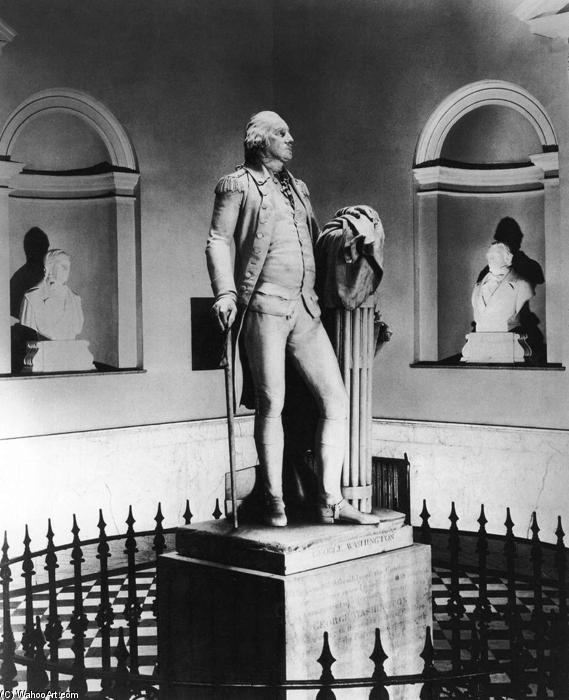
George Washington


Admire Jean-Antoine Houdon’s iconic George Washington statue – a masterpiece capturing the statesman's intellect & gravitas. Explore its history, artistry, and significance in American art.
 Rozwiń treść
Odkryj monumentalne dzieła Jean-Antoine Houdona (1741–1828), francuskiego rzeźbiarza neoklasycznego, który zdominował sztukę portretową epoki Oświecenia i stworzył ikoniczne postaci takich jak George Washington oraz Voltaire.
Giclée / Wydruk artystyczny
Wydruki giclée lub płótna o jakości muzealnej, szybka realizacja i szeroki wybór opcji wykończenia. ( Zamów ręcznie malowaną reprodukcję Przejdź do wersji cyfrowej)




































Standardowy format
personalizowane
CM
INCH
Wybierz spośród naszych standardowych rozmiarów, które zachowują oryginalne proporcje dzieła sztuki.
Loading sizes...

szerokość
wysokość
Wpisz wymaganą szerokość i wysokość, aby dopasować grafikę do ramy lub ściany. Wydruk można jedynie przyciąć, nigdy nie powiększając go poza oryginalny obraz, dlatego format o innych proporcjach spowoduje utratę części kompozycji. Przed rozpoczęciem druku prześlemy Ci cyfrowy podgląd do zatwierdzenia. Obraz wyświetlany na tej stronie nie pokazuje rzeczywistego przycięcia — jedynie podgląd oddaje ten efekt.
Dostawa na cały świat () w ciągu 2 tygodni zamiast standardowych 4/5 tygodni. (6 Listopad)

Bezpłatna ekspresowa wysyłka na cały świat

Wysokiej jakości płótno lniane

Pełne ubezpieczenie przesyłki

Gwarancja zwrotu należności celnych i podatków importowych

Gwarancja wiernego odwzorowania kolorów

100-dniowa polityka zwrotów (tylko w przypadku wad)

Gwarancja 100% zwrotu pieniędzy

Zniżka przy zakupie wielu sztuk
 Opcja ze szkłem jest dostępna wyłącznie w rozmiarach poniżej 110 cm

George Washington
Giclée / Wydruk artystyczny
Wymiary reprodukcji
-


Cena całkowita
zł 274
The Stoic Statesman: Jean-Antoine Houdon’s Portrait of George Washington
Jean-Antoine Houdon's 1788 sculpture of George Washington stands as more than just a likeness; it is a profound distillation of the ideals upon which the nascent American republic was founded. Carved from luminous Carrara marble, this monumental figure transcends mere portraiture, embodying Washington’s leadership, intellect, and quiet dignity—qualities that continue to resonate centuries later. The statue resides within the Virginia State Capitol in Richmond, a testament to its enduring significance for the Commonwealth and the nation as a whole.
Houdon, a pivotal figure bridging the Rococo and Neoclassical eras, possessed an extraordinary ability to capture not simply outward appearance but the very essence of his subjects. Unlike many of his contemporaries who favored idealized depictions rooted in classical antiquity, Houdon sought to portray individuals as they truly were – with their strengths, vulnerabilities, and inner complexities. This approach is strikingly evident in Washington’s face: a subtle furrow above the brow hints at the weight of responsibility borne during the Revolutionary War, while the steady gaze conveys an unwavering resolve. The sculptor masterfully rendered the texture of the skin, capturing the lines etched by time and experience, lending the statue an astonishing sense of realism.
A Masterclass in Neoclassical Technique
The sculpture’s execution is a remarkable feat of technical skill. Houdon employed a subtractive method, beginning with a large block of marble and meticulously removing material to reveal the desired form. This process demanded immense patience and precision, allowing for gradual refinement of details—from the delicate folds of Washington's military coat to the powerful musculature of his arms. The use of light and shadow is particularly noteworthy; Houdon expertly manipulates the surface of the marble to create a dramatic interplay of highlights and recesses, adding depth and volume to the figure. The statue’s smooth, polished finish reflects the ambient light, further enhancing its visual impact.
Notably, Houdon's approach was revolutionary for his time. He eschewed the traditional practice of creating preparatory drawings, instead working directly from a life mask and measurements taken of Washington himself. This direct engagement with the subject ensured an unparalleled level of accuracy and immediacy in the final sculpture. The statue’s dimensions—standing nearly seven feet tall—were carefully calculated to convey a sense of authority and gravitas, reflecting Washington's stature as the first President of the United States.
Symbolism and Historical Context
Beyond its technical brilliance, the sculpture is rich in symbolic meaning. Washington’s attire – a military uniform reminiscent of Roman generals—references the ideals of republican virtue and civic duty that underpinned the American Revolution. The fasces, a bundle of rods symbolizing authority and unity, held by Washington, echoes the traditions of ancient Rome, suggesting his role as a leader guiding the nation towards a new era. The inclusion of agricultural implements – a plow and a sheaf of wheat – subtly alludes to Washington’s roots as a planter and farmer, grounding him in the values of hard work and self-sufficiency.
Commissioned during a period of profound political and social change, the statue reflects the hopes and aspirations of a nation forging its own identity. It embodies the spirit of Enlightenment ideals – reason, liberty, and civic virtue—that fueled the American Revolution. The fact that Washington chose to be depicted in contemporary attire, rather than adhering to classical conventions, signaled his commitment to practicality and progress over rigid adherence to tradition.
A Legacy of Inspiration
Houdon’s portrait of George Washington remains one of the most iconic representations of the Founding Father. Its enduring appeal lies not only in its technical mastery but also in its ability to capture the essence of a man who shaped the destiny of a nation. Numerous copies have been produced over the centuries, ensuring that this powerful image continues to inspire and remind us of the values upon which America was founded. Today, it stands as a poignant reminder of leadership, resilience, and the enduring pursuit of liberty.
Pytania i odpowiedzi
Czy istnieje karta informacyjna o „George Washington” – Jean-Antoine Houdon przeznaczona dla studentów?
Strona Karta informacyjna dla uczniów dzieła „George Washington” – Jean-Antoine Houdon oferuje dwustronicową kartę informacyjną w formacie do druku: samo dzieło wraz z tabelą identyfikacyjną, oś czasu umieszczającą je w latach życia artysty, inne prace tego twórcy, zmierzoną paletę kolorystyczną oraz gotowe do skopiowania cytaty w czterech stylach.
Do czego sugerowane jest wykorzystanie „George Washington” – Jean-Antoine Houdon?
Sugerowanym zastosowaniem dla „George Washington” – Jean-Antoine Houdon jest Statement, choć może on służyć również do innych celów.
Kto stworzył "George Washington" i kiedy?
"George Washington" – autorstwa Jean-Antoine Houdon, rok powstania: 1788.
Biografia artysty
A Sculptor of the Enlightenment
Jean-Antoine Houdon, born in Versailles in 1741, stands as a pivotal figure bridging the Rococo and Neoclassical eras—a sculptor whose work embodies the intellectual fervor and evolving aesthetic sensibilities of the eighteenth century. His life unfolded amidst dramatic shifts in French society, from the waning opulence of the monarchy through the revolutionary upheaval and Napoleonic ascendance. Yet, Houdon remained remarkably consistent in his artistic vision: to capture not merely a likeness, but the very essence of his subjects—their intellect, character, and inner lives—in enduring marble and bronze. This dedication stemmed from an early aptitude for sculpture, nurtured by formal training at the Académie Royale de Peinture et de Sculpture beginning in 1752 under esteemed sculptors like René-Michel Slodtz, Jean-Baptiste Lemoyne, and Jean-Baptiste Pigalle. His subsequent enrollment at the École Royale des Élèves Protégés from 1761 to 1764 solidified his foundation, culminating in a triumphant win of the Prix de Rome competition in 1761—an award that granted him invaluable study time with classical art firsthand in Italy, an experience profoundly shaping his aesthetic sensibilities.The Art of Verisimilitude and Psychological Insight
Houdon’s sculptures are immediately recognizable for their breathtaking realism and meticulous attention to detail. He wasn't content with simply replicating physical features; he sought to penetrate the surface, revealing the personality and intellect within. This commitment to verisimilitude arose from a deep fascination with anatomy—evident in his celebrated *Muscleman Sideview* bronze sculpture—and an unwavering dedication to observation. Unlike many contemporaries who idealized their subjects, Houdon embraced imperfections, believing they contributed to a more truthful and compelling portrayal. He employed innovative techniques, including taking casts directly from life, allowing him to capture remarkable nuance and subtlety that distinguished his work from others of the time. This approach was particularly evident in his portrait busts, which became his signature achievement. These weren’t merely static representations; they were dynamic studies of character, imbued with psychological depth and emotional resonance. Houdon's ability to convey not just *how* someone looked, but *who* they were—their virtues, their passions, their anxieties—was a revolutionary departure from prevailing artistic conventions. He achieved this through subtle nuances in expression, posture, and the rendering of details like the eyes—often carved with a slight concavity to capture the play of light and suggest inner thought. This meticulous attention to detail wasn’t merely stylistic; it reflected Houdon's conviction that sculpture could illuminate the human condition and communicate profound truths about human nature.Immortalizing an Era: A Pantheon of Enlightenment Figures
The breadth of Houdon’s clientele reads as a veritable who’s who of the Enlightenment. He immortalized some of the most influential thinkers, writers, politicians, and leaders of his time—individuals who championed reason, liberty, and progress amidst the turbulent currents of European history. His terracotta portrait of Denis Diderot captures the philosopher’s intellectual intensity and unconventional spirit with remarkable sensitivity, reflecting his belief in the power of critical inquiry and challenging established dogma. Benjamin Franklin, portrayed during his diplomatic mission to France, appears as a man of wisdom and pragmatism, his gaze both shrewd and benevolent—a testament to his astute understanding of politics and diplomacy. Jean-Jacques Rousseau, sculpted with characteristic empathy, embodies both the passion and melancholy that defined his philosophy—a poignant portrayal of human vulnerability and moral responsibility. Perhaps most famously, Houdon sculpted Voltaire—creating multiple versions of the celebrated writer, including a dynamic seated figure for the Comédie-Française that captures his wit and intellectual energy. This sculpture exemplifies Houdon’s masterful ability to distill complex ideas into tangible form, conveying Voltaire's philosophical convictions with arresting clarity. Beyond these intellectual giants, Houdon also received commissions from royalty, notably Louis XVI—a symbol of the waning grandeur of the Bourbon monarchy—and rising political figures like Napoleon Bonaparte—marking a pivotal moment in French history.Key Characteristics of Houdon’s Style
- Neoclassical Realism: Houdon's sculptures are characterized by their exceptional realism and attention to detail, rooted in classical principles but infused with a commitment to portraying subjects as they truly were.
- Psychological Depth: He meticulously captured not only the physical features but also the psychological essence of his subjects—their intellect, character, and inner lives—moving beyond mere likeness to convey personality and intellect.
- Historical Significance: His portraits offer invaluable glimpses into the lives and times of influential figures like Washington, Franklin, Voltaire, and Rousseau, serving as important historical documents.
- Innovative Techniques: Houdon pioneered techniques such as taking casts directly from life—a groundbreaking practice that ensured unparalleled accuracy in capturing anatomical detail and conveying emotional nuance.
Legacy and Enduring Influence
Jean-Antoine Houdon’s impact on the world of sculpture is undeniable. He elevated portraiture to an art form capable of profound psychological insight and historical documentation, establishing a new standard for sculptural representation that continues to inspire artists today. His dedication to realism—combined with his ability to capture the essence of his subjects—set him apart from many of his contemporaries and cemented his place as one of history’s greatest portrait sculptors. Throughout his life, he received widespread recognition, being named a Chevalier de la Légion d'honneur in 1804 and a Chevalier de l'Empire in 1809—testaments to his esteemed status within French society. His sculptures remain highly valued today, not only for their artistic merit but also for the invaluable glimpses they provide into the lives and times of the Enlightenment era. Houdon’s legacy extends far beyond his own lifetime, influencing generations of sculptors who followed him—a testament to his enduring contribution to the history of art. Houdon's work serves as a powerful reminder of the enduring power of art to capture the human spirit and preserve it for generations to come.
Jean-Antoine Houdon
1741 - 1828 , Francja
Krótka nota
- Artistic Movement Or Style: Neoklasycizm
- Artists Or Movements Influenced By This Artist: ['Canova']
- Artists Who Influenced This Artist:
- René-Michel Slodtz
- Jean-Baptiste Lemoyne
- Jean-Baptiste Pigalle
- Bernini
- Date Of Birth: 1741
- Full Name: Jean-Antoine Houdon
- Nationality: Francuski
- Notable Artworks:
- George Washington
- Voltaire
- Benjamin Franklin
- Place Of Birth: Versailles, France
Powiązane artykuły

The Eternal Beauty of Marble: A Guide to Sculpting Light, Stone, and the Soul of Art History
Explore the sublime artistry of marble sculpture. From Greek antiquity to the masters of light, discover how stone captures the eternal essence of human beauty and emotion through expert craftsmanship and historical mastery.
Odkryj dzieła sztuki uporządkowane według tematów, stylów i cech charakterystycznych.


