

Shown: · With its frame:
 Podgląd w skali 1:1
 Wyślij jako kartkę
 Udostępnij
 Szczegóły dzieła
 Przewodnik

 Pobierz obraz
 Podobne obiekty
 RTG
RTG Pokaz slajdów
 Q&A
Q&A Statystyki

zł 1046
Ręcznie malowana reprodukcja olejowa
Ręcznie malowany obraz olejny na płótnie, wykonany na zamówienie przez naszych artystów w wybranym przez Ciebie wymiarze i oprawie. ( Przełącz na wydania drukowane Przejdź do wersji cyfrowej)
Size
·Standardowy format
personalizowane
CM
INCH
Wybierz spośród naszych standardowych rozmiarów, które zachowują oryginalne proporcje dzieła sztuki.
Loading sizes...

szerokość
wysokość
Wpisz wymaganą szerokość i wysokość, aby obraz pasował do Twojej ramy lub ściany. Ponieważ jest to dzieło malowane ręcznie, w przypadku rozmiaru o innych proporcjach artysta może domalować nieco więcej wokół obrazu lub przyciąć jego fragmenty — wybór należy do Ciebie. Przed rozpoczęciem pracy prześlemy Ci cyfrową wizualizację do zatwierdzenia. Obraz widoczny na tej stronie nie przedstawia rzeczywistego efektu — jedynie wizualizacja oddaje realny rezultat.
 Dowiedz się więcej
Finish
·
White zł1

Blurside zł1

Extended zł1

P118B zł10

P118H zł10

P118W zł10

P438Z zł10

P508JH zł12

P508YH zł12

P805H zł10

P805Z zł10

P919BZ zł10

P919G zł10

P919XJ zł10

P959ZH zł10

P968JZ zł12

W106C zł8

W218G zł10

W218JH zł8

W218Y zł10

W307PJ zł10

W316G zł10

W316PJ zł8

W316Y zł10

W398PJ zł8

W4111J zł10

W500HY zł15

W500JH zł15

W692G zł12

W849H zł8

W940BG zł15

W953PJ zł8

H24-GOLD zł30

H24-SILVER zł30

H36-GOLD zł45

H36-SILVER zł45
Shipped in a protective tube, ready for your own framer.
Above 105 cm the frame is shipped as a kit for a professional framer — read the details.
Extras
optionalWhat do the extras include?
Examples of what can be changed: Replace face with customer photo; Add pet (e.g., replace cat with dog); Include hidden message in background; Change background landscape or elements.
After order, TopImpressionists.com team will email client for instructions and provide a mockup preview
After order, TopImpressionists.com team will email client for instructions and provide a mockup preview
Dostawa na całym świecie () w ciągu 3–4 tygodni zamiast standardowych 5 tygodni. (2 Listopad). Bez kompromisów w kwestii jakości.
Lakier ochronny
Etykieta obiektu
Szczegóły grawerowanej brązowej tabliczki
This elegant plaque features the artist's name and the title of the artwork, finely engraved for a timeless presentation.
It is made from bronze with a refined, elegant finish. The text is precisely laser-engraved for a sharp and permanent result. Measuring 9x2 cm, the plaque is compact yet easy to read. It's built to be durable and scratch-resistant, offering a professional, museum-quality look. Mounting is simple thanks to the included adhesive backing.
Szczegóły przezroczystej tabliczki akrylowej
The plaque includes essential engraved details such as the artist's name, the title of the artwork, the date it was created, the type of media used-like oil on canvas or watercolor-a brief description of the piece, and a QR code that links to the complete artwork information.
It is crafted from clear acrylic, offering a sleek, modern appearance. The text is UV-engraved in black to ensure strong visual contrast. With a size of 10x15 cm, it ensures optimal readability. It comes equipped with two metal hooks for secure wall mounting. The plaque is designed to be weather-resistant, making it suitable for various environments, and it includes interactive features that work seamlessly with smartphone scanning.
Szczegóły czarnej tabliczki akrylowej
This elegant plaque includes engraved information such as the artist's name, the title of the artwork, the date it was created, the type of media used (like oil on canvas or watercolor), a short description of the artwork, and a QR code for quick access to more information.
The plaque itself is made from refined black acrylic with a premium finish. The text is laser-engraved in white for high contrast and readability. Its size is 10x15 cm, designed to be easy to read. It comes with two metal hooks for professional mounting. The design is sleek and fits any interior style. It is also weather-resistant and durable, with built-in digital integration for mobile compatibility.
Opcja ze szkłem jest dostępna wyłącznie w rozmiarach poniżej 110 cm
 Opcja ze szkłem jest dostępna wyłącznie w rozmiarach poniżej 110 cm
- Bezpłatna ekspresowa wysyłka na cały świat
- Wysokiej jakości płótno lniane
- Pełne ubezpieczenie przesyłki
- Gwarancja zwrotu należności celnych i podatków importowych
- Gwarancja wiernego odwzorowania kolorów
- 100-dniowa polityka zwrotów (tylko w przypadku wad)
- Gwarancja 100% zwrotu pieniędzy
- Zniżka przy zakupie wielu sztuk


Opis obiektu
Jean-Édouard Vuillard’s “Interior” exemplifies the Nabi movement’s innovative use of color and form, depicting a serene domestic scene with muted tones and subtle textures. Created around 1900, this painting showcases Vuillard's mastery in capturing intimate moments within a home setting and is prominently displayed at the Detroit Institute of Arts.
Biografia artysty
Jean-Édouard Vuillard (1868-1940) – francuski malarz, członek Nabis, znany z intymnych wnętrz, dekoracyjnej stylizacji i wpływu na sztukę nowoczesną. Odkryj jego dzieła!
About the painting
Jean-Édouard Vuillard: Capturing Quietude in “Interior”
The painting "Interior," executed by Jean-Édouard Vuillard around 1900-1905, stands as a quintessential example of Nabis art—a movement that sought to revolutionize artistic expression through radical simplification and the exploration of color’s emotive power. More than just a depiction of domestic space, it embodies Vuillard's profound fascination with capturing fleeting moments of stillness and intimacy within the everyday world. Located at the Detroit Institute of Arts, this artwork invites viewers into a carefully constructed tableau that speaks volumes about artistic innovation and perceptual experience.A Synthesis of Impressionism and Japanese Influence
Vuillard’s approach to painting was deeply rooted in Impressionist principles—particularly the emphasis on capturing light and atmosphere—yet he decisively moved beyond its limitations. Influenced by the pioneering work of Paul Gauguin, Vuillard embraced a bold departure from academic conventions. However, his artistic vision gained significant impetus from Japanese prints (ukiyo-e), which had begun to circulate in Europe during this period. Like Serusier’s “The Talisman,” Vuillard utilized flattened planes of color—a technique borrowed directly from Japanese aesthetics—to create an illusion of depth and spatial ambiguity. This deliberate simplification wasn't merely stylistic; it represented a fundamental rethinking of how artists could represent reality, prioritizing feeling over precise observation.Composition and Color Palette: Orchestrating Emotion
The composition itself is deceptively simple. Two chairs dominate the scene, one occupied by a figure whose presence is subtly suggested rather than overtly portrayed—a characteristic Vuillard technique that encourages contemplation and invites viewers to fill in the gaps of perception. A window frames a glimpse of foliage outside, bathed in soft light, contributing to the overall sense of tranquility. Yet, it’s the color palette that truly distinguishes “Interior.” Vuillard employed hues of pink, peach, and pale yellow—colors chosen not for their literal representation but for their ability to evoke emotion. These shades coalesce into a harmonious blend that conveys warmth, comfort, and perhaps even melancholy—a testament to Vuillard's masterful control over chromatic orchestration.Symbolism Within Everyday Reality
Beyond its formal qualities, “Interior” resonates with symbolic significance. The empty chair serves as a poignant reminder of absence and solitude, while the window represents connection to nature—a recurring motif in Vuillard’s oeuvre. The bird perched on the windowsill symbolizes freedom and aspiration, subtly elevating the scene beyond mere visual description. These elements intertwine to create a narrative that transcends the surface appearance of the room, prompting viewers to consider themes of contemplation, memory, and the beauty inherent in ordinary life.Legacy and Influence
Vuillard’s innovative approach to color and form profoundly impacted subsequent artistic movements—most notably Cubism and Fauvism—establishing him as a pivotal figure in the transition from Impressionism to abstraction. His unwavering commitment to capturing subjective experience continues to inspire artists today, demonstrating the enduring power of art to convey emotion and illuminate the complexities of human perception. “Interior” remains an unforgettable masterpiece, embodying Vuillard’s artistic genius and securing his place among the most celebrated painters of the Belle Époque.Pytania i odpowiedzi
Jaki poziom kontrastu prezentuje „Interior” – Jean-Édouard Vuillard?
Poziom kontrastu dzieła „Interior” – Jean-Édouard Vuillard wynosi Serene.
Jaki kolor dominuje w dziele "Interior"?
„Interior” skłania się ku Ochre to Sepia tonacji.
Czy mogę użyć rozszerzonej rzeczywistości, aby zobaczyć „Interior” – Jean-Édouard Vuillard w swoim pokoju?
Strona Podgląd w AR dzieła „Interior” – Jean-Édouard Vuillard wykorzystuje rozszerzoną rzeczywistość, aby dzięki kompatybilnemu urządzeniu pokazać obraz w Twojej własnej przestrzeni.
Quick facts and art quiz
About Jean-Édouard Vuillard
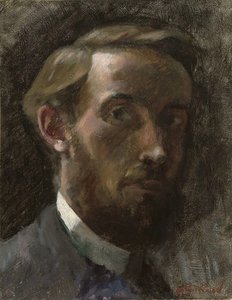
Jean-Édouard Vuillard
1868 - 1940, Francja
Biografia artysty
**early life and artistic beginnings**
Jean-Édouard Vuillard, a luminary of French art, was born on November 11, 1868, in the quaint village of Cuiseaux, nestled within the Bourgogne-Franche-Comté region of France. His early years were marked by a quiet domesticity—a life deeply intertwined with his mother’s profession as a seamstress and dressmaker. This intimate connection to textiles and domestic interiors would profoundly shape his artistic vision later in life. His father, an officer in the French army, had tragically passed away before Jean-Édouard's birth, leaving his mother to raise him alone. This formative experience instilled within him a sensitivity to the textures of everyday life and a profound appreciation for the beauty found in the commonplace. In 1878, the family relocated to Paris, immersing young Jean-Édouard into the vibrant heart of French culture. This move proved pivotal, exposing him to the burgeoning artistic scene and setting the stage for his future endeavors. He enrolled at Lycée Condorcet, where he encountered a kindred spirit in Kéra Xavier Roussel, a fellow student who would later become a prominent figure in the art world. It was through Roussel’s guidance that Vuillard discovered his passion for painting, abandoning his initial aspirations of joining the military and dedicating himself to artistic pursuits. His studies at the École des Beaux-Arts followed, providing him with formal training while simultaneously fostering an independent spirit—a characteristic that would define much of his career.**the nabis movement and its influence**
Vuillard’s artistic trajectory took a significant turn in 1888 when he joined the ranks of Les Nabis, a collective of young artists who sought to break free from the constraints of traditional academic art. This group, comprised of figures like Maurice Denis, Pierre Bonnard, and Félix Vallotton, embraced a radical approach to painting—one that prioritized color, emotion, and symbolism over strict representation. Inspired by the Japanese woodblock prints that were gaining popularity in Europe, the Nabis experimented with flattened planes of color, simplified forms, and an emphasis on decorative patterns. Vuillard’s work became inextricably linked with this movement, characterized by a distinctive use of muted tones, subtle gradations of color, and a remarkable ability to capture the essence of his subjects—often domestic interiors and portraits of women. The Nabis philosophy, rooted in the positivist theories of Auguste Comte and Hippolyte Taine, encouraged artists to find beauty and meaning in everyday life, translating their observations into evocative works of art. Their shared belief in the power of symbolism and the importance of subjective experience profoundly influenced Vuillard’s artistic practice.**vuillard's later work and legacy**
Following the dissolution of Les Nabis in 1900, Vuillard continued to paint with remarkable consistency and innovation. While retaining his signature style—characterized by delicate color palettes and intimate compositions—he gradually shifted towards a more realistic approach, meticulously rendering landscapes and interiors with increased detail and vividness. In the 1920s and 30s, he produced a series of portraits capturing prominent figures in French industry and the arts, often depicting them within their familiar surroundings. These works offer a glimpse into the lives of influential individuals—a testament to Vuillard’s keen eye for character and his ability to convey subtle nuances of personality. Notably, Vuillard's later career was marked by significant commissions from wealthy patrons, including the Natanson brothers and members of Parisian society. He designed theater sets, created decorative panels for private residences, and produced exquisite stained glass—demonstrating his versatility as a visual artist. His final major commission, undertaken in 1937 alongside Pierre Bonnard, involved decorating the Palais de Chaillot in Paris, a project that solidified his reputation as one of France’s most celebrated artists. Jean-Édouard Vuillard passed away on June 21, 1940, leaving behind a legacy of understated elegance and profound artistic insight.**key works and exhibitions**
Vuillard's paintings are held in prestigious museums worldwide, offering viewers an opportunity to immerse themselves in his unique artistic vision. The Musée de la Révolution Française in Paris boasts a particularly rich collection of Vuillard’s work, including “La Patrie en Danger” (1892), a poignant depiction of a young man condemned to death during the French Revolution—a subject that reflects Vuillard's interest in social commentary and historical narratives. Other notable works include "Jean de la Barre" (1893), a portrait of a young woman accused of heresy, and numerous interior scenes capturing the quiet beauty of domestic life. His later portraits, such as those depicting French industrialists and artists within their familiar settings, are also significant contributions to his oeuvre. Vuillard’s art has been featured in numerous exhibitions throughout France and internationally, solidifying his place as a pivotal figure in modern art history.**conclusion**
Jean-Édouard Vuillard remains an enigmatic yet profoundly influential artist—a master of understatement and subtle observation. His distinctive style, characterized by delicate color palettes, intimate compositions, and a profound sensitivity to the textures of everyday life, continues to captivate audiences today. As a pioneer of modernism, Vuillard’s work paved the way for subsequent generations of artists—influencing movements such as Cubism and Fauvism. His legacy endures not only through his remarkable paintings but also through their ability to evoke a sense of quiet contemplation and profound beauty. Explore the world of Jean-Édouard Vuillard further on TopImpressionists, discovering the depth and richness of his artistic vision.Quick facts about Jean-Édouard Vuillard
- Artistic Movement Or Style: Nabis
- Artists Or Movements Influenced By This Artist:
- Cubizm
- Fauvizm
- Artists Who Influenced This Artist: ['Paul Gauguin']
- Date Of Birth: 11 listopada 1868
- Date Of Death: 21 czerwca 1940
- Full Name: Jean-Édouard Vuillard
- Nationality: Francuz
- Notable Artworks:
- Matka
- Sunlit Interior
- Place Of Birth: Cuiseaux, Francja
Podobne dzieła
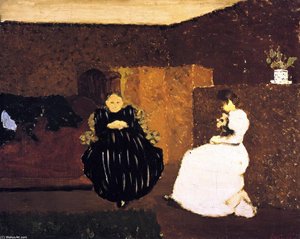
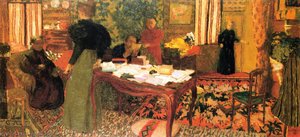
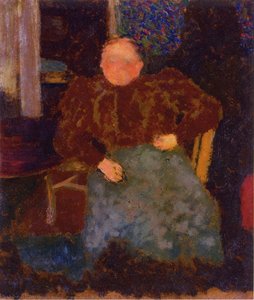


Odkryj dzieła sztuki uporządkowane według tematów, stylów i cech charakterystycznych.


Jean-Édouard Vuillard
Interior
() ·
With its frame: · Hand-painted in oil on linen
Total