


 Zobacz w skali 1:1
 Wyślij
 Udostępnij
 Szczegóły
 Przewodnik

 Pobierz plik obrazu
 Podobne obiekty
 RTG
RTG Pokaz slajdów
 Statystyki
Fruit Vendor


Jerome Myers (1867-1940): Znany twórca Ashcan School, skupiony na wiernym odwzorowaniu życia miejskiego i społecznych realiów. Jego obraz „Fruit Vendor” przedstawia ruchliwy targ z kobietą przy koszyku jabłek – ikona amerykańskiej rzeczywistości.
 Czytaj więcej
Jerome Myers (1867-1940): Znany twórca Ashcan School, którego obraz „Recreation Pier” oraz „Street Shrine” ukazują piękno amerykańskiej codzienności i ciepłe barwy. Jego działalność w organizacji Armory Show wpłynęła na rozwój sztuki nowoczesnej!
Giclée / Wydruk artystyczny
Wydruki giclée lub płótna o jakości muzealnej, szybka realizacja i szeroki wybór opcji wykończenia. ( Kup ręcznie malowany obraz Przełącz na wersję cyfrową)




P118B $10

P118H $10

P118W $10

P438Z $10

P508JH $12

P508YH $12

P805H $10

P805Z $10

P919BZ $10

P919G $10

P919XJ $10

P959ZH $10

P968JZ $12

W106C $8

W218G $10

W218JH $8

W218Y $10

W307PJ $10

W316G $10

W316PJ $8

W316Y $10

W398PJ $8

W4111J $10

W500HY $15

W500JH $15

W692G $12

W849H $8

W940BG $15

W953PJ $8




Standardowy
na zamówienie
CM
INCH
Wybierz spośród naszych standardowych rozmiarów, które zachowują oryginalne proporcje dzieła sztuki.
Loading sizes...

szerokość
wysokość
Możesz wprowadzić własne wymiary, aby dopasować dzieło do konkretnej ramy lub przestrzeni. Jeśli wybrany rozmiar nie będzie odpowiadał proporcjom oryginalnego obrazu, przytniecie dzieło lub rozszerzymy obraz za pomocą odbicia lustrzanego lub jednolitego wypełnienia krawędzi. Przed rozpoczęciem produkcji prześlemy cyfrową wizualizację do Twojej akceptacji.
Prosimy pamiętać, że podgląd na ekranie nie odzwierciedla faktycznego przycinania ani rozszerzania. Tylko wizualizacja dokładnie pokaże końcową kompozycję.
Mimo dostępności niestandardowych rozmiarów, zalecamy wybór wymiaru z listy zdefiniowanej, aby zachować oryginalne proporcje.
Dostawa na cały świat () w ciągu 2 tygodni zamiast standardowych 4/5 tygodni. (24 Wrzesień)

Bezpłatna ekspresowa wysyłka na cały świat

Wysokiej jakości płótno lniane

Pełne ubezpieczenie transportowe

Gwarancja zwrotu należności celnych i podatków importowych

Gwarancja idealnego odwzorowania barw

100-dniowy okres na zwrot dzieła w przypadku wykrycia wad produkcyjnych

Gwarancja 100% zwrotu pieniędzy

Oferta przy zakupie wielu sztuk
 Opcja ze szkłem jest dostępna wyłącznie w rozmiarach poniżej 110 cm

Fruit Vendor
Giclée / Wydruk artystyczny
Rozmiar reprodukcji
-


Suma do zapłaty
$ 69
Jerome Myers: A Visionary of Urban Realism
Jerome Myers (1867-1940) stands as a pivotal figure in American art history, particularly within the Ashcan School movement. Born in Petersburg, Virginia, his life’s journey—marked by itinerant experiences shaped by his father's absences—fueled an artistic sensibility deeply attuned to the struggles and resilience of marginalized communities. This formative upbringing instilled within him a profound empathy for the everyday realities of ordinary people, a perspective that would permeate his prolific output.
Myers’s artistic trajectory began with diverse pursuits – acting and scene painting honed his skills in visual storytelling and dramatic composition—providing invaluable groundwork for his formal training at Cooper Union followed by eight years at the Art Students League under George de Forest Brush. However, it was New York City itself that truly captivated him; specifically, the Lower East Side’s vibrant immigrant neighborhoods became the crucible of his artistic vision.
The Ashcan School and Its Aesthetic
Myers's commitment to portraying urban life with unflinching honesty aligns perfectly with the ethos of the Ashcan School. Rejecting idealized landscapes and academic conventions, these artists sought to capture the gritty textures and emotional complexities of American cities—particularly during the Progressive Era. Myers’s canvases eschewed romantic embellishment in favor of direct observation and meticulous detail, prioritizing capturing the palpable atmosphere of his surroundings.
“Fruit Vendor,” painted circa 1920, exemplifies this stylistic approach. The monochrome palette—characteristic of Ashcan School artists—emphasizes form and texture, mirroring the starkness of urban life. Myers’s masterful technique utilizes broad brushstrokes to convey movement and dynamism, capturing the bustling energy of a busy marketplace.
The composition centers on a woman standing beside a fruit cart laden with apples – a deliberate choice reflecting Myers's fascination with immigrant communities and their daily struggles. Surrounding her are figures engaged in conversation and commerce, creating a tableau that speaks volumes about social interaction and economic hardship. The inclusion of a horse adds to the scene’s visual richness and reinforces its connection to the rural past juxtaposed against the burgeoning urban landscape.
Symbolism and Emotional Impact
Beyond mere depiction, “Fruit Vendor” carries symbolic weight. Myers's unwavering gaze at the human condition—particularly the dignity of labor and perseverance—resonates with humanist ideals prevalent during his time. The painting’s subdued tones evoke a sense of melancholy yet simultaneously convey hope – mirroring the spirit of resilience found within those navigating challenging circumstances.
Myers’s enduring legacy lies in his ability to transform observation into art, capturing not just what he saw but also what he felt. “Fruit Vendor,” like countless other works documenting the realities of American life, remains a testament to his artistic vision and its profound impact on the Ashcan School movement.
Podobne dzieła




Biografia artysty
A Life Etched in Urban Reality
Jerome Myers, born March 20, 1867, in Petersburg, Virginia, was more than just a painter; he was a chronicler of the American urban experience at a pivotal moment in its history. His life story—marked by early hardship and constant relocation due to his father’s absences—deeply informed his artistic vision. This itinerant upbringing instilled within him an acute sensitivity to the struggles and resilience of those living on the margins – a theme that would become central to his oeuvre. His brother, Gustavus Myers, forged a path as a journalist and activist, further cementing a family commitment to social observation and reform. Before fully dedicating himself to art, Myers tasted life as an actor and scene painter, experiences which undoubtedly honed his understanding of visual storytelling and dramatic composition. This practical foundation served him well when he formally pursued artistic training at Cooper Union for a year, followed by eight years at the Art Students League under the tutelage of George de Forest Brush. However, it wasn’t the established art centers of Europe that truly captivated Myers' imagination; rather, it was the teeming streets and vibrant life of New York City’s Lower East Side that became his enduring muse. A brief sojourn to Paris in 1896 paled in comparison to the raw energy and compelling narratives unfolding within his own city.The Ashcan School and a Unique Artistic Voice
Myers emerged as a key figure associated with the Ashcan School, a group of artists who bravely turned their attention away from traditional academic subjects and towards the gritty realities of urban life. He deliberately chose to depict the everyday lives of new immigrants – not as objects of pity or sociological study, but as individuals possessing inherent dignity and beauty. Over a thousand drawings, paintings, etchings, and watercolors bear witness to his dedication, documenting their routines, struggles, and moments of joy outside the confines of tenement walls. He famously articulated his artistic philosophy by stating that where others saw ugliness and degradation, he perceived “poetry and beauty.” This wasn’t mere romanticism; it was a profound belief in the inherent worth of every human experience, regardless of circumstance. His work stands apart within the Ashcan School not for its shock value – though it certainly challenged conventional artistic norms – but for its quiet compassion and unwavering focus on the humanity of his subjects. He wasn't interested in grand narratives or sweeping statements; he was captivated by the small moments that revealed the essence of a life lived fully, even amidst hardship. His technique favored bold brushstrokes and expressive color palettes, reflecting the dynamism of urban environments and conveying emotion with remarkable subtlety.Influences and Artistic Development
Myers’ artistic journey began with formative experiences as an actor and scene painter—skills that instilled in him a keen understanding of visual composition and theatrical storytelling. These early endeavors provided invaluable insight into capturing movement and conveying mood, shaping his approach to painting later in life. His formal training at Cooper Union and the Art Students League under George de Forest Brush solidified his technical skills and exposed him to influential artistic currents. Brush’s emphasis on realism and tonal harmony profoundly impacted Myers' style, encouraging him to prioritize observation and accurate representation of the natural world. However, it was his unwavering fascination with New York City—particularly its Lower East Side—that truly fueled his creative spirit. He returned repeatedly to this locale, capturing scenes of daily life with meticulous detail and conveying a palpable sense of atmosphere.Notable Works: Capturing Urban Essence
Myers’ artistic output spanned across various mediums, including oil paintings, etchings, and watercolors. Among his most celebrated pieces are “Recreation Pier” (1893), which portrays the bustling waterfront activity of New York Harbor with Impressionistic brushstrokes and luminous color—a testament to his ability to capture fleeting moments of beauty amidst urban bustle. "Street Shrine" (1907) exemplifies his dedication to portraying the dignity and resilience of ordinary people, depicting a poignant scene of religious devotion in a tenement setting. His etching series documenting immigrant communities powerfully conveyed social commentary alongside artistic skill. “Italian Procession” (1913), a vibrant depiction of a festive procession, showcases Myers’ masterful use of impasto texture and expressive color—a hallmark of his distinctive style. Finally, "Backyard" (1888) stands as an early exemplar of Ashcan School subject matter, demonstrating his commitment to portraying the everyday realities of urban life with unflinching honesty.A Catalyst for Modernism: The Armory Show
Myers’ involvement in organizing the groundbreaking 1913 Armory Show marked a pivotal moment in American art history. This exhibition served as an unprecedented introduction to European modern movements—Cubism, Fauvism, and Expressionism—to an audience largely unfamiliar with these radical innovations. Myers recognized the importance of fostering dialogue between artistic traditions and championed the inclusion of avant-garde artists, signaling a broader openness to experimentation and a rejection of conservative aesthetic values. His contribution underscored the transformative potential of challenging established norms and embracing new perspectives—a legacy that continues to inspire artists today. Jerome Myers died June 19, 1940, leaving behind an enduring testament to his artistic vision and unwavering belief in portraying humanity with compassion and dignity.
Jerome Myers
1867 - 1940 , Stany Zjednoczone
Najważniejsze informacje
- Artistic Movement Or Style: Ashcan School, Realism
- Artists Or Movements Influenced By This Artist: ['American Realism']
- Artists Who Influenced This Artist: ['George de Forest Brush']
- Date Of Birth: 1867
- Date Of Death: 1940
- Full Name: Jerome Myers
- Nationality: American
- Notable Artworks:
- Recreation Pier
- Street Shrine
- Italian Procession
- Place Of Birth: Petersburg, USA
Zobacz także powiązane artykuły

The Unvarnished Truth: A Cultural Journey Through the Soul of American Realism
Explore the profound beauty of American Realism. From the Ashcan School's urban grit to intimate portraits, discover how artists captured the authentic soul of a nation through unvarnished truth and masterful observation.
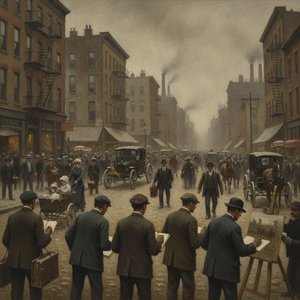
The Ashcan School: Capturing the Raw, Unfiltered Soul of Urban Life through American Realism
Discover the raw beauty of the Ashcan School. Explore how masters like Bellows and Henri captured the gritty, vibrant soul of early 20th-century New York through profound American Realism and evocative urban landscapes.
Odkryj dzieła sztuki uporządkowane według tematów, stylów i cech charakterystycznych.
