

Przedstawiony: · Wraz z ramą:
 Podgląd w skali 1:1
 Wyślij jako kartkę
 Udostępnij
 Szczegóły dzieła
 Przewodnik

 Pobierz obraz
 Podobne obiekty
 RTG
RTG Pokaz slajdów
 Pytania i odpowiedzi
 Statystyki
- 220.0 x 302.0 cm


zł 1052
Ręcznie malowana reprodukcja olejowa
Ręcznie malowany obraz olejny na płótnie, wykonany na zamówienie przez naszych artystów w wybranym przez Ciebie wymiarze i oprawie. ( Przełącz na wydania drukowane Przejdź do wersji cyfrowej)
Wymiar
·Standardowy format
personalizowane
CM
INCH
Wybierz spośród naszych standardowych rozmiarów, które zachowują oryginalne proporcje dzieła sztuki.
Ładowanie rozmiarów...

szerokość
wysokość
Wpisz wymaganą szerokość i wysokość, aby obraz pasował do Twojej ramy lub ściany. Ponieważ jest to dzieło malowane ręcznie, w przypadku rozmiaru o innych proporcjach artysta może domalować nieco więcej wokół obrazu lub przyciąć jego fragmenty — wybór należy do Ciebie. Przed rozpoczęciem pracy prześlemy Ci cyfrową wizualizację do zatwierdzenia. Obraz widoczny na tej stronie nie przedstawia rzeczywistego efektu — jedynie wizualizacja oddaje realny rezultat.
 Dowiedz się więcej
Wykończenie
·
Białe krawędzie zł1

rozmyte krawędzie zł1

Przedłużony zł1

P118B zł10

P118H zł10

P118W zł10

P438Z zł10

P508JH zł12

P508YH zł12

P805H zł10

P805Z zł10

P919BZ zł10

P919G zł10

P919XJ zł10

P959ZH zł10

P968JZ zł12

W106C zł8

W218G zł10

W218JH zł8

W218Y zł10

W307PJ zł10

W316G zł10

W316PJ zł8

W316Y zł10

W398PJ zł8

W4111J zł10

W500HY zł15

W500JH zł15

W692G zł12

W849H zł8

W940BG zł15

W953PJ zł8

H24-GOLD zł30

H24-SILVER zł30

H36-GOLD zł45

H36-SILVER zł45
Dostarczane w ochronnej tubie, gotowe do oprawienia przez Twojego ramiarza.
Dodatki
opcjonalneCo obejmują dodatki?
Przykłady możliwych zmian: Zastąpienie twarzy zdjęciem klienta; Dodanie zwierzęcia (np. zamiana kota na psa); Ukrycie wiadomości w tle; Zmiana krajobrazu lub elementów tła.
Po złożeniu zamówienia zespół TopImpressionists.com skontaktuje się z klientem drogą mailową w celu uzyskania instrukcji i prześle podgląd projektu
Po złożeniu zamówienia zespół TopImpressionists.com skontaktuje się z klientem drogą mailową w celu uzyskania instrukcji i prześle podgląd projektu
Dostawa na całym świecie () w ciągu 3–4 tygodni zamiast standardowych 5 tygodni. (5 Listopad). Bez kompromisów w kwestii jakości.
Lakier ochronny
Etykieta obiektu
Szczegóły grawerowanej brązowej tabliczki
This elegant plaque features the artist's name and the title of the artwork, finely engraved for a timeless presentation.
It is made from bronze with a refined, elegant finish. The text is precisely laser-engraved for a sharp and permanent result. Measuring 9x2 cm, the plaque is compact yet easy to read. It's built to be durable and scratch-resistant, offering a professional, museum-quality look. Mounting is simple thanks to the included adhesive backing.
Szczegóły przezroczystej tabliczki akrylowej
The plaque includes essential engraved details such as the artist's name, the title of the artwork, the date it was created, the type of media used-like oil on canvas or watercolor-a brief description of the piece, and a QR code that links to the complete artwork information.
It is crafted from clear acrylic, offering a sleek, modern appearance. The text is UV-engraved in black to ensure strong visual contrast. With a size of 10x15 cm, it ensures optimal readability. It comes equipped with two metal hooks for secure wall mounting. The plaque is designed to be weather-resistant, making it suitable for various environments, and it includes interactive features that work seamlessly with smartphone scanning.
Szczegóły czarnej tabliczki akrylowej
This elegant plaque includes engraved information such as the artist's name, the title of the artwork, the date it was created, the type of media used (like oil on canvas or watercolor), a short description of the artwork, and a QR code for quick access to more information.
The plaque itself is made from refined black acrylic with a premium finish. The text is laser-engraved in white for high contrast and readability. Its size is 10x15 cm, designed to be easy to read. It comes with two metal hooks for professional mounting. The design is sleek and fits any interior style. It is also weather-resistant and durable, with built-in digital integration for mobile compatibility.
Opcja ze szkłem jest dostępna wyłącznie w rozmiarach poniżej 110 cm
 Opcja ze szkłem jest dostępna wyłącznie w rozmiarach poniżej 110 cm
- Bezpłatna ekspresowa wysyłka na cały świat
- Wysokiej jakości płótno lniane
- Pełne ubezpieczenie przesyłki
- Gwarancja zwrotu należności celnych i podatków importowych
- Gwarancja wiernego odwzorowania kolorów
- 100-dniowa polityka zwrotów (tylko w przypadku wad)
- Gwarancja 100% zwrotu pieniędzy
- Zniżka przy zakupie wielu sztuk


Opis obiektu
Experience 'Mending the Sail' by Joaquin Sorolla! This 1896 Spanish masterpiece captures community & daily life in vibrant oils. A stunning reproduction for art lovers.
Biografia artysty
Joaquín Sorolla – hiszpański malarz światowego formatu! Jego obrazy oświetlone słońcem, portrety i sceny z plaży uchwycą ducha śródziemnomorskiego życia. Odkryj jego dziedzictwo!
O obrazie
Introduction to the Artist and Painting
Joaquín Sorolla Y Bastida, a name synonymous with the radiant light and vibrant energy of Spain, was more than just a painter; he was a chronicler of his nation’s soul. Born in Valencia in 1863, Sorolla's early life was marked by tragedy. Orphaned at the tender age of two following a cholera epidemic that claimed both parents, young Joaquín and his sister were raised by their maternal aunt and uncle. This early experience with loss perhaps instilled within him a profound appreciation for the fleeting beauty of life – a sentiment that would permeate his art. Though hardship shadowed his beginnings, it did not dim the spark of artistic talent that quickly became apparent. He received initial instruction in Valencia, demonstrating an aptitude that led to studies under established artists like Cayetano Capuz and José Benlliure, eventually culminating in a four-year grant to study in Rome. It was there, amidst the classical grandeur of I
A Moment Frozen in Sunlight: ‘Mending the Sail’
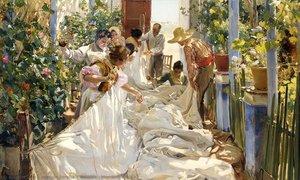
"Mending the Sail," created in 1896, is a captivating tableau that transports the viewer directly into the heart of a sun-drenched afternoon. This large oil on canvas (220 x 302 cm) isn't merely a depiction of manual labor; it’s an exploration of community, resilience, and the simple beauty found in everyday tasks. Sorolla masterfully captures the scene – a group of individuals diligently repairing a sail within a vibrant garden setting – with a remarkable sense of immediacy and warmth. The painting immediately draws the eye to the figures engaged in their work, each contributing to the collective effort with a quiet determination.
Technique and Style: Sorolla’s Impressionistic Brilliance
Sorolla's style is undeniably rooted in Impressionism, yet he possessed a uniquely Spanish sensibility. He employed loose brushstrokes and a broken color technique – layering small dabs of paint to create shimmering effects—to capture the play of light on surfaces with astonishing accuracy. The effect is almost photographic in its realism, but imbued with an emotional depth that elevates it beyond mere representation. Notice how he uses variations of blue and white to represent the sky and water, creating a sense of movement and atmosphere. The use of warm tones – ochres, yellows, and reds – further enhances the feeling of warmth and vitality. His technique allows for a remarkable level of detail in the textures of the sailcloth, the clothing of the workers, and the foliage of the garden.
Symbolism and Narrative: Teamwork and the Passage of Time
"Mending the Sail" is rich with symbolic meaning. The act of repairing the sail represents more than just a practical task; it symbolizes resilience, cooperation, and the ability to overcome challenges as a community. The diverse group of individuals – men, women, and children – working together underscores this theme. The garden setting itself adds another layer of significance, representing life, growth, and renewal. The presence of potted plants, scattered throughout the scene, subtly reinforces the idea of nurturing and care. The painting’s date, 1896, places it firmly within a period of significant social change in Europe, reflecting a growing interest in depicting ordinary people and their lives – a trend that foreshadowed many later artistic movements. The overall composition evokes a sense of timelessness, suggesting that the values represented—community, hard work, and perseverance—are enduring.
A Legacy of Light: Sorolla’s Enduring Appeal
“Mending the Sail” stands as a testament to Joaquín Sorolla's extraordinary talent and his ability to capture the essence of human experience. Its vibrant colors, dynamic composition, and profound symbolism continue to resonate with viewers today. This painting is not just a beautiful work of art; it’s an invitation to contemplate the importance of community, resilience, and the simple joys of life. A reproduction of this iconic piece would be a stunning addition to any interior space, bringing warmth, light, and a touch of Spanish artistry into your home.
Pytania i odpowiedzi
Gdzie mogę znaleźć dzieła sztuki podobne do „Mending the Sail” – Joaquín Sorolla?
Dzieła podobne do „Mending the Sail” – Joaquín Sorolla można znaleźć na stronie Podobne dzieła danego dzieła.
Na którym etapie kariery Joaquín Sorolla znajduje się dzieło „Mending the Sail”, biorąc pod uwagę jego datę powstania?
Data powstania dzieła (1896) sytuuje "Mending the Sail" w Late 19th Century rozwoju twórczości Joaquín Sorolla.
Jakie emocje przekazuje „Mending the Sail” – Joaquín Sorolla?
Emocjonalny ton przypisany do „Mending the Sail” – Joaquín Sorolla to Calm. Oddaje on emocje, jakie wyraża to dzieło.
Najważniejsze informacje i quiz o sztuce
O Joaquín Sorolla

Joaquín Sorolla
1863 - 1923, Hiszpania
Biografia artysty
A Life Bathed in Light: The World of Joaquín Sorolla
Joaquín Sorolla y Bastida, a name synonymous with the radiant light and vibrant energy of Spain, was more than just a painter; he was a chronicler of his nation’s soul. Born in Valencia in 1863, Sorolla's early life was marked by tragedy. Orphaned at the tender age of two following a cholera epidemic that claimed both parents, young Joaquín and his sister were raised by their maternal aunt and uncle. This early experience with loss perhaps instilled within him a profound appreciation for the fleeting beauty of life – a sentiment that would permeate his art. Though hardship shadowed his beginnings, it did not dim the spark of artistic talent that quickly became apparent. He received initial instruction in Valencia, demonstrating an aptitude that led to studies under established artists like Cayetano Capuz and José Benlliure, eventually culminating in a four-year grant to study in Rome. It was there, amidst the classical grandeur of Italy, that Sorolla began to forge his unique artistic path, absorbing influences while simultaneously developing a style distinctly his own.From Historical Narratives to Sun-Drenched Realism
Sorolla’s early work reflected the prevailing academic trends of the time – large-scale historical and mythological scenes. He was initially drawn to grand narratives, producing works like *The Return from Fishing* (1893), a monumental depiction of fishermen hauling their boat ashore. However, a pivotal shift occurred as he returned to Spain and began to truly observe the world around him. He found himself captivated by the everyday lives of his countrymen, particularly those along the Valencian coast. The intense Mediterranean sunlight, the shimmering sea, and the vibrant energy of the people became his primary subjects. This transition wasn’t immediate; Sorolla continued to explore social realism with works like Sad Inheritance (1899), a powerful depiction of children afflicted by polio bathing in the sea – a painting that garnered significant acclaim but also revealed a darker, more compassionate side to his artistic vision. *Sad Inheritance*, exhibited at the Universal Exhibition in Paris, brought him widespread recognition and cemented his position as a leading figure in Spanish art. Yet, it was his increasingly focused exploration of light and color, inspired by Impressionism though never fully embracing its tenets, that would define his legacy. He wasn’t merely *depicting* light; he was attempting to *capture* its very essence, the way it danced on water, illuminated skin, and transformed ordinary moments into scenes of extraordinary beauty.Master of Luminism: A Unique Artistic Voice
Sorolla's technique became instantly recognizable – a bravura display of brushwork, characterized by loose, energetic strokes that conveyed movement and atmosphere. He worked *en plein air* whenever possible, directly confronting the challenges of capturing fleeting light conditions. This dedication to painting outdoors resulted in canvases brimming with life and immediacy. His beach scenes, perhaps his most iconic works, are not simply picturesque representations of leisure; they are studies in luminosity, reflections, and the joyful interaction between people and their environment. Paintings like *Children on the Seashore* and *Sewing the Sail* exemplify this mastery – figures bathed in golden light, rendered with a remarkable sense of spontaneity and vitality. He wasn’t interested in meticulous detail; rather, he sought to convey the *impression* of reality, prioritizing atmosphere and emotion over precise representation. This approach earned him comparisons to Impressionists like Monet and Renoir, but Sorolla's work possessed a unique Spanish character – a warmth, intensity, and emotional depth that set it apart.Key Achievements & Recognition
- 1892: Gold medal at the National Exhibition in Madrid for *Another Marguerite*.
- 1894: Acclaimed for *The Return from Fishing: Hauling the Boat*, acquired by the Musée du Luxembourg.
- 1899: Grand Prix and medal of honor at the Universal Exhibition in Paris for *Sad Inheritance*.
- 1900-1923: Extensive exhibitions throughout Europe and the United States, establishing international recognition.
- 1912-1928: Commissioned to create *Vision of Spain* for the Hispanic Society of America (completed posthumously).
- Present Day: Works held in major museums worldwide, including the Museo Sorolla in Madrid.
Legacy and Enduring Influence
By the early 20th century, Joaquín Sorolla was internationally renowned. He exhibited widely throughout Europe and the United States, receiving numerous accolades and commissions. His most ambitious undertaking, *Vision of Spain*, a series of fourteen monumental murals commissioned by the Hispanic Society of America, remains a testament to his artistic vision and technical skill. Though he suffered a stroke in 1920 that curtailed his painting activity, Sorolla’s influence continued to grow after his death in 1923. His work inspired generations of artists, not only in Spain but around the world. Today, his paintings are held in major museums globally, including the Museo Sorolla in Madrid – a former home transformed into a dedicated space for showcasing his art. Sorolla’s legacy extends beyond his technical brilliance; he captured a specific moment in Spanish history and culture, immortalizing the beauty of its landscapes and the spirit of its people. He remains a master of light, color, and emotion—a painter whose work continues to resonate with audiences today, reminding us of the power of art to illuminate our world.Krótkie informacje o Joaquín Sorolla
- Artistic Movement Or Style: Luminizm, Impresjonizm
- Artists Who Influenced This Artist:
- Pradilla
- Bastien-Lepage
- Menzel
- Date Of Birth: 27 lutego 1863
- Date Of Death: 10 sierpnia 1923
- Full Name: Joaquín Sorolla y Bastida
- Nationality: Hiszpański
- Notable Artworks:
- Inna Margarita
- Powrót z połowu
- Złota rybka
- Typowy Sorosianin
- Place Of Birth: Walencja, Hiszpania
Podobne dzieła


Odkryj dzieła sztuki uporządkowane według tematów, stylów i cech charakterystycznych.


Joaquín Sorolla
Mending the Sail
() ·
Wraz z ramą: · Ręcznie malowane farbami olejnymi na płótnie lnianym
Suma