

Shown: · With its frame:
 Podgląd w skali 1:1
 Wyślij jako kartkę
 Udostępnij
 Szczegóły dzieła
 Przewodnik

 Pobierz obraz
 Podobne obiekty
 RTG
RTG Pokaz slajdów
 Q&A
Q&A Statystyki
 Oil On Canvas
- WallArt
- Baroque Rococo Fusion
 1763
1763- Early Modern
 75.0 x 63.0 cm
 Ashmolean Museum of Art and Archaeology
zł 1045
Ręcznie malowana reprodukcja olejowa
Ręcznie malowany obraz olejny na płótnie, wykonany na zamówienie przez naszych artystów w wybranym przez Ciebie wymiarze i oprawie. ( Przełącz na wydania drukowane Przejdź do wersji cyfrowej)
Size
·Standardowy format
personalizowane
CM
INCH
Wybierz spośród naszych standardowych rozmiarów, które zachowują oryginalne proporcje dzieła sztuki.
Loading sizes...

szerokość
wysokość
Wpisz wymaganą szerokość i wysokość, aby obraz pasował do Twojej ramy lub ściany. Ponieważ jest to dzieło malowane ręcznie, w przypadku rozmiaru o innych proporcjach artysta może domalować nieco więcej wokół obrazu lub przyciąć jego fragmenty — wybór należy do Ciebie. Przed rozpoczęciem pracy prześlemy Ci cyfrową wizualizację do zatwierdzenia. Obraz widoczny na tej stronie nie przedstawia rzeczywistego efektu — jedynie wizualizacja oddaje realny rezultat.
 Dowiedz się więcej
Finish
·
White zł1

Blurside zł1

Extended zł1

P118B zł10

P118H zł10

P118W zł10

P438Z zł10

P508JH zł12

P508YH zł12

P805H zł10

P805Z zł10

P919BZ zł10

P919G zł10

P919XJ zł10

P959ZH zł10

P968JZ zł12

W106C zł8

W218G zł10

W218JH zł8

W218Y zł10

W307PJ zł10

W316G zł10

W316PJ zł8

W316Y zł10

W398PJ zł8

W4111J zł10

W500HY zł15

W500JH zł15

W692G zł12

W849H zł8

W940BG zł15

W953PJ zł8

H24-GOLD zł30

H24-SILVER zł30

H36-GOLD zł45

H36-SILVER zł45
Shipped in a protective tube, ready for your own framer.
Above 105 cm the frame is shipped as a kit for a professional framer — read the details.
Extras
optionalWhat do the extras include?
Examples of what can be changed: Replace face with customer photo; Add pet (e.g., replace cat with dog); Include hidden message in background; Change background landscape or elements.
After order, TopImpressionists.com team will email client for instructions and provide a mockup preview
After order, TopImpressionists.com team will email client for instructions and provide a mockup preview
Dostawa na całym świecie () w ciągu 3–4 tygodni zamiast standardowych 5 tygodni. (30 Październik). Bez kompromisów w kwestii jakości.
Lakier ochronny
Etykieta obiektu
Szczegóły grawerowanej brązowej tabliczki
This elegant plaque features the artist's name and the title of the artwork, finely engraved for a timeless presentation.
It is made from bronze with a refined, elegant finish. The text is precisely laser-engraved for a sharp and permanent result. Measuring 9x2 cm, the plaque is compact yet easy to read. It's built to be durable and scratch-resistant, offering a professional, museum-quality look. Mounting is simple thanks to the included adhesive backing.
Szczegóły przezroczystej tabliczki akrylowej
The plaque includes essential engraved details such as the artist's name, the title of the artwork, the date it was created, the type of media used-like oil on canvas or watercolor-a brief description of the piece, and a QR code that links to the complete artwork information.
It is crafted from clear acrylic, offering a sleek, modern appearance. The text is UV-engraved in black to ensure strong visual contrast. With a size of 10x15 cm, it ensures optimal readability. It comes equipped with two metal hooks for secure wall mounting. The plaque is designed to be weather-resistant, making it suitable for various environments, and it includes interactive features that work seamlessly with smartphone scanning.
Szczegóły czarnej tabliczki akrylowej
This elegant plaque includes engraved information such as the artist's name, the title of the artwork, the date it was created, the type of media used (like oil on canvas or watercolor), a short description of the artwork, and a QR code for quick access to more information.
The plaque itself is made from refined black acrylic with a premium finish. The text is laser-engraved in white for high contrast and readability. Its size is 10x15 cm, designed to be easy to read. It comes with two metal hooks for professional mounting. The design is sleek and fits any interior style. It is also weather-resistant and durable, with built-in digital integration for mobile compatibility.
Opcja ze szkłem jest dostępna wyłącznie w rozmiarach poniżej 110 cm
 Opcja ze szkłem jest dostępna wyłącznie w rozmiarach poniżej 110 cm
- Bezpłatna ekspresowa wysyłka na cały świat
- Wysokiej jakości płótno lniane
- Pełne ubezpieczenie przesyłki
- Gwarancja zwrotu należności celnych i podatków importowych
- Gwarancja wiernego odwzorowania kolorów
- 100-dniowa polityka zwrotów (tylko w przypadku wad)
- Gwarancja 100% zwrotu pieniędzy
- Zniżka przy zakupie wielu sztuk


Opis obiektu
Admire Johann Zoffany's iconic portrait of David Garrick alongside Eva Maria Veigel, capturing the theatrical spirit of Georgian England at The Ashmolean Museum.
Biografia artysty
"meta_description": "Johann Zoffany – niemiecki malarz słynący z portretów i obrazów rodzajowych, zwłaszcza 'Konwersacji'. Jego dzieła uchwycą życie angielskiego dworu i kolonialnej Indii. Odkryj jego mistrzowskie techniki i unikalny styl!"
About the painting
A Theatrical Soul Captured in Oil
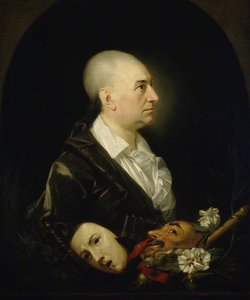
In the quiet halls of The Ashmolean Museum of Art and Archaeology, there exists a portrait that does more than merely record a likeness; it breathes with the very essence of the eighteenth-century stage. Johann Zoffany’s 1763 masterpiece, David Garrick, is an evocative window into the heart of Enlightenment England. At first glance, we encounter the commanding presence of Garrick, the most celebrated actor of his era, rendered with a profound sense of dignity and intellectual depth. Zoffny does not present us with a mere performer in costume, but with a man whose very existence was intertwined with the dramatic arts. The composition is intimate yet grand, focusing on Garrick from the chest up against a somber, dark background that pushes his luminous features toward the viewer, demanding an immediate and visceral connection.
The technique employed by Zoffany is nothing short of masterful, showcasing the meticulous precision characteristic of the finest oil-on-canvas works of the period. Through subtle tonal gradations and a sophisticated command of light, the artist breathes life into the textures of the subject's attire—the crisp white collar contrasting sharply against the deep black of his formal coat. This interplay of light and shadow, or chiaroscuro, serves to sculpt Garrick’s face, highlighting a contemplative gaze that seems to look beyond the frame, perhaps lost in thought regarding a recent performance or a future script. For the discerning collector or interior designer, this painting offers a profound sense of classical elegance, making it an ideal centerpiece for spaces that value historical gravity and sophisticated drama.
The Dual Faces of Drama
Beyond the physical representation of a legendary actor, Zoffany weaves a complex tapestry of symbolism into the very fabric of the portrait. Floating near Garrick’s face are two iconic theatrical masks: the smiling visage of Comedy and the furrowed, mournful brow of Tragedy. These are not mere decorative elements; they are the dual pillars of the human experience that Garrick mastered on stage. The presence of these masks transforms the portrait from a standard biographical study into a profound meditation on the nature of performance and emotion. It suggests that behind the dignified gentleman lies the capacity for both joyous exuberance and profound sorrow, mirroring the duality of the human condition itself.
This symbolic layer adds an intellectual richness that elevates the artwork, making it much more than a decorative piece. It invites the viewer to contemplate the boundaries between reality and artifice, between the man and the persona. For those looking to adorn a home or gallery with a reproduction of this caliber, the painting provides a continuous source of conversation and inspiration. It embodies a period where art, intellect, and social status converged in a beautiful, theatrical display. To possess such a work is to hold a fragment of history—a moment frozen in 1763, where the spirit of the theatre remains eternally vibrant and hauntingly beautiful.
Pytania i odpowiedzi
Czy prawa autorskie do „David Garrick” – Johann Zoffany pozwalają na tworzenie reprodukcji?
Dzieło „David Garrick” – Johann Zoffany, znajdujące się w zbiorach Ashmolean Museum of Art and Archaeology, znajduje się w należy do domeny publicznej – autorskie prawa majątkowe wygasły. Status ten określa, czy możliwe jest tworzenie reprodukcji obrazu.
Jakie są wymiary oryginału "David Garrick"?
Oryginalny utwór „David Garrick” – Johann Zoffany ma wymiary 75 x 63 cm.
Czy mogę obejrzeć "David Garrick" w formie pełnoekranowej prezentacji slajdów?
Prezentację slajdów utworu "David Garrick" można obejrzeć na stronie Prezentacja slajdów tego dzieła.
Quick facts and art quiz
About Johann Zoffany

Johann Zoffany
1733 - 1810, Niemcy
Biografia artysty
Early Life and Training
Johann Zoffany, urodzony Johannes Josephus Zauffaly w 1733 roku we Frankfurcie nad Menem, był malarzem pochodzenia niemieckiego, który zyskał uznanie głównie w Anglii i we Włoszech. Szczegóły jego dzieciństwa pozostają skąpe, jednak wiadomo, że otrzymał wykształcenie artystyczne od najmłodszych lat. Początkowo uczył się u rzeźbiarza, prawdopodobnie Melchiora Paulausa w Ellwangenie, a następnie pod kierunkiem Martina Speera w Regensburgu. Ten fundacyjny okres położył fundamenty dla jego przyszłej kariery.
Podróż do Włoch i Anglii
W 1750 roku Zoffany wyjechał do Rzymu, gdzie wstąpił do stołu Agostina Masucciego, doskonaląc swoje umiejętności w ramach włoskiej tradycji artystycznej. Później w 1760 roku przeniósł się do Anglii, początkowo utrzymując się dzięki tworzeniu dekoracyjnych wzorów dla zegarów Stephena Rimbaulta. Ten okres stanowił przełom, ponieważ zaczął budować kontakty i zyskiwać uznanie w londyńskiej scenie artystycznej.
Patronat Królewski i Rozwój Artystyczny
Zoffany szybko przyciągnął uwagę króla Jerzego III Hanowerskiego i królowej Charloty, stając się ulubionym portrecistą rodziny królewskiej. Jego umiejętność uchwytywania nieformalnych momentów – takich jak Królowa Charlotte z dwoma najstarszymi dziećmi (1765) – odróżniała go od bardziej formalnych malarzy dworskich. Był również popularny wśród rodziny cesarskiej austriackiej i otrzymał tytuł barona Holy Roman Empire w 1776 roku przez cesarzową Marię Teresę.
Mistrz „Konwersacji”
Zoffany stał się znany ze swoich “konwersacji”, czyli nieformalnych portretów grupujących osoby. Doskonalił umiejętność uchwytywania osobowości i interakcji w tych scenach, często przedstawiając wybitne postacie z kręgu towarzyskiego, teatru i literatury. Jego dzieła, takie jak Rodzina Cope’a (1775), oferują wgląd w życie swoich patronów.
Główne Osiągnięcia i Znaczące Dzieła
- Trybuna Galerii Uffizich (1772-1778): Jego najbardziej znane dzieło, precyzyjne przedstawienie Galerii Uffizi w Florencji.
- William Hunter Nauczający Anatomii na Królewskiej Akademii (1779): Fascynujący portret edukacji medycznej i badań naukowych.
- Król Jerzy III (1771): Regalny portret ukazujący potęgę i elegancję króla.
- Mecz Kruków Porucznik Mordaunta (1784-1786): Żywe przedstawienie życia kolonialnego w Indiach, uchwycone unikalne wydarzenie kulturowe.
Lata w Indiach i Późniejsze Życie
Od 1783 roku Zoffany przebywał w Indiach, gdzie malował portrety wybitnych postaci, takich jak Warren Hastings i Asaf-ud-Daula. Jego doświadczenia tamtejsze wpłynęły na jego styl artystyczny i tematykę. Wspaniałą historią z tego okresu jest opowieść o katastrofie statku w Cieśninie Malackiej, gdzie ocalałych zmuszono do drastycznych środków przetrwania.
Wpływy i Dziedzictwo
Prace Zoffany odzwierciedlają wpływy zarówno niemieckiej precyzji, jak i włoskiej sztuki. Był pod wpływem artystów takich jak Agostino Masucci i czerpał inspirację z tradycji barokowej. Jego styl z kolei wpłynął na współczesnych i późniejszych artystów zainteresowanych portretowaniem i komentariuszem społecznym. Został postacią znaczącą w historii sztuki, celebrowanym za swoje umiejętności techniczne, spostrzegawczość i unikalną wizję artystyczną.
Znaczenie Historyczne
Portrety Johanna Zoffany dostarczają cennych informacji na temat zwyczajów społecznych, życia intelektualnego i wartości kulturowych jego czasów. Jego “konwersacje” oferują intymne portrety wybitnych osób i ich świata, a przedstawienia Indii przyczyniają się do naszego zrozumienia historii kolonialnej. Został postacią znaczącą w historii sztuki, celebrowanym za swoje umiejętności techniczne, spostrzegawczość i unikalną wizję artystyczną.
Quick facts about Johann Zoffany
- Artistic Movement Or Style: Neoklasycyzm, Realizm
- Artists Or Movements Influenced By This Artist:
- Zoffany
- Rottmayr
- Artists Who Influenced This Artist:
- Masucci
- Speer
- Date Of Birth: 1733
- Date Of Death: 1810
- Full Name: Johann Zoffany
- Nationality: Niemiec
- Notable Artworks:
- Trybuna Uffizi
- Doktor Hunter
- Król Jerzy III
- Place Of Birth: Frankfurt nad Main
Odkryj dzieła sztuki uporządkowane według tematów, stylów i cech charakterystycznych.


Johann Zoffany
David Garrick
() ·
With its frame: · Hand-painted in oil on linen
Total