

Shown: · With its frame:
 Podgląd w skali 1:1
 Wyślij jako kartkę
 Udostępnij
 Szczegóły dzieła
 Przewodnik

 Pobierz obraz
 Podobne obiekty
 RTG
RTG Pokaz slajdów
 Q&A
Q&A Statystyki
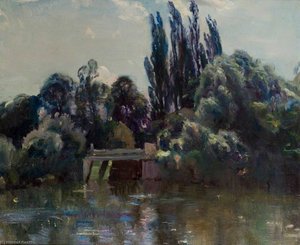
 1948
1948 63.0 x 77.0 cm
 St John’s College (Cambridge)
zł 1045
Ręcznie malowana reprodukcja olejowa
Ręcznie malowany obraz olejny na płótnie, wykonany na zamówienie przez naszych artystów w wybranym przez Ciebie wymiarze i oprawie. ( Przełącz na wydania drukowane Przejdź do wersji cyfrowej)
Ten utwór podlega ochronie prawem autorskim
Dzieło sztuki prezentowane na tej stronie podlega ochronie prawem autorskim, co oznacza, że nie mamy prawa do tworzenia ani sprzedaży jego identycznej reprodukcji. Ochrona ta jest egzekwowana na mocy umów międzynarodowych, takich jak Konwencja berneńska oraz przez przepisy prawa krajowego, w tym te określone w Prawo autorskie USA – Tytuł 17.
Jako pełną szacunku i legalną alternatywę oferujemy personalizowane, malowane ręcznie dzieła sztuki inspirowane oryginałem. Nasi wykwalifikowani i profesjonalni artyści starannie analizują styl, nastrój oraz artystyczną esencję pierwowzoru, aby stworzyć nowe, unikalne dzieło, które przywołuje te same emocje – pozostając jednocześnie w pełni oryginalną kreacją.
Metoda ta jest w pełni zgodna z przepisami prawa autorskiego, ponieważ nie polega na kopiowaniu ani powielaniu chronionego dzieła. Stanowi ona kreatywną reinterpretację – nowy obraz, który czerpie inspirację z oryginału, ale nie jest z nim tożsamy.
 Dowiedz się więcej
Size
·Standardowy format
personalizowane
CM
INCH
Wybierz spośród naszych standardowych rozmiarów, które zachowują oryginalne proporcje dzieła sztuki.
Loading sizes...

szerokość
wysokość
Wpisz wymaganą szerokość i wysokość, aby obraz pasował do Twojej ramy lub ściany. Ponieważ jest to dzieło malowane ręcznie, w przypadku rozmiaru o innych proporcjach artysta może domalować nieco więcej wokół obrazu lub przyciąć jego fragmenty — wybór należy do Ciebie. Przed rozpoczęciem pracy prześlemy Ci cyfrową wizualizację do zatwierdzenia. Obraz widoczny na tej stronie nie przedstawia rzeczywistego efektu — jedynie wizualizacja oddaje realny rezultat.
Finish
·
White zł1

Blurside zł1

Extended zł1

P118B zł10

P118H zł10

P118W zł10

P438Z zł10

P508JH zł12

P508YH zł12

P805H zł10

P805Z zł10

P919BZ zł10

P919G zł10

P919XJ zł10

P959ZH zł10

P968JZ zł12

W106C zł8

W218G zł10

W218JH zł8

W218Y zł10

W307PJ zł10

W316G zł10

W316PJ zł8

W316Y zł10

W398PJ zł8

W4111J zł10

W500HY zł15

W500JH zł15

W692G zł12

W849H zł8

W940BG zł15

W953PJ zł8

H24-GOLD zł30

H24-SILVER zł30

H36-GOLD zł45

H36-SILVER zł45
Shipped in a protective tube, ready for your own framer.
Above 105 cm the frame is shipped as a kit for a professional framer — read the details.
Extras
optionalWhat do the extras include?
Examples of what can be changed: Replace face with customer photo; Add pet (e.g., replace cat with dog); Include hidden message in background; Change background landscape or elements.
After order, TopImpressionists.com team will email client for instructions and provide a mockup preview
After order, TopImpressionists.com team will email client for instructions and provide a mockup preview
Dostawa na całym świecie () w ciągu 3–4 tygodni zamiast standardowych 5 tygodni. (31 Październik). Bez kompromisów w kwestii jakości.
Lakier ochronny
Etykieta obiektu
Szczegóły grawerowanej brązowej tabliczki
This elegant plaque features the artist's name and the title of the artwork, finely engraved for a timeless presentation.
It is made from bronze with a refined, elegant finish. The text is precisely laser-engraved for a sharp and permanent result. Measuring 9x2 cm, the plaque is compact yet easy to read. It's built to be durable and scratch-resistant, offering a professional, museum-quality look. Mounting is simple thanks to the included adhesive backing.
Szczegóły przezroczystej tabliczki akrylowej
The plaque includes essential engraved details such as the artist's name, the title of the artwork, the date it was created, the type of media used-like oil on canvas or watercolor-a brief description of the piece, and a QR code that links to the complete artwork information.
It is crafted from clear acrylic, offering a sleek, modern appearance. The text is UV-engraved in black to ensure strong visual contrast. With a size of 10x15 cm, it ensures optimal readability. It comes equipped with two metal hooks for secure wall mounting. The plaque is designed to be weather-resistant, making it suitable for various environments, and it includes interactive features that work seamlessly with smartphone scanning.
Szczegóły czarnej tabliczki akrylowej
This elegant plaque includes engraved information such as the artist's name, the title of the artwork, the date it was created, the type of media used (like oil on canvas or watercolor), a short description of the artwork, and a QR code for quick access to more information.
The plaque itself is made from refined black acrylic with a premium finish. The text is laser-engraved in white for high contrast and readability. Its size is 10x15 cm, designed to be easy to read. It comes with two metal hooks for professional mounting. The design is sleek and fits any interior style. It is also weather-resistant and durable, with built-in digital integration for mobile compatibility.
Opcja ze szkłem jest dostępna wyłącznie w rozmiarach poniżej 110 cm
 Opcja ze szkłem jest dostępna wyłącznie w rozmiarach poniżej 110 cm
- Bezpłatna ekspresowa wysyłka na cały świat
- Wysokiej jakości płótno lniane
- Pełne ubezpieczenie przesyłki
- Gwarancja zwrotu należności celnych i podatków importowych
- Gwarancja wiernego odwzorowania kolorów
- 100-dniowa polityka zwrotów (tylko w przypadku wad)
- Gwarancja 100% zwrotu pieniędzy
- Zniżka przy zakupie wielu sztuk


Biografia artysty
Explore the evocative landscapes & portraits of John Arthur Malcolm Aldridge (1905-1983). British painter, known for his Great Bardfield style & association with Robert Graves.
About the painting
Quick facts and art quiz
About John Arthur Malcolm Aldridge

John Arthur Malcolm Aldridge
1905 - 1983
Biografia artysty
A Vision of Rural England: The Life and Legacy of John Aldridge
John Arthur Malcolm Aldridge (1905–1983) remains a luminous figure in the tapestry of twentieth-century British art, a painter whose work serves as a serene window into the soul of the English countryside. Born in Woolwich to a prosperous military family, Aldridge’s path was one of intellectual depth and artistic refinement. After honing his academic prowess at Oxford University, where he studied 'Greats' at Corpus Christi College, he turned his focus toward the visual arts, teaching himself the nuances of painting in London. His early career was marked by a bold presence in the London art scene, exhibiting with the prestigious Seven and Five Society and eventually presenting his first solo exhibition at the Leicester Galleries in 1933. This period of rapid ascent saw him recognized on an international stage, including an invitation to exhibit at the Venice Biennale, signaling the arrival of a significant new voice in British landscape and design.
The trajectory of Aldridge’s life was profoundly altered by his move to Great Bardfield in Essex, a village that would become the heart of his creative identity. Alongside contemporaries like Edward Bawden, Aldridge became a central figure in the celebrated Great Bardfield artist community. This era was defined by a unique fusion of fine art and functional design; notably, Aldridge collaborated with Bawden to create exquisite wallpapers for Cole & Sons, bringing a sophisticated, rhythmic aesthetic into the domestic spaces of Britain. His life during these years was deeply intertwined with the literary and artistic circles of the time, most notably through his enduring friendship with the poet Robert Graves. This connection infused his work with a lyrical, almost pastoral quality, as he sought to capture the folklore and quiet rhythms of rural existence through a lens of meticulous observation.
Technique, Texture, and the Great Bardfield Style
To encounter an Aldridge painting is to enter a world of profound stillness and tactile richness. While his early explorations involved various media, he became masterfully adept at using oil and watercolor to render the English landscape with astonishing precision. His signature approach—often referred to as part of the Great Bardfield style—was characterized by a painstaking attention to detail that went far beyond mere representation. He did not simply paint a field or a stone wall; he sought to document the very texture of existence, layering colors and strokes to convey the weight of ancient stones, the softness of summer grasses, and the shifting light of an autumn afternoon.
His technical prowess allowed him to oscillate between the broad, expressive energy found in works like The Moors—where bold brushstrokes and vivid colors capture a sense of movement under a cloud-filled sky—and the more contemplative, structured compositions seen in his village scenes. In pieces such as Autumn, he demonstrates an unparalleled ability to orchestrate color, using the vibrant hues of falling leaves to create an idyllic, almost nostalgic atmosphere. This mastery of light and atmosphere ensured that his landscapes were never static; they breathed with the seasonal shifts of the Cotswolds and the Essex countryside, inviting the viewer to inhabit these peaceful, timeless spaces.
Artistic Achievements and Historical Significance
The professional accolades bestowed upon Aldridge reflect his standing within the British artistic establishment. His election as an Associate of the Royal Academy in 1954, followed by his promotion to full Royal Academician in 1963, stands as a testament to his enduring influence and technical excellence. Beyond the canvas, his service during World War II as an officer in the British Intelligence Corps—interpreting aerial photographs—added a layer of disciplined observation to his artistic eye, perhaps further refining his ability to perceive structure and detail from a distance.
Ultimately, the significance of John Aldridge lies in his role as a chronicler of a vanishing way of life. Through his paintings, he preserved the dignity of the rural landscape during a century of rapid industrial and social change. His work remains a vital link to the interwar and post-war British identity, offering a sense of continuity and peace. Whether through the intimate scale of an oil on panel like The Dovecote or the expansive vistas of his larger canvases, Aldridge’s legacy is one of profound visual poetry, reminding us of the enduring beauty found in the quiet corners of the world.
Quick facts about John Arthur Malcolm Aldridge
- Artistic Movement Or Style: Great Bardfield
- Artists Or Movements Influenced By This Artist: ['English Landscape Painting']
- Artists Who Influenced This Artist: ['Robert Graves']
- Date Of Birth: 1905
- Date Of Death: 1983
- Full Name: John Arthur Malcolm Aldridge
- Nationality: British
- Notable Artworks:
- Old Mill, West Harnham
- The Moors
- Autumn
- Place Of Birth: Bristol, England


John Arthur Malcolm Aldridge
Old Mill, West Harnham
() ·
With its frame: · Hand-painted in oil on linen
Total