

Shown: · With its frame:
 Podgląd w skali 1:1
 Wyślij jako kartkę
 Udostępnij
 Szczegóły dzieła
 Przewodnik

 Pobierz obraz
 Podobne obiekty
 RTG
RTG Pokaz slajdów
 Q&A
Q&A Statystyki
- 61.0 x 34.0 cm


zł 1143
Ręcznie malowana reprodukcja olejowa
Ręcznie malowany obraz olejny na płótnie, wykonany na zamówienie przez naszych artystów w wybranym przez Ciebie wymiarze i oprawie. ( Przełącz na wydania drukowane Przejdź do wersji cyfrowej)
Size
·Standardowy format
personalizowane
CM
INCH
Wybierz spośród naszych standardowych rozmiarów, które zachowują oryginalne proporcje dzieła sztuki.
Loading sizes...

szerokość
wysokość
Wpisz wymaganą szerokość i wysokość, aby obraz pasował do Twojej ramy lub ściany. Ponieważ jest to dzieło malowane ręcznie, w przypadku rozmiaru o innych proporcjach artysta może domalować nieco więcej wokół obrazu lub przyciąć jego fragmenty — wybór należy do Ciebie. Przed rozpoczęciem pracy prześlemy Ci cyfrową wizualizację do zatwierdzenia. Obraz widoczny na tej stronie nie przedstawia rzeczywistego efektu — jedynie wizualizacja oddaje realny rezultat.
 Dowiedz się więcej
Finish
·
White zł1

Blurside zł1

Extended zł1

P118B zł10

P118H zł10

P118W zł10

P438Z zł10

P508JH zł12

P508YH zł12

P805H zł10

P805Z zł10

P919BZ zł10

P919G zł10

P919XJ zł10

P959ZH zł10

P968JZ zł12

W106C zł8

W218G zł10

W218JH zł8

W218Y zł10

W307PJ zł10

W316G zł10

W316PJ zł8

W316Y zł10

W398PJ zł8

W4111J zł10

W500HY zł15

W500JH zł15

W692G zł12

W849H zł8

W940BG zł15

W953PJ zł8

H24-GOLD zł30

H24-SILVER zł30

H36-GOLD zł45

H36-SILVER zł45
Shipped in a protective tube, ready for your own framer.
Above 105 cm the frame is shipped as a kit for a professional framer — read the details.
Extras
optionalWhat do the extras include?
Examples of what can be changed: Replace face with customer photo; Add pet (e.g., replace cat with dog); Include hidden message in background; Change background landscape or elements.
After order, TopImpressionists.com team will email client for instructions and provide a mockup preview
After order, TopImpressionists.com team will email client for instructions and provide a mockup preview
Dostawa na całym świecie () w ciągu 3–4 tygodni zamiast standardowych 5 tygodni. (1 Listopad). Bez kompromisów w kwestii jakości.
Lakier ochronny
Etykieta obiektu
Szczegóły grawerowanej brązowej tabliczki
This elegant plaque features the artist's name and the title of the artwork, finely engraved for a timeless presentation.
It is made from bronze with a refined, elegant finish. The text is precisely laser-engraved for a sharp and permanent result. Measuring 9x2 cm, the plaque is compact yet easy to read. It's built to be durable and scratch-resistant, offering a professional, museum-quality look. Mounting is simple thanks to the included adhesive backing.
Szczegóły przezroczystej tabliczki akrylowej
The plaque includes essential engraved details such as the artist's name, the title of the artwork, the date it was created, the type of media used-like oil on canvas or watercolor-a brief description of the piece, and a QR code that links to the complete artwork information.
It is crafted from clear acrylic, offering a sleek, modern appearance. The text is UV-engraved in black to ensure strong visual contrast. With a size of 10x15 cm, it ensures optimal readability. It comes equipped with two metal hooks for secure wall mounting. The plaque is designed to be weather-resistant, making it suitable for various environments, and it includes interactive features that work seamlessly with smartphone scanning.
Szczegóły czarnej tabliczki akrylowej
This elegant plaque includes engraved information such as the artist's name, the title of the artwork, the date it was created, the type of media used (like oil on canvas or watercolor), a short description of the artwork, and a QR code for quick access to more information.
The plaque itself is made from refined black acrylic with a premium finish. The text is laser-engraved in white for high contrast and readability. Its size is 10x15 cm, designed to be easy to read. It comes with two metal hooks for professional mounting. The design is sleek and fits any interior style. It is also weather-resistant and durable, with built-in digital integration for mobile compatibility.
Opcja ze szkłem jest dostępna wyłącznie w rozmiarach poniżej 110 cm
 Opcja ze szkłem jest dostępna wyłącznie w rozmiarach poniżej 110 cm
- Bezpłatna ekspresowa wysyłka na cały świat
- Wysokiej jakości płótno lniane
- Pełne ubezpieczenie przesyłki
- Gwarancja zwrotu należności celnych i podatków importowych
- Gwarancja wiernego odwzorowania kolorów
- 100-dniowa polityka zwrotów (tylko w przypadku wad)
- Gwarancja 100% zwrotu pieniędzy
- Zniżka przy zakupie wielu sztuk


Opis obiektu
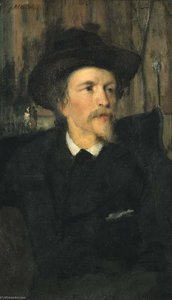
Discover Julian Alden Weir's 'Face Reflected in a Mirror,' an exquisite 1896 Impressionist painting capturing light, reflection & domestic intimacy at the Rhode Island School of Design Museum.
Biografia artysty
Julian Alden Weir (1852-1919): Amerykański impresjonista, członek 'Dziesięciu', mistrz tonalizmu i pejzażystów. Odkryj jego serce Connecticutu w Weir Farm National Historic Site.
About the painting
Face Reflected in a Mirror: A Glimpse into Intimacy and Impressionism
Julian Alden Weir's Face Reflected in a Mirror, painted in 1896, is a captivating work housed within the esteemed collection of the Rhode Island School of Design Museum of Art. This oil on canvas painting (61 x 34 cm) exemplifies Weir's mastery of Impressionism and offers a poignant exploration of domesticity, self-awareness, and the subtle nuances of human connection.
Artistic Style and Technique: Capturing Fleeting Moments
The artwork is firmly rooted in the principles of Impressionism. Weir eschews sharp lines and rigid forms, instead employing soft, feathery brushstrokes to capture the fleeting effects of light and atmosphere. The scene depicts two women – one gazing intently at her reflection in a mirror while the other stands discreetly behind her. This composition isn't merely about depicting a physical space; it’s about conveying a mood, an unspoken narrative. The use of oil on canvas allows for rich, vibrant colors and textures, contributing to the painting's overall luminosity. Notice how Weir uses subtle variations in tone to define form and create depth, particularly around the faces and drapery. The chair positioned near the left side adds a sense of spatial context and further enhances the intimate setting.
A Study in Reflection: Symbolism and Narrative
Beyond its aesthetic beauty, Face Reflected in a Mirror invites contemplation on deeper themes. The mirror itself serves as a powerful symbol – representing self-reflection, identity, and perhaps even vanity or introspection. The woman’s focused gaze suggests a moment of personal assessment, while the presence of the other woman hints at a relationship—a confidante, a sister, or simply an observer. Weir masterfully avoids explicit storytelling, leaving room for individual interpretation. The subdued color palette – dominated by muted yellows and greens with accents of black and white in the clothing – contributes to a sense of quiet contemplation and understated elegance. The scene evokes a feeling of domestic tranquility, yet there's also a subtle undercurrent of melancholy or solitude, adding complexity to the artwork’s emotional impact.
Julian Alden Weir: An American Impressionist
Julian Alden Weir (1852-1919) was a prominent figure in American art during the late 19th century. Born into an artistic family, he received formal training at the National Academy of Design and later studied in Paris with Jean-Léon Gérôme. While initially resistant to Impressionism, Weir eventually embraced its principles, becoming known for his lyrical landscapes and intimate genre scenes. He was a founding member of "The Ten," a group of American artists who sought to break away from traditional art institutions. His work can be found in numerous museums and private collections across the United States. Other notable works by Weir include Union Square, Girl in Black, and At the Piano, all showcasing his distinctive Impressionistic style.
Bringing Impressionism Home: A Reproduction for Your Space
Face Reflected in a Mirror is more than just a painting; it's an invitation to step into a moment of quiet reflection. A hand-painted reproduction allows you to experience the beauty and emotional depth of Weir’s masterpiece within your own home or office, adding a touch of timeless elegance and artistic sophistication. Visit TopImpressionists.com to explore our collection of high-quality reproductions.
Pytania i odpowiedzi
Gdzie mogę pobrać „Face Reflected in a Mirror” – Julian Alden Weir?
Obraz „Face Reflected in a Mirror” – Julian Alden Weir można pobrać na stronie Pobierz plik cyfrowy dzieła: wysokiej rozdzielczości cyfrowe zdjęcie do pobrania.
Czy istnieją dzieła podobne do „Face Reflected in a Mirror”?
Dzieła podobne do „Face Reflected in a Mirror” – Julian Alden Weir można znaleźć na stronie Podobne dzieła danego dzieła.
Jakie miejsce w historii sztuki zajmuje „Face Reflected in a Mirror” – Julian Alden Weir?
Pod względem historycznym „Face Reflected in a Mirror” to dzieło z nurtu Impressionism, powstałe w szerszej epoce 19th Century.
Quick facts and art quiz
About Julian Alden Weir

Julian Alden Weir
1852 - 1919, Stany Zjednoczone
Biografia artysty
Early Life and Artistic Foundations
Julian Alden Weir, urodzony 30 sierpnia 1852 roku w West Point, Nowy Jork, dziedziczył artystyczne korzenie, które głęboko ukształtowały jego drogę. Jego ojciec, Robert Walter Weir, był znanym malarzem i profesorem rysunku na Akademii Wojskowej Stanów Zjednoczonych, przekazując młodemu Julianowi od najmłodszych lat głęboką miłość do sztuki. Sam dom był żywiołową pracownią, wypełnionym narzędziami i inspiracją twórczą. To sprzyjające środowisko rozciągało się również na jego starszego brata, Johna Ferguson Weir, który stał się również wybitnym pejzażystą. Początki formalnego szkolenia artystycznego przypadały na około 1870 roku w Narodowej Akademii Sztuki w Nowym Jorku, zapewniając mu solidne podstawy w tradycyjnych technikach. Jednak podróż do Paryża w 1873 roku zapaliła prawdziwie jego artystyczną pasję. Studiowanie pod okiem Jean-Léon Gerome’a na École des Beaux-Arts pozwoliło mu poznać rygor akademicki i precyzję detalu, a przyjaźnie zawarte z artystami takimi jak Jules Bastien-Lepage poszerzyły jego perspektywę na możliwości malarstwa. Początkowo Weir odczuwał silną niechęć do wschodzącej ruchów impresjonistycznej, odrzucając jej postrzegane braki formy i struktury jako “straszne”. Ta wczesna opór okazała się kluczowa, ponieważ jego ostateczne przyjęcie impresjonizmu nastąpiło nie z natychmiastowego akceptacji, lecz poprzez stopniową ewolucję zrozumienia.The Connecticut Years and Artistic Transformation
Przełomowym momentem w życiu Weira był ślub z Anną Dwight Baker w 1883 roku i ich późniejsza decyzja o zamieszkaniu w Branchville, Connecticut. Kupił tam farmę, szukając wytchnienia od tętniącego życiem świata sztuki w Nowym Jorku. To wiejskie otoczenie stało się czymś więcej niż tylko schronieniem; było to źródło inspiracji. Spokojne krajobrazy, rytm życia na wsi i bliska więź z naturą subtelnie zmieniały jego artystyczny punkt widzenia. Początkowo kontynuując produkcję portretów i przedstawień martwych przytwarzów w tradycyjnym stylu, Weir odkrył, że coraz bardziej ulega fascynacji uchwyceniem ulotnych efektów światła i atmosfery. Około 1891 roku ta tendencja rozwinęła się w pełne przyjęcie impresjonizmu. Pod wpływem innych artystów, takich jak John Twachtman i Theodore Robinson, eksperymentował z łamanymi pociągnięciami pędzla, żywymi kolorami i naciskiem na subiektywne postrzeganie. Nie była to jednak całkowita rezygnacja z wcześniejszego szkolenia; stanowiła raczej syntezę umiejętności akademickich z innowacyjną duszę nowego ruchu. Jego styl często oscylował między czystą ekspresją impresjonistyczną a bardziej stonowaną tonalnością, tworząc unikalny język wizualny, który odróżniał go od współczesnych. Był również utalentowanym grafikiem, szczególnie dzięki umiejętnej wykorzystywaniu technik aquatintowych.A Leading Voice in American Art
W końcu XIX wieku Julian Alden Weir ugruntował swoją pozycję jako wybitna postać w amerykańskiej scenie artystycznej. Był kluczową postacią w tworzeniu „Dziesięciu Amerykańskich Malarzy”, grupy niezależnych malarzy, którzy dążyli do wystawiania swoich prac poza rygorami tradycyjnych instytucji, takich jak Akademia Wojskowa. Ta kolektywa – składająca się z artystów takich jak Childe Hassam, Willard Leroy Metcalf i Edmund Tarbell – stanowiła znaczący krok w kierunku niezależności artystycznej i pomogła ukształtować kierunek amerykańskiego malarstwa. W 1912 roku Weir został wybrany na pierwszego prezydenta Stowarzyszenia Amerykańskich Malarzy i Rzeźbiarzy, dodatkowo umacniając swoją rolę przywódcy w społeczności artystycznej. Później pełnił funkcję prezesa Narodowej Akademii Sztuki, co świadczyło o szacunku, jaki zyskał zarówno od progresywnych, jak i konserwatywnych frakcji świata sztuki. Jego kluczowe dzieła z tego okresu – takie jak *Na brzegu* (1892), żywy krajobraz wybrzeżny; *Amerykański folwark* (1904), urocza scena życia wiejskiego; i *Pastwiska na wzgórzach* (1905) – ilustrują jego biegłość w technikach impresjonistycznych i jego zdolność do uchwycenia esencji amerykańskich krajobrazów.Legacy and Enduring Influence
Dziedzictwo Juliana Alden Weira wykracza daleko poza jego indywidualne obrazy. Odegrał kluczową rolę w połączeniu tradycyjnego malarstwa akademickiego z innowacyjną duszą impresjonizmu, otwierając drogę dla przyszłych pokoleń amerykańskich artystów. Jego zaangażowanie w promowanie niezależności artystycznej poprzez „Dziesiątka” podważało ugruntowane normy i pomogło stworzyć bardziej różnorodny krajobraz artystyczny. Dziś Weir Farm National Historic Site w Branchville, Connecticut, stanowi świadectwo jego życia i twórczości. Zachowany w stanie, w jakim był podczas jego pobytu, farm oferuje odwiedzającym wgląd w świat, który go inspirował – pagórkowaty teren, poszarpane stodmy i spokojną urodę wiejskiej Ameryki. Miejsce to nie jest tylko zabytkiem historycznym, ale także ciągłym źródłem inspiracji dla artystów dzisiejszych czasów. Jego rodzinne korzenie artystyczne – pochodzące od jego ojca Roberta Waltera Weira, malarza z epoki Hudson River School – dodatkowo umacniają pozycję Juliana Alden We ira w szerszym kontekście historii amerykańskiej sztuki. Zmarł w Nowym Jorku 8 grudnia 1919 roku, pozostawiając za sobą twórczość, która nadal fascynuje i inspiruje, przypominając nam o sile sztuki w uchwytywaniu piękna i esencji otaczającego nas świata.Quick facts about Julian Alden Weir
- Artistic Movement Or Style: Impressionizm, Tonalizm
- Artists Or Movements Influenced By This Artist: ['The Ten American Painters']
- Artists Who Influenced This Artist:
- Jean-Léon Gérôme
- Jules Bastien-Lepage
- Date Of Birth: 30 sierpnia 1852
- Date Of Death: 8 grudnia 1919
- Full Name: Julian Alden Weir
- Nationality: Amerykański
- Notable Artworks:
- Na brzegu
- Angielska stodola
- Upland Pasture
- Place Of Birth: West Point, USA
Podobne dzieła




Julian Alden Weir
Face Reflected in a Mirror
() ·
With its frame: · Hand-painted in oil on linen
Total