

Przedstawiony: · Wraz z ramą:
 Podgląd w skali 1:1
 Wyślij jako kartkę
 Udostępnij
 Szczegóły dzieła
 Przewodnik

 Pobierz obraz
 Podobne obiekty
 RTG
RTG Pokaz slajdów
 Pytania i odpowiedzi
 Statystyki

zł 2126
Ręcznie malowana reprodukcja olejowa
Ręcznie malowany obraz olejny na płótnie, wykonany na zamówienie przez naszych artystów w wybranym przez Ciebie wymiarze i oprawie. ( Przełącz na wydania drukowane Przejdź do wersji cyfrowej)
Wymiar
·Standardowy format
personalizowane
CM
INCH
Wybierz spośród naszych standardowych rozmiarów, które zachowują oryginalne proporcje dzieła sztuki.
Ładowanie rozmiarów...

szerokość
wysokość
Wpisz wymaganą szerokość i wysokość, aby obraz pasował do Twojej ramy lub ściany. Ponieważ jest to dzieło malowane ręcznie, w przypadku rozmiaru o innych proporcjach artysta może domalować nieco więcej wokół obrazu lub przyciąć jego fragmenty — wybór należy do Ciebie. Przed rozpoczęciem pracy prześlemy Ci cyfrową wizualizację do zatwierdzenia. Obraz widoczny na tej stronie nie przedstawia rzeczywistego efektu — jedynie wizualizacja oddaje realny rezultat.
 Dowiedz się więcej
Wykończenie
·
Białe krawędzie zł1

rozmyte krawędzie zł1

Przedłużony zł1

P118B zł10

P118H zł10

P118W zł10

P438Z zł10

P508JH zł12

P508YH zł12

P805H zł10

P805Z zł10

P919BZ zł10

P919G zł10

P919XJ zł10

P959ZH zł10

P968JZ zł12

W106C zł8

W218G zł10

W218JH zł8

W218Y zł10

W307PJ zł10

W316G zł10

W316PJ zł8

W316Y zł10

W398PJ zł8

W4111J zł10

W500HY zł15

W500JH zł15

W692G zł12

W849H zł8

W940BG zł15

W953PJ zł8

H24-GOLD zł30

H24-SILVER zł30

H36-GOLD zł45

H36-SILVER zł45
Dostarczane w ochronnej tubie, gotowe do oprawienia przez Twojego ramiarza.
Dodatki
opcjonalneCo obejmują dodatki?
Przykłady możliwych zmian: Zastąpienie twarzy zdjęciem klienta; Dodanie zwierzęcia (np. zamiana kota na psa); Ukrycie wiadomości w tle; Zmiana krajobrazu lub elementów tła.
Po złożeniu zamówienia zespół TopImpressionists.com skontaktuje się z klientem drogą mailową w celu uzyskania instrukcji i prześle podgląd projektu
Po złożeniu zamówienia zespół TopImpressionists.com skontaktuje się z klientem drogą mailową w celu uzyskania instrukcji i prześle podgląd projektu
Dostawa na całym świecie () w ciągu 3–4 tygodni zamiast standardowych 5 tygodni. (6 Listopad). Bez kompromisów w kwestii jakości.
Lakier ochronny
Etykieta obiektu
Szczegóły grawerowanej brązowej tabliczki
This elegant plaque features the artist's name and the title of the artwork, finely engraved for a timeless presentation.
It is made from bronze with a refined, elegant finish. The text is precisely laser-engraved for a sharp and permanent result. Measuring 9x2 cm, the plaque is compact yet easy to read. It's built to be durable and scratch-resistant, offering a professional, museum-quality look. Mounting is simple thanks to the included adhesive backing.
Szczegóły przezroczystej tabliczki akrylowej
The plaque includes essential engraved details such as the artist's name, the title of the artwork, the date it was created, the type of media used-like oil on canvas or watercolor-a brief description of the piece, and a QR code that links to the complete artwork information.
It is crafted from clear acrylic, offering a sleek, modern appearance. The text is UV-engraved in black to ensure strong visual contrast. With a size of 10x15 cm, it ensures optimal readability. It comes equipped with two metal hooks for secure wall mounting. The plaque is designed to be weather-resistant, making it suitable for various environments, and it includes interactive features that work seamlessly with smartphone scanning.
Szczegóły czarnej tabliczki akrylowej
This elegant plaque includes engraved information such as the artist's name, the title of the artwork, the date it was created, the type of media used (like oil on canvas or watercolor), a short description of the artwork, and a QR code for quick access to more information.
The plaque itself is made from refined black acrylic with a premium finish. The text is laser-engraved in white for high contrast and readability. Its size is 10x15 cm, designed to be easy to read. It comes with two metal hooks for professional mounting. The design is sleek and fits any interior style. It is also weather-resistant and durable, with built-in digital integration for mobile compatibility.
Opcja ze szkłem jest dostępna wyłącznie w rozmiarach poniżej 110 cm
 Opcja ze szkłem jest dostępna wyłącznie w rozmiarach poniżej 110 cm
- Bezpłatna ekspresowa wysyłka na cały świat
- Wysokiej jakości płótno lniane
- Pełne ubezpieczenie przesyłki
- Gwarancja zwrotu należności celnych i podatków importowych
- Gwarancja wiernego odwzorowania kolorów
- 100-dniowa polityka zwrotów (tylko w przypadku wad)
- Gwarancja 100% zwrotu pieniędzy
- Zniżka przy zakupie wielu sztuk


Opis obiektu
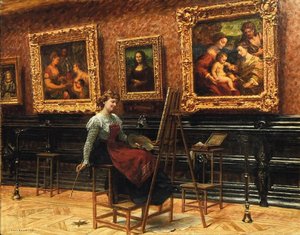
Explore 'A la gloire de Rubens' by Louis Beroud – a vibrant Baroque masterpiece inspired by Rubens! Capturing opulent revelry & sensual energy, this oil painting offers a glimpse into 19th-century Parisian art.
Biografia artysty
Odkryj Louisa Berouda (1852-1930), francuskiego malarza słynącego z niezwykle szczegółowych przedstawień paryskich wnętrz i zabytków, w tym m.in. Luwru oraz Opery Garnier.
O obrazie
À la gloire de Rubens – A Celebration of Baroque Grandeur
Louis Béroud’s “À la gloire de Rubens” is more than just a depiction of a painting; it's an embodiment of the artistic spirit of its time—the fervent embrace of academic tradition alongside a keen observation of modern life that characterized Parisian art in the early 20th century. Painted in 1905, this monumental canvas captures the atmosphere of the Louvre Museum during a period marked by significant cultural renewal and intellectual curiosity. The artwork’s subject matter is deceptively simple: a young woman diligently sketching “The Coronation” by Peter Paul Rubens from his celebrated Marie de Medici cycle—a masterpiece that embodies the Baroque ideal of dramatic grandeur and emotional intensity.- Composition & Style: Béroud adheres to the stylistic conventions of the École de Beaux-Arts, prioritizing clarity of form and meticulous detail. The scene unfolds within a richly ornamented interior space reminiscent of Rubens’s own studio, emphasizing architectural perspective and creating a sense of spatial depth. However, unlike Rubens's canvases which aim for idealized beauty, Béroud presents a realistic portrayal of artistic practice—a testament to the artist’s commitment to capturing the essence of his subject matter.
- Technique: Employing oil paint on canvas with visible brushstrokes, Béroud utilizes impasto – thick application of pigment – particularly noticeable in areas depicting drapery and skin tones. This technique lends texture and luminosity to the painting, mirroring the dramatic chiaroscuro employed by Rubens himself. The artist’s careful attention to light and shadow contributes significantly to the overall theatrical quality of the composition.
- Historical Context: Béroud's work emerged during a period of artistic debate following Impressionism’s dominance. Artists like Béroud sought to reaffirm classical principles while acknowledging the influence of contemporary life—a dynamic tension that reflects broader cultural shifts occurring in France at the time. The painting’s inclusion within the Louvre’s collection underscores its significance as an exemplar of academic art and a celebration of Rubens's legacy.
- Symbolism: The central figure, sketching “The Coronation,” symbolizes the dedication to artistic craft and the pursuit of excellence—values deeply ingrained in the Beaux-Arts tradition. The inclusion of Rubens’s monumental painting serves as a visual reminder of the Baroque aesthetic’s ambition to inspire awe and convey profound emotion.
- Emotional Impact: “À la gloire de Rubens” evokes a feeling of reverence for artistic heritage combined with an appreciation for meticulous observation. It invites viewers to contemplate the role of art in capturing beauty, conveying emotion, and preserving cultural memory—themes that resonate powerfully across generations.
Detailed Description & Artistic Considerations
The painting’s palette is dominated by muted earth tones – ochre, umber, Sienna – reflecting the subdued lighting of the Louvre’s galleries. Béroud skillfully renders textures with remarkable precision, capturing the folds of fabric and the subtle nuances of skin tone. The artist's meticulous brushwork contributes to a palpable sense of movement—suggesting the dynamism inherent in artistic creation itself. Careful attention is paid to architectural elements – moldings, arches – reinforcing the spatial illusion and enhancing the grandeur of the setting. Béroud’s masterful technique elevates the depiction beyond mere representation, transforming it into an evocative meditation on art history and artistic practice.Provenance & Acquisition
“À la gloire de Rubens” entered the Louvre's collection in 1993 as a bequest from Micheline Héblot (1930-1990), honoring her parents’ memory. The painting was originally exhibited at the Salon of Société des Artistes français in 1905 and subsequently reproduced as prints during that era. Its inclusion in Musée Carnavalet's permanent collection provides invaluable insight into Parisian artistic culture at the turn of the century.Further Research & Artistic Influences
Louis Béroud’s artistic trajectory was profoundly shaped by his training at the École Supérieure des Beaux-Arts, where he absorbed the precepts of classical art and technique. His unwavering devotion to realism combined with an artist's sensitivity distinguishes him as a pivotal figure in late 19th-century French painting—a legacy that continues to inspire artists today. References: Musée Carnavalet; Louvre éditions / Somogy, 2008, p. 149, coul. n°178; Bresc-Bautier, Geneviève ; Foucart, Jacques, « Le tableau du mois n° 9 : trois nouveaux tableaux pour l’histoire du Louvre : Louis Béroud, Henri Coroënne », Tableau du mois, 9, du 7 septembre au 3 octobre 1994, 1994, 1-4, p. 1-4, n&b, p. 1, B; Musée du Louvre, Département des Peintures; Bresc-Bautier, Geneviève ; Foucart, Jacques, « Le tableau du mois n° 9 : trois nouveaux tableaux pour l’histoire du Louvre : Louis Béroud, Henri Coroënne », Tableau du mois, 9, du 7 septembre au 3 octobre 1994, 1994, 1-4, p. 1-4, n&b, p. 1, B; Musée Carnavalet; Louvre éditions / Somogy, 2008, p. 149, coul. n°178; Musée du Louvre, Département des Peintures; Bresc-Bautier, Geneviève ; Foucart, Jacques, « Le tableau du mois n° 9 : trois nouveaux tableaux pour l’histoire du Louvre : Louis Béroud, Henri Coroënne », Tableau du mois, 9, du 7 septembre au 3 octobre 1994, 1994, 1-4, p. 1-4, n&b, p. 1, B; Musée Carnavalet; Louvre éditions / Somogy, 2008, p. 149, coul. n°178Pytania i odpowiedzi
Jak mogę odkryć dzieła podobne do „A la gloire de Rubens” – Louis Beroud?
Dzieła podobne do „A la gloire de Rubens” można znaleźć na stronie Podobne dzieła danego dzieła.
Czy kolory dzieła "A la gloire de Rubens" są intensywne czy stonowane?
Kolory dzieła „A la gloire de Rubens” – Louis Beroud charakteryzują się Balanced Soft nasyceniem oraz Balanced intensywnością.
Co przedstawia „A la gloire de Rubens” – Louis Beroud?
„A la gloire de Rubens” – Louis Beroud przedstawia: mythological feast, nude figures, baroque revelry, sensual celebration, opulent interior, venus mythology, dynamic composition.
Najważniejsze informacje i quiz o sztuce
O Louis Beroud
Louis Beroud
1852 - 1930, Francja
Biografia artysty
Louis Beroud: Paryski wizjoner chwytający ducha swoich czasów
Louis Beroud (1852-1930) jawi się jako postać niezwykle znacząca w historii francuskiej sztuki przełomu XIX i XX wieku, sławiona dzięki pieczołowitym przedstawieniom paryskich wnętrz oraz zabytków – ze szczególnym uwzględnieniem Muzeum Luwr i Opery Garnier. Urodzony w Lyonie, Beroud rozpoczął swoją artystyczną podróż w czasach, gdy wpływ impresjonizmu powoli słabł, co pozwoliło mu na trwałe zakorzenienie się w tradycji akademickiej, przy jednoczesnym przyjęciu subtelnego zrozumienia nowoczesnego życia. Jego płótna oferują wgląd w świat przesycony przepychem, detalem i psychologiczną obserwacją, stanowiąc świadectwo jego niezłomnego oddania realizmowi połączonemu z niezwykłą wrażliwością artysty.- Wczesne lata i edukacja artystyczna: Beroud odebrał swoje pierwsze wykształcenie artystyczne w École Supérieure des Beaux-Arts w Paryżu, gdzie szlifował umiejętności pod okiem wpływowych mistrzów, będących strażnikami klasycznych zasad kompozycji i techniki. Ten formacyjny okres zaszczepił w nim głęboki szacunek do tradycji, a jednocześnie rozbudził w nim badawczego ducha, który pchnął go ku eksploracji różnorodnych tematów i stylów.
- Wybitne dzieła i styl artystyczny: Twórczość Berouda obejmuje niezwykle szeroki wachlarz tematów – od monumentalnych przedstawień architektonicznych, takich jak jego słynne wizje Luwru i Opery Garnier, po intymne portrety chwytające esencję paryskiego życia. Jego malarstwo charakteryzuje się drobiazgową dbałością o szczegół, mistrzowskim operowaniem światłocieniem oraz zdolnością do oddawania atmosfery z wyjątkową precyzją. Zręcznie łączył on akademicki realizm z ekspresyjnym pociągnięciem pędzla, tworząc obrazy rezonujące zarówno intelektualną dyscypliną, jak i emocjonalną głębią.
Incydent w Luwrze: Moment surrealistycznego humoru
Być może najtrwalsza sława Berouda wywodzi się z niezapomnianego epizodu podczas jego wizyty w Muzeum Luwr w sierpniu 1911 roku. Szukając inspiracji do obrazu upamiętniającego stulecie muzeum, Beroud przybył, aby szkicować „Mona Lisę w Luwrze”, tylko po to, by odkryć, że ikoniczny portret Leonarda da Vinci zniknął – zastąpiony przez cztery żelazne kołki, które dotąd mocowały go do ściany. Ta osobliwa okoliczność wywołała śledztwo w sprawie kradzieży arcydzieła i poruszyła opinię publiczną Paryża. Incydent ten stał się symbolem niepokojów związanych z autentycznością sztuki oraz wkroczeniem nowoczesności w mury szlachetnych instytucji.- Zlecenia muzealne i uznanie artystyczne: Renoma Berouda jako malarza zyskała ogromny rozgłos dzięki licznym zamówieniom od prestiłowych organizacji kulturalnych, w tym samego Luwru. Projekty te pozwoliły mu zaprezentować swój talent na wielką skalę i ugruntowały jego pozycję jako jednego z czołowych artystów swojej epoki we Francji.
- Wpływ i dziedzictwo: Styl artystyczny Berouda – cechujący się rygorystycznym realizmem i psychologicznym wglądem – wpłynął na kolejne pokolenia malarzy, szczególnie tych zainteresowanych uwiecznianiem złożoności życia miejskiego. Jego dzieła nieustannie budzą podziw dzięki technicznej doskonałości oraz sugestywnemu portretowaniu społeczeństwa Belle Époque, utrwalając jego dziedzictwo jako kluczowej postaci w historii sztuki francuskiej.
Eksploracja paryskich przestrzeni: Od wielkich sal po ciche zakątki
Artystyczna koncentracja Berouda skupiała się na skrupulatnym dokumentowaniu paryskiego otoczenia – zarówno tego monumentalnego, jak i domowego. Z zapierającą dech w piersiach precyzją oddawał majestat przestrzeni architektonicznych, takich jak Opera Garnier czy Luwr, stosując techniki odzwierciedlające te, które preferowali malarze akademiccy jego czasów. Jednocześnie zgłębiał subtelności codzienności poprzez intymne portrety i sceny przedstawiające zwykłych paryżan pochłoniętych swoimi codziennymi rutynami. Płótna te stanowią nieocenione źródło wiedzy o krajobrazie społecznym i kulturowym Belle Époque – okresu naznaczonego gwałtowną industrializacją, innowacjami artystycznymi oraz rodzącą się fascynacją nowoczesnością.Wybitne obrazy i wystawy muzealne
Wśród najbardziej cenionych dzieł Berouda znajdują się „Avenue de la Gare w Nicei” oraz „Le dôme central de la galerie des machines à l'exposition universelle de 1889”, które stanowią doskonały przykład jego zaangażowania w chwytanie ducha epoki. Jego malarstwo można odnaleźć w prestiżowych muzeach na terenie całej Francji, w tym w Muzeum Luwr oraz Saint Louis Art Museum, gdzie wciąż inspiruje widzów swoją wartością artystyczną i znaczeniem historycznym.Krótkie informacje o Louis Beroud
- Artistic Movement Or Style: Realizm akademicki
- Artists Or Movements Influenced By This Artist: ['Art Deco']
- Artists Who Influenced This Artist: ['Gustave Moreau']
- Date Of Birth: 1852 Lyon Francja
- Date Of Death: 1930
- Full Name: Louis Beroud
- Nationality: Francuz
- Notable Artworks:
- Avenue de la Gare w Nicei
- Le dôme central de la galerie des machines à l'exposition universelle de 1889
- Bureau du Baron Schlichting
- Place Of Birth: Lyon Francja

Louis Beroud
A la gloire de Rubens
() ·
Wraz z ramą: · Ręcznie malowane farbami olejnymi na płótnie lnianym
Suma